
When Apple released the iPhone XS Max in 2018, it marked a pivotal shift in design philosophy—embracing larger, edge-to-edge displays while retiring the home button. For users still loyal to the iPhone 8 Plus, the decision to upgrade isn't just about new features; it's also about how the device fits into daily life. The physical size difference between these two models is significant, and that impacts everything from pocketability to one-handed use. But does the leap in technology justify trading the familiar form factor of the 8 Plus for the sleeker, wider XS Max?
Design and Physical Dimensions: A Tale of Two Eras
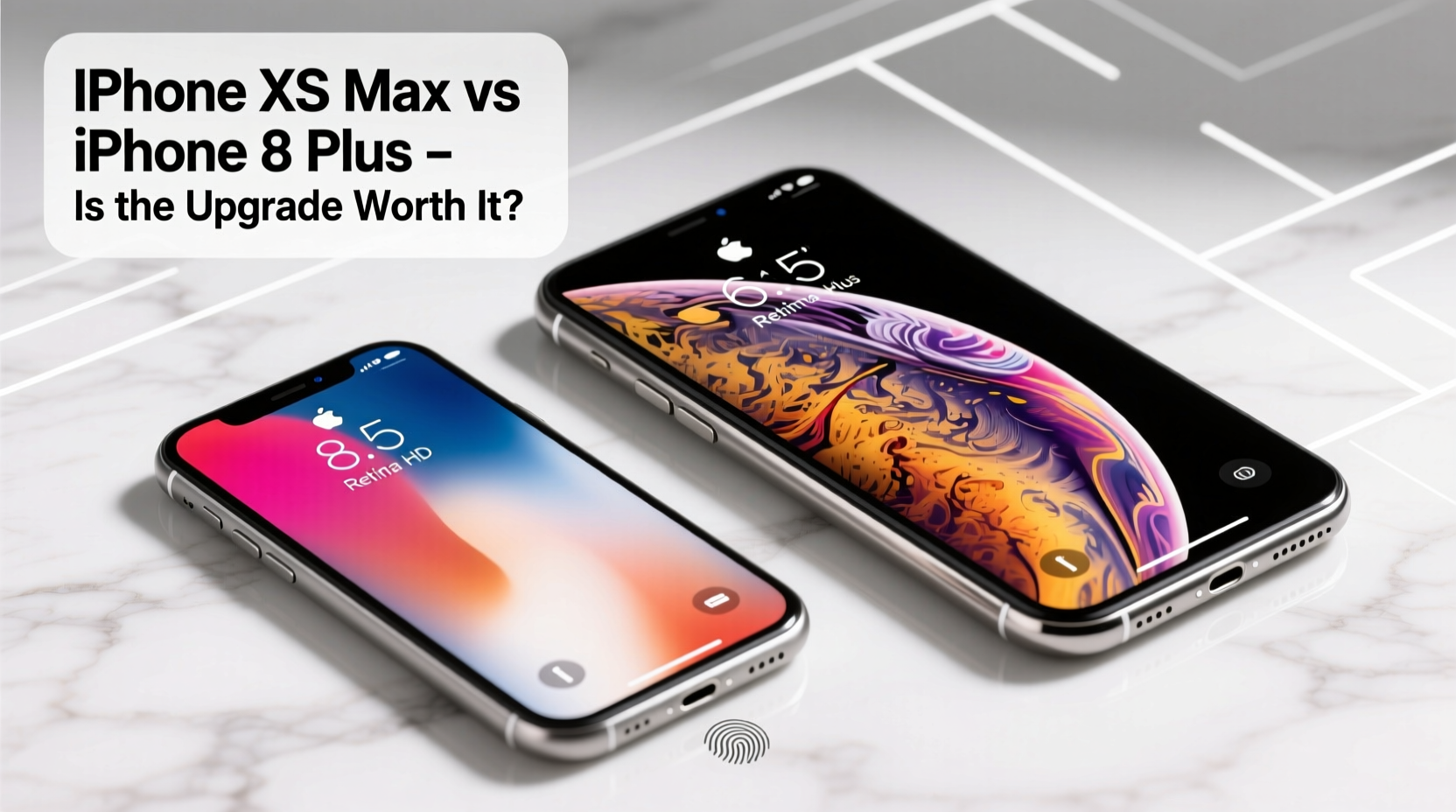
The iPhone 8 Plus and iPhone XS Max represent opposite ends of Apple’s smartphone evolution. The 8 Plus, launched in 2017, sticks to a traditional design with thick bezels, a physical Home button, and Touch ID. It measures 158.4 x 78.1 x 7.5 mm and weighs 203 grams. While bulky by today’s standards, its shape makes it easy to grip and operate with one hand—especially for those with larger hands.
In contrast, the iPhone XS Max (2018) ditches the Home button for Face ID and adopts an OLED display that stretches nearly edge-to-edge. At 157.5 x 77.4 x 7.7 mm, it’s only slightly taller than the 8 Plus but significantly more compact in terms of front-facing footprint thanks to minimized bezels. Despite similar dimensions, the XS Max feels more modern and immersive, though its taller screen makes single-thumb navigation harder.
Display Quality and Usability
The display is where the XS Max pulls decisively ahead. It features a 6.5-inch Super Retina OLED panel with a resolution of 2688 x 1242 pixels. Colors are deeper, blacks are true black, and brightness reaches up to 1200 nits for HDR content. Whether you're watching movies or editing photos, the visual experience is noticeably superior.
The iPhone 8 Plus, meanwhile, has a 5.5-inch Retina HD LCD screen with a resolution of 1920 x 1080. While perfectly functional and color-accurate, it lacks the contrast and vibrancy of OLED. It’s also more prone to glare in direct sunlight due to lower peak brightness.
However, the larger screen on the XS Max comes at a cost: increased power consumption and greater difficulty in managing notifications and app switching without two hands. Users upgrading from the 8 Plus may find themselves adjusting gestures like swiping down from the top-right corner for Control Center—a change that takes time to internalize.
Performance and Software Longevity
Under the hood, the XS Max runs on the A12 Bionic chip—the first 7nm processor in a smartphone at the time. Compared to the A11 Bionic in the 8 Plus, it delivers around 15–20% faster CPU performance and up to 50% better GPU efficiency. This translates to smoother multitasking, quicker app launches, and better longevity when running modern iOS versions.
As of 2024, both devices support the latest iOS updates, but the XS Max handles them more fluidly. Apps optimized for newer hardware can feel sluggish on the 8 Plus, particularly augmented reality experiences or photo-editing tools. Battery life under heavy use also favors the XS Max due to more efficient architecture, despite having a similar-sized battery.
“Devices with OLED displays and modern SoCs don’t just perform better—they age more gracefully.” — David Lin, Mobile Hardware Analyst at TechPulse Insights
Camera Capabilities: Evolution, Not Revolution
Both phones feature dual 12MP rear cameras: wide and telephoto. The 8 Plus introduced portrait mode and optical zoom, setting a high bar. The XS Max improves upon this with Smart HDR, which balances highlights and shadows far more effectively, especially in backlit scenes. Its enhanced image signal processor captures more detail in low light and produces more natural skin tones.
Front-facing cameras tell a different story. The 8 Plus has a 7MP TrueDepth camera, adequate for selfies but limited in dynamic range. The XS Max upgrades to a 7MP front shooter with Portrait Mode and Lighting effects, leveraging the same facial mapping tech as Face ID.
| Feature | iPhone 8 Plus | iPhone XS Max |
|---|---|---|
| Display Type | LCD | OLED |
| Screen Size | 5.5 inches | 6.5 inches |
| Processor | A11 Bionic | A12 Bionic |
| Battery Life (Video Playback) | Up to 14 hours | Up to 15 hours |
| Fingerprint / Face Unlock | Touch ID | Face ID |
| Water Resistance | IP67 | IP68 |
| Storage Options | 64GB, 256GB | 64GB, 256GB, 512GB |
Real-World Upgrade Experience: A Mini Case Study
Sarah, a freelance photographer based in Portland, used her iPhone 8 Plus for four years. She loved its durability, ease of handling, and camera quality. But after shooting a wedding where she needed quick access to cloud backups and smooth video exports, she upgraded to the XS Max.
At first, she struggled with the size. “I dropped it twice in the first week because I couldn’t get used to swiping instead of pressing,” she said. But within a month, the benefits became clear. “The screen made editing on-site so much easier. And Face ID actually works faster than Touch ID once you’re moving.”
For Sarah, the trade-off was worth it—not because the phone was bigger, but because the entire ecosystem felt more responsive and future-ready.
Checklist: Should You Upgrade?
Ask yourself these questions before making the switch:
- Do you value screen real estate for media consumption or productivity?
- Are you comfortable giving up Touch ID for Face ID?
- Do you often edit photos or videos directly on your phone?
- Is software support beyond 2025 important to you?
- Can your current case and accessories be replaced easily?
- Do you mind carrying a slightly heavier, taller device?
If most answers are “yes,” the XS Max offers tangible improvements. If not, sticking with the 8 Plus—or even considering a smaller modern alternative like the iPhone 13 Mini—might be wiser.
Frequently Asked Questions
Is the iPhone XS Max too big compared to the 8 Plus?
It depends on your usage. While the XS Max is taller, its slimmer bezels make it feel less wide. However, one-handed operation is more challenging. If pocket space or grip comfort is a priority, the size difference may be a drawback.
Does Face ID work better than Touch ID?
In most cases, yes—once properly set up. Face ID adapts to changes in appearance (glasses, beards) and unlocks seamlessly when lifting the phone. However, it fails with masks or extreme angles, whereas Touch ID works with gloves removed.
Will the iPhone 8 Plus stop working soon?
No. As of 2024, it still receives security updates and supports essential apps. However, future iOS versions may drop support, and performance could degrade with newer software demands.
Final Verdict: Is the Upgrade Worth It?
The jump from iPhone 8 Plus to iPhone XS Max isn’t just about size—it’s about stepping into a new era of smartphone interaction. You gain a superior display, longer software support, better cameras, and improved biometrics. But you lose the tactile feedback of a home button and the snug fit in smaller pockets.
Ultimately, the decision hinges on what you prioritize. If you value cutting-edge performance, immersive media, and a device built to last several more years, the XS Max is absolutely worth the upgrade—even with its larger footprint. But if comfort, familiarity, and one-handed control matter more, holding onto the 8 Plus (or opting for a mid-sized successor) might serve you better.




 浙公网安备
33010002000092号
浙公网安备
33010002000092号 浙B2-20120091-4
Comments
No comments yet. Why don't you start the discussion?