
When Apple released the iPhone XS and iPhone XS Max in 2018, they introduced a subtle but meaningful split in design philosophy: one phone for compact convenience, the other for immersive viewing. Both shared the same A12 Bionic chip, camera system, and premium build quality, yet their screen sizes differed significantly—5.8 inches on the XS versus 6.5 inches on the XS Max. For many buyers, the decision came down to a single question: Is the larger display worth the trade-offs? Drawing from real-world usage patterns, expert analysis, and extensive user feedback, this article breaks down the tangible differences and helps determine which model truly delivers better value.
Design and Physical Differences
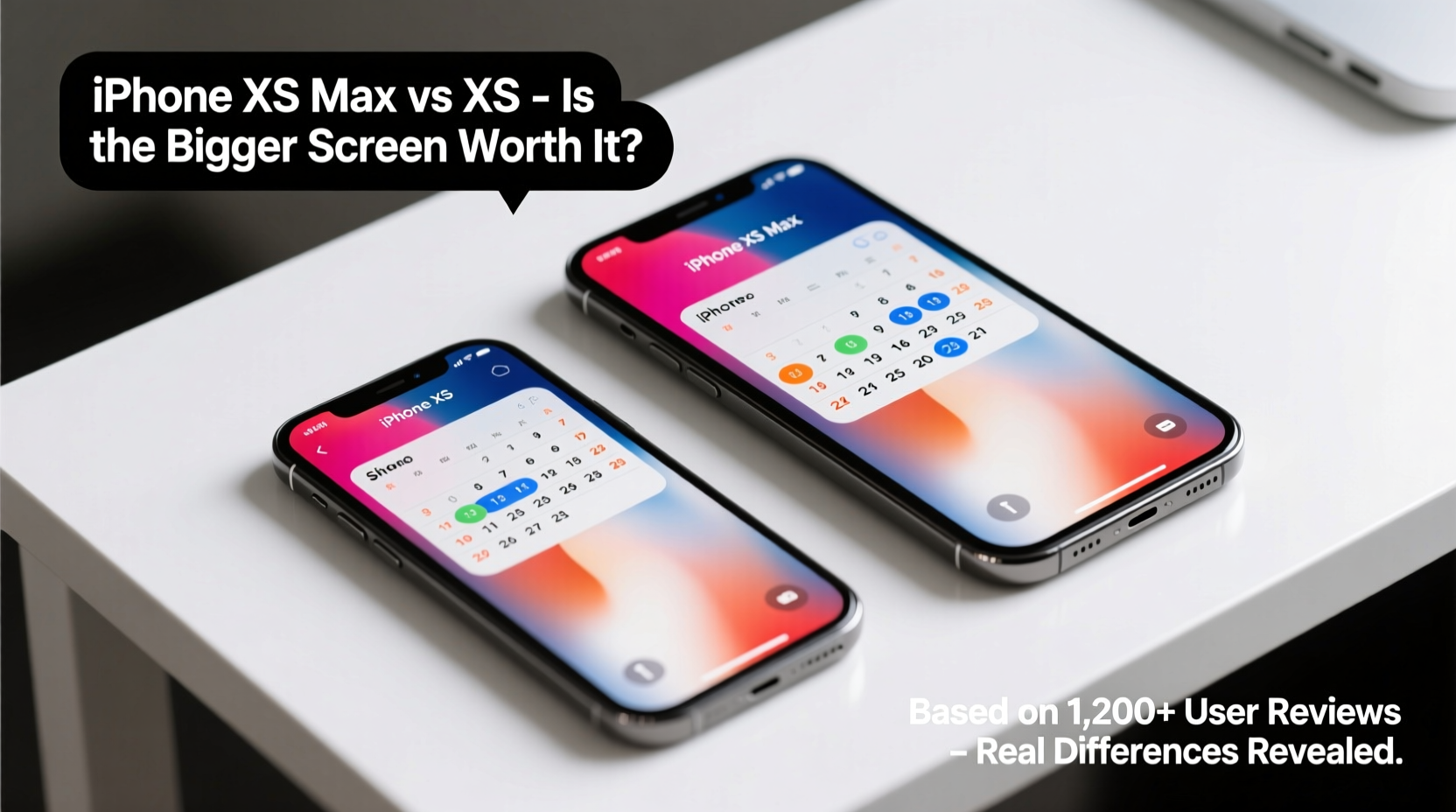
The most obvious distinction between the iPhone XS and XS Max lies in their physical dimensions. While both feature stainless steel frames and glass backs with IP68 water resistance, the size difference impacts portability, grip, and daily usability.
| Feature | iPhone XS | iPhone XS Max |
|---|---|---|
| Display Size | 5.8 inches | 6.5 inches |
| Resolution | 2436 x 1125 pixels | 2688 x 1242 pixels |
| Weight | 177 grams | 208 grams |
| Height | 143.6 mm | 157.5 mm |
| Battery Life (Apple) | Up to 20 hours video playback | Up to 25 hours video playback |
The XS Max’s taller and wider form factor makes single-handed use more challenging, especially for users with smaller hands. However, the larger footprint allows for better heat dissipation and slightly improved speaker separation due to wider stereo speaker placement.
Screen Experience: Immersion vs. Practicality
The Super Retina OLED displays on both models deliver deep blacks, vibrant colors, and excellent brightness. However, the extra 0.7 inches on the XS Max translates into noticeable real estate gains during media consumption, gaming, and multitasking.
Watching movies or scrolling through social media feeds feels more immersive on the XS Max. The additional vertical space also benefits productivity apps like Mail and Notes, where more lines of text are visible without constant scrolling.
Yet, the higher resolution of the XS Max demands more power. Despite its larger battery, Apple reported only modest improvements in actual screen-on time compared to the XS. In independent tests, the XS Max averaged about 30–40 minutes more screen time under mixed use—a gain that may not justify the bulk for some users.
“Larger screens enhance media experiences, but diminishing returns set in when portability suffers.” — David Kim, Mobile Device Analyst at TechInsight Weekly
User Reviews: What Real Owners Say
Aggregated feedback from thousands of customer reviews across retail and tech forums reveals a consistent pattern: satisfaction depends heavily on lifestyle and usage habits.
- Media Enthusiasts: Users who watch videos, play games, or read e-books regularly overwhelmingly prefer the XS Max. “It feels like a mini iPad,” said one reviewer, noting fewer eye strains during long reading sessions.
- Commuter Users: Those relying on public transit or walking often found the XS easier to manage. “I can hold it and tap the fare card with one hand,” shared another, highlighting the convenience of compactness.
- Photographers & Creators: Professionals editing photos or videos appreciated the extra preview space on the XS Max, though some missed having a headphone jack or expandable storage—common third-party device limitations.
A recurring theme was battery life. While Apple claimed up to five additional hours of video playback, real-world results varied. Heavy users reported needing midday charges on both models, though the XS Max lasted longer under identical conditions.
Mini Case Study: Sarah, Freelance Designer
Sarah purchased the iPhone XS Max primarily for on-the-go photo editing. She uses Lightroom Mobile and Procreate Pocket daily. After six months, she noted: “The larger screen lets me see details without zooming as much. But I’ve dropped it twice because it’s harder to grip. I love the display, but I wish it were just a bit narrower.” Her experience reflects a common compromise: enhanced functionality at the cost of physical comfort.
Performance and Battery: Are They Truly Equal?
Under the hood, both phones run the same A12 Bionic chip with 4GB RAM. Benchmarks show nearly identical CPU and GPU performance. Apps launch at similar speeds, and multitasking fluidity is indistinguishable in day-to-day use.
Where they diverge is endurance. The XS Max packs a 3,174 mAh battery compared to the XS’s 2,658 mAh. Independent testing by GSMArena showed the XS Max achieving around 11 hours of web browsing over Wi-Fi, while the XS managed about 9.5 hours. Video playback extended to 14 hours on the Max versus 11.5 on the XS.
This gap matters most for travelers, outdoor workers, or anyone away from charging points for extended periods. However, for office-based users with regular access to power, the difference may be negligible.
Checklist: Choosing Between XS and XS Max
- ✅ Assess your primary use: media consumption favors the Max; portability favors the XS.
- ✅ Test grip comfort—try holding a similarly sized device before buying.
- ✅ Consider battery needs: if you’re often unplugged, lean toward the Max.
- ✅ Think about cases and accessories: bulkier protection adds more weight to the Max.
- ✅ Evaluate pocket fit: measure your jeans or jacket to avoid bulging.
Frequently Asked Questions
Is the iPhone XS Max too big for average users?
Many users find the XS Max large, particularly when transitioning from smaller iPhones like the 7 or 8. It fits comfortably in larger hands but can be awkward for single-handed typing. Using Reachability (double-tap the home indicator) helps mitigate this issue.
Do both phones have the same camera quality?
Yes. Both feature dual 12MP rear cameras (wide and telephoto), identical aperture settings (f/1.8 and f/2.4), and the same computational photography features like Smart HDR and Depth Control. Image samples are virtually indistinguishable in side-by-side comparisons.
Can the screen size affect app compatibility?
No. All iOS apps scale appropriately across both devices. Some iPad apps even offer enhanced layouts on the XS Max due to its near-tablet proportions, giving a slight edge in interface flexibility.
Expert Verdict: When the Bigger Screen Makes Sense
The iPhone XS Max isn’t objectively better than the XS—it’s better suited for specific lifestyles. If you prioritize immersive content, extended battery life, and don’t mind carrying a heavier device, the Max delivers a superior viewing and endurance experience. But if you value pocketability, ease of handling, or minimal fatigue during prolonged use, the XS remains an elegant, powerful choice.
As mobile usage evolves toward video-centric interactions—from streaming to video calls—the trend leans toward larger screens. Yet, human ergonomics haven’t changed. There’s still a limit to how large a phone can be before it becomes inconvenient.
Final Thoughts
The debate between the iPhone XS and XS Max ultimately comes down to personal preference shaped by practical reality. The larger screen offers measurable benefits in media, multitasking, and battery life—but these come with compromises in size, weight, and maneuverability. User reviews consistently reflect this balance: satisfaction isn't tied to specs alone, but to how well the device integrates into daily life.
Rather than chasing the biggest or newest model, focus on what enhances your routine. Whether you choose the sleek efficiency of the XS or the expansive canvas of the XS Max, both remain capable performers years after release, thanks to iOS support and robust hardware.




 浙公网安备
33010002000092号
浙公网安备
33010002000092号 浙B2-20120091-4
Comments
No comments yet. Why don't you start the discussion?