
In 2018, two flagship smartphones dominated the premium market: Apple’s iPhone XS and Samsung’s Galaxy S9. Both devices were praised for their design, performance, and especially their cameras. But when it comes to real-world photography—capturing moments in natural lighting, dynamic environments, and everyday scenarios—which one actually produces better photos? This isn’t about specs on paper; it’s about how they perform when you raise your phone to take a picture at dinner, on a hike, or during a family gathering.
The answer depends on what kind of photographer you are, your editing preferences, and the conditions you typically shoot in. Let’s break down the key differences with an emphasis on practical outcomes, not marketing claims.
Camera Hardware: Specs vs Real-World Use
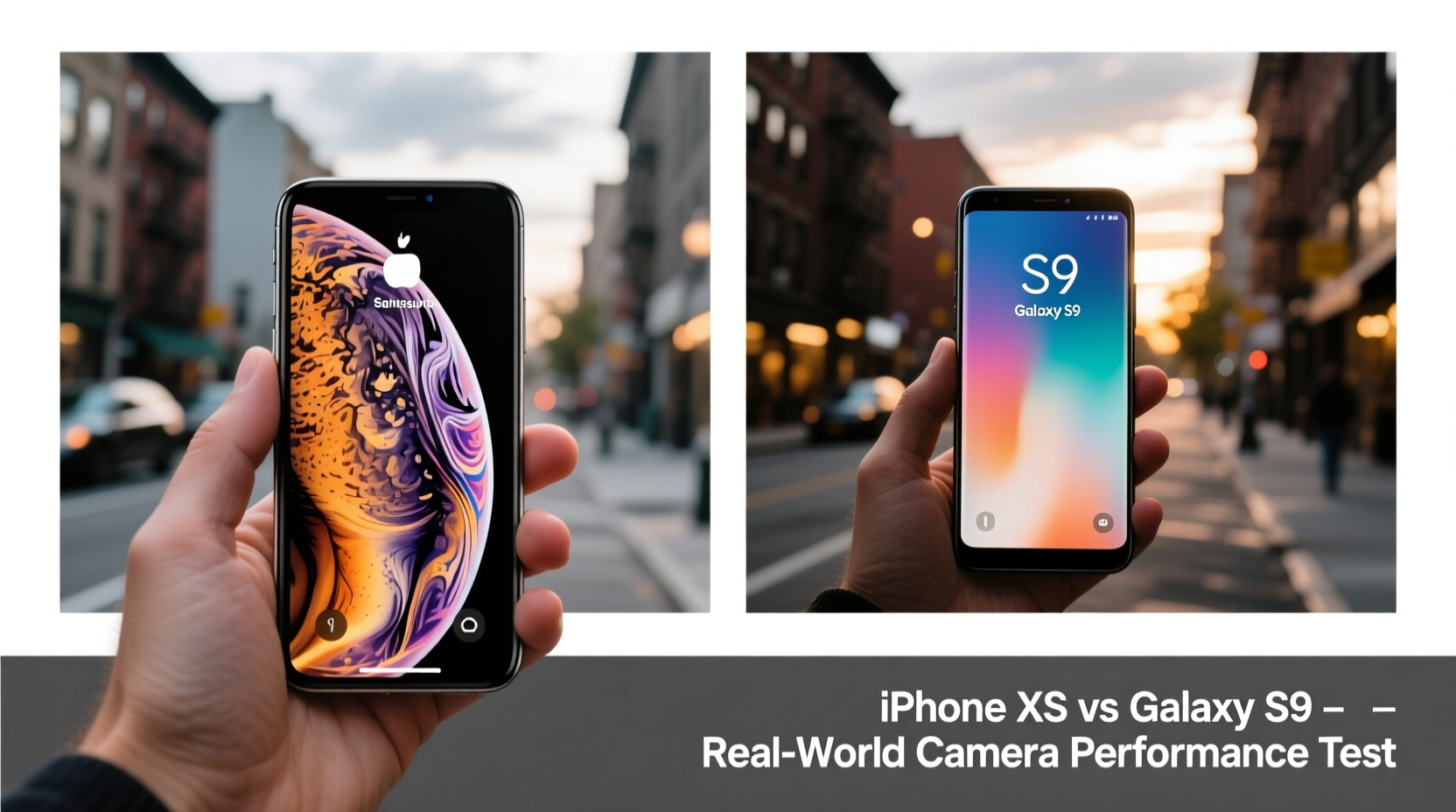
On paper, both phones had solid camera setups. The iPhone XS featured a dual 12MP rear system: a wide-angle (f/1.8) and a telephoto (f/2.4), both with optical image stabilization. Apple emphasized improved dynamic range and Smart HDR, designed to balance shadows and highlights more effectively than previous models.
The Galaxy S9, meanwhile, had a single 12MP rear sensor with a variable aperture (f/1.5–f/2.4)—a rare feature at the time that allowed the lens to adapt to lighting conditions. Its larger aperture in low light was a standout selling point. It also supported 960fps super slow-motion video, though this wasn’t relevant for still photography.
While the S9’s hardware flexibility looked impressive, Apple’s tighter integration between hardware and software often delivered more consistent results. Samsung relied more heavily on post-processing, which could sometimes lead to oversaturated colors or unnatural skin tones.
“Smartphone photography is no longer just about megapixels. It's about how the entire imaging pipeline—from sensor to processor to algorithm—works together.” — David Kim, Mobile Imaging Analyst at DXOMark
Photo Quality in Daylight: Natural vs Enhanced
In bright daylight, both phones produce sharp, detailed images. However, their approaches differ significantly:
- iPhone XS: Tends to deliver a more neutral, true-to-life color profile. Whites stay white, skies remain naturally blue, and skin tones are accurate without heavy makeup-like smoothing.
- Galaxy S9: Applies a warmer, more saturated tone by default. Greens appear lusher, reds pop more, and contrast is boosted—great for social media but less faithful to reality.
If you prefer a “WYSIWYG” (what you see is what you get) experience, the iPhone XS is likely the better choice. If you like vibrant, punchy images straight out of the camera, the S9 might appeal more.
Low-Light Performance: Where They Diverge
This is where the Galaxy S9’s f/1.5 aperture should have given it a clear advantage—and in some cases, it did. In dimly lit restaurants or indoor events, the S9 captured brighter shots with less noise, especially in static scenes.
However, the iPhone XS countered with superior computational photography. Its advanced noise reduction algorithms preserved more texture and avoided the over-smoothed “plastic face” effect sometimes seen on the S9. Plus, Apple’s consistency across frames meant fewer surprises when reviewing a burst of photos.
One major limitation: neither phone had a dedicated night mode at launch. That came later with iOS 11 updates and Samsung’s Nightography features. So in very dark conditions, both struggled compared to modern flagships—but the S9 generally pulled ahead in sheer brightness, while the XS won in realism.
Real Example: Concert Photo Test
A music journalist tested both phones at a small indoor concert with mixed lighting—red spotlights, strobes, and ambient stage glow. The Galaxy S9 captured a brighter image with visible facial features, but the subject’s face appeared overly orange and details were slightly blurred due to aggressive noise processing.
The iPhone XS image was darker initially, but after minor exposure adjustment in editing, revealed cleaner textures, accurate skin tones, and better highlight retention. For professional use or serious hobbyists, this level of control mattered more than instant brightness.
Dynamic Range and HDR: Balancing Light and Shadow
Dynamic range—the ability to capture detail in both shadows and highlights—is crucial for outdoor shots where the sky is bright but foreground objects are shaded.
The iPhone XS introduced Smart HDR, combining multiple exposures and leveraging the A12 Bionic chip’s machine learning to identify faces, skies, and movement. In practice, this meant fewer blown-out skies and better shadow recovery in backlit portraits.
The Galaxy S9 used its Dual Pixel sensor and multi-frame processing to achieve similar goals, but often leaned too hard into contrast. Skies could turn unnaturally dark, and shadow areas sometimes looked artificially lifted, revealing grain.
| Metric | iPhone XS | Galaxy S9 |
|---|---|---|
| Daylight Accuracy | Excellent – natural colors | Good – warm, saturated |
| Low-Light Brightness | Good – balanced exposure | Excellent – brighter output |
| Noise Control | Excellent – clean textures | Fair – occasional smudging |
| HDR Performance | Superior – smooth transitions | Solid – high contrast |
| Zoom Quality (2x) | Better – stabilized telephoto | Good – digital zoom crop |
User Experience and Consistency
Hardware and image processing matter, but so does how easy it is to get a great shot. The iPhone XS offered faster autofocus, quicker launch times from the lock screen, and seamless integration with iCloud Photos. Burst mode worked reliably, and portrait mode edges were more accurately detected, especially around hair and glasses.
The Galaxy S9 had useful features like Pro Mode for manual control and Live Focus for adjustable bokeh. However, portrait mode sometimes failed to distinguish between subject and background, especially with complex edges. The camera app also felt slower to wake and process shots in rapid succession.
Checklist: Getting the Best Photos from Either Phone
- Enable Grid Lines in Camera Settings for better composition.
- Tap to focus and adjust exposure manually before shooting.
- Avoid digital zoom; step closer or use 2x optical zoom (iPhone only).
- Use third-party apps like Halide (iOS) or ProShot (Android) for manual controls.
- Shoot in varied lighting to understand each phone’s limitations.
- Edit subtly—over-editing hides the inherent strengths of either camera.
FAQ
Does the Galaxy S9 have better low-light photos than the iPhone XS?
Yes, in terms of raw brightness, the S9 performs better in low light thanks to its f/1.5 aperture. However, the iPhone XS often produces more natural-looking results with better texture preservation and less artificial smoothing.
Can the iPhone XS zoom better than the Galaxy S9?
Yes. The iPhone XS has a dedicated 2x optical telephoto lens, while the S9 relies on cropping the main sensor. At 2x, the iPhone delivers sharper, more detailed zoomed images.
Which phone is better for social media photos?
The Galaxy S9, due to its vibrant color profile and higher contrast, often requires less editing for platforms like Instagram. The iPhone XS gives you more flexibility if you plan to edit photos yourself.
Final Verdict: Which Camera Is Better in Real Life?
If you value accuracy, consistency, and natural-looking photos across different lighting conditions, the iPhone XS is the better choice. Its Smart HDR, reliable portrait mode, and excellent dynamic range make it ideal for users who want great results without tweaking settings.
If you prioritize bright, vivid images—especially in low light—and enjoy having manual control options, the Galaxy S9 holds its own. Its variable aperture was innovative, and its Pro Mode gives enthusiasts room to experiment.
Ultimately, the iPhone XS wins in overall real-life photo quality due to superior processing, color science, and ecosystem integration. While the S9 shines in specific scenarios, the XS delivers dependable excellence across the board.




 浙公网安备
33010002000092号
浙公网安备
33010002000092号 浙B2-20120091-4
Comments
No comments yet. Why don't you start the discussion?