
When Apple released the iPhone 11 in 2019, it came as a direct successor to the iPhone XS, offering updated hardware at a more accessible price point. For users still on the iPhone XS, the question isn’t just about new features—it’s about real-world value. Does the upgrade deliver meaningful improvements in daily use, or is it simply incremental? To answer this, we need to look beyond marketing claims and examine actual performance, camera quality, battery life, software longevity, and overall user experience.
Performance: A Closer Look at the Chips
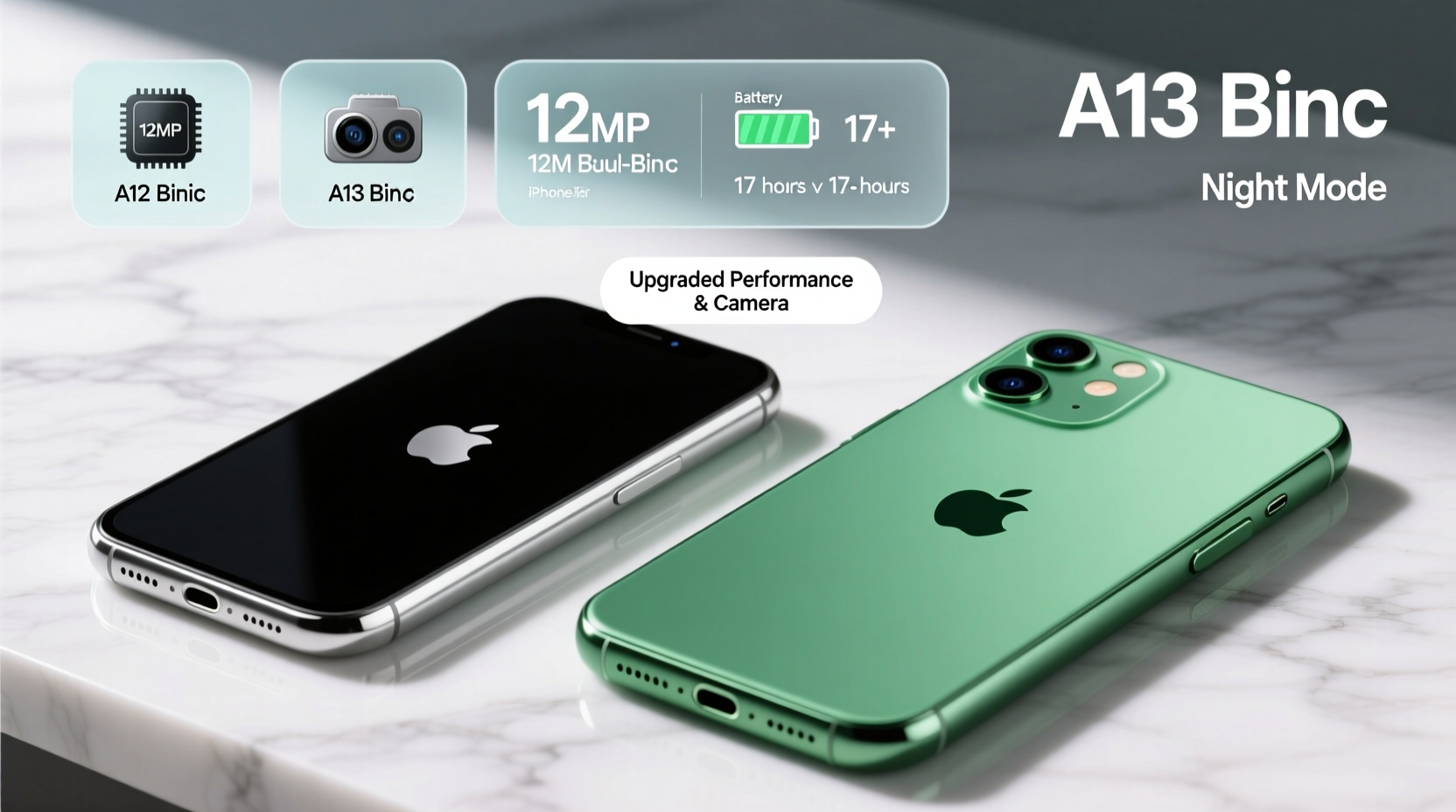
The iPhone XS runs on Apple’s A12 Bionic chip, a powerhouse in its time. The iPhone 11, meanwhile, introduced the A13 Bionic—Apple’s fastest chip when it launched. While both chips are capable of handling iOS smoothly, the difference becomes apparent under sustained workloads.
The A13 delivers roughly 20% better CPU performance and up to 30% improved graphics efficiency over the A12. In practical terms, this means faster app launches, smoother multitasking, and better performance in graphics-intensive games like Genshin Impact or Minecraft. However, for everyday tasks—browsing, messaging, social media—the difference is subtle. Most users won’t notice a dramatic shift unless they’re pushing their device hard.
Camera Comparison: More Than Just Megapixels
One of the most compelling reasons to upgrade from the iPhone XS to the iPhone 11 lies in the camera system. The iPhone XS features a single 12MP wide lens with optical image stabilization (OIS), while the iPhone 11 adds a second 12MP ultra-wide lens, expanding creative possibilities.
The ultra-wide lens allows for broader landscape shots, tighter interior photography, and dynamic perspectives previously impossible on the XS. Combined with Smart HDR and next-generation portrait mode, the iPhone 11 captures richer details, especially in backlit scenes. Night mode, introduced with the iPhone 11, is another game-changer—delivering dramatically brighter and clearer low-light photos compared to the XS, which lacks this feature entirely.
In daylight, both phones produce excellent results, but the iPhone 11 consistently outperforms the XS in dynamic range and color accuracy. Video recording remains strong on both devices, supporting 4K at 60fps, though the iPhone 11 benefits from extended dynamic range and improved stabilization.
“Night mode alone makes the iPhone 11 a worthwhile upgrade for anyone who takes photos after dark.” — David Kim, Mobile Photography Specialist
Battery Life: Real-World Endurance Matters
Battery life is where the iPhone 11 pulls significantly ahead. Apple rated the iPhone 11 for one hour longer of video playback than the XS, but real-world usage tells a different story. Many users report gaining up to 3–4 additional hours of screen-on time with the iPhone 11.
This improvement stems from two factors: a larger battery (3,110mAh vs. 2,658mAh) and greater power efficiency from the A13 chip and optimized iOS 13+. Whether you're commuting, traveling, or working remotely, that extra endurance reduces charging anxiety and keeps you connected longer.
Estimated Daily Usage Comparison
| Metric | iPhone XS | iPhone 11 |
|---|---|---|
| Average Screen-On Time | 5–6 hours | 8–9 hours |
| Video Playback | 14 hours | 17 hours |
| Standby Time | Up to 250 hours | Up to 310 hours |
| Charging Speed | 5W included (18W adapter sold separately) | Same, but supports faster charging with compatible adapter |
Design and Durability: Subtle Differences
Externally, both phones share a similar design language: glass front and back with an aluminum frame (XS) or aluminum edge (11). The iPhone 11 is slightly thicker and heavier, but not noticeably so in hand. One key change is the dual-camera layout—vertical on the 11 versus horizontal on the XS—which some find less elegant but more functional.
Durability-wise, both offer IP68 water resistance, though the iPhone 11 improves slightly—from 2 meters for 30 seconds (XS) to 2 meters for up to 30 minutes. In drop tests, the iPhone 11 often fares better due to reinforced glass and internal structural changes.
The display, however, marks a regression. The iPhone XS features a Super Retina OLED panel with deeper blacks and higher contrast. The iPhone 11 uses an LCD Liquid Retina display, which, while sharp and color-accurate, can’t match OLED’s vibrancy or true blacks. If you watch a lot of video content or prefer rich visuals, this downgrade may disappoint.
Software Support and Longevity
As of 2024, both devices support the latest versions of iOS, but their update windows differ. The A13 chip in the iPhone 11 is expected to receive updates through at least 2025, possibly into 2026. The A12 in the XS may stop receiving major updates sooner, especially as Apple shifts focus to newer architectures.
Future-proofing matters. Apps are becoming more demanding, and newer iOS features—like enhanced privacy controls, Live Text, and improved Focus modes—are optimized for A13 and later chips. Users on the XS might find these features slower or less responsive over time.
Mini Case Study: Sarah’s Upgrade Decision
Sarah had used her iPhone XS since 2018. By late 2022, she noticed sluggishness in Instagram and occasional crashes in Notes. Her battery drained by noon, and night photos were grainy. After researching, she upgraded to the iPhone 11. The change was immediate: her phone lasted all day, Night Mode transformed her travel photos, and apps opened faster. “It felt like getting a new phone every day,” she said. For her, the upgrade wasn’t just about specs—it restored confidence in her device.
Cost-Benefit Analysis: Is It Worth It?
Let’s break down whether the upgrade makes financial and practical sense.
- If your iPhone XS still performs well—apps run smoothly, battery holds charge, and you don’t take many photos—the upgrade may not be urgent.
- If you’re struggling with battery life, want better cameras, or plan to keep your phone for 2+ years, the iPhone 11 offers tangible benefits.
- Resale value: Selling your XS now can offset the cost of a used or refurbished iPhone 11, making the transition nearly cost-neutral.
Checklist: Should You Upgrade?
- Is your iPhone XS battery health below 80%?
- Do you regularly shoot photos in low light?
- Are you frustrated by short battery life?
- Do you want to keep your phone for at least two more years?
- Have you maxed out storage and can’t offload data easily?
If you answered “yes” to two or more, upgrading to the iPhone 11 is likely a smart move.
Frequently Asked Questions
Can the iPhone 11 last until 2025?
Yes. With iOS updates still supported and strong performance, the iPhone 11 remains viable through 2025 for most users. Heavy gamers or pro photographers may want something newer, but average users will find it sufficient.
Does the iPhone 11 have Touch ID?
No. Both the iPhone XS and iPhone 11 use Face ID for biometric authentication. There’s no Touch ID option on either model.
Is the iPhone 11 waterproof?
It’s water-resistant, not waterproof. Rated IP68, it can survive submersion in up to 2 meters of water for 30 minutes. However, water damage isn’t covered under warranty, so caution is advised.
Final Verdict: When the Upgrade Makes Sense
The jump from iPhone XS to iPhone 11 isn’t revolutionary, but it’s meaningful. You gain better cameras, notably Night Mode and ultra-wide shooting, a significantly longer-lasting battery, and a more future-ready processor. The trade-off is a slightly less premium display and a bulkier design.
For users experiencing performance slowdowns or battery degradation, the upgrade restores reliability and enjoyment. For those satisfied with their XS, holding off is reasonable—especially if eyeing an iPhone 12 or later for 5G and further improvements.
Ultimately, upgrading is worth it if your current pain points align with the iPhone 11’s strengths. It’s not about chasing the latest tech—it’s about solving real problems in your daily routine.




 浙公网安备
33010002000092号
浙公网安备
33010002000092号 浙B2-20120091-4
Comments
No comments yet. Why don't you start the discussion?