
Thirteen is one of the most misunderstood numbers in modern culture. While many dread it—skipping floor numbers in buildings, avoiding travel on the 13th day of the month, or flinching at a dinner party with exactly 13 guests—others see it as powerful, sacred, or even fortunate. The perception of 13 varies dramatically across cultures, religions, and historical contexts. To understand whether 13 is truly unlucky—or perhaps unfairly maligned—we must look beyond superstition and examine its deeper meanings.
The Origins of 13’s Bad Reputation
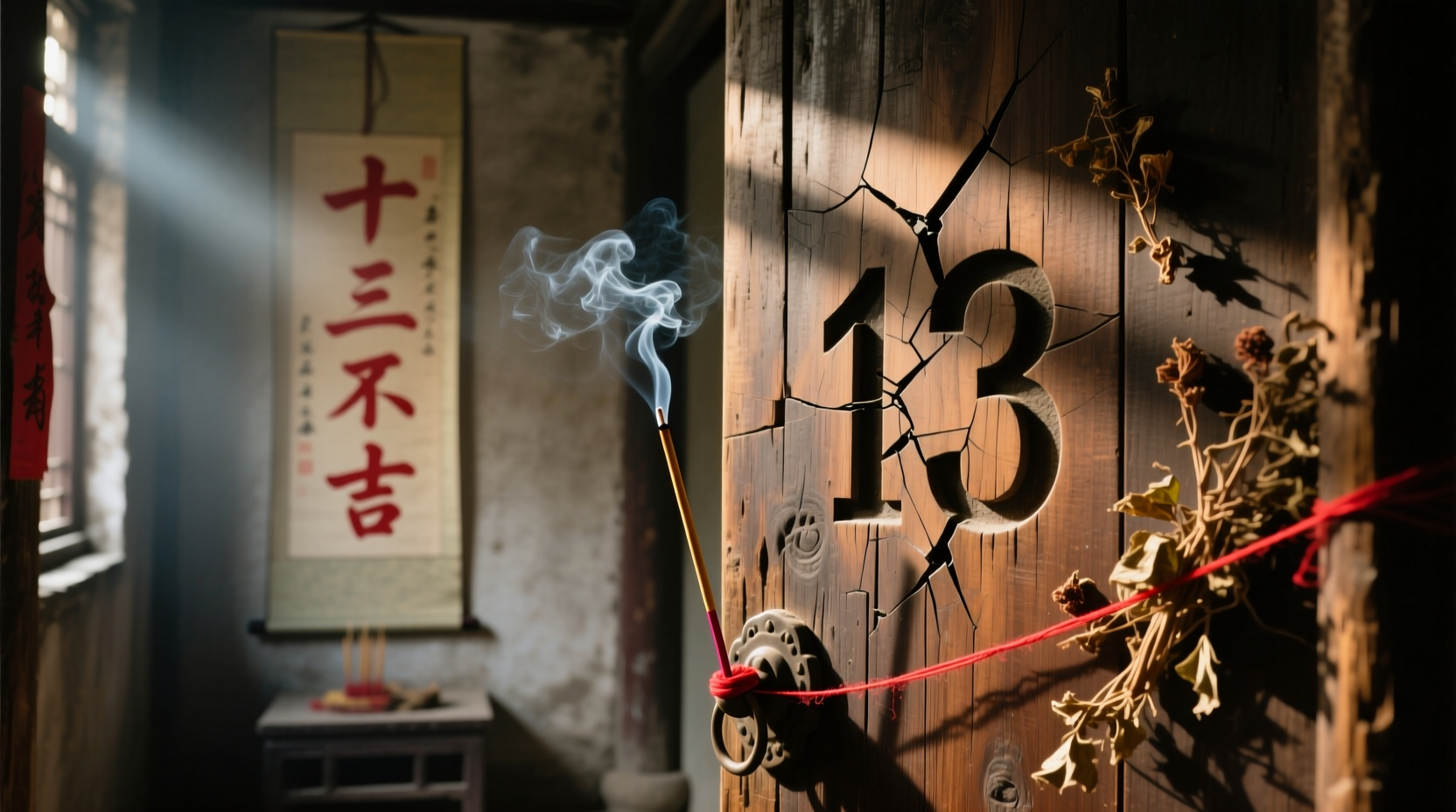
The stigma surrounding the number 13 didn’t appear overnight. It has roots in ancient mythology, religious narratives, and linguistic coincidence. One of the most cited sources comes from Christian tradition: the Last Supper. Jesus dined with his 12 apostles, making 13 people at the table. Judas Iscariot, the 13th guest, betrayed Christ, linking the number to treachery and misfortune.
Similarly, Norse mythology tells a story of 12 gods gathering for a feast in Valhalla. Loki, the trickster god, arrived uninvited as the 13th guest, leading to the death of Baldr, a beloved deity. This myth reinforced the idea that a 13th attendee brings chaos.
In Western psychology, this pattern of 12 (a complete group—months, zodiac signs, apostles) followed by an intrusive 13 creates cognitive dissonance. The number disrupts symmetry, which humans instinctively seek. This disruption may explain why 13 feels “off” to some, even without religious context.
Cultural Perspectives: Where 13 Is Actually Lucky
Not all cultures view 13 negatively. In fact, several revere it:
- Italy: While Friday the 17th is feared (due to Roman numerals rearranging to \"VIXI,\" meaning \"I have lived\"—implying death), 13 is considered lucky, especially in gambling.
- China: Though 4 is avoided (sounds like \"death\"), 13 isn’t inherently feared. In some regions, it’s neutral or even auspicious due to its association with growth and progress.
- India: The 13th day of certain lunar phases is celebrated. For example, Trayodashi is considered favorable for spiritual practices.
- Mexico and Peru: The pre-Columbian Mesoamerican calendars were based on cycles of 13. The Mayans used a 13-day week and viewed the number as sacred, representing divine order.
In numerology, 13 is often interpreted not as unlucky but as transformative. It reduces to 1 + 3 = 4—a number associated with stability, structure, and hard work. Numerologists argue that 13 represents the end of a cycle and the beginning of a new foundation.
“Thirteen is not a number to fear but to respect. It signifies rebirth through destruction.” — Dr. Lena Patel, Cultural Anthropologist, University of Toronto
When 13 Brings Success: Real-Life Examples
Despite widespread superstition, numerous individuals and organizations have thrived under the influence of 13.
Case Study: NASA’s Apollo 13 Mission
Apollo 13 launched on April 11, 1970—at 13:13 CST. Superstitious minds saw disaster written in the numbers. And indeed, two days into the mission, an oxygen tank exploded, crippling the spacecraft.
Yet, instead of ending in tragedy, the mission became known as a “successful failure.” Through ingenuity and teamwork, NASA brought the astronauts safely back to Earth. The phrase “Failure is not an option,” coined during this crisis, entered popular culture. Rather than confirming 13’s curse, Apollo 13 demonstrated resilience—and turned the number into a symbol of human triumph over adversity.
Sports and Entertainment
Many athletes wear jersey number 13 proudly. Tennis legend Martina Navratilova won 18 Grand Slam singles titles wearing 13. In Formula 1, driver Max Verstappen has frequently qualified in 13th position before going on to win races. In film, director Danny Boyle embraced the number, releasing *127 Hours*—a movie about survival after a 13-day ordeal—on June 13, 2010.
These examples don’t prove 13 is magically lucky, but they do show that outcomes depend more on preparation, skill, and mindset than on numerical symbolism.
Practical Guide: How to Reframe Your View of 13
If you’ve always avoided 13—changing flight dates, skipping hotel floors, or feeling anxious on Friday the 13th—it may be time to reassess. Here’s a step-by-step approach to shifting your perspective:
- Recognize the source of your belief. Was it learned from family, media, or a personal experience?
- Research alternative interpretations. Learn how other cultures honor the number.
- Test the fear with action. Book a meeting on the 13th. Stay on the 13th floor. Observe what actually happens.
- Keep a journal. Note any events following “13 moments.” You’ll likely find no consistent pattern of bad luck.
- Create a new association. Link 13 to a personal milestone—your 13th birthday, a job start date, or a meaningful address.
Do’s and Don’ts When Facing Number 13
| Do’s | Don’ts |
|---|---|
| Use 13 as a reminder to embrace change | Cancel plans just because of the date |
| Study cultural histories where 13 is revered | Assume correlation equals causation (e.g., “I had a bad day on the 13th, so 13 is bad”) |
| Wear or display 13 proudly if it resonates with you | Let fear dictate major life decisions |
| Reflect on what endings and new beginnings mean to you | Mock others’ beliefs—whether they fear or celebrate 13 |
Frequently Asked Questions
Why is Friday the 13th considered unlucky?
The combination of Friday—a day associated with Christ’s crucifixion—and the number 13 amplifies fear in Christian-influenced cultures. The term “paraskevidekatriaphobia” refers to the fear of Friday the 13th. However, studies show no statistical increase in accidents or disasters on this day.
Is 13 lucky in numerology?
Yes, in many numerological systems, 13 is seen as a number of transformation. It breaks down to 1 (new beginnings) and 3 (creativity, expression), suggesting growth through effort. The Tarot card associated with 13 is “Death,” which symbolizes change, not literal death.
Do any countries skip the number 13?
Yes. Many high-rises in North America and Europe label the floor after 12 as “14” or “12A.” Airlines sometimes omit row 13. However, countries like China and India rarely follow this practice unless catering to international clients.
Conclusion: Embracing 13 as a Symbol of Power, Not Fear
The truth behind the superstition of 13 is simple: it holds only the power we give it. Like all symbols, its meaning is shaped by culture, history, and personal belief. While fear of 13 persists in some corners of the world, growing awareness reveals a more nuanced reality—one where 13 stands not for doom, but for evolution, courage, and renewal.
Rather than avoiding the number, consider what it might represent for you personally. Is it a challenge to overcome irrational fears? A prompt to welcome change? Or perhaps a quiet invitation to question inherited beliefs and think independently?




 浙公网安备
33010002000092号
浙公网安备
33010002000092号 浙B2-20120091-4
Comments
No comments yet. Why don't you start the discussion?