
When shopping for a Cuban link chain, one of the most pressing decisions isn’t just about size or style—it’s about material. You’ll often find two main options: solid 14k gold and gold-plated alternatives. The price difference can be dramatic. A 14k gold Cuban link might cost ten or even twenty times more than its gold-plated counterpart. So, is that premium justified?
The answer depends on your priorities: Are you looking for a temporary fashion accessory, or an investment piece meant to last a lifetime? To make an informed decision, it’s essential to understand what each option offers in terms of durability, appearance, maintenance, and long-term value.
Understanding the Materials: What \"14k Gold\" and \"Gold Plated\" Really Mean
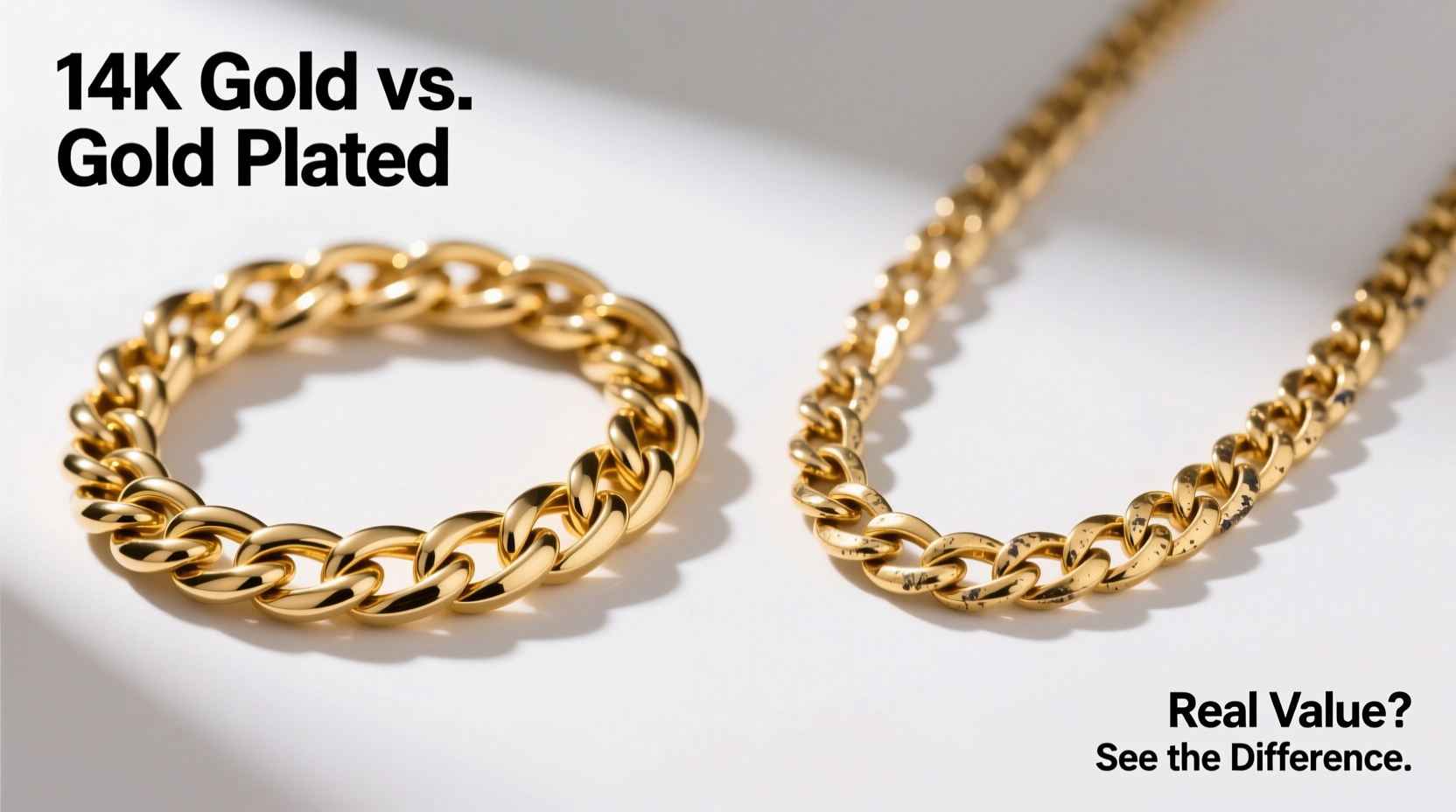
At the core of this debate is a fundamental difference in composition. A 14k gold Cuban link chain is made from an alloy consisting of 58.3% pure gold, mixed with metals like copper, silver, and zinc to enhance strength and durability. This means the entire structure of the chain—every link—is composed of real gold throughout.
In contrast, a gold-plated chain starts with a base metal—typically stainless steel, brass, or copper—and is coated with a thin layer of gold, usually measured in microns. While it may look identical to solid gold at first glance, the gold layer can wear off over time, especially with regular use.
The Federal Trade Commission (FTC) requires gold-plated items to disclose their plating thickness. However, many lower-cost pieces have only 0.5 to 2.5 microns of gold, which can begin to fade within months.
“Gold plating gives you the look without the longevity. If you're serious about jewelry as heirloom-quality or daily wear, solid gold is non-negotiable.” — Daniel Reyes, Jewelry Appraiser & GIA Graduate
Long-Term Durability: Will It Last?
Durability is where the gap between 14k gold and gold-plated chains becomes most apparent. Solid 14k gold is highly resistant to tarnishing, corrosion, and skin reactions. It won’t flake, peel, or turn green—common issues with plated chains when the coating wears down.
Gold-plated chains are vulnerable to friction, moisture, sweat, and chemicals found in lotions and perfumes. Over time, these factors degrade the outer layer, exposing the base metal underneath. Once that happens, the chain loses its luster and can cause skin discoloration or irritation.
A well-cared-for 14k gold Cuban link chain can last decades—even generations—with minimal maintenance. It can be polished, repaired, and resized without compromising integrity. Gold-plated chains, once damaged, are rarely worth restoring.
Value Comparison: Cost vs. Longevity
Let’s compare real-world scenarios. A high-quality 14k gold Cuban link chain (18-inch, 6mm width) might retail for $2,500–$4,000. A similar-looking gold-plated version could cost $80–$150. That’s a significant upfront savings—but consider the long-term picture.
| Feature | 14k Gold Cuban Link | Gold-Plated Cuban Link |
|---|---|---|
| Material Composition | 58.3% pure gold throughout | Base metal + thin gold layer (0.5–2.5 microns) |
| Lifespan | Decades with care | 6 months to 2 years (with daily wear) |
| Tarnish Resistance | Excellent | Poor – prone to fading and discoloration |
| Hypoallergenic | Yes (if nickel-free alloy) | No – base metals may cause reactions |
| Resale Value | High – based on gold weight and market price | Negligible – no intrinsic metal value |
| Maintenance Needs | Occasional polishing | Frequent cleaning, limited restoration options |
Over a 10-year period, purchasing a new gold-plated chain every 1–2 years could cost $400–$1,000—still less than a single 14k chain. But you’d be sacrificing quality, consistency, and emotional value. There’s no sentimental or financial return on disposable jewelry.
Real-Life Example: Two Buyers, Two Outcomes
Consider two friends: Marcus and Jordan. Both wanted a bold Cuban link chain for personal style and special occasions.
Marcus opted for a gold-plated chain costing $120. He wore it frequently—at parties, workouts, and even while swimming. Within eight months, the gold began chipping near the clasp, revealing a dark underlayer. By month 14, the chain had tarnished significantly and broke during routine wear. He replaced it twice over five years, spending $360 total, but never felt confident wearing it daily.
Jordan invested $3,200 in a 14k gold Cuban link. He cleaned it monthly with a soft cloth and stored it separately. After five years, the chain looked nearly new. When he needed a slight resize, a jeweler adjusted it easily. Recently, he wore it to his wedding—passed down as a future family heirloom.
Their experiences highlight a key truth: price reflects not just material, but purpose.
When Gold Plated Might Make Sense
Gold-plated chains aren’t inherently “bad”—they serve a specific niche. They’re ideal for:
- Occasional wear (e.g., photo shoots, events)
- Testing a style before committing to solid gold
- Budget-conscious shoppers who prioritize variety over permanence
- Fashion-forward individuals who rotate accessories seasonally
If you choose gold-plated, look for items labeled “heavy gold electroplated” (over 2.5 microns) or “vermeil” (gold over sterling silver). These offer better durability than standard plating.
Step-by-Step Guide to Making Your Decision
- Define your usage: Will you wear the chain daily, weekly, or occasionally?
- Assess your budget: Can you afford a one-time investment, or do you prefer lower upfront costs?
- Check sensitivity: Do you react to certain metals? Solid 14k gold is less likely to irritate skin.
- Think long-term: Do you want something you can pass down or resell?
- Research sellers: Buy 14k gold from reputable jewelers with hallmarks and appraisals. For plated, read reviews about longevity.
- Inspect craftsmanship: Even solid gold varies in quality—look for tight links, secure clasps, and smooth finishes.
- Factor in maintenance: Are you willing to clean and store it properly?
Frequently Asked Questions
Can I tell the difference between 14k gold and gold-plated just by looking?
Not always. High-quality plating can mimic the color and shine of real gold initially. However, over time, plated chains develop uneven wear, dull spots, or green tints—especially around the neck or clasp.
Does 14k gold tarnish?
Pure gold does not tarnish, but 14k gold contains alloys that may oxidize slightly over decades. Regular cleaning prevents buildup. Unlike plated chains, any discoloration can be professionally polished away.
Can a gold-plated chain be re-plated?
Yes, but it’s often not cost-effective. Re-plating typically costs $50–$150 and must be repeated every few years. In comparison, solid gold maintains its finish indefinitely with care.
Final Verdict: Is the Extra Money Worth It?
For anyone planning to wear a Cuban link chain regularly, cherish it as a signature piece, or view it as part of a growing jewelry collection, a 14k gold chain is absolutely worth the investment. The higher price reflects real material value, enduring beauty, and timeless appeal.
Gold-plated chains have their place—as temporary accessories or experimental styles—but they lack the permanence, prestige, and performance of solid gold. When you factor in replacement costs, emotional attachment, and resale potential, the math often favors investing in quality from the start.
Think of it this way: a 14k Cuban link isn’t just jewelry. It’s a statement of self-worth, a testament to craftsmanship, and potentially, a legacy item. The extra money isn’t spent—it’s preserved.




 浙公网安备
33010002000092号
浙公网安备
33010002000092号 浙B2-20120091-4
Comments
No comments yet. Why don't you start the discussion?