
The Breville Barista Express has earned a reputation as one of the most popular semi-automatic espresso machines on the market. With its built-in conical burr grinder, steam wand, and compact design, it promises café-quality coffee at home. But for beginners stepping into the world of espresso, a critical question arises: Is the Barista Express truly beginner-friendly, or is it too complex for someone just starting out?
This isn't just about buttons and dials—it's about time investment, learning curve, and whether the machine aligns with your expectations and lifestyle. While many enthusiasts swear by it, others warn that novices may feel overwhelmed. The truth lies somewhere in between, shaped by how you approach the machine and what you're willing to learn.
Understanding the Barista Express: Features That Attract Beginners
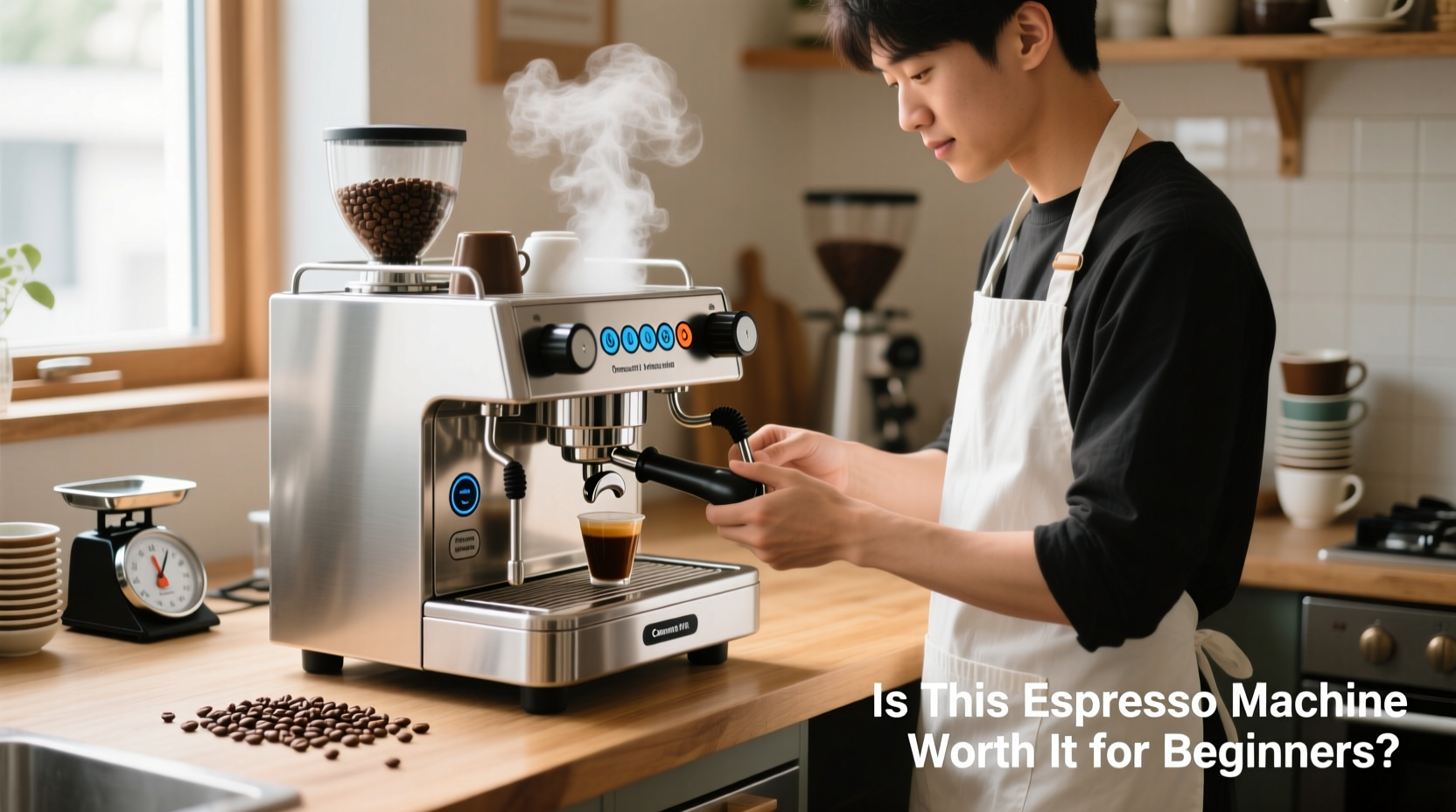
The Breville Barista Express (BES870XL) stands out for combining two essential tools—a grinder and an espresso machine—into one countertop unit. This integration eliminates the need for a separate grinder, which can save space and reduce initial cost compared to buying components individually. Key features include:
- Integrated conical burr grinder: Allows fresh grinding before each shot, enhancing flavor.
- Dose control grinding: Automatically grinds for a set duration, helping maintain consistency.
- 54mm stainless steel portafilter: Standard size used in commercial machines, compatible with aftermarket accessories.
- Adjustable grind settings: 16 settings let users fine-tune particle size based on bean type and roast.
- Steam wand with swivel joint: Enables milk texturing for lattes and cappuccinos.
- Pre-infusion function: Gently wets the coffee puck before full pressure extraction, improving evenness.
On paper, these features make the Barista Express appealing to beginners who want convenience without sacrificing quality. The promise of “freshly ground, hand-pulled espresso” is powerful. But features alone don’t determine usability—how they’re implemented does.
Why Some Beginners Struggle with the Barista Express
Despite its popularity, the Barista Express isn’t plug-and-play. It requires active participation in every step of the espresso-making process. Unlike super-automatic machines that do everything with the push of a button, this model demands technique, patience, and troubleshooting.
New users often face challenges such as:
- Inconsistent grind size: Even minor changes in dose or tamping affect extraction. Beginners may not recognize under- or over-extraction signs like sourness or bitterness.
- Tamping pressure variability: Without a calibrated tamper or consistent hand strength, puck density varies, leading to channeling and poor shots.
- Steam wand learning curve: Texturing milk effectively takes practice. Many beginners burn milk or create large bubbles instead of microfoam.
- Lack of feedback: The machine doesn’t guide you when something’s wrong. No alerts for low water, incorrect pressure, or temperature issues during extraction.
One common frustration is the \"dialing-in\" process—adjusting grind size, dose, and tamp until you achieve balanced espresso. For someone expecting immediate great results, this trial-and-error phase can be discouraging.
“Espresso isn’t a setting—it’s a skill. Machines like the Barista Express reward attention to detail. If you’re willing to learn, it’s an excellent teacher.” — Marco Silva, Home Espresso Coach and Trainer
When the Barista Express Makes Sense for Beginners
The Barista Express isn’t inherently too complex—but it is better suited for certain types of beginners. Those who succeed early tend to share specific traits:
- Curiosity about the coffee-making process
- Willingness to read manuals and watch tutorials
- Access to quality beans and willingness to experiment
- Time to dedicate to practice, not just consumption
If you're the kind of person who enjoys understanding how things work—whether it’s cooking, gadgets, or DIY projects—the Barista Express can be deeply satisfying. It offers transparency: you see the grind, feel the tamp, pull the shot, and assess the outcome. Each variable is adjustable, which means mistakes are informative, not just failures.
Moreover, because the machine includes a high-quality grinder, it removes one of the biggest barriers to good espresso: inconsistent pre-ground coffee. This alone gives beginners a leg up if they’re committed to learning.
Real Example: A Beginner’s First Month with the Barista Express
Sarah, a software analyst from Portland, bought the Barista Express after enjoying espresso drinks at local cafés. She had no prior experience but watched YouTube tutorials before her first use. Her first week was rough—shots ran too fast, tasted sour, and her milk steaming produced scalded, bubbly messes.
By week two, she started tracking variables: 18g dose, 28-second grind time, firm tamp. She adjusted grind finer and increased dose slightly. By day 18, she pulled her first balanced shot—crema-rich, sweet, with notes of chocolate and caramel. Milk texturing improved after practicing with cold water and using a thermometer.
Today, Sarah makes espresso daily and recently upgraded her tamper for better consistency. “It wasn’t easy at first,” she says, “but I learned more than I expected. Now I understand why my favorite café uses specific beans and techniques.”
Step-by-Step Guide: Getting Started with the Barista Express
Follow this timeline to build confidence and competence in your first month:
- Day 1–3: Setup and Familiarization
- Descale and prime the machine per manual.
- Practice loading the portafilter, tamping, and locking it in.
- Run blank shots (without coffee) to observe flow and pressure.
- Week 1: First Pulls and Basic Adjustments
- Use a medium-dark roast with known freshness.
- Start with factory grind setting (~#5), 18g dose, level tamp.
- Aim for a 1:2 ratio (e.g., 18g in, 36g out) in 28–32 seconds.
- Adjust grind finer if too fast, coarser if too slow.
- Week 2–3: Dialing In and Tasting
- Change only one variable at a time.
- Take notes: grind setting, dose, yield, time, taste.
- Identify flaws: sour = under-extracted; bitter = over-extracted.
- Week 4: Milk Steaming and Drink Assembly
- Fill pitcher halfway with cold milk.
- Purge steam wand, submerge tip, and introduce air briefly (1–2 sec).
- Roll milk in a circular motion until 140–155°F (use thermometer).
- Pour latte art shapes like hearts or rosettas with practice.
Barista Express vs. Simpler Alternatives: A Comparison
To determine if the Barista Express is right for you, compare it to other entry-level options:
| Machine | Grinder Included | Learning Curve | Price Range | Best For |
|---|---|---|---|---|
| Breville Barista Express | Yes | Moderate to High | $600–$700 | Beginners eager to learn the full process |
| Nespresso Vertuo | No (uses pods) | Very Low | $150–$200 | Convenience-focused users |
| De’Longhi EC155 | No | Moderate | $100–$130 | Budget-conscious learners |
| Bialetti Moka Pot | No | Low | $30–$50 | Stovetop coffee fans |
| Barista Touch Impress | Yes | Low to Moderate | $1,000+ | Those wanting automation with some control |
The Barista Express sits in the middle: more involved than pod systems, but less automated than its sibling, the Barista Touch Impress. It offers more control than budget machines but demands more effort.
Frequently Asked Questions
Can I make good espresso with the Barista Express as a total beginner?
Yes, but not immediately. Expect a learning period of 2–4 weeks to produce consistently good shots. Success depends on your willingness to learn, use fresh beans, and adjust variables methodically. Many beginners achieve excellent results within a month with regular practice.
Do I need additional accessories to get started?
The machine includes basic tools, but upgrades help. Recommended additions include a precision scale ($20–$30), a bottomless portafilter ($40), a calibrated tamper ($50+), and a milk thermometer ($10). These improve consistency and feedback during the learning process.
Is the built-in grinder good enough?
Yes, for the price point. The conical burr grinder is among the best included in any all-in-one machine. It’s consistent and reduces waste compared to blade grinders. However, serious enthusiasts often upgrade to a dedicated grinder later for finer adjustments and reduced retention.
Final Verdict: Worth It or Too Complex?
The Breville Barista Express is worth it for beginners who view espresso as a craft to learn, not just a drink to consume. It’s not the easiest machine to use, but it is one of the most rewarding for those willing to invest time and attention.
If your goal is speed, simplicity, and consistency with minimal effort, a pod machine or super-automatic model would serve you better. But if you’re curious about what goes into a great espresso—grind size, dose, tamping, milk texture—then the Barista Express provides an all-in-one platform to explore and grow.
Its complexity isn’t a flaw—it’s a feature. The machine doesn’t hide the process; it exposes it. And for many, that transparency is exactly what makes home espresso enjoyable.
Checklist: Is the Barista Express Right for You?
- ☐ I enjoy hands-on activities and learning new skills
- ☐ I have 20–30 minutes daily to practice or make coffee
- ☐ I’m willing to spend $600+ on a coffee machine
- ☐ I prefer whole beans and care about freshness
- ☐ I want to make lattes or cappuccinos at home
- ☐ I’m okay with a 1–4 week learning curve
If you checked most of these, the Barista Express is likely a strong fit. If not, consider starting with a simpler system and upgrading later.
Conclusion
The Breville Barista Express isn’t the simplest way to make espresso, but for the right beginner, it’s one of the best. It balances performance, convenience, and educational value in a way few machines do. Rather than doing the work for you, it invites you into the process—teaching you what matters in a great shot.
Don’t buy it expecting perfection on day one. Buy it because you’re ready to learn, experiment, and eventually master something that tastes as good as it feels accomplished. Whether you’re pulling your first wobbly shot or crafting silky microfoam, every mistake is a step toward better coffee.




 浙公网安备
33010002000092号
浙公网安备
33010002000092号 浙B2-20120091-4
Comments
No comments yet. Why don't you start the discussion?