
Walk into any department store or browse online, and you’ll find pullovers ranging from $25 to over $1,000. At first glance, many look nearly identical—simple crewnecks, neutral colors, clean lines. So what justifies such a dramatic price gap? Is it branding, marketing, and perceived status alone? Or are there tangible differences in quality, design, and longevity that make a designer sweater worth the investment?
The answer lies somewhere in between. While brand prestige and markup play a role, the real distinctions emerge in materials, craftsmanship, fit precision, and long-term wearability. Understanding these factors helps consumers make informed decisions—not just about what they’re paying for, but whether it aligns with their lifestyle, values, and wardrobe needs.
Fabric Quality: The Foundation of Difference
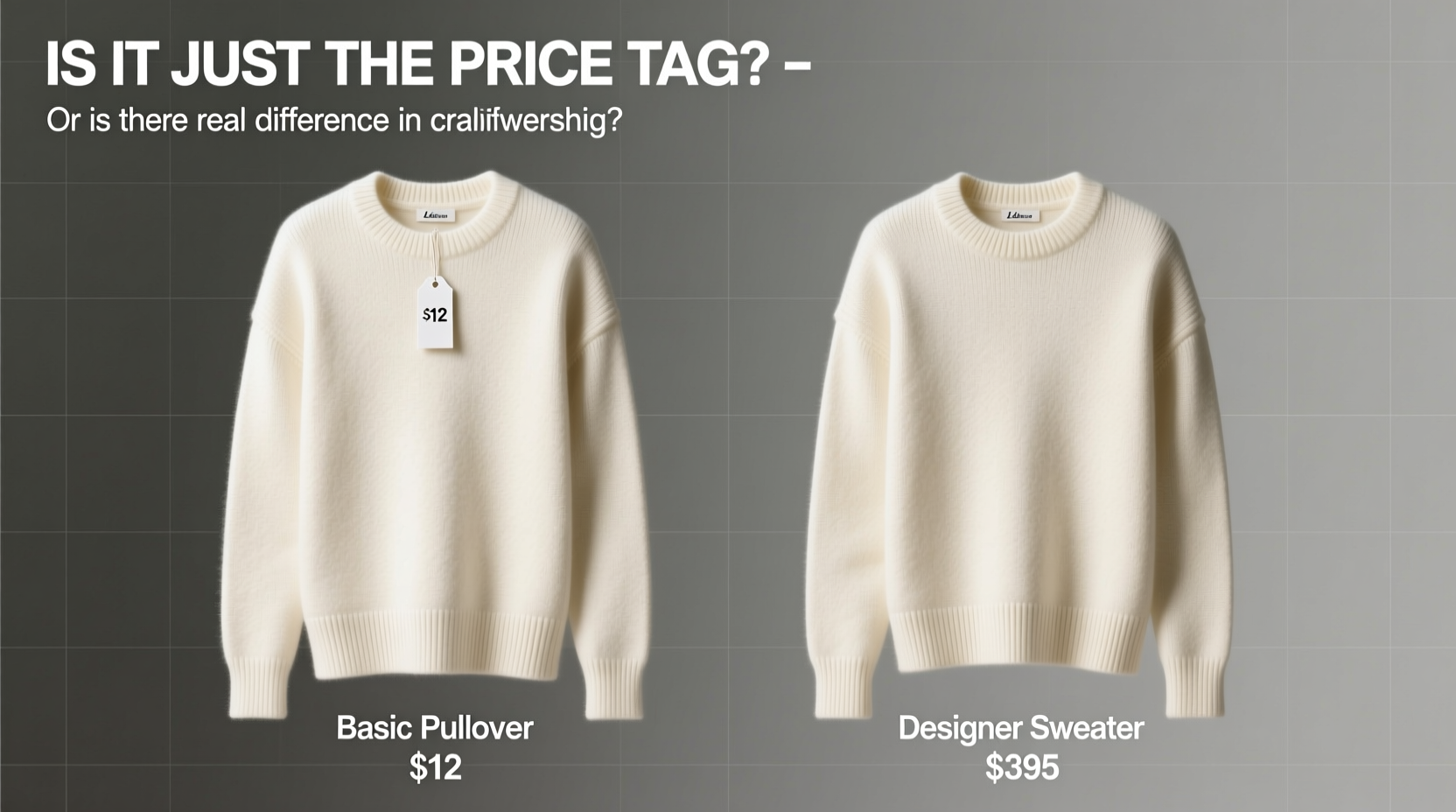
The most significant difference between a basic and a designer pullover starts with the fiber. A budget-friendly pullover often uses synthetic blends—polyester, acrylic, or lower-grade cotton—that mimic the look of premium fabrics but lack durability and breathability. These materials pill quickly, lose shape after a few washes, and may trap moisture, leading to discomfort.
In contrast, high-end sweaters typically use natural, high-tension yarns like merino wool, cashmere, alpaca, or pima cotton. These fibers offer superior softness, temperature regulation, and resilience. For example, Italian-milled merino wool used by brands like Loro Piana or Brunello Cucinelli is combed multiple times to remove coarse strands, resulting in a finer, lighter, and more luxurious feel.
Construction and Craftsmanship
How a pullover is made affects both its comfort and lifespan. Mass-produced basics are often stitched on automated machines with lockstitch seams, which can stretch or snap under stress. Seams may be bulky or uneven, and finishing details like ribbing or collar binding are frequently cut corners.
Designer garments, especially those made in Italy, Scotland, or Japan, emphasize hand-linked knitting and reinforced seams. Hand-finishing ensures smoother joins, better drape, and less pulling at stress points. Many luxury brands also use fully fashioned knitting, where sleeves and body are shaped during knitting rather than cut and sewn, reducing waste and improving fit.
Consider stitch density: higher-end sweaters often have tighter gauge knitting, meaning more stitches per inch. This results in a denser, warmer, and longer-lasting garment. A well-made cashmere sweater might have 18–20 stitches per inch, while a fast-fashion version may only have 12–14.
“Luxury isn’t just about material—it’s about how much care went into each seam. That attention translates into how the garment ages.” — Daniel Park, Menswear Textile Consultant
Fit, Design, and Intentional Detailing
Off-the-rack basics are designed for broad appeal, not precision fit. They often follow generic sizing charts that don’t account for nuanced proportions. Shoulder seams may sit too far forward, sleeves can be awkwardly long or short, and the torso might box out instead of skimming the body.
Designer brands invest heavily in fit development. They create custom blocks (patterns) tailored to their ideal customer silhouette. Adjustments like slightly tapered sides, articulated elbows, or a subtly curved hem improve movement and appearance. Even small choices—like the height of a ribbed cuff or the depth of a neckline—are tested across prototypes to achieve balance.
Moreover, designer pieces often incorporate subtle design intelligence. A minimalist sweater from Acne Studios might feature a slightly oversized fit engineered to layer perfectly over a collared shirt. Another from Arket may use a hybrid wool-cotton blend optimized for transitional weather. These aren’t accidental—they’re the result of deliberate research and iteration.
Price vs. Value: Breaking Down the Markup
Yes, designer sweaters carry substantial markups—often 60–70% above production cost. But that doesn’t mean the entire premium is pure profit. Let’s unpack typical costs for a $350 merino wool pullover versus a $35 retail alternative:
| Cost Factor | Basic Pullover ($35) | Designer Sweater ($350) |
|---|---|---|
| Material | Polyester blend (~$3) | Italian merino wool (~$45) |
| Labor | Mass production, low-wage region (~$2) | Skilled artisans, EU/Japan (~$35) |
| Construction | Automated stitching, minimal finishing | Hand-linked seams, reinforced hems |
| Design & Fit Development | Minimal R&D | Multiple prototypes, fit testing |
| Brand & Marketing | Low overhead | High investment in image, campaigns, retail |
| Markup / Profit | ~$30 | ~$270 |
The table shows that while the markup is steep, a portion funds better materials, skilled labor, and thoughtful design. It’s not all vanity—some of that cost delivers measurable quality.
Real-World Example: Two Years Later
Take Mark, a graphic designer in Portland, who bought two black crewneck pullovers at the same time: one from Uniqlo ($40), another from Everlane’s Cashmere Line ($180). Both looked similar initially—clean, soft, versatile.
After two years of regular wear (worn ~20 times per year, hand-washed), the differences became clear. The Uniqlo sweater showed pilling on the sides, stretched cuffs, and a slightly misshapen neckline. The Everlane piece retained its form, required only light de-pilling, and still felt plush. Mark noted he reached for the latter more often because it “still looks intentional, not worn out.”
In this case, the cost-per-wear came to $2 for the Uniqlo and $4.50 for the Everlane. But because the designer sweater lasted longer and performed better, Mark considered it the better value despite the higher upfront cost.
Checklist: How to Evaluate a Pullover’s True Worth
- Feel the fabric: Does it have weight and softness, or does it feel plasticky?
- Inspect the seams: Are they flat, even, and reinforced at shoulders?
- Check stitch density: More stitches per inch usually mean better durability.
- Assess the fit: Do shoulder seams align with your natural shoulder line?
- Look at care instructions: Machine-washable doesn’t always mean durable—sometimes it signals synthetic content.
- Research the origin: Sweaters made in Italy, Scotland, or Japan often reflect higher standards.
- Calculate cost-per-wear: Divide price by number of times you’ll realistically wear it.
Frequently Asked Questions
Can a basic pullover last as long as a designer one?
It’s possible with careful use and maintenance, but unlikely. Lower-grade materials degrade faster, and construction isn’t built for long-term stress. With meticulous care, a good-quality basic might last 2–3 years with moderate wear, whereas a well-made designer sweater can last 5–10 years or more.
Are “affordable luxury” brands worth it?
Brands like COS, Arket, or Quince offer a middle ground—better materials and design than fast fashion, without the six-figure marketing budgets. They often source directly from premium mills and reduce markup through direct-to-consumer models. For many, these represent the sweet spot between value and quality.
Does washing method really make a difference?
Absolutely. Hand-washing in cool water with a wool-specific detergent preserves fiber integrity. Tumble drying or harsh detergents strip natural oils and cause shrinkage or pilling. Even a designer sweater will deteriorate quickly if mistreated.
Conclusion: Beyond the Label
A basic pullover and a designer sweater may serve the same functional purpose—a warm, casual layer—but they are not equivalent. The differences in material integrity, construction technique, fit refinement, and long-term performance are real and measurable. The price tag reflects more than just branding; it often captures the sum of better inputs, smarter design, and greater care in production.
That said, value is personal. If you need a throwaway layer for occasional use, a $30 option makes sense. But if you’re building a timeless wardrobe, prioritize garments that age gracefully. Look beyond the label. Touch the fabric. Study the seams. Ask how it will look and feel a year from now.




 浙公网安备
33010002000092号
浙公网安备
33010002000092号 浙B2-20120091-4
Comments
No comments yet. Why don't you start the discussion?