
In recent years, bidet attachments have transitioned from niche bathroom fixtures in parts of Asia and Europe to increasingly common additions in North American homes. Once considered a luxury or novelty, these devices are now being recognized for their practical advantages in personal hygiene, environmental sustainability, and long-term cost efficiency. But is a bidet attachment truly worth installing on your existing toilet? The answer depends on your priorities—whether it’s improved cleanliness, reduced toilet paper use, or simply modernizing your bathroom experience.
Beyond comfort and convenience, bidet attachments offer tangible health and ecological benefits. They require minimal installation, typically take less than 30 minutes to set up, and are compatible with most standard toilets. As awareness grows about the environmental toll of single-use paper products and the limitations of dry wiping, more people are turning to bidets as a sensible upgrade. This article explores the full scope of what bidet attachments offer, backed by real-world insights, expert opinions, and practical guidance to help you decide if this small change could make a meaningful difference in your daily life.
Hygiene Benefits: A Cleaner Alternative to Toilet Paper
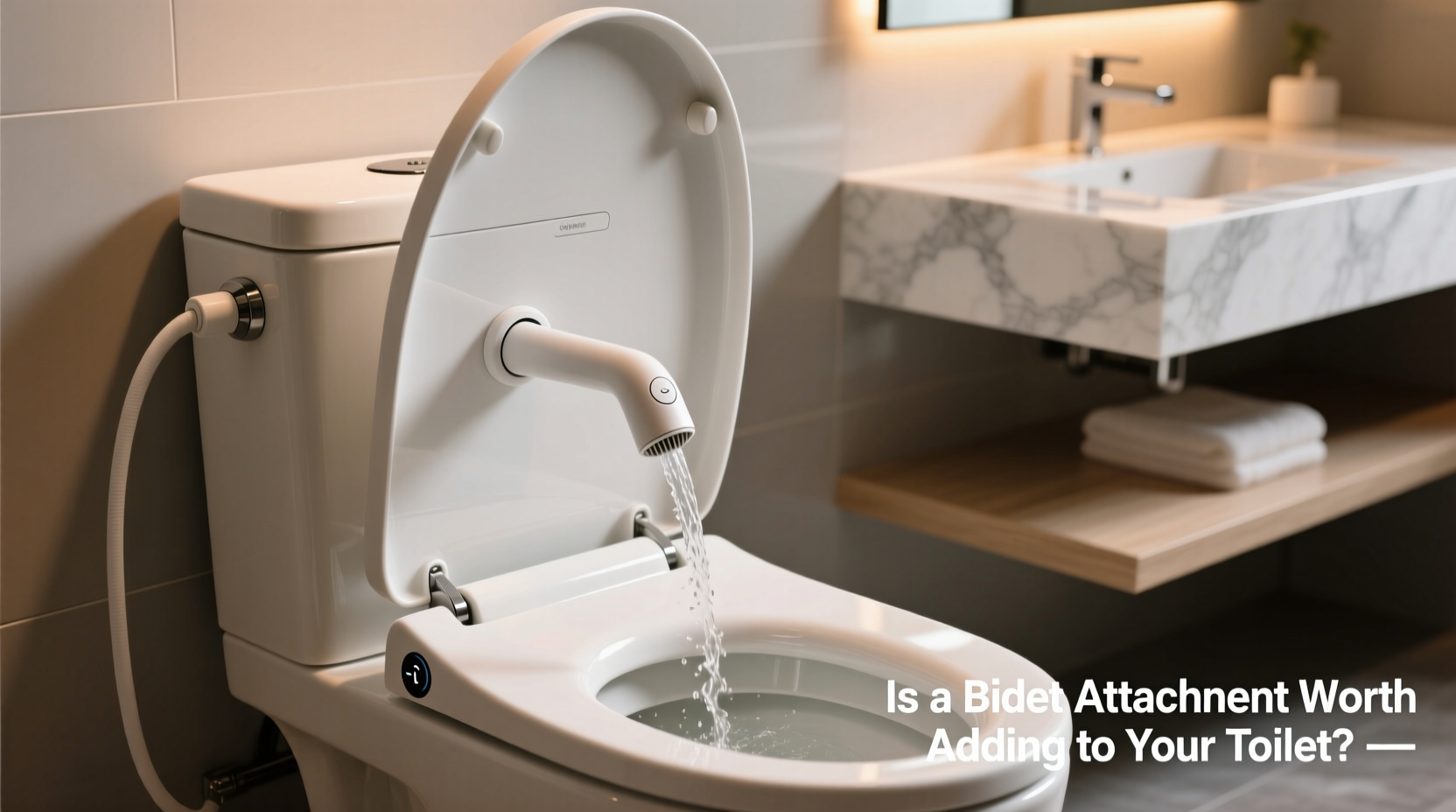
One of the most compelling reasons to consider a bidet attachment is superior hygiene. Traditional wiping with toilet paper often leaves behind residue, especially after bowel movements. In contrast, a stream of water provides a more thorough cleanse, reducing the risk of irritation, bacterial buildup, and conditions like hemorrhoids or urinary tract infections (UTIs).
Medical professionals have long advocated for water-based cleansing. Dr. Sarah Thompson, a board-certified gastroenterologist, explains:
“Water is far more effective than dry paper at removing waste without causing micro-tears in sensitive tissue. For patients with chronic digestive issues or post-surgical recovery, I frequently recommend bidet use to support healing and reduce discomfort.” — Dr. Sarah Thompson, MD, Gastroenterology Specialist
The precision of a targeted water spray allows users to control pressure and angle, making it easier to clean hard-to-reach areas. Many models also include adjustable nozzles and self-cleaning features, ensuring both effectiveness and sanitation.
Environmental and Economic Impact
The average American uses approximately 141 rolls of toilet paper per year. Multiply that across households, and the environmental footprint becomes staggering: deforestation, high water consumption during manufacturing, and significant carbon emissions from production and transportation.
A bidet attachment drastically reduces reliance on toilet paper. Most users report cutting their usage by 75% or more—some eliminate it entirely except for drying. Over time, this translates into fewer trees cut down, less plastic packaging, and lower household waste.
From an economic standpoint, the initial investment in a bidet attachment—ranging from $30 to $150—pays for itself within months through reduced toilet paper purchases. Consider this breakdown:
| Expense | Annual Cost (Without Bidet) | Annual Cost (With Bidet) |
|---|---|---|
| Toilet Paper (141 rolls @ $1.20 each) | $169.20 | $42.30 (25% usage) |
| Electricity/Water (bidet operation) | $0 | $8.00 (estimated) |
| Bidet Attachment (amortized over 5 years) | $0 | $20.00 ($100 unit) |
| Total Annual Cost | $169.20 | $70.30 |
Even accounting for the purchase price and minimal utility increase, the savings exceed $90 per year. Within two years, the device has effectively paid for itself.
Installation and Compatibility: What You Need to Know
Contrary to popular belief, installing a bidet attachment does not require plumbing expertise or permanent modifications. Most models connect directly to the existing toilet’s water supply line and operate manually via a side knob or lever. No electricity is needed for basic non-electric versions.
Here’s a step-by-step overview of typical installation:
- Turn off the water supply valve located near the base of the toilet.
- Disconnect the toilet tank’s water line using an adjustable wrench.
- Screw the bidet T-valve onto the outlet where the water line was attached.
- Reconnect the water line to the top port of the T-valve.
- Attach the bidet’s hose to the side port of the T-valve.
- Mount the bidet unit to the side of the toilet seat using included brackets.
- Turn the water back on and test for leaks.
- Adjust nozzle position and spray settings as needed.
The entire process usually takes under 20 minutes. Manufacturers provide detailed instructions, and many units come with all necessary hardware. If you're renting, most bidet attachments are removable and leave no lasting damage—ideal for temporary upgrades.
User Experience and Real-Life Adaptation
Maria Gonzalez, a teacher from Portland, Oregon, installed a bidet attachment in her home after experiencing recurring irritation from sensitive skin. Skeptical at first, she now calls it “the best $45 I’ve ever spent on my bathroom.”
“At first, I wasn’t sure how I’d get used to it. But after one week, I couldn’t imagine going back. It’s gentler, cleaner, and my daughter loves it too—she says it feels like a ‘bum shower.’ We’ve cut our toilet paper use in half, and honestly, I feel healthier.”
Maria’s story reflects a growing trend: once people try a bidet, they rarely revert to paper-only cleaning. The learning curve is minimal, and satisfaction rates remain high across age groups and lifestyles. Parents find them helpful for teaching children proper hygiene, while seniors appreciate the ease of use for mobility-limited individuals.
Some concerns arise around water temperature and drying methods. While electric models offer heated water and built-in dryers, non-electric versions rely on ambient water temperature and require a small towel or leftover toilet paper for drying. However, most users adapt quickly, viewing the minor extra step as a fair trade for enhanced cleanliness.
Choosing the Right Bidet Attachment: A Buyer’s Checklist
Not all bidet attachments are created equal. Features vary widely between budget and premium models. To ensure you select the right one for your needs, consider the following checklist before purchasing:
- ✅ Compatibility: Confirm it fits your toilet shape (round or elongated) and connects to standard plumbing.
- ✅ Water Pressure Control: Look for adjustable knobs or dials to customize spray intensity.
- ✅ Nozzle Adjustment: Ensure the spray direction can be fine-tuned for optimal positioning.
- ✅ Self-Cleaning Nozzle: Prevents bacterial buildup and maintains hygiene between uses.
- ✅ Easy Installation: Prefer models that don’t require tools or professional help.
- ✅ Durable Materials: Stainless steel or medical-grade plastic resist corrosion and wear.
- ✅ Price Range: Balance features with budget—many reliable options exist under $60.
- ✅ Warranty & Support: Choose brands offering at least a 1-year warranty and responsive customer service.
For renters or those testing the waters, start with a manual non-electric model. If you enjoy the experience, you can later upgrade to a smart bidet seat with heated water, air drying, remote controls, and deodorizers.
Frequently Asked Questions
Do bidet attachments use a lot of water?
No. A typical bidet uses only about 1/8 to 1/4 gallon of water per use—far less than the 37 gallons of water required to produce a single roll of toilet paper. Overall, switching to a bidet reduces net water consumption when factoring in manufacturing.
Are bidets hygienic for shared bathrooms?
Yes, especially models with self-cleaning nozzles and antimicrobial surfaces. Each user can adjust the spray individually, and there’s no physical contact with the unit during use. Families often report fewer cross-contamination issues compared to shared toilet paper dispensers.
Can a bidet help with medical conditions?
Absolutely. Individuals with hemorrhoids, irritable bowel syndrome (IBS), postpartum recovery, or limited mobility often benefit significantly from bidet use. The gentle rinse reduces friction, minimizes pain, and supports better wound care. Some healthcare providers even prescribe bidets as part of treatment plans.
Final Verdict: Is It Worth It?
The evidence overwhelmingly supports the value of adding a bidet attachment to your toilet. It improves personal hygiene, reduces environmental impact, saves money over time, and enhances bathroom comfort—all without requiring major renovations or ongoing maintenance.
While cultural habits may make the idea seem unusual at first, millions of users worldwide have already embraced bidets as a normal, sensible part of daily life. As sustainability and wellness become central to modern living, upgrading to a bidet isn’t just practical—it’s forward-thinking.
If you’ve been curious about trying one, the best approach is simple: pick an affordable, well-reviewed model, install it yourself in under half an hour, and give it a genuine two-week trial. Chances are, you won’t look back.




 浙公网安备
33010002000092号
浙公网安备
33010002000092号 浙B2-20120091-4
Comments
No comments yet. Why don't you start the discussion?