
In recent years, the humble bathroom has become a battleground of tradition versus innovation. For decades, toilet paper reigned supreme as the standard post-toilet hygiene tool in Western cultures. But now, bidet attachments — once considered exotic or unnecessary — are quietly gaining ground in homes across North America and Europe. The question remains: is installing a bidet attachment genuinely beneficial, or is it just a trendy splash zone upgrade with minimal real-world impact?
The answer isn’t as simple as yes or no. It depends on your priorities—hygiene, sustainability, health, comfort, or budget. To cut through the noise, let’s examine what bidet attachments actually do, who benefits most, and whether the investment pays off over time.
What Is a Bidet Attachment and How Does It Work?
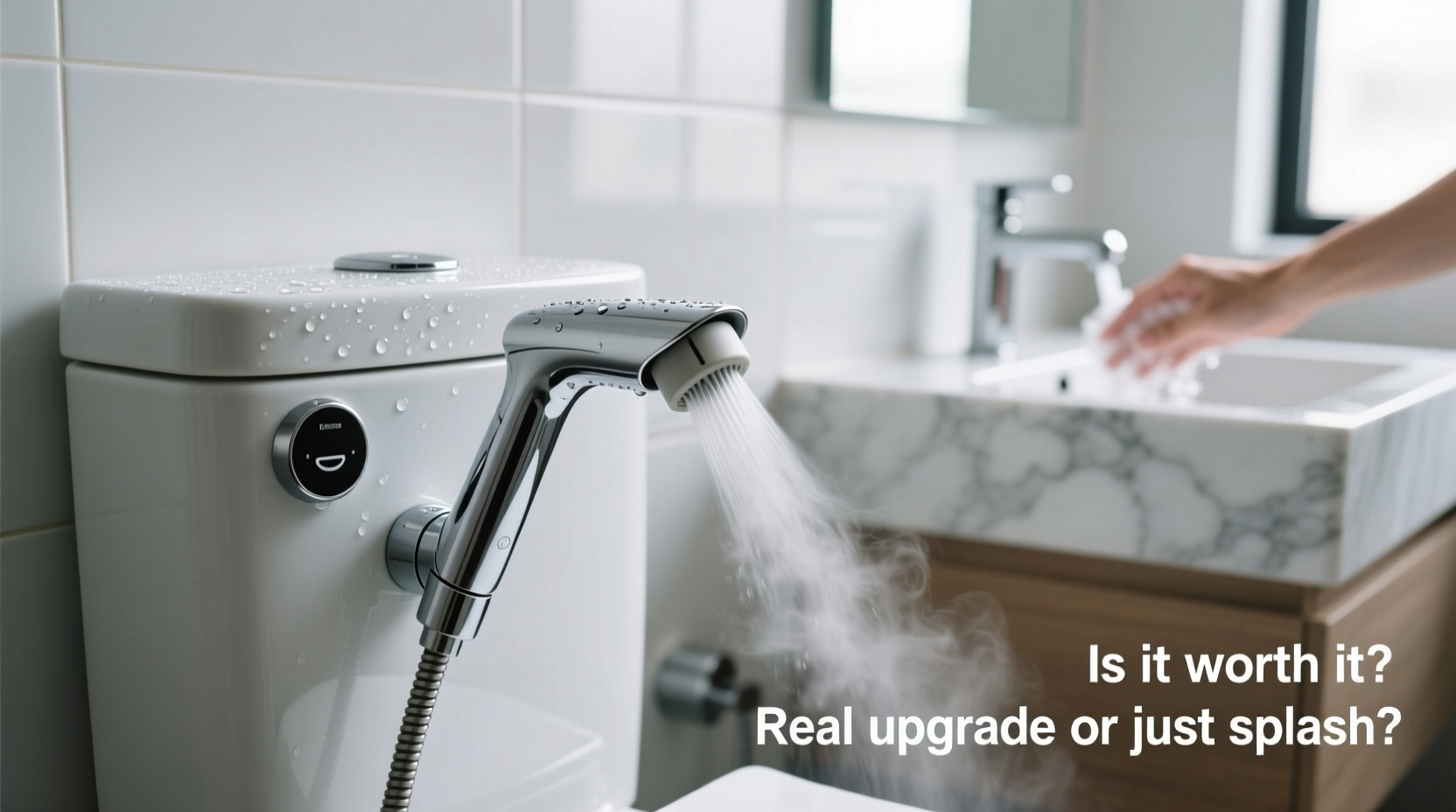
A bidet attachment is a device that connects directly to your existing toilet. It typically mounts under the toilet seat and uses a small nozzle to spray a controlled stream of water for cleaning after using the restroom. Unlike standalone bidets (which require separate plumbing), these add-ons integrate seamlessly into your current setup without major renovations.
Most models operate manually via a side knob or lever, adjusting water pressure and spray direction. Higher-end versions include features like heated seats, warm water supply, oscillating sprays, self-cleaning nozzles, and even remote controls. However, basic cold-water models start as low as $30 and can be installed in under 30 minutes with no professional help required.
The mechanism is straightforward: when activated, clean water flows from your home’s main supply through the bidet’s hose and out a retractable nozzle. After use, the nozzle retracts and may self-clean depending on the model. There’s no electricity needed for entry-level units—just water pressure and a T-valve splitter that diverts flow from the toilet fill line.
Hygiene: A Clear Step Beyond Toilet Paper
Toilet paper doesn’t clean—it smears. This fundamental limitation becomes especially apparent during illness, menstruation, or digestive discomfort. Residual waste left behind can lead to irritation, bacterial buildup, and unpleasant odors. In contrast, a water-based rinse physically removes contaminants rather than redistributing them.
Dermatologists and gastroenterologists increasingly recommend bidets for individuals prone to anal fissures, hemorrhoids, or sensitive skin conditions like eczema. Dr. Lena Patel, a board-certified gastroenterologist based in Portland, explains:
“Patients with chronic constipation or inflammatory bowel disease often experience significant relief when switching to a bidet. Gentle rinsing reduces friction and trauma caused by aggressive wiping, which can exacerbate inflammation.” — Dr. Lena Patel, MD
For people with limited mobility—such as seniors or those recovering from surgery—a bidet offers greater independence. Instead of relying on others for assistance or struggling to reach difficult areas, users gain control over their personal hygiene with minimal effort.
Cost vs. Long-Term Savings: Breaking Down the Numbers
At first glance, spending $40–$150 on a bidet attachment might seem frivolous. But when viewed through the lens of long-term household expenses, the math begins to shift.
The average American uses about 141 rolls of toilet paper per year. At roughly $0.75 per roll, that’s around $106 annually. Over five years, one person spends nearly $530—money that could instead go toward a high-quality electric bidet with advanced features.
Even if you continue using some toilet paper post-rinse (most people use 1–2 sheets instead of full wiping), the reduction in consumption can cut your TP bill by 75% or more. Households with multiple members see even greater cumulative savings.
| Item | Initial Cost | Annual Ongoing Cost | 5-Year Total |
|---|---|---|---|
| Bidet Attachment (basic) | $45 | $0 | $45 |
| Toilet Paper (1 person) | $0 | $106 | $530 |
| Toilet Paper + Reduced Use with Bidet | $45 | $25 | $170 |
Additionally, fewer clogged pipes result from reduced toilet paper usage. According to plumbing experts at Roto-Rooter, excessive TP buildup accounts for nearly 40% of residential drain issues. By minimizing paper flushed down the toilet, bidet users reduce both maintenance costs and environmental strain on municipal sewage systems.
Environmental Impact: Less Waste, Lower Footprint
Every year, the U.S. consumes approximately 36 billion rolls of toilet paper—equivalent to wiping with 15 million trees. Manufacturing this volume requires vast amounts of water, energy, and chemicals, particularly chlorine bleach used to whiten pulp. Once discarded, much of it ends up in landfills or wastewater treatment plants where decomposition releases methane.
Switching to a bidet drastically reduces reliance on single-use paper products. While water is used during each rinse, the quantity is surprisingly small—an average bidet cycle uses less than half a gallon. Compare that to the estimated 37 gallons of water required to produce a single roll of toilet paper, and the conservation argument strengthens significantly.
- A family of four switching to bidets could save over 150 trees in a lifetime.
- Reduces packaging waste from plastic-wrapped multi-packs.
- Lowers carbon emissions tied to manufacturing and transportation.
In countries like Japan and South Korea, where bidet adoption exceeds 80%, public restrooms often provide only hand dryers and bidet toilets—no paper towels or TP dispensers. This cultural shift reflects not just technological advancement but a broader commitment to sustainable living.
Real-World Experience: A Case Study from Austin, TX
When Sarah Kim moved into her new condo in downtown Austin last year, she was skeptical about adding a bidet. “I saw ads online and thought it was just another gimmick,” she said. “But after dealing with recurring yeast infections and irritation, my doctor suggested trying one.”
Sarah purchased a mid-range $75 bidet with adjustable pressure and a self-cleaning nozzle. Installation took 20 minutes using the included wrench and instructions. Within a week, she noticed less itching and discomfort. More surprisingly, her monthly toilet paper order dropped from two bulk packs to one—and sometimes none at all.
“It feels luxurious, but it’s also practical,” Sarah shared. “My partner was grossed out at first, but now he won’t use any other bathroom. Even our guests comment on how clean they feel afterward.”
After ten months, Sarah estimates she’s saved $80 on toilet paper and avoided three potential plumbing calls thanks to reduced clogs. “It paid for itself quickly,” she added. “Now I wonder why every apartment doesn’t come with one.”
Common Misconceptions About Bidets
Despite growing popularity, several myths persist about bidet attachments:
- “It’s unhygienic because the nozzle touches ‘dirty’ areas.” Most modern bidets feature antimicrobial materials and automatic nozzle cleaning before and after use. No contact occurs between the user and the nozzle tip.
- “You’ll get soaked or make a mess.” Spray intensity is fully adjustable. Users control duration and angle, preventing overspray. Proper positioning eliminates splashing.
- “Only people with health problems need them.” While medical benefits exist, many adopt bidets simply for improved cleanliness and comfort—similar to upgrading from a manual toothbrush to an electric one.
- “They’re hard to install.” Basic models connect in minutes using hand tools. No plumber needed. If you can replace a showerhead, you can install a bidet.
Step-by-Step Guide to Installing a Basic Bidet Attachment
Installing a bidet attachment is a DIY-friendly project. Follow these steps for a successful setup:
- Turn off the water supply to your toilet by closing the shut-off valve located near the base.
- Drain remaining water by flushing the toilet and holding the handle down until the tank is empty.
- Remove the existing supply line connecting the wall pipe to the toilet tank.
- Attach the T-valve splitter to the threaded outlet on the wall pipe. This allows water to flow to both the toilet and the bidet.
- Reconnect the toilet supply line to the bottom port of the T-valve.
- Connect the bidet’s hose to the side port of the T-valve using the provided fittings.
- Mount the bidet unit under the toilet seat according to manufacturer instructions—usually secured with screws or brackets.
- Open the water valve slowly and check for leaks at all connections.
- Test the spray function and adjust nozzle position and pressure to your preference.
- Wipe down components and ensure everything is secure before regular use.
Total time: under 30 minutes. Cost: $0 in labor. Result: a permanent upgrade to daily hygiene.
Checklist: Is a Bidet Right for You?
Before purchasing, consider the following factors:
- ✅ Do you frequently experience irritation, itching, or discomfort after wiping?
- ✅ Are you interested in reducing household waste and environmental impact?
- ✅ Do you want to lower long-term spending on toilet paper?
- ✅ Do you or a family member have mobility challenges or chronic health conditions?
- ✅ Are you open to adopting a new bathroom routine for better cleanliness?
- ❌ Are you renting and prohibited from modifying plumbing fixtures?
- ❌ Do you live in an area with unreliable water pressure or poor water quality?
If most of your answers are “yes” to the positives and “no” to the limitations, a bidet attachment is likely a worthwhile investment.
Frequently Asked Questions
Can I install a bidet attachment on any toilet?
Most standard two-piece and one-piece toilets accommodate bidet attachments. Elongated and round bowls work equally well. However, smart toilets with built-in washlets or non-standard mounting systems may not support third-party add-ons. Always verify compatibility before ordering.
Do bidet attachments use hot water?
Basic cold-water models draw from your existing supply and do not heat the water. If warm water is important, look for models connected to a hot-cold mixing valve or consider electric bidets with built-in heaters. These typically require plug-in power and professional installation.
Are bidets sanitary for shared bathrooms?
Yes. Since the spray is targeted and the nozzle cleans itself (on higher-end models), cross-contamination risk is extremely low. Each user controls their own spray settings, and no physical contact occurs with the device. Families report easier hygiene management, especially for children learning proper wiping techniques.
Conclusion: Upgrade or Gimmick?
The idea that bidet attachments are merely a “fancy splash zone upgrade” overlooks their tangible benefits in hygiene, economy, and sustainability. While they may seem novel in Western contexts, millions worldwide rely on them as a standard part of daily life—for good reason.
You don’t need a medical condition or eco-warrior mindset to benefit. Sometimes, progress comes not in dramatic leaps but in quiet improvements: feeling cleaner, wasting less, saving money, and enhancing comfort—all from a modest device under your toilet seat.
Whether you're motivated by health, environmental responsibility, or simple curiosity, trying a bidet attachment involves minimal risk and potentially lasting reward. The next time you wipe with dry paper and wonder if there’s a better way—you now know there is.




 浙公网安备
33010002000092号
浙公网安备
33010002000092号 浙B2-20120091-4
Comments
No comments yet. Why don't you start the discussion?