
In recent years, traditional evergreen Christmas trees have faced an unexpected challenger: the black artificial Christmas tree. Once considered a fringe trend reserved for goth interiors or avant-garde decorators, black trees are now popping up in mainstream homes, boutique hotels, and luxury retail displays. But while some hail them as a daring twist on holiday decor, others question whether they cross the line from stylish to sacrilegious. Is a black artificial Christmas tree a bold statement of individuality—or a holiday mistake that alienates guests and clashes with seasonal cheer?
The answer isn’t straightforward. Like any strong design choice, a black tree can succeed or fail depending on context, execution, and personal taste. To understand where this polarizing decoration stands, it’s essential to examine its aesthetic impact, cultural associations, practical considerations, and how it fits within broader interior trends.
The Rise of the Black Christmas Tree
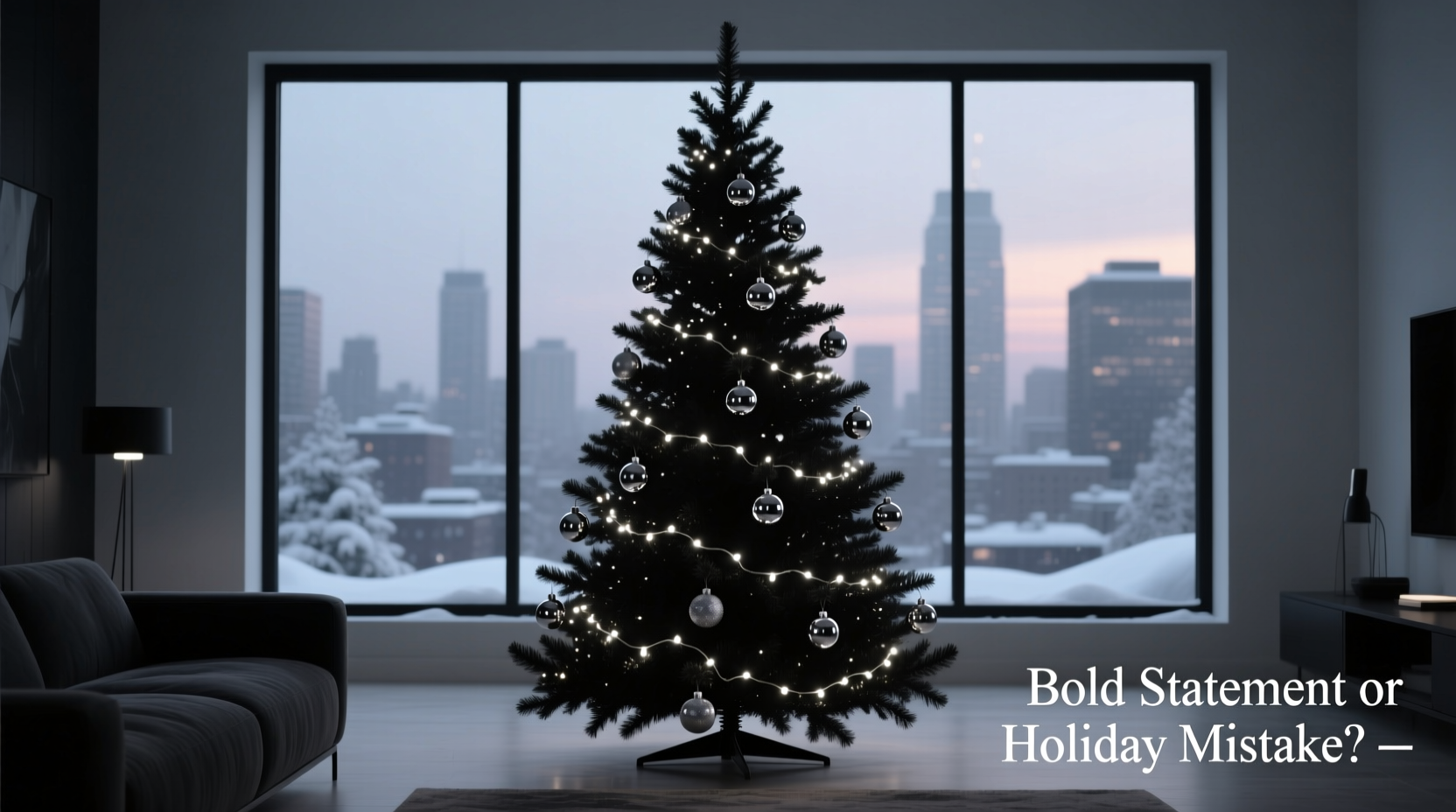
Black Christmas trees first gained visibility in the early 2010s, often associated with alternative subcultures and minimalist design movements. Designers began experimenting with monochromatic holiday themes, using black trees as dramatic backdrops for metallic ornaments, white lights, and mirrored baubles. What started as a niche concept quickly caught on among urban dwellers, modernists, and those seeking to break free from conventional red-and-green schemes.
Today, major retailers like Target, Home Depot, and Wayfair offer black artificial trees in multiple sizes and silhouettes. Some models even feature dual-color options—green on one side, black on the other—allowing homeowners to switch between traditional and contemporary looks. This commercial acceptance signals that black trees are no longer just a rebellious gesture but a legitimate option in the holiday decorating toolkit.
“Color is emotional, especially during holidays. A black tree isn’t inherently wrong—it’s a declaration of intent. It says, ‘I’m not following tradition blindly.’ When done well, it’s powerful.” — Lena Park, Interior Stylist & Author of *Modern Holiday Design*
Aesthetic Impact: Drama vs. Dissonance
The primary appeal of a black artificial tree lies in its visual contrast. Against light walls or neutral decor, a deep charcoal or matte black tree creates instant focal drama. Unlike green trees, which blend into seasonal expectations, black trees stand out—sometimes defiantly so.
This contrast allows for creative ornamentation. Gold, silver, copper, and crystal decorations reflect light strikingly against dark foliage, creating a luxurious, almost theatrical effect. White snowflake ornaments, frosted pinecones, or clear glass icicles can evoke a winter night sky, turning the tree into a celestial centerpiece.
However, this same intensity can become overwhelming. In homes with warm-toned wood furniture, floral wallpaper, or cozy textiles, a black tree may feel jarring rather than harmonious. It risks appearing not as sophisticated but as incongruous—a design element that competes with, rather than complements, its surroundings.
Psychological and Cultural Considerations
Color psychology plays a subtle but significant role in holiday perception. Green has long symbolized life, renewal, and nature—even in winter. Red evokes warmth, passion, and celebration. Black, by contrast, carries complex associations: elegance and power, yes—but also mourning, formality, and absence.
In many Western cultures, black is worn at funerals and linked to solemnity. Placing a black tree at the center of festive gatherings can unintentionally signal melancholy, especially to older relatives or guests from more traditional backgrounds. For some, it may feel like a rejection of holiday joy rather than a reimagining of it.
Yet these meanings are not fixed. In fashion, black is perennially chic. In architecture, black accents denote modernity. Among younger generations, particularly Gen Z and millennials, black holiday decor is often embraced as part of “dark academia,” “witchcore,” or “moody maximalism” aesthetics—styles that celebrate mystery, introspection, and unconventional beauty.
The key is intentionality. A black tree shouldn’t be chosen simply because it’s edgy. It should align with the homeowner’s identity and the emotional tone they wish to create.
Practical Guide: How to Make a Black Tree Work
Choosing a black artificial tree isn’t the end of the decision—it’s the beginning. The real challenge lies in styling it effectively. Done poorly, it looks like a Halloween holdover. Done well, it becomes a conversation piece that enhances the season.
Follow this step-by-step guide to ensure your black tree elevates, rather than undermines, your holiday atmosphere.
- Assess your space. Is your living room modern, minimalist, or industrial? Does it feature high ceilings, concrete floors, or metallic finishes? These environments support bold choices. Cozy cottages or traditional homes may require more careful integration.
- Select lighting wisely. Warm white LEDs create a softer glow, balancing the coolness of black. Avoid multicolored lights, which can look garish. For maximum impact, use dimmable string lights to adjust ambiance throughout the day.
- Choose ornaments with reflective surfaces. Mirrored balls, mercury glass, chrome stars, and crystal drops catch and scatter light, preventing the tree from looking flat or absorbing too much brightness.
- Incorporate texture. Add dimension with velvet ribbons, faux fur garlands, dried florals, or wooden star shapes. These soften the tree’s severity and introduce organic warmth.
- Balance with surrounding decor. Use white candles, cream throws, or silver trays on nearby tables to create continuity. Avoid letting the tree dominate visually—anchor it within a cohesive scene.
Comparison: Black Tree vs. Traditional Green Tree
| Feature | Black Artificial Tree | Traditional Green Tree |
|---|---|---|
| Visual Impact | High contrast, dramatic, modern | Familiar, comforting, seasonal |
| Ornament Compatibility | Best with metallics, whites, crystals | Versatile—works with all colors |
| Light Reflection | Low; requires bright, reflective decor | Moderate; naturally reflects ambient light |
| Cultural Perception | Polarizing; may unsettle traditional guests | Universally accepted |
| Reusability Beyond Holidays | Can double as event backdrop or year-round accent | Limited to seasonal use |
Real Example: A Brooklyn Loft Transformation
Jamal and Priya, a couple in their mid-30s, live in a converted warehouse loft in Brooklyn. Exposed brick, steel beams, and large windows define their space. Each year, they aim to merge holiday spirit with their love of contemporary art and design.
Last December, they installed a 7-foot black artificial tree in their open-plan living area. Instead of tinsel or candy canes, they adorned it with handmade ceramic orbs in ivory and slate, vintage brass candleholders wired onto branches, and a single strand of warm fairy lights. At the base, they placed sculptural gift boxes wrapped in black linen with raw silk ribbons.
Guests described the tree as “unexpected but beautiful,” “like a gallery installation,” and “cozy in a moody way.” One elderly aunt admitted she was skeptical at first but came around after seeing how thoughtfully every detail was curated. For Jamal and Priya, the tree wasn’t a rejection of tradition—it was a reinterpretation that honored their aesthetic values while still feeling celebratory.
Checklist: Is a Black Tree Right for You?
Before purchasing, ask yourself the following questions. Answer “yes” to at least four to ensure the tree will integrate successfully into your home and lifestyle.
- Do I have a modern, minimalist, or industrial interior style?
- Am I comfortable with making a strong visual statement?
- Do I plan to use primarily metallic, white, or reflective ornaments?
- Will my guests likely appreciate or at least tolerate unconventional decor?
- Do I want a tree that doubles as a design object beyond the holidays?
- Am I willing to invest time in thoughtful styling rather than quick decoration?
Common Mistakes to Avoid
Even with good intentions, a black tree can go wrong. Here are frequent pitfalls and how to sidestep them.
- Overloading with color. Adding red, green, or rainbow ornaments undermines the tree’s cohesion. Stick to a tight palette—ideally two or three accent colors max.
- Using cheap materials. Low-quality black trees can look plasticky or uneven. Invest in one with realistic branch density and a sturdy base.
- Neglecting lighting. Poor illumination makes the tree vanish into the background. Use layered lighting: tree lights, floor lamps, and overheads.
- Ignoring scale. A massive black tree in a small apartment can overwhelm. Match size to room volume.
- Forgetting scent. Unlike real trees, artificial ones lack fragrance. Compensate with pine-scented candles or diffusers nearby to maintain seasonal aroma.
Frequently Asked Questions
Can a black Christmas tree be family-friendly?
Yes, if styled appropriately. Families can make black trees welcoming by incorporating child-made ornaments in silver or white, adding soft plush animals nearby, or using the theme to spark creativity (“Let’s make our tree look like outer space!”). The key is ensuring children feel included in the festive narrative, not excluded by its moodiness.
Where can I store a black tree after the holidays?
Treat it like any artificial tree—store in a climate-controlled, dry space using a durable tree bag to prevent dust and crushing. Because black trees are less common, you may find resale value if stored well and kept in good condition.
Is a black tree appropriate for rental properties or Airbnb?
Generally, no. While unique, a black tree may deter guests expecting a cozy, traditional holiday experience. For short-term rentals, opt for neutral or classic decor to maximize broad appeal. Reserve bold statements for your personal residence.
Conclusion: A Statement Worth Making—If Done Right
A black artificial Christmas tree is neither an automatic triumph nor a categorical mistake. It is a design decision that demands awareness, confidence, and care. When aligned with a home’s aesthetic, thoughtfully decorated, and presented with intention, it can be one of the most memorable and impactful holiday choices a person makes.
But when chosen impulsively, poorly lit, or clashing with its environment, it risks becoming a source of discomfort or confusion. The difference lies not in the color of the tree, but in the thought behind it.
Holidays are about meaning—whether through tradition, reinvention, or personal expression. A black tree can honor that meaning as deeply as any spruce or fir, provided it reflects something true about the people who gather around it.




 浙公网安备
33010002000092号
浙公网安备
33010002000092号 浙B2-20120091-4
Comments
No comments yet. Why don't you start the discussion?