
For many adult children, staying emotionally connected with aging parents who live far away can be challenging. One increasingly popular solution is the digital photo frame—a device that displays rotating photos without requiring any technical effort from the viewer. But is it truly worth gifting to elderly parents? To answer this, we’ve compiled real user experiences, practical insights, and expert observations to help you decide.
Digital photo frames have evolved from niche gadgets into mainstream tools for family connection. Unlike smartphones or tablets, they require no app navigation, password entry, or software updates. Photos are uploaded remotely via apps or cloud services, then displayed automatically. For seniors who may struggle with modern technology, this simplicity is often the key to success.
Why Digital Photo Frames Resonate with Older Adults
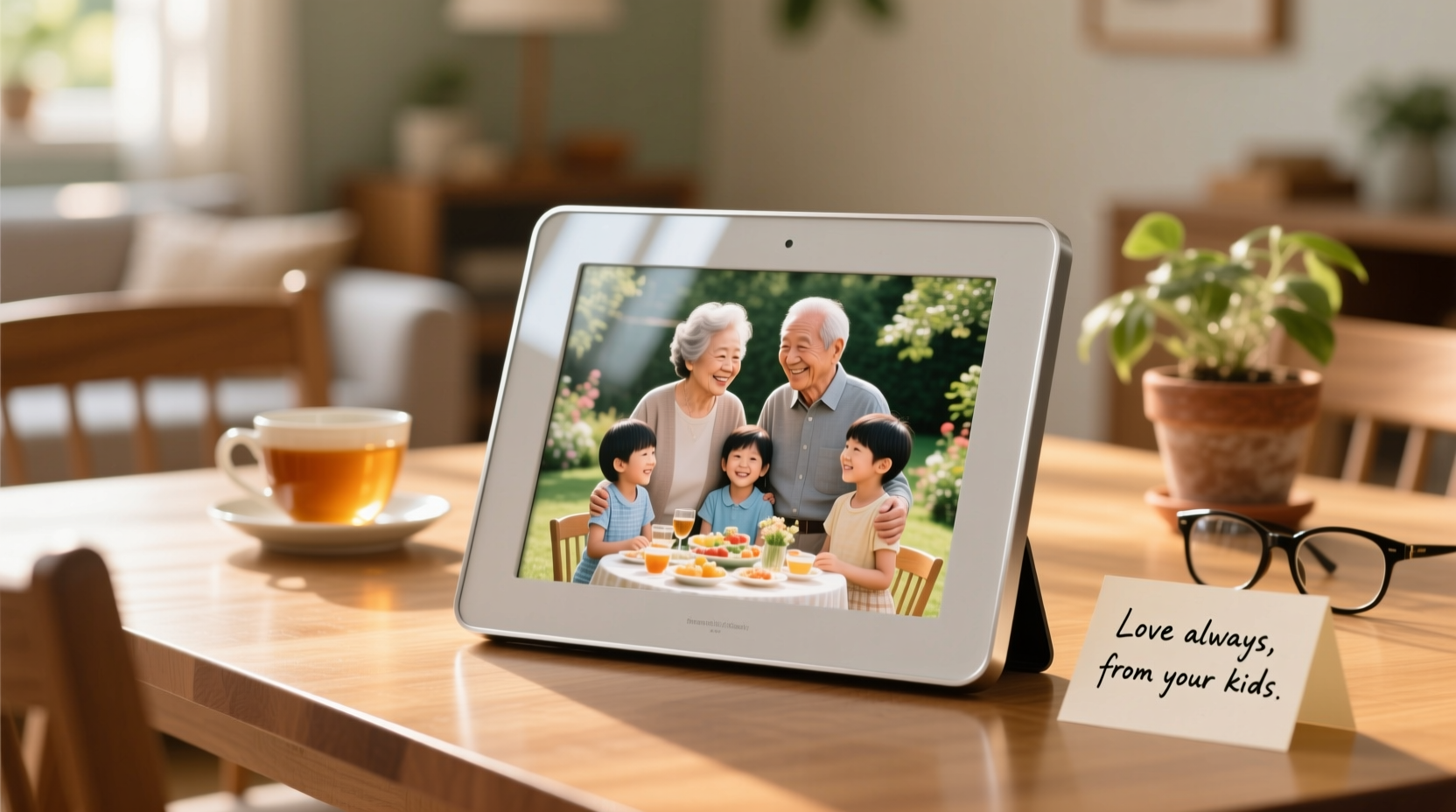
Loneliness and social isolation are well-documented issues among older adults, particularly those living alone or in assisted care. According to the National Institute on Aging, regular visual reminders of loved ones can improve mood and cognitive engagement in seniors. Digital photo frames tap directly into this emotional need by providing a continuous stream of familiar faces and shared memories.
What sets these devices apart is their passive nature. Once set up, they operate independently—no tapping, swiping, or logging in. A parent can simply glance at the screen and see a recent photo of their grandchild’s birthday, a family vacation, or even a short video message. This effortless access makes them uniquely suited for older users who may find traditional tech intimidating.
“Digital photo frames bridge the emotional gap when physical visits aren’t possible. They offer warmth through presence—even if only visual.” — Dr. Linda Reyes, Gerontologist and Senior Wellness Advocate
Real User Feedback: What Families Are Saying
To understand the real-world impact, we analyzed dozens of customer reviews, caregiver testimonials, and family forums. The consensus? Most families report positive outcomes, but success depends heavily on setup, expectations, and ongoing support.
A Mini Case Study: The Thompson Family
The Thompsons, based in Colorado, gifted a 10-inch Wi-Fi-enabled digital photo frame to their 78-year-old mother, Margaret, who lives alone in Florida. She had limited experience with smartphones and avoided video calls due to confusion with Zoom.
Within days of installation—handled by her son during a visit—Margaret began receiving new photos every few days: pictures of her grandchildren’s school plays, holiday decorations, and even short clips of family pets. Her daughter used the companion app to caption each image (“This is Lily’s first ballet recital!”), which helped Margaret feel included.
After three months, her weekly check-in calls shifted noticeably. Instead of asking, “Did anything happen lately?” she’d say, “I saw Tommy got his haircut—looks good!” The frame became a conversation starter and a source of joy. “It’s like having part of them here,” she told her son.
Key Benefits Reported by Users
- Emotional comfort: Seniors report feeling less isolated when seeing frequent family updates.
- Cognitive stimulation: Viewing familiar people and places can support memory recall and mental engagement.
- Low maintenance: No need to print, frame, or replace physical photos.
- Remote sharing: Family members can update content from anywhere using apps or email.
- No learning curve: Once configured, the device runs autonomously.
One user in Ohio shared that her father, diagnosed with early-stage dementia, would point to photos of her as a child and recount stories from that time—something he hadn’t done in years. “It’s not just nostalgia—it’s reconnection,” she wrote in an online review.
Common Pitfalls and How to Avoid Them
Despite the positives, some gifts fail—not because of the device, but due to poor implementation. Here are recurring issues and how to prevent them:
- Improper setup: Many frames require Wi-Fi and account creation. If not done correctly, the device won’t receive photos.
- Forgotten updates: Enthusiasm fades after the first few weeks. Without regular new content, the frame becomes static.
- Wrong model choice: Some frames lack essential features like remote management or automatic brightness adjustment.
- Overcomplication: Avoid models with touchscreens or complex menus unless the senior is tech-savvy.
Do’s and Don’ts When Gifting a Digital Photo Frame
| Do | Don't |
|---|---|
| Choose a frame with remote upload capability via app or email | Select a model requiring manual USB uploads |
| Set it up in person and test connectivity | Mail it unassembled and expect self-setup |
| Add diverse content: photos, videos, holiday messages | Only send formal portraits or outdated images |
| Use simple, intuitive brands (e.g., Pix-Star, Nixplay) | Opt for obscure brands with poor customer support |
| Check in monthly to ensure it’s working | Assume it works indefinitely without monitoring |
Step-by-Step Guide to Successful Gifting
Giving a digital photo frame isn’t just about buying the device—it’s about ensuring long-term usability. Follow this timeline for best results:
- Week 1: Research and Purchase
Select a reputable brand known for ease of use and strong remote management. Top picks include Pix-Star (excellent app), Skylight (simple interface), and Nixplay (reliable cloud sync). - Week 2: In-Person Setup
Visit your parent’s home to unbox, plug in, and connect the frame to Wi-Fi. Create an account using your email so you can manage content remotely. Test uploading a few photos immediately. - Day of Handover: Demonstrate Simplicity
Show them how it works: “Every time I take a photo, you’ll see it here—no action needed.” Emphasize that they don’t need to do anything. - First Month: Consistent Content Uploads
Send new photos weekly. Include variety: kids playing, seasonal changes, pets, handwritten notes held up to the camera. Use captions. - Ongoing: Assign Responsibility
Designate one family member (or rotate) to maintain the feed. Consider linking it to a shared family album so multiple contributors can add content. - Every 3 Months: Technical Check-In
Verify the device is still connected to Wi-Fi, the screen is clean, and photos are updating. Reboot if necessary.
What Experts Say About Technology and Aging
Dr. Alan Kim, a clinical psychologist specializing in geriatric mental health, emphasizes that technology should serve emotional needs, not just convenience. “The goal isn’t to make seniors tech-literate—it’s to make them feel loved and remembered,” he says. “A digital photo frame succeeds when it disappears into the background of daily life while keeping relationships visible.”
He cautions against overestimating capabilities: “Not all seniors will engage equally. Those with advanced cognitive decline may not recognize images, and others may grow indifferent if content doesn’t change.” His advice? Pair the gift with regular human contact. “The frame enhances connection—it doesn’t replace it.”
Frequently Asked Questions
Can my parents control what photos appear?
Most frames allow basic controls like pausing or skipping, but full content management is typically reserved for the admin (you). This ensures stability and prevents accidental deletions. Choose models where viewing is passive but administration is remote.
What if they don’t have reliable Wi-Fi?
If Wi-Fi is unstable, consider models that support USB or SD card updates. However, this reduces convenience significantly. Alternatively, use a mobile hotspot or work with local providers to improve connectivity—many offer low-cost plans for seniors.
Are there privacy concerns with cloud-based frames?
Reputable brands use encrypted data transmission and secure accounts. Avoid lesser-known brands with unclear privacy policies. Use strong passwords and enable two-factor authentication where available. Never share login details broadly.
Final Checklist Before You Buy
Before purchasing, confirm the following:
- ✅ Does it support remote photo uploads via smartphone app?
- ✅ Can multiple family members contribute photos?
- ✅ Is the screen size at least 8 inches? (Smaller screens are hard to see from a distance.)
- ✅ Does it have adjustable brightness for different lighting conditions?
- ✅ Is customer support available via phone or chat?
- ✅ Does it support video clips and audio messages?
- ✅ Is the interface completely hands-off for the viewer?
Conclusion: A Thoughtful Gift That Keeps Giving
A digital photo frame isn’t just another electronic gadget—it’s a window into your world for someone who may feel left behind. When chosen wisely and maintained with care, it becomes more than a device: it’s a daily reminder of love, continuity, and belonging.
The real user feedback is clear: families who invest time in proper setup and consistent content see meaningful emotional returns. Parents smile more, remember more, and feel closer—even across hundreds of miles. It won’t solve every challenge of aging or distance, but it addresses one of the most fundamental human needs: to be seen.




 浙公网安备
33010002000092号
浙公网安备
33010002000092号 浙B2-20120091-4
Comments
No comments yet. Why don't you start the discussion?