
For many households, the holiday season brings joy, tradition, and the annual ritual of assembling a Christmas tree. Yet for others—especially those with limited space, tight schedules, or frequent moves—the process can be more hassle than celebration. Enter the foldable Christmas tree: a modern alternative promising faster assembly, easier storage, and smarter space management. But does it truly deliver on these promises? And is it actually better than traditional pre-lit or classic trees that require full disassembly each year?
This article examines the foldable Christmas tree from multiple angles—design, convenience, durability, aesthetics, and long-term value—to determine whether its benefits outweigh potential drawbacks. Whether you live in a small apartment, travel during the holidays, or simply want to streamline your seasonal routine, this guide offers practical insights to help you make an informed decision.
The Evolution of Artificial Trees: From Boxes to Hinges
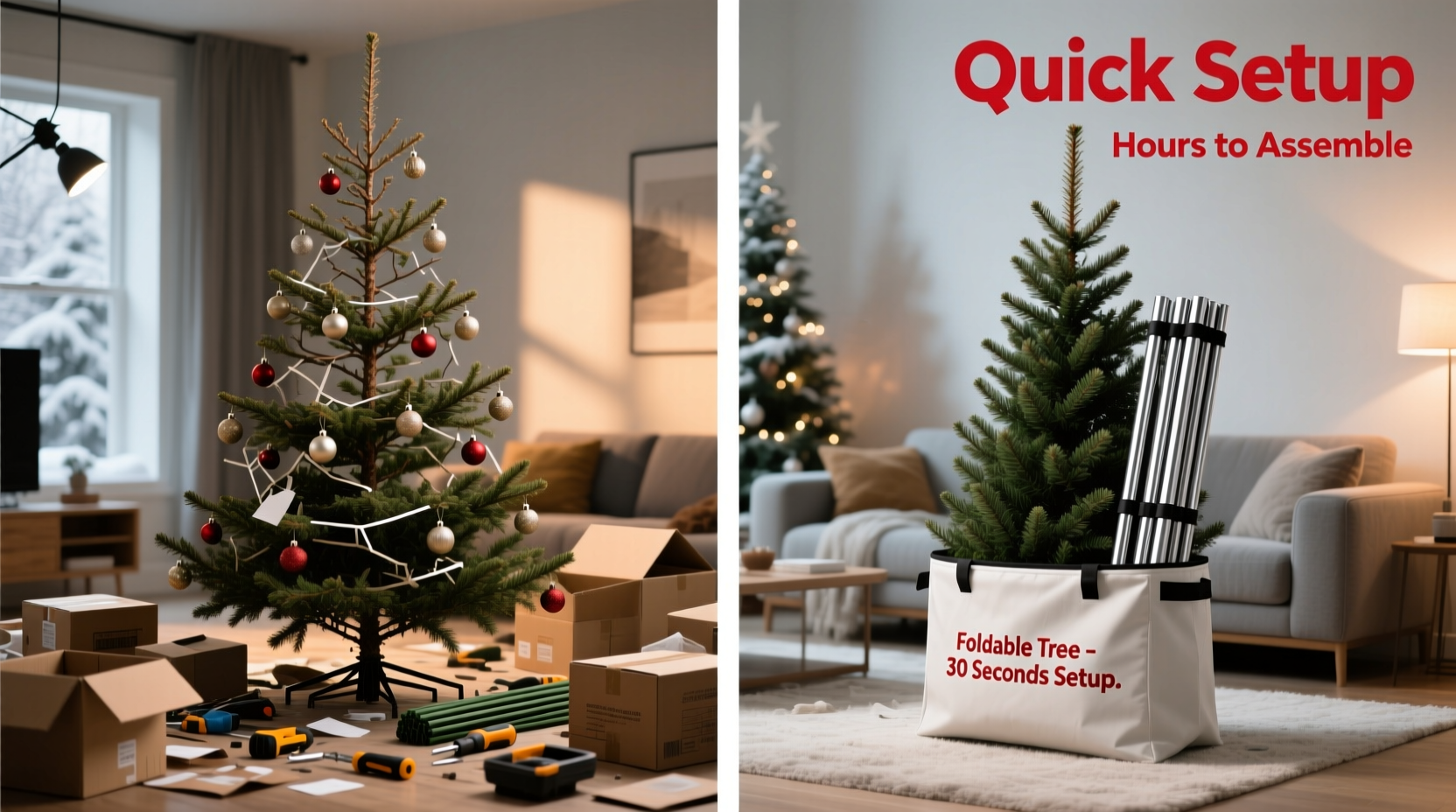
Artificial Christmas trees have come a long way since their mid-20th-century origins. Early versions were often made of aluminum or PVC branches packed into large boxes, requiring hours of fluffing, shaping, and stringing lights. While convenient compared to chopping down a real tree, they still demanded significant effort and storage space.
In recent years, manufacturers have introduced innovative designs focused on user experience. Among the most notable is the foldable (or “pop-up”) Christmas tree—a model built around a central hinge mechanism that allows entire sections to open like an accordion. Instead of inserting dozens of individual branches, users unfold pre-attached limb panels, significantly reducing setup time.
These trees are particularly popular among urban dwellers, renters, and minimalist decorators. According to market research firm Statista, sales of space-saving holiday decor—including foldable trees—grew by 17% between 2020 and 2023, reflecting a shift toward convenience-driven consumer behavior.
Speed and Simplicity: How Fast Is \"Quick Setup\"?
One of the primary claims made about foldable Christmas trees is rapid setup. Manufacturers often advertise assembly times as low as 5–10 minutes. In practice, actual results vary depending on tree size, design complexity, and user familiarity.
A realistic timeline for setting up a standard 6-foot foldable tree includes:
- Unboxing (2 minutes): Most models come partially assembled in a single rectangular container.
- Unfolding the frame (3–5 minutes): Sections swing outward on hinges; some require manual locking into place.
- Fluffing branches (5–10 minutes): Even pre-attached limbs need shaping for fullness.
- Adding lights and ornaments (optional): Pre-lit versions save additional time.
Compared to traditional artificial trees—which can take 30–60 minutes to assemble and shape—foldable models offer a clear advantage in speed. However, this benefit diminishes if the tree lacks structural stability or requires repeated adjustments.
Storage Efficiency: Do Foldable Trees Really Save Space?
Storage is where foldable trees shine most convincingly. Traditional artificial trees are typically broken down into multiple sections—trunk, middle, top—and packed into cylindrical bags or cardboard boxes measuring up to 4 feet in length. These often require dedicated closet space, attic room, or under-bed clearance.
Foldable trees, by contrast, collapse flat. A typical 6-foot model folds down to approximately 24 inches wide and 6 inches thick—about the size of a large suitcase. This makes them ideal for:
- Small apartments with minimal storage
- Seasonal travelers who pack decorations in luggage
- Rental properties without permanent storage areas
- Multi-location households (e.g., city home and country cabin)
Additionally, because the branches remain attached, there’s no risk of losing individual pieces or misplacing connectors—a common frustration with modular trees.
“Space efficiency isn’t just about square footage—it’s about mental load. When holiday prep feels overwhelming, people delay or skip traditions altogether.” — Dr. Laura Simmons, Behavioral Scientist at the Home & Lifestyle Institute
Comparative Analysis: Foldable vs. Traditional Artificial Trees
| Feature | Foldable Tree | Traditional Tree |
|---|---|---|
| Setup Time | 10–15 minutes | 30–60+ minutes |
| Storage Size | Folds flat (~24\"x6\") | Bulky box or bag (up to 48\") |
| Branch Fullness | Moderate (limited by folding design) | High (customizable layering) |
| Durability | Depends on hinge quality | Generally high (replaceable parts) |
| Portability | Excellent (suitcase-style) | Limited (heavy, awkward shapes) |
| Price Range (6 ft) | $80–$180 | $60–$200+ |
| Long-Term Lifespan | 3–7 years (hinge wear) | 10+ years (with care) |
While foldable trees excel in convenience, they often sacrifice density and realism. The folding mechanism limits how many branches can be attached per section, resulting in a sparser silhouette. Some users compensate with extra garlands or strategic ornament placement, but purists may find the look less authentic.
Real-World Test: One Family's Experience with a Foldable Tree
The Chen family lives in a 750-square-foot downtown condo. For years, they avoided owning a Christmas tree due to storage constraints and the hassle of annual assembly. In 2022, they purchased a 5.5-foot foldable pre-lit tree after reading online reviews praising its ease of use.
Here’s how it worked for them:
- First Setup: Took 12 minutes, including plugging in lights and minor adjustments.
- Storage: Fits under their bed inside a slim fabric case—no need for overhead shelves.
- Kids’ Involvement: Their 8-year-old could help unfold and lock the panels safely.
- Decorating: Used lightweight ornaments to avoid stressing branch joints.
- After Two Seasons: One hinge became slightly loose but was stabilized with a small zip tie.
“We used to dread decorating,” said Mei Chen. “Now it’s something we look forward to. It takes less time, creates less mess, and doesn’t eat up our tiny storage space.”
Theirs is a typical success story—but not universal. Users in larger homes with ample storage often prefer traditional trees for their fuller appearance and greater customization.
Key Considerations Before Buying a Foldable Tree
Not all foldable trees are created equal. To ensure satisfaction, consider the following factors before purchasing:
1. Hinge Mechanism Quality
The durability of the folding system determines the tree’s lifespan. Look for metal-reinforced joints over plastic-only connectors. Metal hinges resist warping and snapping, especially in larger models.
2. Pre-Lit vs. Unlit Options
Most foldable trees come pre-lit with LED lights. This enhances convenience but reduces flexibility—if one bulb fails, entire sections may go dark unless the wiring supports independent circuits.
3. Tree Shape and Proportion
Foldable designs sometimes compromise natural tapering. Some models appear boxy or overly symmetrical. If realism matters, choose a tree with variable-length branch panels and textured tips.
4. Weight and Base Stability
Because folded sections create lateral weight distribution, some models are prone to tipping. Ensure the stand is wide and weighted. For added security, anchor tall trees to a wall using a discreet support cable.
5. Material Longevity
PVC needles can become brittle over time, especially when exposed to heat or sunlight. Store your tree in a climate-controlled environment to prevent cracking and discoloration.
Step-by-Step Guide: Getting the Most Out of Your Foldable Tree
To maximize both performance and longevity, follow this simple maintenance routine:
- Unfold Carefully: Open each panel slowly to avoid stressing hinges.
- Lock All Panels: Engage any mechanical latches or clips to stabilize the structure.
- Fluff Strategically: Start from the bottom, bending outer branches outward and inner ones upward for depth.
- Test Lights Immediately: Identify and replace faulty bulbs while the tree is accessible.
- Rotate Ornaments: Distribute weight evenly to prevent sagging.
- Disassemble Gently: Remove decorations first, then fold inward without forcing joints.
- Store Properly: Use the original case or a breathable fabric cover; avoid vacuum-sealed bags that compress branches.
Frequently Asked Questions
Can foldable Christmas trees be reused year after year?
Yes, most high-quality foldable trees last 5–7 years with proper care. Avoid exposing them to extreme temperatures or moisture, and inspect hinges annually for signs of wear.
Are foldable trees suitable for heavy ornaments?
Use caution. Due to their engineered structure, foldable trees often support less weight per branch than traditional models. Stick to lightweight or medium-sized decorations, and avoid hanging items heavier than 3–4 ounces on individual tips.
Do foldable trees come in different styles and colors?
Yes. Beyond classic green, options include flocked (snow-covered), blue-tinted, slim-profile, and even pink or silver variants for themed displays. Slim foldable trees are especially useful for corners or narrow spaces.
Final Verdict: Who Should Choose a Foldable Tree?
The answer depends on priorities. For those who value speed, simplicity, and space-saving design, a foldable Christmas tree is not just better—it’s transformative. It removes friction from holiday preparation, making it easier to maintain traditions even amid busy lives or constrained environments.
However, if you prioritize maximum realism, dense foliage, or heirloom-level durability, a traditional hinged or sectional tree may still be the superior choice. Foldable models trade some aesthetic richness for logistical efficiency.
Ultimately, the best tree is the one that gets used. For many modern households, the foldable version lowers the barrier to entry so effectively that it becomes the only practical option.
“For families short on time or space, a foldable tree isn’t a compromise—it’s an enabling technology. It keeps the spirit of the season alive without demanding excessive effort.” — James O'Reilly, Senior Editor at *Holiday Living Magazine*
Take Action This Season
If you’ve ever skipped putting up a tree because it felt too complicated or inconvenient, now might be the time to reconsider. Evaluate your current setup challenges: Is storage the issue? Is assembly too time-consuming? Are you tired of digging out boxes every November?
A foldable Christmas tree could be the solution you’ve been overlooking. Research reputable brands, read verified customer reviews, and consider trying one on a trial basis—perhaps starting with a smaller 4- or 5-foot model. Many retailers offer holiday return windows, allowing you to test it risk-free.




 浙公网安备
33010002000092号
浙公网安备
33010002000092号 浙B2-20120091-4
Comments
No comments yet. Why don't you start the discussion?