
Foldable phones have moved from futuristic prototypes to mainstream shelves in under five years. Samsung, Google, Motorola, and Huawei now offer sleek, high-performance devices that bend, flip, or fold—some even more than once. But beyond the wow factor, a critical question remains: are these devices genuinely useful in everyday life, or are they simply status symbols for early adopters and gadget enthusiasts?
The answer isn’t binary. For some users, a foldable phone enhances productivity, multitasking, and media consumption. For others, it’s an overpriced novelty with trade-offs in durability, pocketability, and battery life. This article examines the practicality of foldable phones through real-world usage patterns, expert insights, and user experiences to determine whether they’ve earned their place in your pocket—or your ego.
Design Evolution: From Gimmick to Refinement
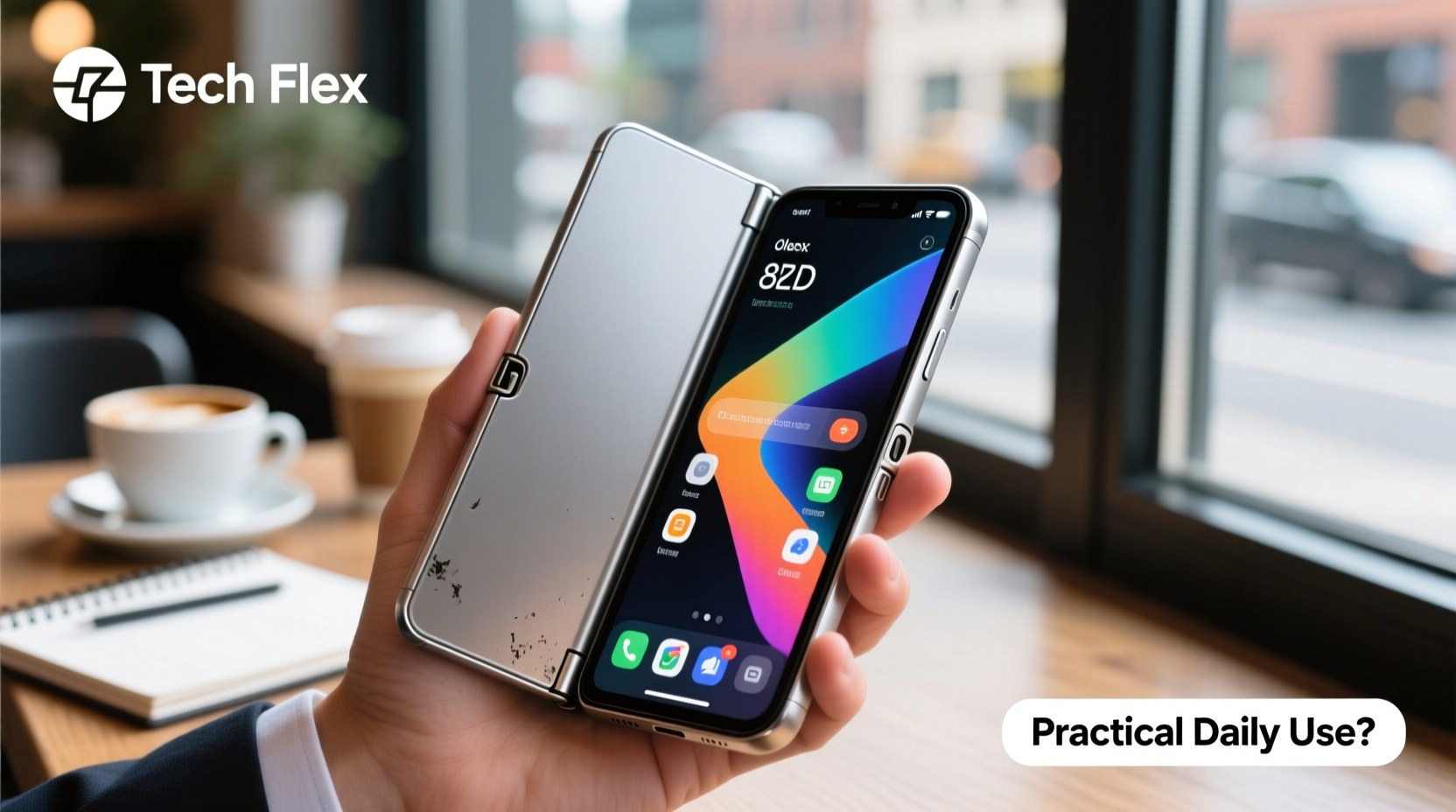
Early foldable phones were fragile, expensive, and plagued by screen creases, dust ingress, and inconsistent software support. The 2019 Samsung Galaxy Fold, for instance, faced widespread display failures during reviewer testing, prompting a months-long redesign. Since then, manufacturers have made significant strides in hinge mechanics, protective layers, and water resistance.
Modern foldables like the Samsung Galaxy Z Fold 5, Google Pixel Fold, and Motorola Razr+ feature improved durability ratings, smoother folding mechanisms, and better integration with Android’s interface. Many now include IPX8 water resistance, reducing concerns about accidental spills. Yet, despite these improvements, compromises remain.
The core tension lies between form and function. When folded, most book-style foldables (like the Fold series) are thick and heavy compared to traditional smartphones. Flip-style models (like the Razr+) are more compact but often sacrifice screen real estate and performance to achieve portability.
Daily Usability: Strengths and Trade-Offs
For practical daily use, foldable phones deliver tangible benefits in specific scenarios:
- Enhanced multitasking: The larger unfolded screen allows split-screen apps, drag-and-drop file transfers, and true windowed browsing—features that mimic tablet functionality.
- Better media experience: Watching videos, reading e-books, or editing documents feels more immersive on a 7.6-inch display.
- Compact mode convenience: Flip-style models excel here—snapping shut to become instantly pocketable while silencing notifications.
- Innovative camera flexibility: Some models support hands-free video calls using the outer screen while the main camera captures in high resolution.
However, these advantages come with notable drawbacks:
- Bulk and weight: Most foldables exceed 250g—nearly 30% heavier than standard flagships like the iPhone 15 Pro or Galaxy S24.
- Battery life: Despite large batteries, dual screens and power-hungry processors often result in shorter endurance than conventional phones.
- Pocket friction: Thick edges and uneven weight distribution can make retrieval awkward, especially in tight pockets.
- Screen vulnerability: While improved, creases persist, and micro-scratches accumulate faster on foldable OLED panels.
“Foldables are no longer lab experiments, but they’re still niche tools. They solve problems many users didn’t know they had.” — Dr. Lena Tran, Mobile UX Researcher at MIT Media Lab
Real-World Case: The Hybrid Worker’s Dilemma
Consider Mark, a freelance designer who travels frequently. He replaced his tablet and smartphone with a Galaxy Z Fold 5, hoping to reduce device clutter. On paper, it worked: he could sketch on the large screen, run design apps side-by-side, and take notes during client calls using the split-screen feature.
In practice, challenges emerged. The phone’s thickness made it uncomfortable to hold one-handed during long sessions. Battery drained quickly when using Adobe Fresco and Slack simultaneously. And after three months, a fine scratch appeared near the hinge—despite using a case and avoiding direct contact with surfaces.
Still, Mark found value. “I don’t miss carrying a separate tablet,” he said. “But I wouldn’t recommend it to someone who just checks email and texts. It’s powerful, but only if you actively use the extra screen.”
This scenario illustrates a broader truth: foldables shine for users who leverage their unique form factor. Casual users may find them overkill.
Comparative Analysis: Foldable vs. Traditional Flagship
| Feature | Foldable Phone (e.g., Galaxy Z Fold 5) | Traditional Flagship (e.g., iPhone 15 Pro) |
|---|---|---|
| Display Size (Unfolded/Usual) | 7.6” internal, 6.2” external | 6.1” |
| Weight | 253g | 187g |
| Battery Life (Typical Use) | 6–8 hours screen-on time | 8–10 hours screen-on time |
| Durability Rating | IPX8, reinforced hinge | IP68, solid chassis |
| Price (Launch) | $1,799 | $999 |
| Best For | Multitaskers, mobile creators, travelers minimizing gear | General users, photographers, one-device simplicity |
The data shows a clear divergence: foldables offer expanded utility at the cost of efficiency, comfort, and affordability. They are not upgrades—they are alternatives.
Expert Tips for Maximizing Practicality
If you're considering a foldable phone, follow these guidelines to ensure it serves a genuine purpose in your routine:
- Evaluate your workflow: Do you regularly use two apps at once? Edit documents on the go? Prefer reading on larger screens? If yes, a foldable adds value.
- Choose the right form factor: Flip models suit users wanting compactness; book-style foldables benefit those needing tablet-like space.
- Invest in protection: Use manufacturer-approved cases and screen protectors. Third-party options may interfere with the hinge or seal.
- Update software regularly: Manufacturers optimize multitasking features and fix bugs monthly—staying current improves longevity.
- Limit exposure to extreme conditions: Avoid leaving the phone in hot cars or humid environments. Heat accelerates wear on flexible OLEDs.
Longevity and Repair Considerations
Durability remains a top concern. While Samsung claims its latest Ultra Thin Glass (UTG) and Armor Aluminum frame can withstand 200,000 folds (about 5 years of daily use), real-world conditions vary. Dust, moisture, and accidental drops introduce risks not fully mitigated by current engineering.
Repairs are another hurdle. Replacing a damaged inner display can cost $400–$600—nearly half the device’s original price. Most warranties exclude accidental damage, and third-party repair shops often lack certified parts or expertise.
As a result, long-term ownership requires caution. Users must balance the appeal of innovation with the reality of higher maintenance costs and potential obsolescence. Unlike standard phones, foldables may not retain resale value as well due to perceived fragility.
Checklist: Is a Foldable Right for You?
Before purchasing, ask yourself the following:
- ✅ Do I frequently use multiple apps simultaneously?
- ✅ Would a larger screen improve my productivity or media experience?
- ✅ Am I willing to carry a thicker, heavier device?
- ✅ Can I afford potential repair costs or plan for insurance?
- ✅ Do I travel light and want to replace a tablet or laptop?
- ❌ Do I mostly use social media, messaging, and streaming?
- ❌ Do I drop my phone often or use it in rugged environments?
If most checked items are positive, a foldable may be practical. If negatives dominate, a traditional flagship likely serves you better.
FAQ: Common Questions About Foldable Phones
Can I close the phone with dirt on the screen?
No. Even microscopic particles can scratch the inner display when folded. Always wipe the screen gently with a microfiber cloth before closing.
Do foldable phones last as long as regular smartphones?
With careful use, they can—but they require more attention. The average lifespan is estimated at 3–4 years with moderate wear, compared to 4–5 years for standard phones.
Are app experiences optimized for foldables?
Major apps like Gmail, YouTube, Microsoft Office, and Samsung Notes support multi-window and adaptive layouts. However, many smaller apps still stretch or letterbox, reducing the advantage of the larger screen.
The Verdict: Practical Tool or Tech Flex?
Foldable phones occupy a hybrid space. For professionals, creatives, and digital minimalists seeking to consolidate devices, they offer legitimate utility. The ability to run complex workflows on a single, portable unit represents meaningful progress in mobile computing.
Yet, for the average user, the benefits are less compelling. The premium price, reduced battery life, and physical bulk outweigh the novelty of a folding screen. In many cases, pairing a reliable smartphone with a lightweight tablet delivers similar functionality with greater durability and lower risk.
Moreover, the \"tech flex\" aspect cannot be ignored. Owning a foldable signals early adoption, affluence, and interest in cutting-edge design. That social currency has real value in certain circles—just not necessarily practical value.
Ultimately, the decision hinges on intent. If you buy a foldable to solve a problem—like managing spreadsheets on a commute or sketching ideas without a laptop—it can be a practical choice. If you buy it because it turns heads, it’s a flex—and there’s nothing wrong with that, as long as you acknowledge it.
“The best technology disappears into your life. Foldables are still trying to prove they belong there.” — Carlos Mendez, Senior Editor at TechLife Magazine
Final Thoughts: What Should You Do?
Don’t buy a foldable phone because it’s new. Buy it because it fits your lifestyle. Visit a retail store, open and close the device, try typing on the inner screen, and assess how it feels in your hand and pocket. Compare it directly with your current phone.
Technology should serve you—not the other way around. Foldable phones have evolved from fragile curiosities into capable tools, but they remain specialized devices. Their practicality depends entirely on how you use them.




 浙公网安备
33010002000092号
浙公网安备
33010002000092号 浙B2-20120091-4
Comments
No comments yet. Why don't you start the discussion?