
For many people building a home gym, space is the biggest constraint. Apartments, small living rooms, or shared spaces make it difficult to justify bulky fitness equipment. That’s where foldable treadmills come in—marketed as compact, convenient, and practical solutions for urban dwellers and minimalist lifestyles. But does the convenience of folding actually translate into long-term satisfaction and performance? The answer depends on your priorities: if saving floor space is critical, a foldable treadmill may be ideal. However, if performance, durability, and smooth running mechanics are non-negotiable, compromises may become apparent over time.
This article examines the trade-offs between space efficiency and workout quality, evaluates key features, and helps you determine whether a foldable treadmill is truly worth the investment—or if you’re sacrificing too much for the sake of convenience.
The Space-Saving Advantage of Foldable Treadmills
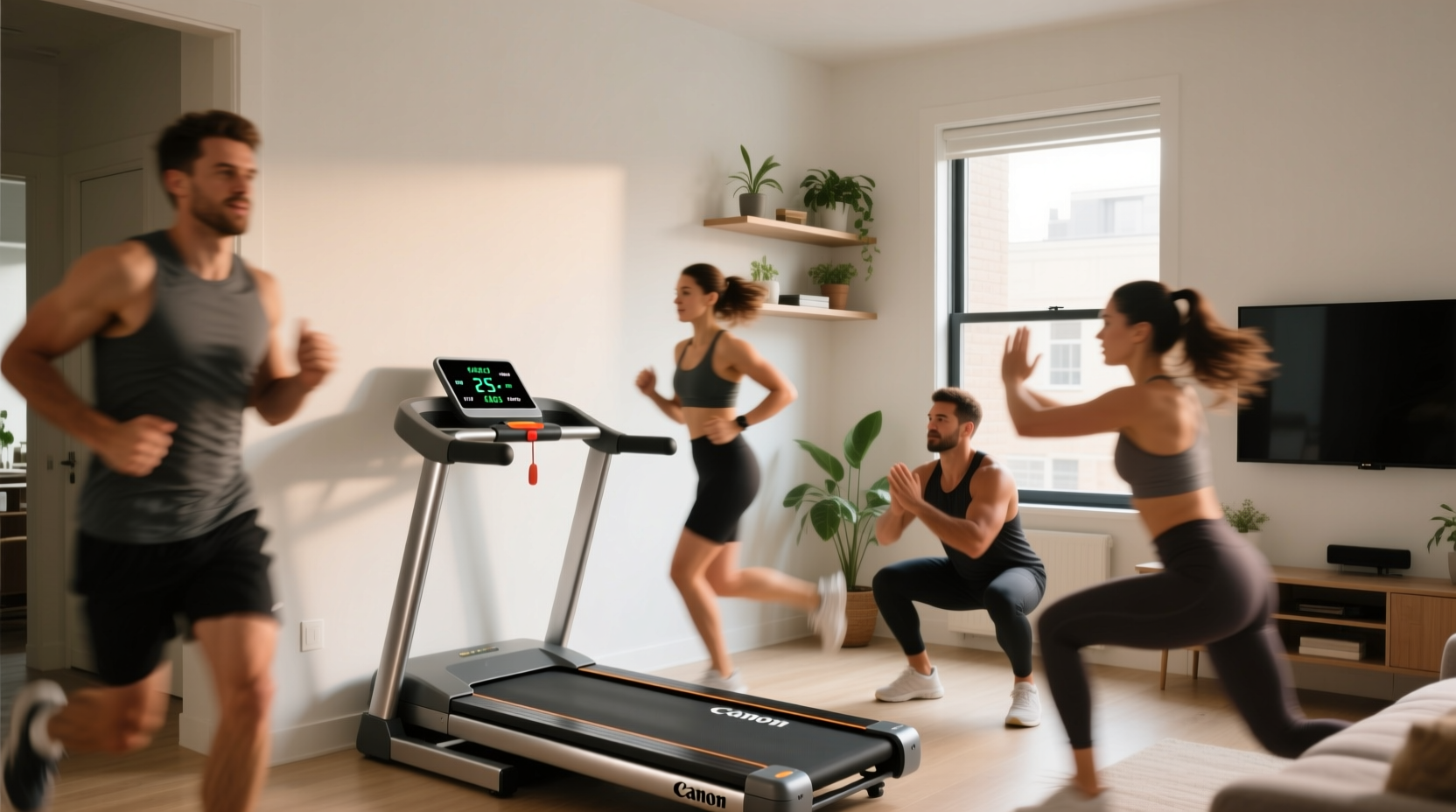
In cities where square footage comes at a premium, every inch counts. A standard treadmill can occupy 30–40 square feet when in use and remains a permanent fixture in most homes. Foldable models, by contrast, reduce their footprint by up to 60% when stored vertically or tucked against a wall. This makes them especially appealing for:
- Apartments with limited living space
- Multipurpose rooms (e.g., guest bedrooms, home offices)
- Families needing flexible room layouts
- Renters who move frequently
The ability to store a treadmill behind a door, in a closet, or under a desk offers tangible lifestyle benefits. No longer does your workout gear dominate the room—it becomes an invisible part of your routine until needed.
Performance vs. Portability: What You Might Sacrifice
While foldable treadmills excel in space efficiency, they often make design concessions that impact performance. These include:
- Smaller running decks: Most foldable models have shorter and narrower belts than full-sized counterparts, which can feel restrictive during longer runs or high-intensity workouts.
- Less powerful motors: To keep weight down, manufacturers often use lower horsepower motors (typically 2.0–2.5 CHP), limiting top speed and incline capabilities.
- Reduced stability: The folding mechanism introduces flex points. Even well-built models may wobble slightly during sprinting or heavy use.
- Noisier operation: Lighter frames transmit more vibration, making some foldable treadmills louder than commercial-grade machines.
That said, not all foldable treadmills are created equal. High-end models from brands like NordicTrack, Sole Fitness, and Horizon incorporate reinforced hinges, auto-folding hydraulics, and shock absorption systems that significantly narrow the performance gap.
“Modern engineering has closed the gap between foldable and fixed-frame treadmills—but only if you invest in a mid-to-high-tier model.” — Daniel Ruiz, Home Fitness Equipment Analyst at ActiveGear Review
Key Features to Evaluate Before Buying
To determine whether a foldable treadmill is worth it for your needs, assess these five critical factors:
1. Motor Power and Durability
Look for continuous-duty motors rated at 2.5 CHP or higher if you weigh over 180 lbs or plan to run regularly. Entry-level models with 2.0 CHP may suffice for walking or light jogging but can overheat during sustained use.
2. Deck Size and Cushioning
A belt measuring at least 55 inches long and 20 inches wide accommodates most users comfortably. Advanced cushioning systems like FlexDeck or RunnersFlex reduce joint impact, improving comfort and longevity.
3. Folding Mechanism Type
There are two main types:
- Manual fold: Requires lifting the deck into upright position. Heavier but less expensive.
- Automatic/electric fold: Uses a motorized lift system. More convenient, especially for frequent use, but adds cost and complexity.
4. Weight Capacity and Frame Build
Check the maximum user weight rating—ideally 300+ lbs for durability. Steel frames offer better stability than aluminum, though they add weight.
5. Tech Integration and Workout Programs
Many foldable treadmills now include Bluetooth connectivity, tablet holders, built-in speakers, and access to virtual training platforms like iFit or Peloton. While not essential, these features enhance motivation and usability.
Comparison Table: Foldable vs. Non-Foldable Treadmills
| Feature | Foldable Treadmill | Non-Foldable (Standard) Treadmill |
|---|---|---|
| Footprint (in use) | Similar to standard models | Typically 30–40 sq ft |
| Stored Footprint | Reduced by 50–60% | No change – permanent setup |
| Motor Power (avg.) | 2.0–3.0 CHP | 3.0–4.0+ CHP |
| Running Deck Size | Often shorter/narrower | Larger, more stable surface |
| Stability & Vibration | Moderate to good (varies by brand) | Generally superior |
| Price Range | $800–$2,500+ | $1,200–$4,000+ |
| Ideal For | Small spaces, casual users, apartment living | Dedicated home gyms, serious runners |
Real-World Example: Sarah’s Apartment Dilemma
Sarah lives in a 700-square-foot downtown condo with her partner. Their living room doubles as a workspace and occasional guest area. She wanted to start running regularly but didn’t want a treadmill taking over the space.
After researching options, she purchased a mid-range foldable treadmill with automatic lift, a 3.0 CHP motor, and a 20” x 60” deck. She stores it vertically behind the couch when not in use, freeing up floor space during the day.
“At first, I was worried it wouldn’t feel ‘real,’” Sarah says. “But after six months of use—three runs per week—I’ve had no issues. It handles my 5K training just fine. The only downside is it takes 10 seconds to unfold, so I’m less likely to do quick 10-minute walks spontaneously.”
Sarah’s experience reflects a common reality: foldable treadmills work best when integrated into a consistent routine rather than used impulsively. The minor setup delay can deter spontaneous use, but for planned workouts, the trade-off is manageable.
Step-by-Step Guide: Choosing the Right Foldable Treadmill
If you're considering a foldable treadmill, follow this decision-making process:
- Assess your available space. Measure both the workout area and storage location. Confirm ceiling height and floor strength for vertical storage.
- Determine your primary use. Will you walk, jog, or run? Higher intensity requires stronger motors and larger decks.
- Set a realistic budget. Expect to spend $1,000–$1,800 for a reliable model with good features.
- Read verified user reviews. Focus on long-term feedback about durability, noise, and customer service.
- Check warranty terms. Look for at least 10 years on the frame, 2–3 years on parts, and 1 year on labor.
- Test before buying if possible. Visit a fitness retailer or rent one short-term to evaluate comfort and ease of use.
- Plan your storage routine. Decide exactly where and how you’ll store it to ensure consistency.
When a Foldable Treadmill Is Worth It
A foldable treadmill delivers the most value when:
- You live in a small home or apartment
- You use the treadmill 3–5 times per week on a predictable schedule
- You prioritize convenience and aesthetics over elite performance
- You’re committed to maintaining your equipment (lubricating the belt, cleaning the deck)
It’s also a smart choice if you anticipate moving within the next few years. Unlike bulky stationary treadmills, foldable ones are easier to transport and reinstall.
When You Should Consider a Full-Size Model Instead
A traditional, non-foldable treadmill may be the better option if:
- You're a serious runner logging more than 15 miles per week
- You need maximum stability and shock absorption due to joint concerns
- You want top-tier incline/decline performance (common in advanced training)
- You already have a dedicated workout room
In these cases, the marginal space savings aren’t worth compromising on endurance, safety, or biomechanical support.
Frequently Asked Questions
Do foldable treadmills last as long as regular ones?
High-quality foldable treadmills can last 7–10 years with proper maintenance. However, the folding mechanism introduces additional wear points. Regular lubrication and avoiding forced closures extend lifespan.
Are foldable treadmills harder to assemble?
Most require moderate assembly (30–60 minutes), similar to standard models. The folding feature doesn’t complicate setup, though heavier units may need two people to position safely.
Can I leave a foldable treadmill unfolded between uses?
Yes, but doing so defeats the purpose of space-saving. Leaving it open increases tripping hazards and exposes it to dust and foot traffic. If you won’t fold it regularly, consider whether you really need the feature.
Final Verdict: Balancing Practicality and Performance
The question isn’t whether foldable treadmills work—they absolutely do. The real issue is whether their limitations align with your lifestyle and fitness goals. For the average home user focused on walking, light jogging, and consistency, a well-chosen foldable treadmill offers an excellent balance of function and flexibility.
Space is a form of luxury in modern living. Being able to reclaim your floor after a workout isn't just convenient—it can improve mental clarity, encourage tidiness, and make fitness feel less intrusive in shared environments. In that context, the slight reduction in performance is often a fair compromise.
However, don’t buy a foldable treadmill simply because it’s marketed as “space-saving.” Make the decision based on actual measurements, intended usage, and honest self-assessment of your commitment level. The best treadmill is the one you’ll use consistently—not the one that gathers dust because it’s inconvenient or uncomfortable.
“The future of home fitness isn’t about bigger equipment—it’s about smarter integration. Foldable treadmills represent that shift: practical tools designed for real lives.” — Lena Park, Urban Wellness Coach and Home Gym Designer
Take Action Today
If you're tired of letting space constraints dictate your fitness routine, it’s time to explore foldable treadmill options with fresh eyes. Reassess your room layout, define your workout goals, and identify what you’re willing to compromise on—and what you’re not. Whether you choose a compact folding model or opt for a full-size machine, the most important factor remains unchanged: consistency.




 浙公网安备
33010002000092号
浙公网安备
33010002000092号 浙B2-20120091-4
Comments
No comments yet. Why don't you start the discussion?