
As winter temperatures drop, many people turn to heated blankets for comfort and warmth. These electric bedding accessories promise cozy nights without cranking up the thermostat. But questions remain: Is it truly safe to leave one on overnight? And more importantly, can using a heated blanket actually reduce your energy consumption and lower heating bills? The answers depend on technology, usage habits, and product quality. This article dives into the safety standards, energy efficiency, and real-world implications of sleeping with a heated blanket running all night.
Safety Standards and Modern Technology
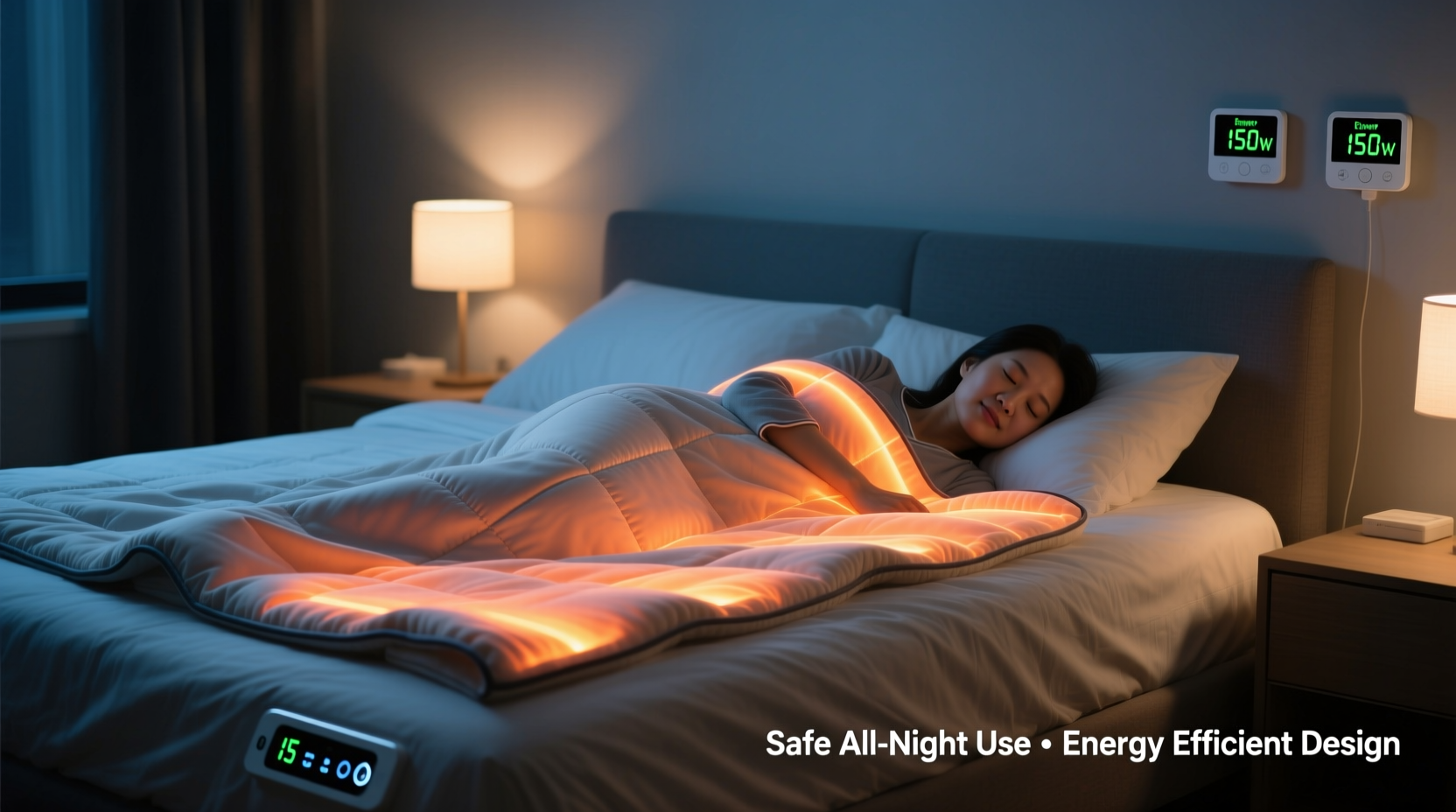
Older generations of electric blankets carried a higher risk of fire, overheating, or electrical malfunction—especially when left unattended. However, modern heated blankets are engineered with multiple safety features that make overnight use far safer than in the past.
Today’s models typically include:
- Auto-shutoff timers (usually 8–12 hours), which power down the blanket automatically.
- Overheat protection sensors that detect abnormal temperature spikes.
- Low-voltage operation, reducing risks associated with high electrical currents.
- Double-insulated wiring to prevent short circuits.
According to the U.S. Consumer Product Safety Commission (CPSC), incidents related to electric blankets have significantly declined over the last few decades due to improved manufacturing standards and regulatory oversight.
“Modern heated blankets are designed with fail-safes that make them suitable for overnight use, provided they’re used according to manufacturer instructions.” — Dr. Linda Harper, Electrical Safety Researcher at the National Home Safety Institute
Can You Safely Sleep with a Heated Blanket On All Night?
The short answer: Yes, but only under specific conditions.
If your heated blanket is new, certified, and equipped with an auto-shutoff feature, using it through the night is generally considered safe. Many users preheat their beds before sleeping and rely on the timer to turn off the heat after falling asleep. This approach maximizes comfort while minimizing risk.
However, certain groups should exercise caution or avoid prolonged use altogether:
- People with diabetes or neuropathy may not feel excessive heat, increasing burn risk.
- Infants, toddlers, and very young children lack the ability to react to overheating.
- Elderly individuals with reduced mobility or sensitivity may be vulnerable to low-temperature burns from sustained contact.
- Pregnant women are often advised to avoid prolonged core heating, especially in early pregnancy.
Folded or bunched blankets can trap heat and damage internal wires, creating hot spots. Always lay the blanket flat and avoid placing heavy objects or additional layers on top while in use.
When Overnight Use Becomes Risky
Damaged cords, frayed fabric, or blankets older than 7–10 years pose greater hazards. Internal wires degrade over time, and insulation can wear thin, increasing the chance of short circuits. If your blanket emits a burning smell, feels unevenly hot, or shows visible wear, discontinue use immediately.
Additionally, never use a heated blanket with a heating pad or electric mattress pad simultaneously—this can lead to dangerous heat buildup.
Energy Efficiency: Do Heated Blankets Save Money?
One of the most compelling reasons to use a heated blanket is its potential to reduce household energy consumption. Instead of heating an entire home to maintain comfort, localized heating targets only the person under the blanket.
Consider this: A typical central heating system consumes between 10,000 and 50,000 BTUs per hour, depending on home size and climate. In contrast, most heated blankets use only 50 to 100 watts of electricity—an amount comparable to a standard light bulb.
If you lower your thermostat by just 10°F (about 6°C) at night and rely on a heated blanket for warmth, you could reduce heating costs by up to 10–15%, according to the U.S. Department of Energy.
| Heating Method | Wattage (Average) | Estimated Cost (8 hrs @ $0.15/kWh) | Heat Coverage |
|---|---|---|---|
| Electric Heated Blanket | 80 W | $0.096 | One person |
| Space Heater (small room) | 1,500 W | $1.80 | Single room |
| Central Electric Heat (whole house) | 5,000–15,000 W | $6.00–$18.00 | Entire home |
This table illustrates how dramatically more efficient a heated blanket is compared to other common heating methods. Even when used nightly during winter months, the total cost rarely exceeds a few dollars per month.
Step-by-Step Guide to Safe and Efficient Use
To get the most out of your heated blanket while ensuring safety and energy savings, follow this practical routine:
- Inspect Before Use: Check for damaged wires, stains, or odors. Never use a wet or damp blanket.
- Preheat Your Bed: Turn on the blanket 15–30 minutes before bedtime to warm the sheets.
- Set Timer Mode: Enable auto-shutoff so the blanket turns off after you fall asleep.
- Lower Your Thermostat: Reduce bedroom temperature by 5–10°F once you're under the blanket.
- Use Over, Not Under: Place the heated blanket on top of you—not beneath—to avoid pressure on heating elements.
- Turn Off When Not Needed: Don’t leave it running during the day or when away from home.
- Store Properly Off-Season: Fold loosely or roll it; avoid sharp creases that can damage internal wires.
Following these steps ensures both personal safety and optimal energy performance. The goal is to leverage targeted warmth without relying on continuous operation.
Real-World Example: The Winter Energy Experiment
In Boise, Idaho, Sarah Thompson, a 42-year-old teacher and mother of two, decided to test whether switching to heated blankets could reduce her winter heating bill. Her household previously kept the thermostat at 72°F (22°C) overnight during cold months, averaging $180 monthly on electricity and gas.
For one winter season, she introduced dual-control heated blankets in the master bedroom and encouraged her teens to use theirs. She lowered the thermostat to 62°F (17°C) at night and wore thermal sleepwear.
The results were striking: her heating-related energy costs dropped by 23% over three months. More importantly, she reported better sleep quality, attributing it to consistent personal warmth without overheating the entire house.
“I was skeptical at first,” Sarah said. “But once I got used to warming just my bed instead of the whole house, it felt smarter—and cheaper.”
This case reflects a growing trend among energy-conscious households: microclimate heating. By focusing warmth where it’s needed most, users achieve comfort at a fraction of the cost.
Checklist: Using a Heated Blanket Safely and Efficiently
Before turning on your heated blanket each season, run through this checklist:
- ✅ Confirm the blanket has a UL or ETL safety certification
- ✅ Test all settings and ensure even heat distribution
- ✅ Verify the auto-shutoff function works correctly
- ✅ Inspect cord and controller for damage
- ✅ Avoid folding or bunching during use
- ✅ Use only on top of the body, never underneath
- ✅ Wash only as instructed (most require spot cleaning or gentle machine cycles)
- ✅ Replace blankets older than 7–10 years
- ✅ Combine with lowered thermostat settings for maximum energy savings
- ✅ Keep pets with sharp claws away—chewed wires are a fire hazard
Frequently Asked Questions
Can I wash my heated blanket?
Most modern heated blankets are removable and machine-washable, but only if explicitly stated by the manufacturer. Always disconnect the control unit and follow care instructions precisely. For non-removable types, spot clean with a damp cloth and mild detergent. Never submerge the plug or controller.
Are heated blankets safe for pets?
While pet-specific heated pads exist, regular human-use blankets are not recommended for animals. Pets may chew wires or overheat due to limited ability to regulate their position. If used, constant supervision is required.
Do heated blankets cause health problems?
For most healthy adults, occasional use poses no health risks. However, prolonged exposure to high heat may contribute to “erythema ab igne,” a skin condition caused by repeated low-level heat exposure. To prevent this, avoid sleeping on high settings all night and allow skin to cool periodically.
Final Thoughts and Smart Heating Habits
Using a heated blanket all night can be safe—provided the device is modern, well-maintained, and used responsibly. Auto-shutoff functions, safety certifications, and proper placement drastically reduce risks. Meanwhile, the energy-saving potential is real and measurable. By heating only your body rather than your entire home, you gain comfort while cutting costs and reducing environmental impact.
The key lies in balance: embrace convenience without complacency. Regular inspection, smart thermostat pairing, and adherence to usage guidelines transform a simple electric blanket into a powerful tool for efficient, personalized comfort.




 浙公网安备
33010002000092号
浙公网安备
33010002000092号 浙B2-20120091-4
Comments
No comments yet. Why don't you start the discussion?