
Staying properly hydrated is one of the simplest yet most overlooked aspects of health. While drinking enough water may seem straightforward, many people consistently fall short—often without realizing it. Enter hydration tracker apps: digital tools designed to remind, log, and motivate users to drink more water throughout the day. But with hundreds available on app stores, often free or low-cost, the real question arises: are they actually effective? Do they deliver meaningful change, or are they just another digital distraction?
The answer isn’t a simple yes or no. For some, these apps are transformative. For others, they’re quickly abandoned after a few days. The value of a hydration tracker depends not just on the app itself, but on how well it aligns with your habits, lifestyle, and psychological triggers for behavior change.
How Hydration Tracker Apps Work
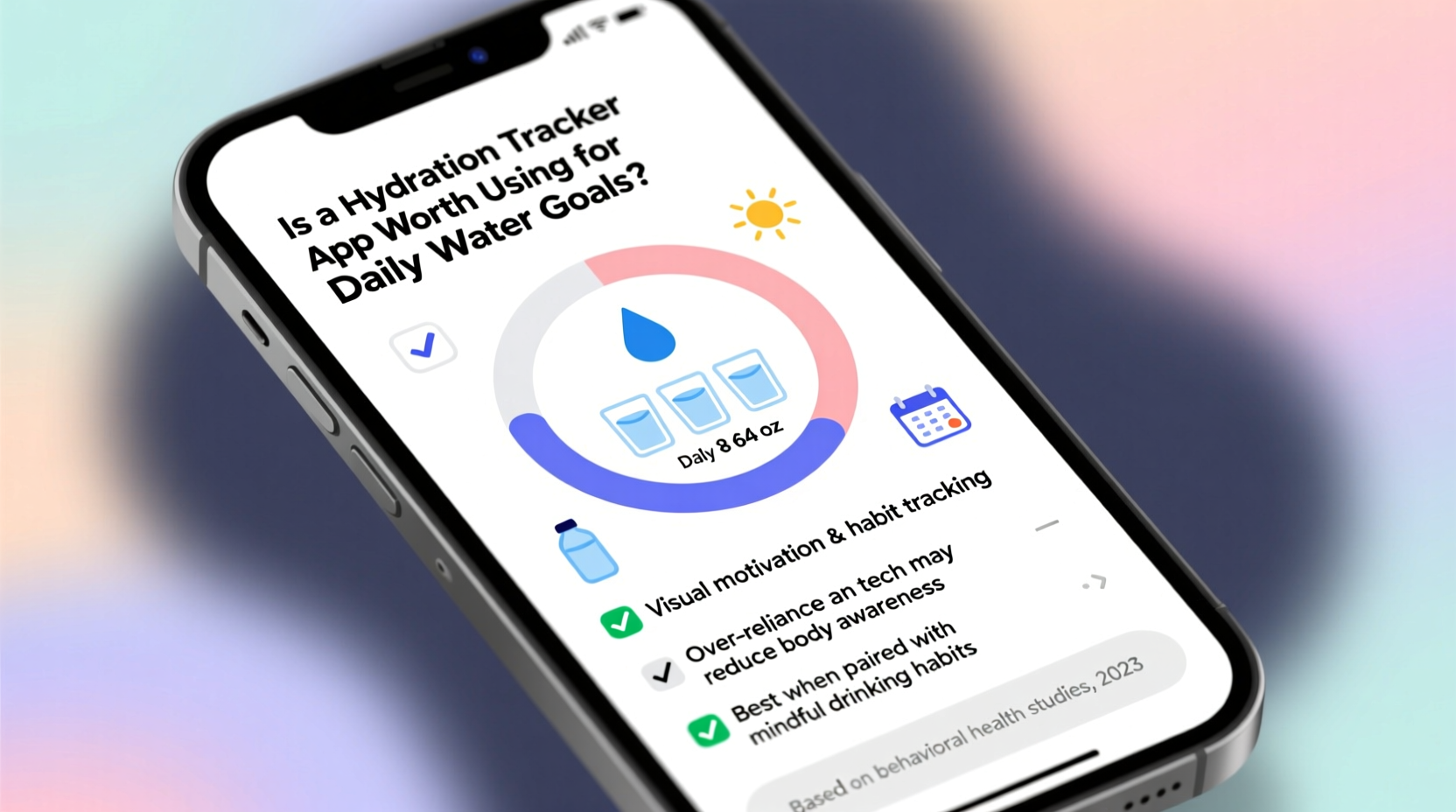
At their core, hydration tracker apps function as digital logs and reminder systems. Users input their body weight, activity level, climate, and sometimes even diet, and the app calculates a personalized daily water goal—typically ranging from 2 to 4 liters. From there, the user logs each glass, bottle, or cup consumed, either manually or through voice commands and smart integrations.
Most apps offer features such as:
- Customizable reminders at set intervals
- Progress bars showing daily intake
- Weekly or monthly reports
- Integration with wearables (e.g., Apple Watch, Fitbit)
- Themes, streaks, and gamification elements
- Exportable data for health journals or consultations
Some advanced versions sync with smart water bottles that automatically record sips via sensors, reducing the need for manual logging. These high-end devices can cost upwards of $60, raising the stakes on whether the investment pays off.
The Science Behind Tracking: Does It Help?
Behavioral psychology suggests that tracking habits increases awareness and accountability—two key drivers of change. A 2019 study published in the Journal of Medical Internet Research found that participants who used mobile health apps for hydration showed a 23% increase in daily water consumption over six weeks compared to a control group.
However, the effect tends to diminish over time unless the user forms an intrinsic habit. As Dr. Lena Torres, behavioral scientist at the University of Michigan, explains:
“Apps work best during the initiation phase of behavior change. They provide structure when motivation is low. But long-term success depends on transitioning from external tracking to internal cues—like recognizing thirst or linking water intake to routine activities.” — Dr. Lena Torres, Behavioral Scientist
This insight reveals a critical nuance: hydration apps are not a permanent solution, but rather a training tool. Their real value lies in helping users build consistent habits that eventually become automatic.
Who Benefits Most from a Hydration Tracker App?
Not everyone needs a hydration app. For individuals already attuned to their body’s signals and with established routines, adding an app may introduce unnecessary friction. However, certain groups tend to see significant benefits:
- Office workers and remote employees – People with sedentary jobs often forget to drink water due to screen focus and lack of movement-based cues.
- Fitness enthusiasts – Those engaging in regular exercise have higher fluid needs and benefit from real-time adjustments based on sweat loss.
- New parents or caregivers – High-demand roles leave little room for self-monitoring; automated reminders help maintain personal health.
- Individuals managing health conditions – Kidney stones, urinary tract infections, or migraines often require strict hydration protocols.
- Beginners building healthy habits – People new to wellness routines often lack structure and benefit from guided feedback.
If you fall into any of these categories, a hydration tracker may serve as a valuable onboarding system.
Common Pitfalls and How to Avoid Them
Despite their potential, many users abandon hydration apps within two weeks. Common reasons include:
- Over-reliance on notifications leading to notification fatigue
- Manual entry becoming tedious
- Unrealistic goals causing frustration
- Forgetting to log intake until the end of the day
- Using the app as a guilt mechanism rather than a supportive tool
To avoid these traps, consider the following checklist before committing to an app:
✅ Hydration Tracker App Success Checklist
- Choose an app with minimal, customizable alerts (max 3–4 per day)
- Set a realistic starting goal—add 500ml to your current average, not double it
- Pick one consistent trigger (e.g., after bathroom breaks, with meals) to prompt logging
- Pair the app with a visible water bottle to reduce reliance on memory
- Use weekly summaries, not daily perfection, to measure progress
- Commit to a trial period of 21 days before deciding to continue
Real-World Example: Sarah’s 30-Day Challenge
Sarah, a 34-year-old graphic designer working remotely, struggled with afternoon fatigue and frequent headaches. She drank coffee heavily but rarely tracked her water intake. After a visit to her doctor, she was advised to increase hydration to support kidney function and energy levels.
She downloaded a popular free hydration app and set her goal at 2.5 liters per day—higher than her usual ~1 liter but not overwhelming. She enabled two reminders: one at 10:00 AM after her morning meeting, and another at 2:00 PM to counteract her energy crash.
Initially, logging felt awkward. But by pairing each entry with a physical action—refilling her 750ml bottle—she created a visual cue. By day 10, she noticed fewer headaches. By day 21, she no longer needed the app to remember to drink; the habit had formed.
After 30 days, she discontinued the app but kept her refillable bottle on her desk. Her average intake stabilized at 2.3 liters daily—a sustainable improvement without ongoing digital oversight.
Sarah’s experience illustrates a successful trajectory: use the app as a scaffold, not a crutch.
Comparison: Top Features Across Popular Hydration Apps
With dozens of options available, choosing the right app can be overwhelming. The table below compares key features across five widely used hydration trackers.
| App Name | Free Version? | Smart Bottle Sync? | Wearable Integration | Gamification | Best For |
|---|---|---|---|---|---|
| WaterMinder | Yes (limited) | Yes | Apple Health, Fitbit | Streaks, badges | Apple ecosystem users |
| Plant Nanny | Yes | No | None | High (virtual plants) | Gamers, younger users |
| MyWater | Yes | No | Google Fit | Low | Android users seeking simplicity |
| Hydro Coach | Yes | No | None | Moderate | Users wanting detailed analytics |
| Aqualert | Yes | Yes | Apple Health | Moderate | Those using smart bottles |
No single app is best for everyone. Your choice should depend on device compatibility, desired complexity, and whether you plan to integrate hardware.
When an App Isn’t Necessary
While helpful for many, hydration trackers aren’t universally beneficial. Some individuals do better with low-tech solutions:
- Using a marked water bottle with time indicators
- Drinking a glass of water upon waking, before meals, and before bed
- Listening to natural thirst cues instead of rigid targets
- Adding flavor infusions (lemon, cucumber, mint) to make water more appealing
In fact, over-tracking can lead to orthosomnia—the obsession with perfect health metrics—which may increase anxiety rather than improve well-being. If checking your hydration percentage causes stress, it’s a sign the tool is working against you.
Step-by-Step: Building Sustainable Hydration Habits
Whether you use an app or not, lasting change comes from integrating hydration into your existing routine. Follow this timeline to build resilience beyond digital tracking:
- Week 1: Awareness – Observe your current intake. Carry a reusable bottle and note how often you refill it. No logging required—just observation.
- Week 2: Anchor to Routines – Link drinking to existing habits: one glass after brushing teeth, one after checking email, one with lunch.
- Week 3: Introduce Tracking (Optional) – Use an app or notebook to log intake for seven days. Focus on patterns, not perfection.
- Week 4: Adjust and Automate – Identify gaps (e.g., late afternoon) and adjust timing or volume. Refine cues until drinking feels natural.
- Week 5+: Evaluate and Evolve – After a month, assess whether you still need the app. Transition to maintenance mode—occasional spot-checks instead of constant monitoring.
This phased approach prioritizes habit formation over dependency, ensuring long-term success regardless of technology use.
FAQ
Can a hydration tracker app replace medical advice?
No. While these apps can support general wellness, they are not substitutes for professional guidance—especially for individuals with heart, kidney, or electrolyte-related conditions. Always consult a healthcare provider before making major changes to fluid intake.
Do I need to hit my exact water goal every day?
No. Daily needs fluctuate based on temperature, activity, food intake (e.g., water-rich fruits and vegetables), and health status. Aim for consistency over time, not daily precision. Being slightly under one day and above the next evens out naturally.
Are smart water bottles worth the extra cost?
Only if manual logging is a consistent barrier. For most people, a simple $10 refillable bottle with volume markings provides the same benefit. Smart bottles are best suited for tech enthusiasts or those with memory challenges.
Conclusion: Tools Serve Habits, Not the Other Way Around
A hydration tracker app can be worth using—but only if it serves your goals without becoming a burden. When used strategically, it can raise awareness, reinforce positive behavior, and accelerate habit formation. But like any tool, its effectiveness depends on how you use it.
The ultimate goal isn’t to become dependent on an app, but to develop an intuitive relationship with hydration—one where drinking water becomes as automatic as breathing. Whether you use digital tracking for a week, a month, or indefinitely, let it be a bridge, not a barrier, to lasting health.




 浙公网安备
33010002000092号
浙公网安备
33010002000092号 浙B2-20120091-4
Comments
No comments yet. Why don't you start the discussion?