
In recent years, the jade roller has become a staple on skincare shelves and Instagram feeds alike. With its smooth, cool stones and elegant design, it’s easy to see why it’s considered a symbol of self-care. But beyond aesthetics, does it actually do anything for your skin? Or is it simply a decorative object with no real function—essentially, a fancy paperweight? The truth lies somewhere in between. While it won’t replace medical treatments or potent serums, when used correctly, a jade roller can offer tangible, albeit subtle, benefits—especially when it comes to depuffing the face.
This article dives into the history, mechanics, and science behind facial rolling. We’ll examine whether the claims hold up, how to use the tool effectively, and what results you can realistically expect.
The Origins and Evolution of the Jade Roller
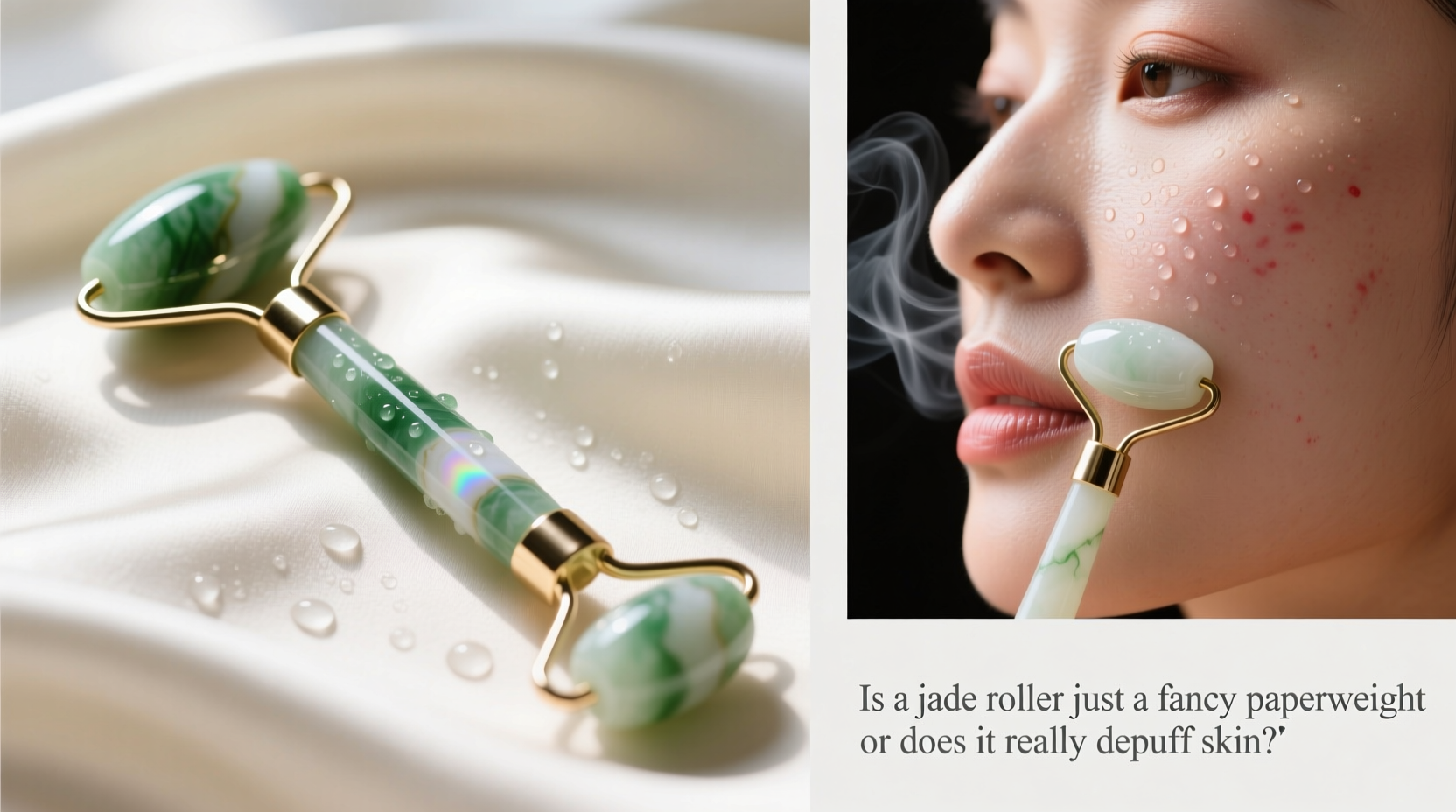
Jade rollers trace their roots back to ancient Chinese medicine, where they were used as part of holistic beauty rituals. Traditionally made from natural jade or other cooling stones like rose quartz, these tools were believed to promote energy flow (qi), enhance circulation, and support lymphatic drainage. In traditional practice, the face was seen as a reflection of internal health, and facial massage was thought to balance the body’s systems while improving skin tone and texture.
Fast forward to the 21st century: the jade roller has been rebranded by wellness influencers and luxury skincare brands. Today, it’s often marketed as a quick fix for puffiness, fine lines, and dullness. While some claims are exaggerated, the core mechanism—facial massage—has legitimate physiological backing.
“Facial massage isn’t just ritual—it’s physiology. Gentle manipulation of facial tissues can stimulate circulation and support lymphatic flow, which may reduce temporary puffiness.” — Dr. Naomi Patel, Dermatologist & Cosmetic Researcher
How Does a Jade Roller Work? The Science of Depuffing
Puffiness, especially around the eyes and cheeks, is often caused by fluid retention. This can result from poor sleep, high sodium intake, hormonal fluctuations, or even allergies. The key to reducing this swelling lies in encouraging lymphatic drainage—the body’s natural process for removing excess fluid and waste from tissues.
The lymphatic system doesn’t have a pump like the circulatory system; instead, it relies on muscle movement and manual stimulation to keep fluid moving. This is where facial massage—and tools like the jade roller—come into play.
When you roll the device across your face using upward and outward motions, you’re applying gentle pressure that helps guide fluid toward lymph nodes located near the ears, jawline, and neck. These nodes then filter and eliminate the excess. Because jade naturally stays cool at room temperature (and can be chilled further), it adds a mild vasoconstrictive effect, temporarily tightening blood vessels and reducing swelling.
However, it’s important to note: the depuffing effect is typically short-term. You may wake up with puffy eyes and use a chilled jade roller for five minutes to see visible improvement—but this won’t “cure” chronic puffiness or replace lifestyle changes like better sleep or reduced salt intake.
What a Jade Roller Can (and Can’t) Do
Let’s separate fact from fiction. Despite bold marketing claims, a jade roller is not a miracle device. It won’t lift sagging skin, erase deep wrinkles, or deliver the same results as radiofrequency treatments or injectables. However, it can complement a solid skincare routine in several meaningful ways.
| Claim | Supported? | Explanation |
|---|---|---|
| Reduces facial puffiness | ✅ Yes, temporarily | Manual lymphatic drainage can move excess fluid, especially when combined with cold therapy. |
| Improves product absorption | 🟡 Partially | Rolling may help press products into the skin, but evidence is anecdotal. Proper formulation matters more. |
| Firms skin or reduces wrinkles | ❌ No | No clinical evidence supports long-term anti-aging effects from rolling alone. |
| Enhances circulation | ✅ Yes | Gentle massage increases blood flow, which may give skin a healthy glow. |
| Replaces professional treatments | ❌ No | It’s a supplementary tool, not a substitute for dermatological care. |
The most consistent benefit users report is a refreshed, less swollen appearance after morning use—particularly helpful if you’ve had a salty dinner or a restless night. Over time, regular use may also train you to be more mindful of facial tension, leading to reduced clenching and grinding, which can indirectly affect puffiness and jawline definition.
Step-by-Step Guide to Using a Jade Roller Effectively
To get real results—not just placebo—you need to use the jade roller properly. Random rolling won’t trigger lymphatic drainage. Follow this clinically informed sequence for optimal depuffing:
- Prep Your Skin: Cleanse your face and apply a serum or facial oil. A slippery surface allows the roller to glide without tugging.
- Start Cold: Remove the roller from the fridge. The cool stone helps constrict blood vessels and calm inflammation.
- Begin at the Center: Start under the eyes, using the smaller end of the roller. Gently roll outward toward the temples—this follows the path of lymphatic flow.
- Move to Cheeks: Place the roller at the nose and roll diagonally up and out toward the hairline. Repeat 3–5 times per side.
- Jawline and Neck: Use the larger end. Start at the chin and roll downward along the jaw to the lymph nodes below the ears. Then continue down the neck in long strokes.
- Forehead: Roll from the center of the forehead outward toward the temples, then upward toward the hairline.
- Finish with Pressure Points: Lightly press the roller at key points—under the eyes, beside the nostrils, and at the base of the skull—to encourage drainage.
Spend no more than 5–7 minutes total. Overuse or excessive pressure can irritate delicate facial skin or even damage capillaries.
Real-World Example: Morning Routine Transformation
Sophie, a 34-year-old project manager, struggled with persistent morning puffiness. She attributed it to stress and irregular sleep patterns. After seeing a dermatologist, she was advised to incorporate gentle lymphatic techniques into her routine. Skeptical but willing to try, she bought a basic jade roller and began using it every morning after cleansing.
She followed the proper technique, storing the roller in the fridge and pairing it with a lightweight facial oil. Within two weeks, she noticed a consistent reduction in under-eye swelling. Her makeup applied more smoothly, and she felt more alert after the ritual. While her skin didn’t dramatically tighten, the cumulative effect was a more awake, balanced appearance.
“It’s not magic,” she said. “But it’s become part of my mindfulness routine. I take three minutes each morning to focus on my breath and my skin. That alone has made a difference.”
Sophie’s experience illustrates a key point: the value of a jade roller isn’t just in the physical outcome, but in the ritual it encourages. Consistency, technique, and realistic expectations are crucial.
Expert Tips and Best Practices
To maximize benefits and avoid common mistakes, consider the following checklist:
- ✅ Use clean hands and a clean roller—wash with mild soap weekly.
- ✅ Apply light pressure; the face is delicate.
- ✅ Pair with a serum or oil to prevent friction.
- ✅ Store in a cool place, preferably the fridge.
- ✅ Use daily for best results, ideally in the morning.
- ❌ Don’t use on active acne or broken skin.
- ❌ Avoid aggressive rolling or pressing too hard.
- ❌ Don’t expect permanent changes—this is maintenance, not transformation.
“The jade roller works best as a supportive tool. Think of it like stretching: it feels good, improves circulation, and supports overall health—but it won’t rebuild muscle.” — Dr. Lena Choi, Integrative Aesthetician
Frequently Asked Questions
Can I use a jade roller if I have sensitive skin?
Yes, as long as you use gentle pressure and a non-irritating product underneath. Avoid rolling over active breakouts, rosacea flare-ups, or sunburned skin. If irritation occurs, discontinue use.
How often should I clean my jade roller?
Clean it at least once a week with lukewarm water and mild soap. Rinse thoroughly and dry with a soft cloth. Avoid harsh chemicals or soaking, as porous stones can absorb liquids.
Are jade rollers better than other materials like rose quartz?
Jade retains coolness slightly longer than rose quartz and is traditionally associated with healing properties in Eastern medicine. Rose quartz is softer and may feel gentler on sensitive skin. Both work similarly—material preference is largely personal.
Conclusion: More Than a Paperweight, Less Than a Miracle
So, is a jade roller just a fancy paperweight? No—but it’s also not a miracle worker. Its value lies in its ability to support natural processes like lymphatic drainage and circulation when used correctly. The depuffing effect is real, though temporary, and most noticeable in the short term after use.
For those seeking a simple, non-invasive way to refresh their complexion and add a mindful moment to their day, the jade roller earns its place on the vanity. It’s not a replacement for medical skincare, but rather a complementary ritual—one that blends tradition, tactile pleasure, and modest physiological benefits.




 浙公网安备
33010002000092号
浙公网安备
33010002000092号 浙B2-20120091-4
Comments
No comments yet. Why don't you start the discussion?