
Facial rollers have become a staple in modern skincare routines, with jade rollers leading the trend. Touted for their ability to depuff, sculpt, and promote glowing skin, these smooth stone tools are often seen gliding across celebrity foreheads and TikTok tutorials. But behind the viral moments and influencer endorsements, a pressing question remains: Are jade rollers genuinely effective for reducing facial puffiness, or is their impact mostly psychological—a well-polished placebo?
To answer this, we need to look beyond aesthetics and marketing claims. By examining the mechanics of lymphatic drainage, the physiology of morning puffiness, and existing clinical insights, we can separate myth from measurable benefit. The truth lies somewhere between tradition and science—and understanding that balance is key to making informed decisions about your skincare.
The Science Behind Facial Puffiness
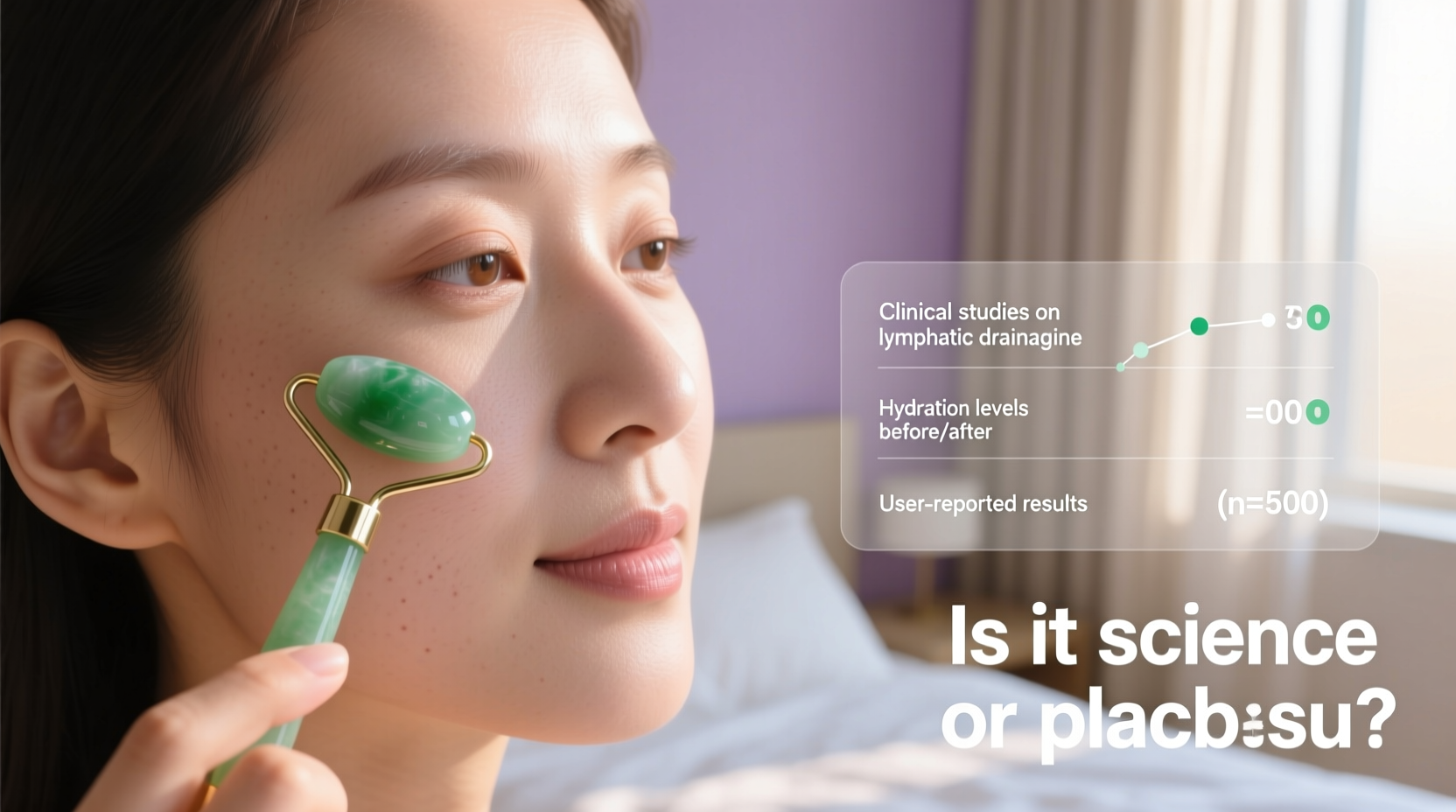
Facial puffiness, especially around the eyes and cheeks, is typically caused by fluid accumulation in the subcutaneous tissues. This is most noticeable upon waking, when gravity has pulled fluids upward during sleep, and circulation has slowed. Other contributors include high sodium intake, dehydration, allergies, hormonal fluctuations, and lack of sleep.
The body naturally regulates this through the lymphatic system, a network responsible for removing excess fluid and waste from tissues. Unlike the circulatory system, which has a pump (the heart), the lymphatic system relies on muscle movement and manual stimulation to function efficiently. This is where techniques like facial massage—and tools such as the jade roller—enter the picture.
Lymphatic drainage involves gentle pressure and directional strokes to encourage fluid to move toward lymph nodes, primarily located along the jawline and neck. When performed correctly, this can reduce localized swelling. However, the intensity and duration matter. A quick 30-second roll across the forehead is unlikely to produce significant physiological change.
“Manual lymphatic drainage can have a measurable short-term effect on facial volume, particularly in individuals with mild edema. But consistency and technique are crucial.” — Dr. Lena Torres, Board-Certified Dermatologist
How Jade Rollers Work: Mechanism vs. Marketing
Jade rollers are typically made from natural jade or sometimes rose quartz, featuring a larger stone for cheeks and forehead and a smaller one for under-eyes and contours. Proponents claim they cool the skin, improve circulation, boost product absorption, and “detox” the face. While some of these assertions are overstated, others have a basis in physical response.
The cooling effect of a refrigerated jade roller can constrict blood vessels, temporarily reducing inflammation and the appearance of puffiness. This is similar to placing a cold spoon under the eyes—an age-old remedy with real, albeit fleeting, results. The rolling motion itself applies light pressure, potentially aiding lymph flow when used with proper technique.
However, material matters less than method. There’s no scientific evidence that jade possesses unique energetic properties that enhance skincare. Claims about “balancing chi” or “releasing negative energy” fall into metaphysical territory, not dermatology. That said, if believing in the ritual enhances user compliance or relaxation—which can indirectly benefit skin health—there may be secondary value.
Placebo or Practical? Evaluating the Evidence
While anecdotal reports praise jade rollers for giving an “instant glow” or “slimmer face,” objective studies are limited. A 2021 review published in *Clinical, Cosmetic and Investigational Dermatology* noted that while facial massage devices may offer transient improvements in skin texture and tone, long-term structural changes are unsupported by robust data.
One challenge in assessing efficacy is distinguishing between actual fluid reduction and optical illusion. Tighter, cooled skin reflects light differently, creating the perception of reduced puffiness—even if fluid levels remain unchanged. Additionally, the act of self-massage triggers parasympathetic nervous system activation, reducing stress hormones like cortisol, which can contribute to water retention.
In essence, jade rollers may not eliminate puffiness at a biological level, but they can create conditions that make it appear diminished. This doesn’t make them useless—it means their benefits are more nuanced than advertised.
| Claim | Scientific Support | Reality Check |
|---|---|---|
| Reduces facial puffiness | Moderate (short-term) | Effective via cooling + massage; results last 1–3 hours |
| Improves lymphatic drainage | Conditional | Only with correct technique and consistent use |
| Enhances product absorption | Low | No direct evidence; rolling may spread product more evenly |
| Provides anti-aging benefits | Poor | No collagen stimulation; temporary plumping only |
| Jade has healing energy | None | Metaphysical belief, not medical fact |
A Step-by-Step Guide to Effective Jade Rolling
If you choose to incorporate a jade roller into your routine, technique determines outcome. Random swiping won’t yield results. Follow this clinically informed sequence for optimal depuffing effects:
- Chill the roller: Place it in the refrigerator for at least 20 minutes before use.
- Cleanse and prep: Start with a clean face. Apply a serum or facial oil to reduce friction.
- Begin at the center: Use the larger end, starting from the nose, roll outward along the cheekbones toward the ears.
- Under-eye area: With the small end, gently roll from the inner corner of the eye outward, following the orbital bone.
- Forehead: Start at the center and roll upward and out toward the temples.
- Jawline and neck: Move downward from the chin along the jaw to the lymph nodes near the collarbone. This direction supports natural drainage.
- Repeat: Perform each stroke 3–5 times with light to moderate pressure.
- Duration: Aim for 3–5 minutes total for noticeable effect.
This routine mimics professional lymphatic drainage protocols. Consistency over weeks may lead to improved microcirculation and reduced chronic puffiness, though individual results vary.
Realistic Expectations: A Mini Case Study
Sophie, a 32-year-old graphic designer, struggled with persistent morning puffiness exacerbated by late nights and high-stress deadlines. After seeing jade rollers featured in beauty magazines, she purchased one and began using it daily for five minutes each morning, storing it in the fridge and pairing it with a vitamin C serum.
Within two weeks, Sophie noticed her under-eye area looked less swollen, particularly on days when she hadn’t slept well. She didn’t expect dramatic changes but appreciated the ritual and the immediate cooling sensation. Over time, she found that combining the roller with adequate hydration and reduced evening salt intake amplified the results.
When she paused use for ten days due to travel, the puffiness returned slightly more pronounced. Resuming the routine brought back the improvement. While Sophie acknowledges the roller isn’t a miracle cure, she views it as a supportive tool—one that works best alongside foundational habits like sleep, diet, and skincare.
Her experience reflects a growing trend: consumers who don’t expect transformation but appreciate subtle, sensory-enhanced maintenance.
Checklist: Is a Jade Roller Right for You?
Before investing, ask yourself the following:
- Do I struggle with morning facial puffiness?
- Am I willing to use it consistently for at least 3–5 minutes daily?
- Do I already follow a basic skincare routine (cleanser, moisturizer, SPF)?
- Am I looking for temporary aesthetic enhancement rather than medical treatment?
- Do I value mindfulness and ritual in my self-care?
If most answers are yes, a jade roller could be a worthwhile addition. If you’re dealing with chronic swelling, thyroid-related issues, or allergic edema, consult a dermatologist instead.
Expert Insight: What Dermatologists Say
Not all professionals dismiss jade rollers outright. Many acknowledge their role as adjuncts—not replacements—for proven treatments.
“The jade roller won’t replace retinoids or prescription therapies, but as a tool for gentle stimulation and patient engagement, it has merit. I’ve had patients report better compliance with skincare when they enjoy the application process.” — Dr. Arjun Patel, Cosmetic Dermatologist, NYC
Some clinics even incorporate mechanical rollers or microcurrent devices into post-procedure recovery to manage swelling. The principle is similar: controlled stimulation supports circulation. The difference lies in precision and power. At-home tools like jade rollers offer milder versions of these effects.
FAQ: Common Questions About Jade Rollers
Can a jade roller really depuff the face?
Yes, but temporarily. The combination of cold temperature and massage can reduce visible puffiness for a few hours by constricting blood vessels and encouraging lymph flow. It won’t address underlying causes like poor kidney function or allergies.
How often should I use a jade roller?
Daily use yields the best results, ideally in the morning to combat overnight fluid buildup. Evening use is optional and may help relax facial muscles after a long day.
Are jade rollers better than other materials like rose quartz or stainless steel?
Not necessarily. Jade retains cold well and is durable, but rose quartz offers similar thermal properties. Stainless steel rollers provide stronger cooling and are easier to sanitize but lack the aesthetic appeal. Functionally, the rolling technique matters more than the stone type.
Final Verdict: Worth It or Overhyped?
The jade roller sits at the intersection of wellness ritual and functional skincare. It is neither a medical device nor a complete sham. Its depuffing effects are real but modest and short-lived. For those seeking immediate visual refinement—say, before a Zoom call or photo session—it delivers a quick, non-invasive boost.
Where it truly shines is in habit formation. The act of rolling encourages mindfulness, slows down morning routines, and fosters a connection with one’s body. In a world of fast-paced living and screen-dominated self-image, that deliberate pause holds value beyond inches or ounces.
So, is the jade roller worth the hype? Not if you expect permanent slimming or deep tissue remodeling. But if you view it as a low-risk, sensory-rich tool that supports circulation, enhances product application, and promotes daily self-care, then yes—it earns its place on the vanity.




 浙公网安备
33010002000092号
浙公网安备
33010002000092号 浙B2-20120091-4
Comments
No comments yet. Why don't you start the discussion?