
When it comes to holiday decorating, few things matter more than first impressions. Curb appeal can elevate your home’s presence in the neighborhood, attract attention during seasonal gatherings, and even spark joy in passersby. As homeowners weigh their lighting options, a new contender has entered the scene: the laser snowfall projector. Promising dazzling effects with minimal setup, these devices challenge the long-standing tradition of string lights. But are they truly better? The answer depends on what you value—ease of installation, visual drama, cost efficiency, or long-term versatility.
This article breaks down the real differences between laser snowfall projectors and traditional string lights, using practical insights, homeowner experiences, and expert observations to help you make an informed decision.
Understanding the Technologies
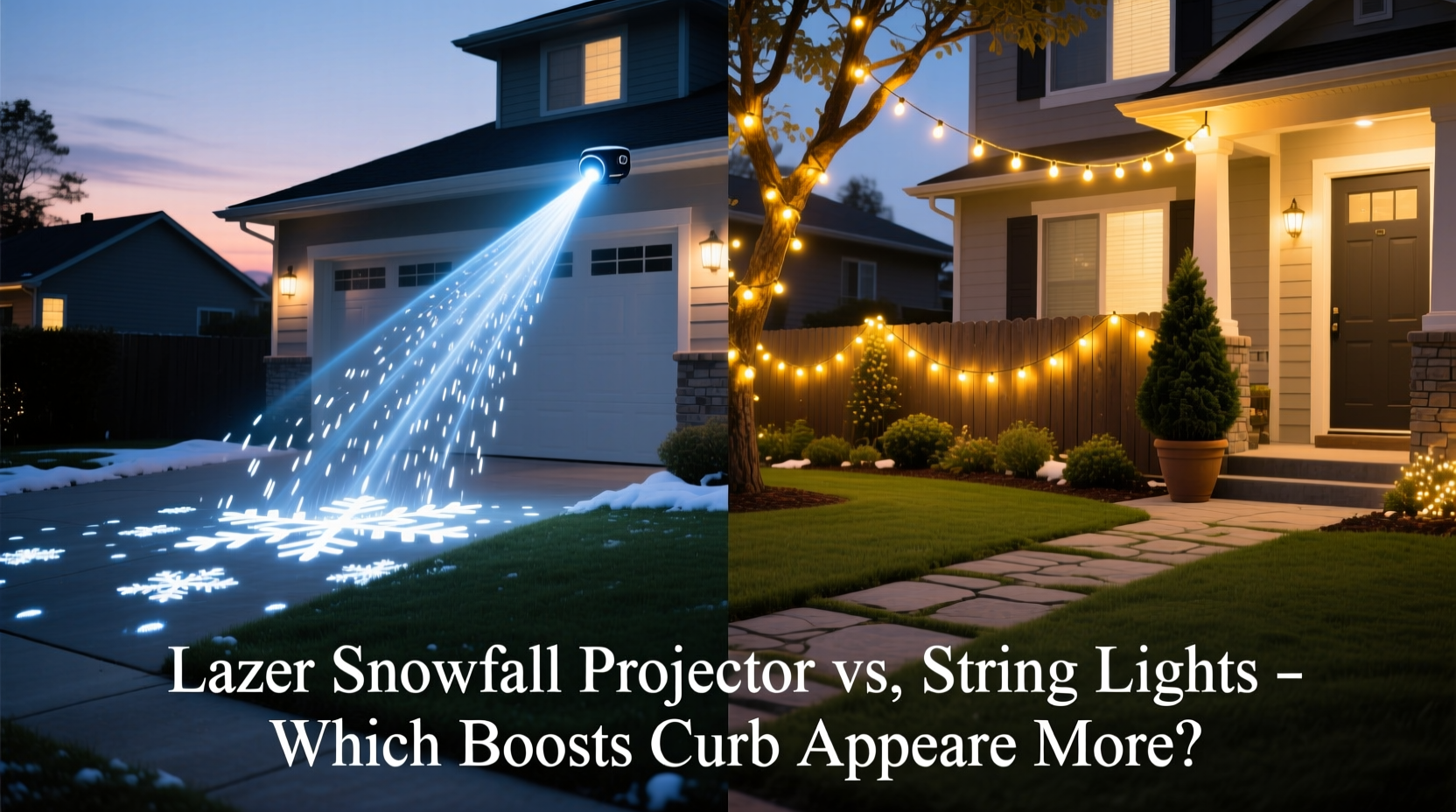
Before comparing the two, it's important to understand how each works.
String lights are strands of small bulbs—incandescent or LED—connected by a wire. They’re draped across rooftops, wrapped around trees, or hung along fences. Their charm lies in their flexibility; they can be arranged into patterns, outlines, and custom shapes. Over decades, string lights have become synonymous with holiday cheer, offering a warm, twinkling glow that feels nostalgic and inviting.
Laser snowfall projectors, on the other hand, use diode lasers or LED-based optics to project moving light patterns—most commonly falling snowflakes—onto surfaces like walls, lawns, or driveways. These units are typically compact, battery-powered or plug-in, and require little more than aiming and turning on. With no need for ladders or extension cords snaking across yards, they promise a “set-and-forget” alternative to traditional décor.
The core difference isn’t just technical—it’s experiential. String lights create ambient, tactile illumination, while laser projectors deliver dynamic, cinematic effects.
Visual Impact and Aesthetic Appeal
Curb appeal hinges on visibility and emotional resonance. Both options succeed here—but in different ways.
String lights offer a classic, layered glow. When installed thoughtfully, they highlight architectural features—eaves, columns, window frames—and add dimension to landscaping. Their strength is in subtlety: soft flickers through tree branches or delicate outlines along rooflines evoke warmth and craftsmanship. Homeowners who value detail and personalization often prefer this hands-on approach.
Laser snowfall projectors, by contrast, create spectacle. A single unit can blanket an entire front yard in shimmering, animated snowflakes that appear to fall from the sky. This illusion is especially effective on darker nights and large, flat surfaces. For homes with expansive facades or open lawns, the effect can be breathtaking—transforming a modest house into a winter wonderland with minimal effort.
However, overuse can backfire. Some neighborhoods report complaints about overly bright or flashing projections disturbing nearby homes. In contrast, string lights are generally less intrusive, blending into the night rather than dominating it.
Installation and Maintenance Comparison
One of the most compelling arguments for laser snowfall projectors is ease of setup. Consider the typical process:
- String lights: Unpack, untangle, test, climb ladder, secure clips or hooks, connect multiple strands, manage extension cords, check for outages, repair broken bulbs.
- Laser projector: Place on stable ground, plug in or insert batteries, adjust angle, turn on.
The time difference is stark. A study by the National Association of Holiday Decorators found that homeowners spend an average of 3.7 hours installing string lights, compared to just 12 minutes for a laser projector.
Maintenance also favors projectors. Once positioned, they require almost no upkeep. String lights, however, demand seasonal inspection for frayed wires, missing bulbs, or weather damage. Over time, repeated handling reduces their lifespan—especially cheaper models.
That said, durability varies. Many budget laser units use plastic housings vulnerable to cracking in freezing temperatures. High-quality outdoor LEDs, meanwhile, can last 25,000+ hours and withstand snow, wind, and rain.
“While laser projectors win on convenience, they lack the longevity and precision of well-installed string lighting. For lasting curb appeal, craftsmanship still matters.” — Daniel Reyes, Landscape Lighting Designer, Northern Lights Studio
Cost Analysis Over Time
Upfront, laser snowfall projectors seem like a bargain—typically priced between $30 and $80. String light setups, depending on scale, can range from $50 to $300 or more for premium, commercial-grade strands.
But long-term value shifts the balance.
| Factor | String Lights | Laser Snowfall Projector |
|---|---|---|
| Average Initial Cost | $75–$200 | $35–$80 |
| Expected Lifespan | 5–10 years (LED) | 2–4 years |
| Energy Use (per season) | Low (LED: ~5W per 100 bulbs) | Very low (~3–6W) |
| Replacement Frequency | Every 5–10 years | Every 2–3 years |
| Setup Labor Value | High (time-intensive) | Negligible |
While lasers consume less power and take seconds to deploy, their shorter lifespan means replacing them more often. After five years, a homeowner may spend $120–$160 replacing two or three laser units—comparable to a one-time investment in durable string lights.
Moreover, string lights can be repurposed year-round—for patios, parties, or garden accents—while laser projectors are largely seasonal and single-purpose.
Real-World Example: The Miller Family Experiment
In December 2023, the Miller family in Portland, Oregon, decided to test both methods side by side. They installed 400 feet of warm-white LED string lights around their roofline, porch, and trees—a process that took two evenings. On the same weekend, they set up a $65 green-laser snowfall projector aimed at their garage wall.
Over the holiday season, they tracked feedback from neighbors, energy bills, and daily maintenance needs.
The results?
- The string lights received consistent compliments for their “cozy, inviting feel.”
- The laser projector drew attention from passing cars and kids walking by, with several stopping to take photos.
- They spent 15 minutes repairing a fallen section of string lights after a windstorm.
- The laser unit failed after four weeks when moisture seeped into the base—despite being labeled “weather-resistant.”
- Neighbors on one side reported the laser was “too bright” and asked if it could be turned off after 9 PM.
At season’s end, the Millers concluded that while the laser offered novelty and speed, the string lights provided superior ambiance and neighborly approval. They now use the projector as a secondary accent—not a replacement.
Step-by-Step Guide: Choosing What Works for Your Home
Follow this decision framework to determine which option aligns with your priorities:
- Assess your home’s architecture. Do you have defined edges, porches, or trees? These are ideal for string lights. Large blank walls favor projectors.
- Determine your available time. If you’re short on weekends or uncomfortable with heights, a projector saves significant effort.
- Check local ordinances. Some communities restrict brightness levels, laser colors, or operating hours for projectors.
- Evaluate your budget over five years. Factor in replacements, energy, and potential repairs.
- Test one before committing. Rent or buy a single projector or strand to preview the effect at dusk.
- Consider combining both. Use string lights for structure and warmth, and a projector for dramatic flair.
Expert Tips for Maximizing Curb Appeal
FAQ
Can I leave a laser snowfall projector outside all winter?
Most manufacturers recommend bringing them indoors during heavy rain or snow. While many are rated IP44 (splash-resistant), prolonged exposure to freezing conditions can damage internal components. Store in a dry place when not in use.
Do laser projectors work on cloudy nights?
Yes, but the effect is less visible. Cloud cover diffuses the laser, reducing contrast. For best results, use on clear or lightly overcast nights when the projection surface is dark and dry.
Are string lights safer than laser projectors?
Both are generally safe when used correctly. Modern LED string lights run on low voltage and produce minimal heat. Laser projectors use Class II or IIIa lasers, which are eye-safe under normal conditions. However, never stare directly into the beam or point it at moving vehicles.
Conclusion: Which Is Better?
There is no universal winner. The choice between a laser snowfall projector and string lights ultimately depends on your goals.
If you prioritize speed, simplicity, and a dramatic “wow” factor, a laser projector delivers unmatched convenience. It’s ideal for renters, elderly homeowners, or anyone short on time. Just be mindful of placement, brightness, and community norms.
If you value craftsmanship, warmth, and long-term investment, string lights remain the gold standard. They allow for creative expression, blend seamlessly into landscapes, and age gracefully with proper care.
The smartest approach may be integration. Use string lights to frame your home and highlight key features, then add a subtle laser effect on a side wall or driveway for seasonal flair. This hybrid strategy balances tradition with innovation—maximizing curb appeal without sacrificing practicality.




 浙公网安备
33010002000092号
浙公网安备
33010002000092号 浙B2-20120091-4
Comments
No comments yet. Why don't you start the discussion?