
Leather backpacks exude timeless style, durability, and craftsmanship. They age beautifully, develop a rich patina, and often become heirloom pieces. But when you live in a climate where rain is a near-daily occurrence—think Seattle, London, or Vancouver—the question arises: is a leather backpack actually practical? Or should you opt for a synthetic model with a built-in rain cover instead?
The answer isn’t black and white. It depends on your lifestyle, how much you value aesthetics versus function, and whether you’re willing to invest time in maintenance. Let’s break down the realities of using leather in wet conditions and explore smarter ways to keep your gear dry—whether you stick with leather or switch materials.
How Leather Reacts to Rain
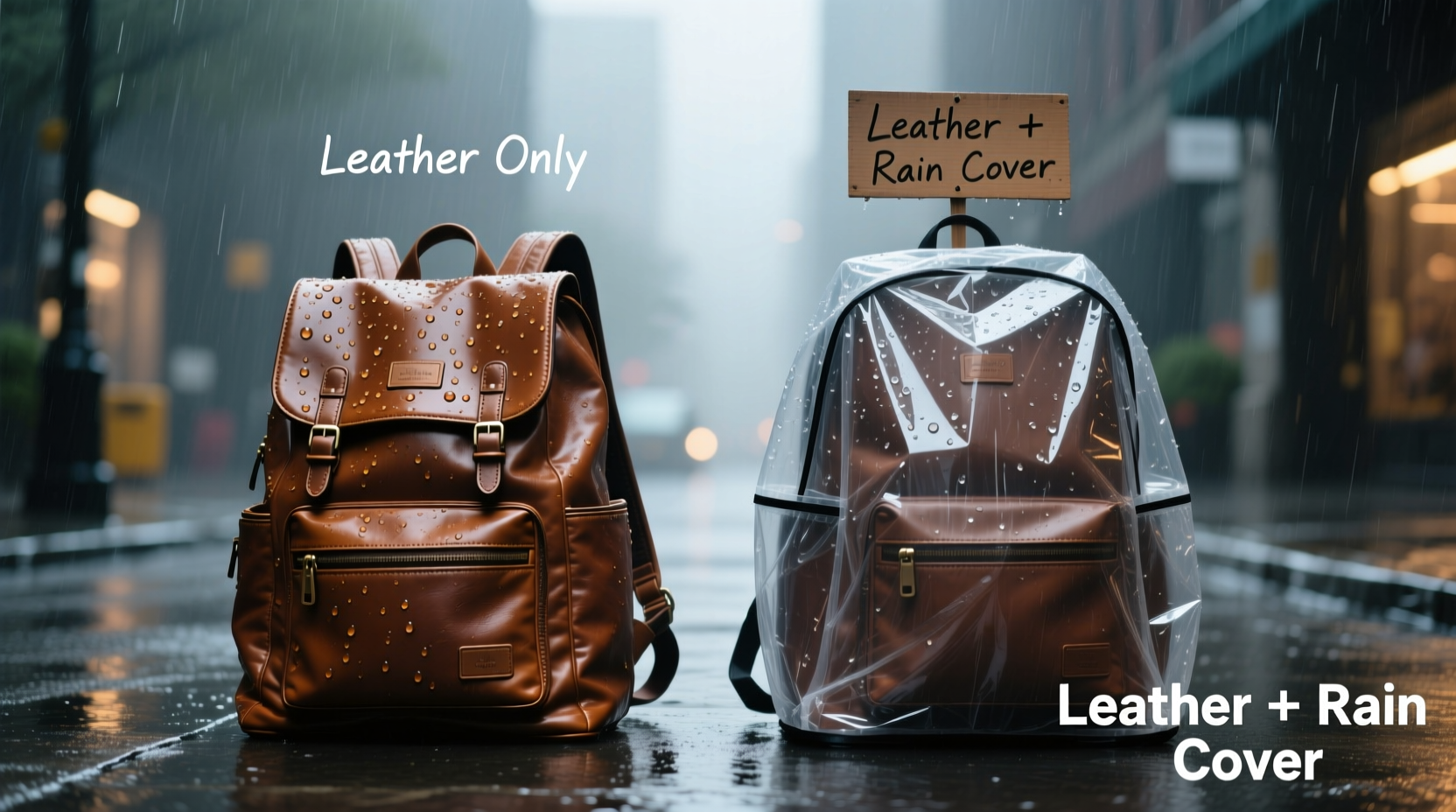
Not all leathers are created equal. Full-grain and top-grain leathers, commonly used in premium backpacks, are naturally porous. When exposed to water, they absorb moisture like a sponge. This can lead to several issues:
- Staining: Water leaves dark spots or uneven blotches as it dries.
- Warping: Prolonged exposure can cause the leather to stiffen or distort its shape.
- Mold and mildew: If stored damp, leather can develop fungal growth over time.
- Hardware corrosion: Moisture seeping into zippers, buckles, or metal accents accelerates rust.
That said, occasional light rain won’t ruin a quality leather backpack—especially if treated properly. The real problem is repeated, unmanaged exposure without drying or conditioning.
“Leather isn’t waterproof, but it’s remarkably resilient when cared for. Think of it like human skin—it needs protection from the elements.” — Daniel Reeves, Artisan Leather Goods Maker
Protecting Your Leather Backpack in Wet Weather
If you’re committed to using a leather backpack despite frequent rain, proactive protection is non-negotiable. Here’s how to minimize damage:
Waterproofing Treatments
Apply a high-quality leather conditioner followed by a waterproofing spray designed specifically for leather. Products like Saphir Super Invulnercote or Obenauf’s Heavy Duty LP create a protective barrier that repels water without clogging pores.
Drying Techniques After Exposure
If your backpack gets wet:
- Wipe off surface water with a soft, dry cloth.
- Let it air dry at room temperature—never near a heater or in direct sunlight.
- Stuff the interior with acid-free paper to maintain shape and absorb internal moisture.
- Once fully dry, recondition with leather balm to restore oils lost during wetting.
Using a Rain Cover on a Leather Backpack
You absolutely can use a rain cover on a leather backpack. In fact, it’s one of the smartest compromises between style and function. A lightweight, packable rain cover (often made from ripstop nylon) shields the entire bag from downpours while preserving the leather underneath.
Many leather backpack brands now offer optional rain covers as accessories. Third-party universal models are also widely available and affordable.
When Synthetic Materials Might Be Better
If you bike to work through pouring rain five days a week, or hike in humid forests year-round, a full-leather backpack may not be the most practical choice. That’s where modern synthetics shine.
Materials like Cordura nylon, recycled polyester, or waxed canvas are inherently water-resistant—and sometimes fully waterproof. Combined with sealed seams and roll-top closures, they outperform untreated leather in sustained wet conditions.
Moreover, many outdoor-focused backpacks come with integrated rain covers stored in the bottom compartment. These deploy in seconds and provide complete coverage.
Comparison: Leather vs. Synthetic + Rain Cover
| Feature | Leather Backpack | Synthetic + Rain Cover |
|---|---|---|
| Aesthetic Appeal | High – ages beautifully, luxurious look | Moderate – functional, less refined |
| Water Resistance | Low (unless treated) | High – especially with sealed seams |
| Maintenance Needs | High – regular conditioning, drying care | Low – wipe clean, air dry |
| Lifespan (with care) | 10+ years | 5–8 years |
| Weight | Heavier | Lighter |
| Eco Impact | Biodegradable but tanning concerns | Often petroleum-based, less biodegradable |
Real-World Example: Commuting in Glasgow
Take Mark, a graphic designer living in Glasgow, Scotland—a city averaging over 170 rainy days per year. He initially bought a handcrafted full-grain leather backpack for its elegance and durability. Within six months, however, the base darkened from puddle splashes, the shoulder straps developed stiffness, and he noticed faint mold near the zipper lining.
After consulting a local cobbler, he learned he’d been drying it too close to a radiator. He switched tactics: started using a compact rain cover during drizzle, wiped it down after every wet commute, and conditioned it monthly. Two years later, the bag looks richer than ever—thanks to consistent care.
His takeaway? “The bag didn’t fail me. My routine did. Once I adjusted, it became my favorite piece of gear.”
Step-by-Step Guide: Making Leather Work in Rainy Climates
If you love your leather backpack but face constant rain, follow this routine:
- Pre-Treat: Apply a waterproofing spray before first use and reapply quarterly.
- Carry a Rain Cover: Keep a foldable one in a side pocket or your coat.
- React Immediately: Wipe down the bag after any moisture exposure.
- Dry Properly: Air dry for 12–24 hours away from heat sources.
- Condition Monthly: Use a leather balm to prevent drying and cracking.
- Inspect Regularly: Check for mold, loose stitching, or hardware wear.
Frequently Asked Questions
Can I use a silicone-based waterproofer on leather?
Silicone sprays can create a temporary barrier, but they often leave a glossy finish and don’t penetrate deeply. For long-term protection, opt for oil- or wax-based treatments formulated for leather, such as those containing beeswax or lanolin.
Are there waterproof leather backpacks?
True waterproof leather doesn’t exist—leather is naturally breathable and absorbent. However, some manufacturers treat leather with advanced hydrophobic coatings or combine it with waterproof linings. These improve resistance but still require care in heavy rain.
What’s better: a rain cover or a waterproof backpack?
A dedicated waterproof backpack (e.g., made from TPU-coated fabric) offers superior protection in extreme weather. But if aesthetics matter, a stylish leather backpack with a reliable rain cover gives you both form and function—without sacrificing either.
Final Verdict: Should You Choose Leather?
Yes—but only if you’re prepared to maintain it. A leather backpack can thrive in rainy environments with proper care. It’s not about avoiding water entirely; it’s about managing exposure and responding correctly.
If you prioritize low maintenance and maximum weather protection, go for a synthetic backpack with a built-in rain cover. These excel in outdoor, travel, or urban commuting scenarios where getting soaked is inevitable.
But if you value craftsmanship, longevity, and a personal connection to your gear, a leather backpack protected by a rain cover strikes an ideal balance. You get the beauty of natural material and the practicality of modern design.
Conclusion: Make the Choice That Fits Your Life
Your backpack shouldn’t just carry your belongings—it should fit seamlessly into your daily rhythm. In consistently wet climates, dismissing leather entirely means missing out on enduring quality and character. Conversely, ignoring environmental demands sets you up for disappointment.
Assess your routine. How often do you walk or bike in the rain? Do you mind carrying a small rain cover? Are you willing to spend 10 minutes a month on maintenance? Answer honestly, then choose accordingly.




 浙公网安备
33010002000092号
浙公网安备
33010002000092号 浙B2-20120091-4
Comments
No comments yet. Why don't you start the discussion?