
Delicate fabrics like silk, cashmere, lace, and fine wool demand special care. One common household tool—often praised for its convenience—is the lint roller. But when faced with a silk blouse before an important meeting or a vintage lace shawl passed down through generations, many pause: Is using a lint roller on such materials truly safe? While effective at removing lint, pet hair, and dust from sturdier textiles, lint rollers can pose real risks to fragile fibers. Understanding how they work, what types of fabrics are most vulnerable, and which safer alternatives exist can help preserve both the appearance and longevity of your most sensitive garments.
How Lint Rollers Work—and Why That Matters for Delicates
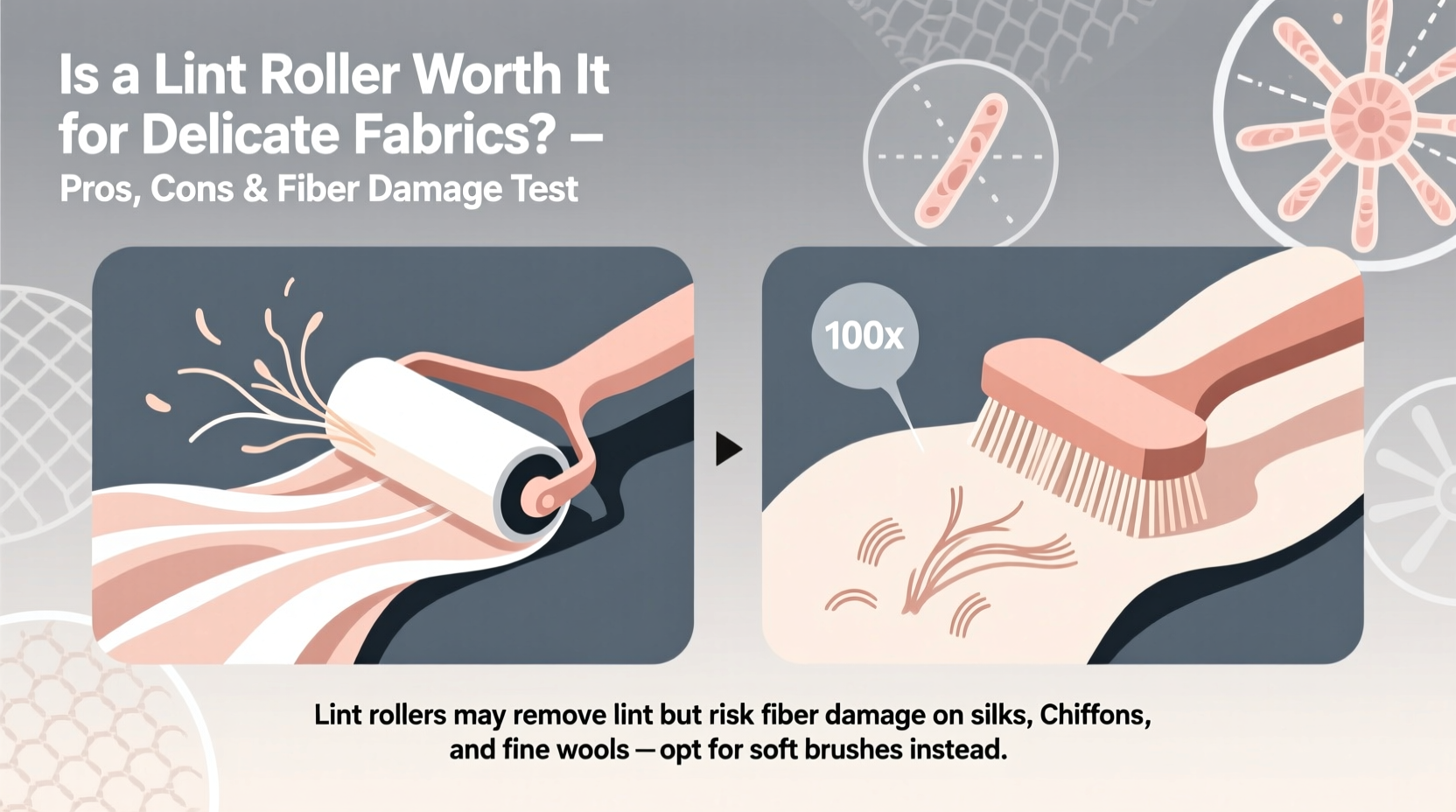
Lint rollers operate on a simple principle: adhesive tape wrapped around a handle picks up loose fibers, dust, and debris through static cling and stickiness. As the roller moves across a surface, the sticky side lifts particles that aren’t firmly attached. This mechanism works efficiently on cotton, denim, or synthetic blends, where fibers are tightly woven and resilient enough to withstand light pulling.
However, delicate fabrics often have looser weaves, finer threads, or raised surfaces (like nap or embroidery) that make them more susceptible to snagging. The adhesive on standard lint rollers isn’t designed with gentleness in mind—it’s meant to grab and hold. When pressed against silk or cashmere, this force can pull out individual fibers, distort knits, or even lift delicate embellishments. Over time, repeated use may lead to pilling, thinning, or visible wear along high-friction areas like collars and cuffs.
“Adhesives don’t discriminate—they’ll pick up lint just as easily as they’ll lift fragile fibers if used improperly.” — Dr. Lena Torres, Textile Conservation Specialist, Museum of Fabric Preservation
Fabrics Most at Risk: A Breakdown
Not all delicate fabrics react the same way to lint rollers. Some are inherently more fragile due to their structure, fiber composition, or finishing processes. Below is a list of materials commonly considered high-risk when exposed to adhesive rollers:
- Silk: Especially raw silk or chiffon, which has a slippery surface and low tensile strength.
- Cashmere: Soft but prone to pilling; aggressive rolling accelerates fiber breakdown.
- Lace: Openwork patterns can snag easily, unraveling intricate designs.
- Velvet and velour: Nap can be flattened or pulled by sticky surfaces.
- Fine knits: Including merino wool or hand-knit pieces with loose stitches.
- Embroidered textiles: Thread ends or beads may catch on adhesive.
The danger increases when pressure is applied during rolling. Even light pressing can cause micro-tears in weak points of the fabric, especially after multiple uses. In archival textile preservation, conservators avoid adhesives entirely for these reasons, opting instead for controlled vacuuming with protective screens.
Lint Roller Alternatives That Protect Fibers
For those who want to keep delicate garments clean without risking damage, several non-invasive methods offer effective results. These techniques prioritize gentle interaction with the fabric while still addressing surface debris.
1. Use a Soft-Bristle Clothes Brush
A natural bristle clothes brush, ideally made from goat or boar hair, gently lifts lint and dust without pulling fibers. Use light, one-direction strokes following the grain of the fabric. This method works particularly well on wool coats, cashmere scarves, and structured silks.
2. Try a Damp Microfiber Cloth
Slightly dampen a lint-free microfiber cloth and lightly dab or swipe over the fabric surface. The moisture helps attract lint and hair via static, while the smooth texture minimizes friction. Always ensure the fabric can tolerate minimal moisture—never use on water-sensitive silks unless spot-tested.
3. Employ a Fabric Shaver (With Caution)
Fabric shavers remove pills and fuzz with rotating blades behind a safety screen. While useful for revitalizing wool or cotton blends, they should be avoided on sheer or loosely woven fabrics. Always set to the lowest setting and move slowly.
4. Use Packing Tape as a Gentle Substitute
If you don’t have a lint roller but need a quick fix, wrap a piece of clear packing tape around your hand (sticky side out) and lightly press it onto the fabric. Because you control the contact area and pressure, this method allows for precision and reduces risk compared to a full roller pass.
5. Invest in a Battery-Powered Mini Vacuum with Mesh Guard
Specialty garment vacuums use low suction and come with mesh attachments that prevent direct contact between the nozzle and fabric. Ideal for heirloom textiles or stage costumes, these tools remove debris without mechanical stress.
Step-by-Step Guide: Safe Removal of Lint from Delicate Fabrics
When dealing with a cherished silk dress or a handwoven shawl, follow this careful process to maintain integrity while achieving cleanliness:
- Inspect the Garment: Check labels for cleaning instructions and examine seams, hems, and textured areas for weakness.
- Test Any Tool First: Apply your chosen method (brush, tape, etc.) to an interior seam or hidden area to assess reaction.
- Work in One Direction: Avoid back-and-forth motions. Stroke gently from top to bottom or left to right to prevent fiber displacement.
- Use Minimal Pressure: Let the tool do the work—do not press hard, even if debris seems stubborn.
- Allow Rest Between Uses: Don’t repeat the process daily. Frequent handling increases wear.
- Store Properly After Cleaning: Place in breathable cotton bags away from humidity and direct light.
“Preserving delicates isn’t just about cleaning—it’s about minimizing intervention. Less is often more.” — Miriam Chen, Conservator at the National Costume Archive
Do’s and Don’ts: Quick Reference Table
| Action | Do | Don’t |
|---|---|---|
| Removing lint from silk | Use a soft brush or taped finger | Apply a standard lint roller |
| Treating pilling on cashmere | Use a manual fabric comb gently | Scrape with scissors or sharp tools |
| Cleaning embroidered fabric | Dab with dry microfiber cloth | Roll over beads or thread details |
| Storing delicate items | Use acid-free tissue and cotton covers | Hang long-term or fold sharply |
| Testing new tools | Always check on a hidden area first | Assume all fabrics react the same |
Real Example: Preserving a Vintage Silk Scarf
Sophia inherited a 1950s silk scarf from her grandmother. The delicate print was pristine, but after wearing it once, she noticed cat hair clinging to the surface. Eager to clean it quickly, she reached for her lint roller. After two passes, she spotted faint pulls near the edge—one thread had begun to unravel.
She stopped immediately and consulted a local textile restorer. The expert advised against any further adhesive use and demonstrated how a soft-bristled hat brush could safely remove remaining hairs. Sophia now stores the scarf flat in a drawer with acid-free paper and only handles it with clean hands. She admits she underestimated how much force a lint roller applies—even when used “gently.”
This case illustrates how easily irreversible damage can occur, even with good intentions. A few seconds of convenience led to months of restoration effort.
Are There Safe Lint Rollers for Delicates?
Some manufacturers market “gentle” or “reusable” lint rollers made with lower-tack adhesives or silicone surfaces. These claim to reduce fiber damage while still lifting debris. While better than traditional models, they are not risk-free.
- Reusable Silicone Rollers: These rely on electrostatic charge rather than glue. They can be wiped clean and reused indefinitely. Best for light dust and occasional pet hair. Not effective on deeply embedded fibers.
- Low-Adhesion Paper Rolls: Some refillable systems offer softer adhesive layers. Still require caution on open weaves.
- Foam Rollers: Non-stick and designed for upholstery, but too abrasive for most delicates.
No lint roller eliminates risk entirely. Their effectiveness depends heavily on user technique. For true heirlooms or irreplaceable pieces, experts recommend avoiding them altogether.
Frequently Asked Questions
Can I ever use a lint roller on silk?
You can—with extreme caution. Use a low-adhesion roller, apply no pressure, and roll in one direction only. However, a soft brush or taped finger is always safer. Never use on antique or fragile silk.
What causes pilling on delicate fabrics?
Pilling occurs when fibers break and tangle into small balls due to friction. Lint rollers can worsen this by pulling loose fibers instead of cutting them cleanly. Regular abrasion from bags, seatbelts, or layered clothing contributes more than cleaning tools.
How often should I clean delicate garments?
Only when necessary. Over-cleaning accelerates wear. Spot-clean minor marks and air out garments between wears. Full cleaning every 3–5 wears is sufficient for most delicates, depending on exposure.
Final Checklist: Caring for Delicate Fabrics Without Damage
- ✔️ Identify fabric type before attempting any cleaning
- ✔️ Avoid standard lint rollers on silk, lace, cashmere, and knits
- ✔️ Use a soft-bristle brush or microfiber cloth for routine maintenance
- ✔️ Test any tool on an inconspicuous area first
- ✔️ Store delicate items flat or rolled, never hung long-term
- ✔️ Consider professional textile cleaning for valuable pieces
Conclusion: Prioritize Longevity Over Convenience
The question isn’t just whether a lint roller works on delicate fabrics—but whether its short-term benefit outweighs long-term harm. For everyday cotton shirts, it’s a time-saver. For silk blouses, vintage lace, or hand-knit woolens, the risk of snags, pulls, and accelerated wear makes it a questionable choice.
True garment care means respecting the material’s limits. By choosing gentler methods and reserving aggressive tools for durable textiles, you extend the life and beauty of your most treasured pieces. The extra minute spent brushing instead of rolling pays off in preserved texture, color, and structure for years to come.




 浙公网安备
33010002000092号
浙公网安备
33010002000092号 浙B2-20120091-4
Comments
No comments yet. Why don't you start the discussion?