
Meditation has moved from spiritual retreats into mainstream wellness, with millions turning to guided sessions for stress relief, focus, and emotional balance. As demand grows, so do the options: on one side, polished meditation apps like Calm, Headspace, and Insight Timer offer structured programs for a monthly fee. On the other, YouTube hosts thousands of free guided meditations from independent teachers, therapists, and global mindfulness leaders. The question isn’t just about cost—it’s about value. Is paying for a meditation app truly better than accessing high-quality content at no charge?
The answer depends on your goals, habits, and how you engage with mindfulness. While both paths lead to inner calm, they differ significantly in structure, reliability, personalization, and long-term sustainability.
Understanding the Core Differences
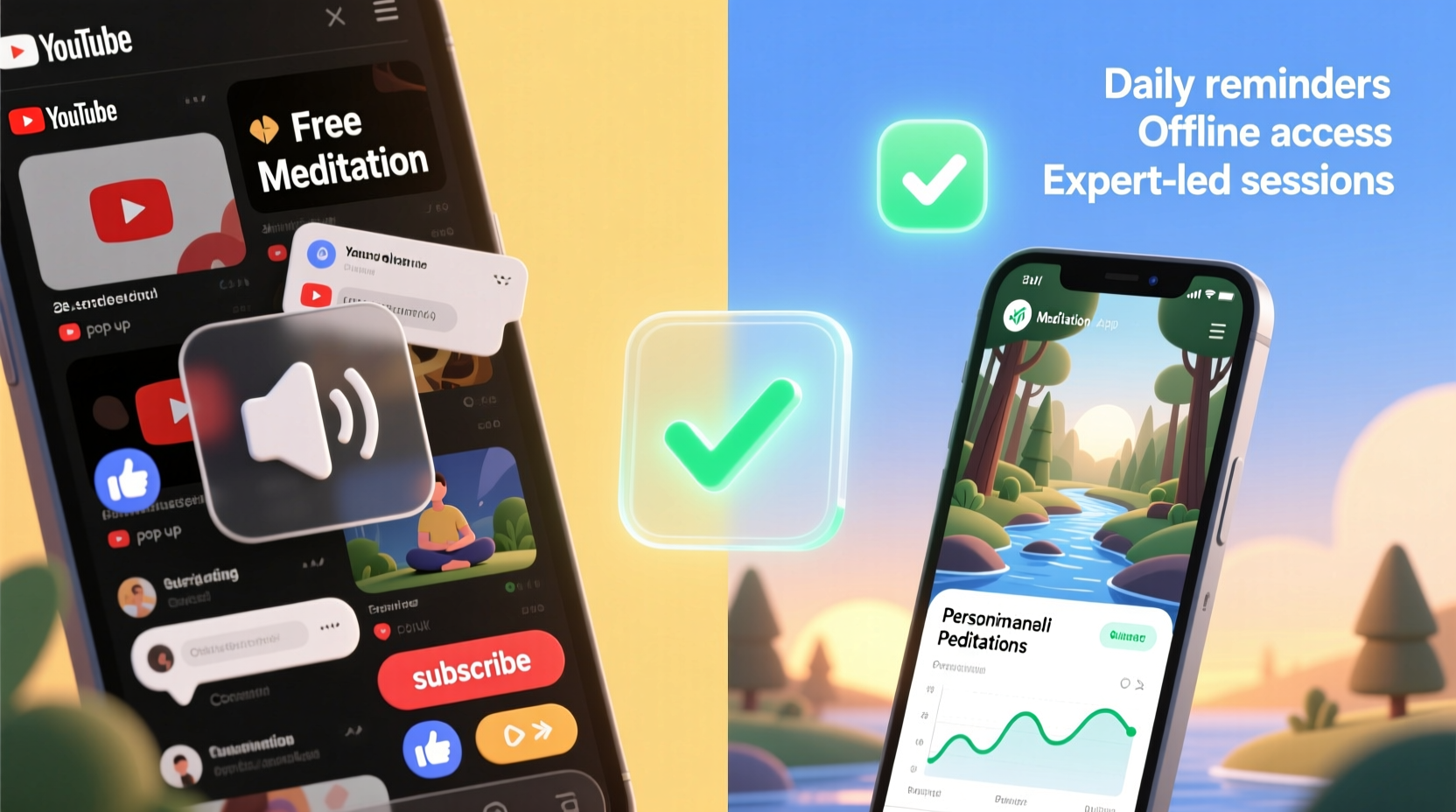
At first glance, both platforms deliver spoken guidance designed to help you meditate. But beneath the surface, their approaches diverge.
Meditation apps are built like fitness trackers for the mind. They offer curated content, progress tracking, themed journeys (e.g., “Sleep Better,” “Anxiety Relief”), offline access, and gentle reminders. These features are engineered to support consistency—a critical factor in building a lasting meditation habit.
YouTube guides, while abundant and often excellent, operate more like an open library. You search, click, and listen. There’s no built-in accountability, limited personalization, and variable audio quality. Some creators produce professional-grade content; others record in noisy environments with inconsistent pacing.
Consider this: if meditation were a gym membership, apps would be the full-service facility with trainers, classes, and progress logs. YouTube would be the public park with free workout videos playing on a laptop. Both can get results—but only one offers structure, feedback, and tailored support.
Cost vs. Value: What Are You Actually Paying For?
A typical meditation app subscription ranges from $10 to $15 per month, or $60–$70 annually. At first glance, that may seem steep when unlimited free content exists. But cost isn’t just about dollars—it’s about time, attention, and outcomes.
Paid apps invest heavily in:
- Professional voice talent (often the same narrators used in YouTube videos)
- Sound design with binaural beats, nature layers, and studio-quality audio
- Clinically informed content developed with psychologists and neuroscientists
- User experience design that reduces friction (e.g., one-tap play, bedtime mode)
- Personalized recommendations based on mood, duration, and past behavior
In contrast, YouTube content varies widely. You might find a 20-minute sleep meditation by a licensed therapist with soothing music—or a poorly lit video with background chatter and abrupt cuts. Sorting through hours of content to find something reliable consumes mental energy, which defeats the purpose of meditation: to reduce cognitive load.
Feature Comparison: Apps vs. YouTube
| Feature | Meditation Apps | YouTube Guides |
|---|---|---|
| Content Quality Control | High – vetted instructors, consistent production | Variable – depends on creator |
| Offline Access | Yes – download sessions for travel or low connectivity | Limited – requires Premium for offline use |
| Personalization | Yes – tracks mood, suggests relevant sessions | No – algorithm based on watch history, not intent |
| Ad-Free Experience | Yes – no interruptions during practice | No – ads may play before or mid-session |
| Program Structure | Yes – multi-day courses with progression | Rare – mostly standalone sessions |
| Progress Tracking | Yes – streaks, total minutes, insights | No |
| Cost | $60–$70/year | Free (or $13/month for YouTube Premium) |
This table highlights a key insight: paid apps trade upfront cost for time savings, consistency, and psychological safety. YouTube trades accessibility for unpredictability.
A Real-World Example: Sarah’s Journey
Sarah, a 34-year-old project manager, struggled with insomnia and work-related anxiety. For months, she relied on YouTube, searching “sleep meditation” each night. She found some helpful videos but often got distracted by suggested content, encountered abrupt ads, or selected sessions that were too long or too intense.
After two months of inconsistent practice, she subscribed to a meditation app. Within weeks, she noticed changes. The app greeted her with a five-minute wind-down session based on her bedtime routine. It remembered her preference for female voices and forest sounds. She completed a seven-day “Calm Mind” course and unlocked a badge for meditating five days in a row.
“It felt like having a coach,” she said. “On YouTube, I was always starting over. The app made it feel like I was actually getting somewhere.”
Sarah’s experience reflects a broader pattern: people who succeed with meditation often do so because of structure, not just motivation.
“Consistency is the most underrated factor in meditation. A $70 app that gets you to practice five times a week is worth far more than unlimited free content you never finish.” — Dr. Lena Patel, Clinical Psychologist & Mindfulness Researcher
When Free YouTube Guides Make Sense
That doesn’t mean YouTube isn’t valuable. For many, it’s the perfect entry point. Here are scenarios where free content outperforms paid subscriptions:
- You’re exploring meditation for the first time – Why commit financially before knowing if it resonates?
- You need a specific type of meditation – Looking for a 10-minute walking meditation or a Tibetan singing bowl session? YouTube’s diversity shines here.
- You’re budget-constrained – Not everyone can justify $60/year, even for wellness.
- You prefer eclectic teachers – YouTube offers global perspectives you won’t find in mainstream apps.
Some creators—like The Honest Guys, Great Meditation, and Michael Sealey—produce content comparable in quality to top-tier apps. Their libraries include sleep stories, chakra balancing, and anxiety relief—all free.
When a Paid App Is Worth the Investment
If any of the following apply, a subscription likely pays for itself in reduced stress and improved focus:
- You’ve tried meditation before but lost momentum. Apps provide nudges, streaks, and milestones that reinforce habit formation.
- You want targeted programs. Healing from burnout? Preparing for surgery? Apps offer clinically backed pathways for specific needs.
- You value uninterrupted, ad-free sessions. Even a single mid-meditation ad can break deep relaxation.
- You travel frequently. Downloadable content means you can meditate on flights, in hotels, or off-grid.
- You want data on your progress. Seeing “You’ve meditated 25 days in a row” builds confidence and commitment.
Think of it like nutrition: you can survive on supermarket leftovers, but a meal plan designed by a dietitian—with portion control, timing, and balance—delivers better long-term results.
Step-by-Step: Choosing the Right Path for You
Follow this decision framework to determine whether a paid app or YouTube suits your needs:
- Assess your current habit. Do you meditate regularly? If not, start free on YouTube to test interest.
- Define your goal. Is it sleep, focus, emotional regulation, or spiritual growth? Match it to available content.
- Test three YouTube sessions from reputable creators. Note distractions, audio quality, and completion rate.
- Try a 7-day free trial of a top app. Most offer full access during trials—use it to compare UX and engagement.
- Evaluate consistency after two weeks. Did you stick with it? Was the experience calming or frustrating?
- Decide: pay for structure or optimize free resources. If you’re using YouTube daily, consider creating playlists and setting reminders to mimic app features.
FAQ: Common Questions Answered
Can I get the same results from YouTube as from a paid app?
Yes, if you’re disciplined about selecting high-quality content, avoiding distractions, and maintaining consistency. However, most users find it harder to stay on track without built-in guidance and tracking.
Are meditation apps just glorified YouTube playlists?
Some are, but the best go further. They integrate behavioral science, adaptive learning, and clinical research to improve outcomes. Features like mood logging, session tailoring, and expert-led courses add value beyond playback.
Do any meditation apps offer free tiers?
Yes. Insight Timer provides thousands of free meditations, including courses and music. Smiling Mind is entirely free and designed for schools and workplaces. These bridge the gap between YouTube and premium services.
Checklist: Making the Most of Your Meditation Practice
- ✅ Start with free content to assess interest and compatibility
- ✅ Use playlists or bookmarks to reduce search time on YouTube
- ✅ Try a 7-day trial of a top app (Headspace, Calm, or Insight Timer)
- ✅ Track how often you complete sessions over two weeks
- ✅ Evaluate based on consistency, focus, and emotional impact—not just cost
- ✅ Invest in a subscription only if it increases your practice frequency and depth
- ✅ Reassess every 90 days—your needs may change
Final Verdict: It’s About Sustainability, Not Savings
The real question isn’t whether meditation apps are “better” than YouTube—it’s whether they help you sustain a practice. Mindfulness isn’t a one-time fix; it’s a skill that deepens over time. And like any skill, it thrives under supportive conditions.
If free YouTube videos get you to meditate regularly and you enjoy them, there’s no need to upgrade. But if you find yourself skipping sessions due to poor audio, distractions, or lack of direction, a subscription may remove those barriers.
Spending $6 a month isn’t about buying peace of mind—it’s about investing in a tool that makes peace easier to access. When measured against the cost of chronic stress, poor sleep, or burnout, even $70 a year becomes a bargain.
In the end, the best meditation resource is the one you actually use.




 浙公网安备
33010002000092号
浙公网安备
33010002000092号 浙B2-20120091-4
Comments
No comments yet. Why don't you start the discussion?