
For decades, holiday decorators have leaned on mirrors to amplify festive light, deepen narrow rooms, and create that elusive “wow” moment when guests enter the room. But as interior design has evolved—prioritizing authenticity, intentionality, and livability—many homeowners now pause before committing to a full mirrored wall behind their Christmas tree. It’s no longer just about sparkle; it’s about cohesion, function, and whether the effect endures beyond December 25th. This isn’t a trend question—it’s a spatial, aesthetic, and practical one. We’ll break down exactly when a mirrored backdrop delivers measurable value—and when it introduces more complications than charm.
How Mirrors Transform Tree Presence (Beyond Just “More Sparkle”)
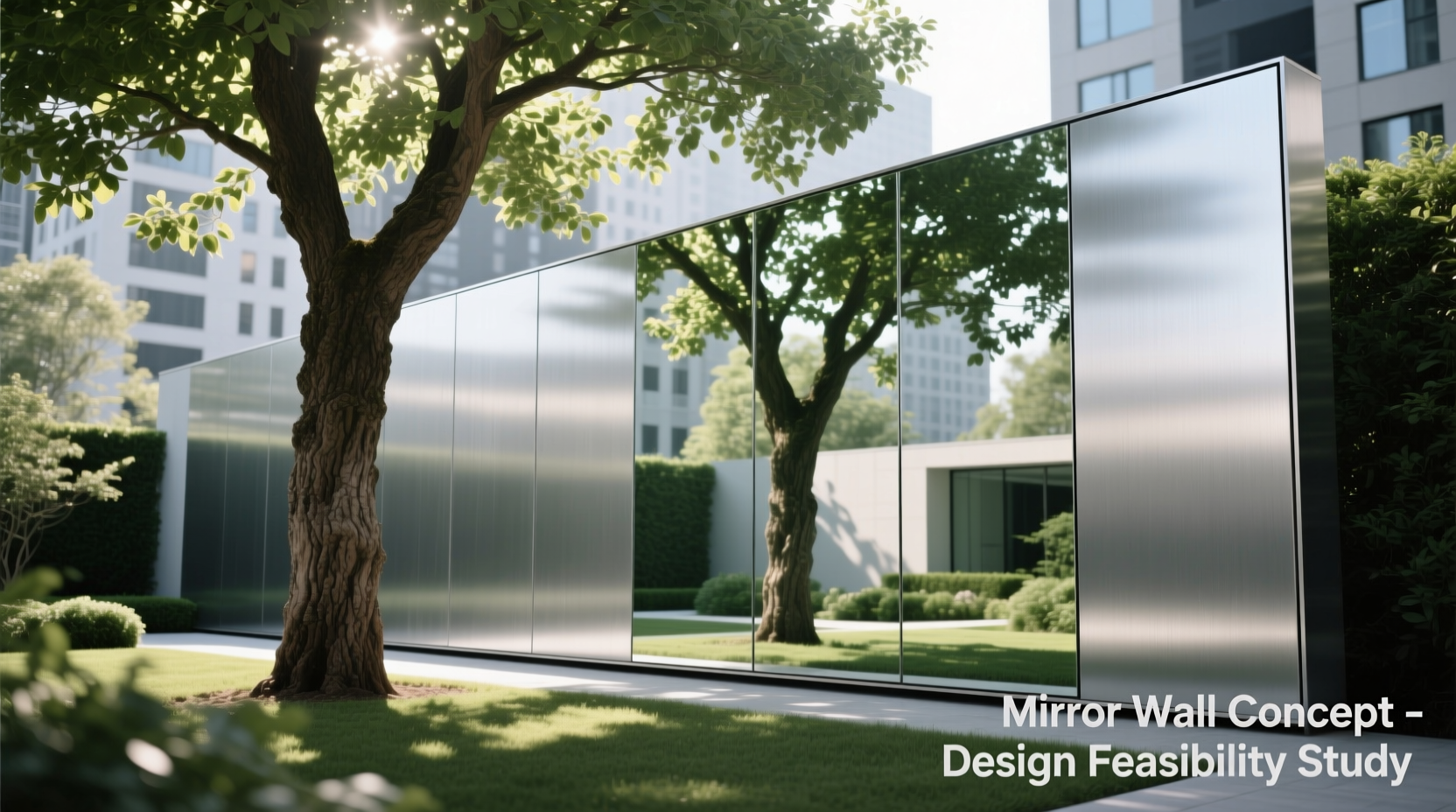
A mirror behind a tree doesn’t simply double the lights—it reframes perception. Light reflects *at angles*, not just straight back, so candles, LED strings, and ornament glints scatter across adjacent walls and ceilings. This creates layered luminosity: the tree itself, its reflection, and the secondary reflections of that reflection in nearby surfaces (windows, glass tables, metallic finishes). The result is ambient brightness with depth—especially effective in rooms with low natural light or north-facing windows.
More subtly, mirrors alter spatial psychology. A 36-inch-wide tree against a 60-inch-wide mirrored panel visually widens the focal wall by ~40%, easing pressure in compact living areas. In open-plan homes, this can anchor the tree zone without physical barriers—a functional alternative to furniture-based zoning. But crucially, the effect depends entirely on mirror placement, size, and framing. An oversized, frameless sheet installed haphazardly can distort proportions, making the tree appear unnaturally stretched or floating in an undefined void.
The Five Critical Trade-offs You Must Evaluate
Before measuring your wall or calling a contractor, weigh these interdependent factors. Each influences the others—and skipping even one can undermine the entire installation.
| Factor | Pros | Cons & Risks |
|---|---|---|
| Visual Impact | Instant glamour; enhances small spaces; multiplies candlelight warmth; creates elegant symmetry with centered trees | Amplifies clutter (visible cords, gift wrap piles, pet toys); highlights wall imperfections (cracks, uneven paint); risks visual competition if adjacent artwork or wallpaper is bold |
| Safety & Practicality | No added heat risk (unlike some LED alternatives); inert surface; durable if properly mounted | Sharp edges if unframed or poorly installed; reflective glare on TV screens or workspaces; potential hazard for young children or pets near lower edges |
| Installation Complexity | Can be DIY with heavy-duty adhesive strips for lightweight acrylic mirrors (<10 lbs); professional mounting adds minimal time if wall studs are accessible | Full-wall glass mirrors require structural anchoring into studs or masonry; improper mounting risks detachment; drywall anchors alone are insufficient for panels over 24\"x36\" |
| Long-Term Flexibility | Removable with minimal residue (if using acrylic + removable adhesive); frames can be repurposed year-round as art displays | Permanent mounting leaves holes/patching; mirrored glass is difficult to reposition; may clash with future decor shifts (e.g., moving to minimalist or earth-toned palettes) |
| Cost Efficiency | One-time investment; lasts 10+ years with care; eliminates need for extra lighting fixtures or decorative panels | Premium mirrored glass starts at $120/sq ft installed; acrylic alternatives ($35–$60/sq ft) scratch easily; labor adds 30–50% to material cost |
A Real-World Case Study: The Brooklyn Brownstone Dilemma
Maya, a graphic designer in a 19th-century brownstone, faced a narrow 7-foot-wide living room with 10-foot ceilings and only one south-facing window. Her 6.5-foot Nordmann fir occupied nearly half the usable floor space, making the room feel cramped during gatherings. She initially considered expanding the tree footprint—but realized scale wasn’t the issue; it was perceived volume.
She installed a custom-framed, beveled-edge acrylic mirror (48\"x72\") centered behind the tree, mounted using heavy-duty 3M Command™ Mirror Strips (rated for 20 lbs). She kept the frame simple: matte black aluminum, 1.5 inches wide, echoing her existing shelving. During setup, she discovered two critical insights: First, angling the tree 5 degrees toward the mirror created a more natural reflection—eliminating the “floating trunk” effect. Second, she hid all cords behind the mirror’s lower edge using Velcro cable wraps, then draped faux pine garlands along the bottom 8 inches to soften the transition.
Result? Guests consistently commented on the room feeling “larger and airier,” despite no physical changes. Maya kept the mirror up year-round, hanging seasonal botanical prints within the frame in January and switching to abstract line drawings in summer. Total cost: $289 (mirror + frame + hardware). Time invested: 3.5 hours. Value realized: extended usability of a constrained space—not just during holidays, but all year.
Step-by-Step: Installing a Mirror Backdrop That Lasts (and Looks Intentional)
- Measure twice, order once: Measure your tree’s maximum width (including branches) and height. Add 6 inches to width, 4 inches to height for ideal reflection margin. Note wall material (drywall, plaster, brick).
- Choose material wisely: For rentals or frequent redecorating: opt for shatter-resistant acrylic (3mm thick). For permanent installations in owned homes: tempered glass (¼ inch) with polished edges and beveling. Avoid standard picture-frame glass—it’s too fragile and lacks clarity.
- Select mounting method: If wall is drywall with accessible studs: use lag bolts into studs + French cleat system. If no studs align: hire a contractor to install a plywood backing board anchored to multiple studs, then mount mirror to board. Never rely solely on drywall anchors for mirrors over 20 lbs.
- Prep the wall: Fill nail holes, sand bumps, repaint if needed. Use a level and laser guide—not just a bubble level—to ensure absolute vertical alignment. Mark stud locations with painter’s tape before drilling.
- Install with buffer zones: Leave ½ inch gap between mirror top and ceiling crown molding. Keep bottom edge 12–18 inches above floor to avoid tripping hazards and simplify vacuuming. Seal edges with clear silicone caulk to prevent dust accumulation.
“Mirrors don’t enhance spaces—they reveal them. A well-placed mirror behind a tree works because it answers a spatial need: depth, light, or focus. Install it as decoration first, and you’ll likely remove it by New Year’s Eve.” — Lena Torres, Interior Architect and Founder of Spatial Clarity Studio
FAQ: Addressing Common Concerns Head-On
Will a mirrored backdrop make my tree look cheap or overly flashy?
Not inherently—but execution determines perception. Cheap-looking outcomes stem from mismatched proportions (mirror too large or misaligned), poor lighting (harsh overhead LEDs instead of warm, directional string lights), or visual clutter visible in reflection (exposed cords, stacked boxes, mismatched ornaments). Prioritize restraint: warm-white lights, cohesive ornament palette (e.g., mercury glass + natural wood), and intentional negative space around the tree base.
Can I use a mirrored tile or mosaic instead of a single panel?
Yes—but with caveats. Small mirrored tiles (e.g., 2\"x2\" or 4\"x4\") introduce grout lines that fracture reflections, diminishing the immersive effect. They also increase installation time and cost significantly. If choosing tiles, use a monochromatic silver-gray grout and limit coverage to a 36\"x48\" zone centered behind the tree—not the full wall. Better alternatives: a single framed mirror, or mirrored acrylic cut into clean geometric shapes (hexagon, octagon) for subtle pattern play.
What if I rent or can’t drill into walls?
Framed acrylic mirrors with heavy-duty removable adhesive strips (like 3M’s FasTak™) are viable for panels under 24\"x36\". For larger options, consider a freestanding mirrored screen—positioned 6–12 inches behind the tree, angled slightly forward. Modern folding screens with mirrored panels (available in brushed nickel or matte black frames) offer flexibility, zero wall damage, and year-round utility as room dividers or vanity accents.
When It’s Worth It—And When It Isn’t
A mirrored backdrop delivers exceptional ROI in three specific scenarios: First, in rooms with limited natural light where artificial illumination feels flat or clinical. Second, in narrow, linear spaces (hallways, studio apartments, galley living-dining combos) where visual expansion directly improves daily function. Third, in homes where the tree occupies a transitional zone—like a stair landing or entry vestibule—where reflection helps unify disparate architectural elements.
It rarely pays off in open-concept great rooms with abundant windows, especially those facing west or south. Here, daylight already provides dynamic light variation, and mirrors compete rather than complement. It also falters in high-traffic family rooms where durability is non-negotiable: acrylic scratches from stray toy cars; glass poses liability concerns near active play zones; and both materials show fingerprints and dust relentlessly—demanding weekly cleaning that few sustain past Week 2 of December.
Crucially, value isn’t measured in Instagram likes. It’s measured in how often you pause while walking past the tree—not to check your phone, but to notice how the light catches a particular ornament’s curve, how the reflection softens a harsh corner, or how the space feels quietly, comfortably *full* without being crowded. That’s the hallmark of a worthwhile installation: not spectacle, but serenity made visible.
Your Next Step Starts With Observation—Not Installation
Before ordering materials or scheduling contractors, spend three evenings observing your intended tree location at different times: at dusk (when ambient light fades), at 7 p.m. (typical family gathering hour), and on a cloudy afternoon. Note where shadows pool, where glare hits your sofa or desk, and what’s unavoidably visible behind the tree—the baseboard heater, the thermostat, the cat’s water bowl. Take photos. Print them. Circle what works—and what would become amplified, not improved, by reflection.
If the answer reveals genuine spatial tension—light deprivation, awkward proportions, or visual fragmentation—then a thoughtfully executed mirror isn’t a gimmick. It’s spatial problem-solving dressed in elegance. But if the room already breathes easily, if light flows generously, if the tree feels like a natural punctuation mark rather than a forced centerpiece, then redirect that budget and energy. Invest in heirloom-quality ornaments, commission a local woodworker to craft a custom tree stand, or commission a textile artist to weave a bespoke garland. Those choices accumulate meaning. Mirrors merely multiply what’s already there.




 浙公网安备
33010002000092号
浙公网安备
33010002000092号 浙B2-20120091-4
Comments
No comments yet. Why don't you start the discussion?