
In an age where desk jobs dominate and screen time is at an all-time high, poor posture has become a widespread concern. Slouching over keyboards, craning necks toward smartphones, and sitting for hours without movement have led many to seek solutions. Enter the posture corrector—a wearable device promising to pull shoulders back, straighten the spine, and retrain the body into ideal alignment. But does it actually work, or is it just another uncomfortable gadget with little long-term benefit?
The answer isn’t black and white. While some users report noticeable improvements in how they sit and stand, others find these devices painful, restrictive, and ultimately ineffective. To understand whether a posture corrector is worth your time and money, it’s essential to examine how they work, what science says about them, and what alternatives exist for lasting postural improvement.
How Posture Correctors Work
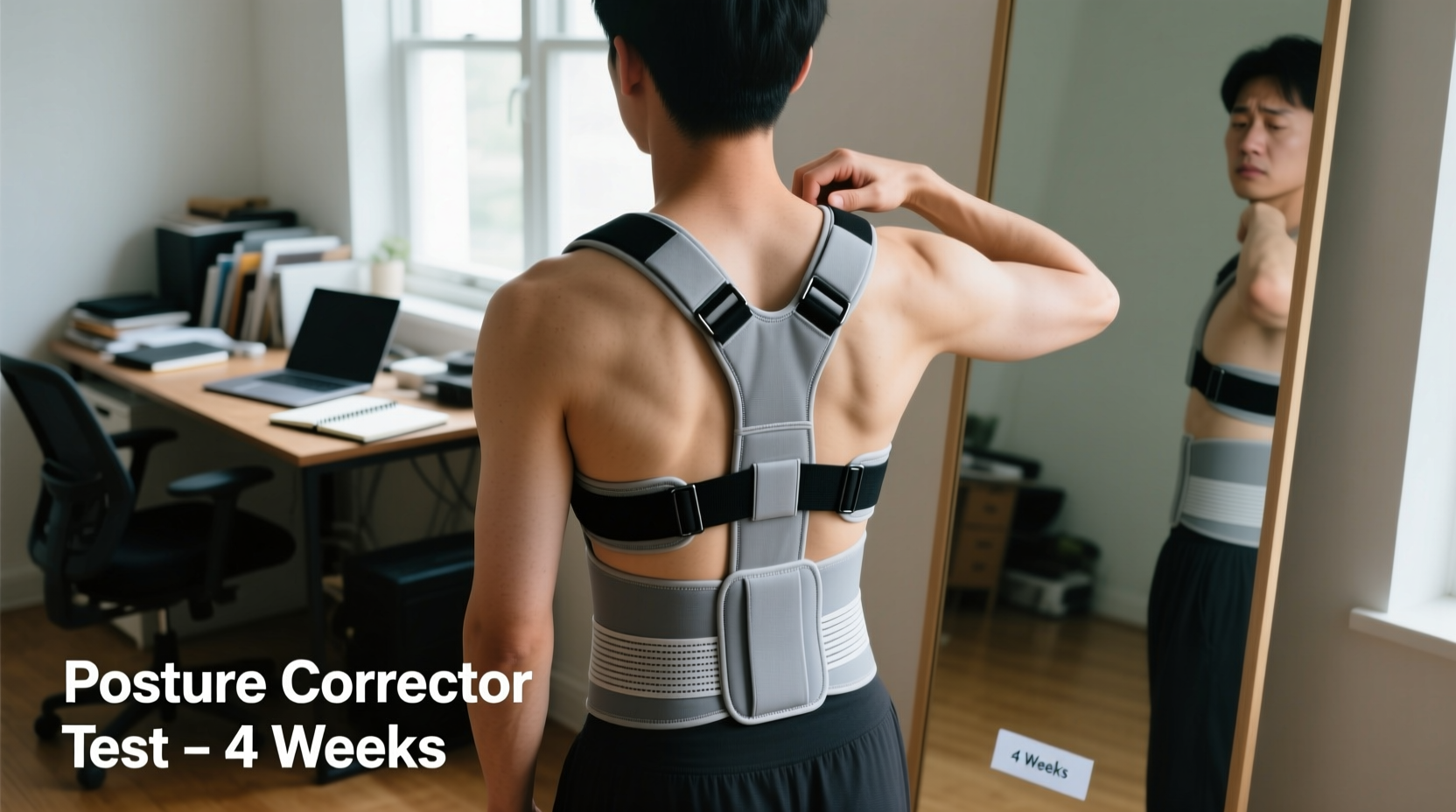
Posture correctors come in various forms—vests, straps, braces, and even smart wearables—but most share a common design principle: mechanical support. They typically feature adjustable bands that wrap around the upper arms and shoulders, pulling them backward to open up the chest and reduce forward shoulder slump. Some models include padding along the spine or clavicle to provide additional feedback.
The underlying idea is simple: by physically holding the body in proper alignment, the device trains muscles and neural pathways to maintain that position naturally over time. Think of it like training wheels on a bicycle—temporary support while the body learns a new habit.
However, unlike a bike, the human body relies on complex muscular coordination and proprioception (the sense of where your body is in space). Simply forcing the shoulders back doesn’t address why poor posture developed in the first place—often due to weak postural muscles, tight chest muscles, or prolonged sedentary behavior.
Scientific Evidence: What Research Says
Despite their popularity, scientific support for posture correctors remains limited. A 2018 study published in the Journal of Physical Therapy Science found that wearing a posture brace improved thoracic kyphosis (upper back curvature) in young adults after four weeks—but only during use. Once the brace was removed, postural gains diminished significantly.
Another review in the European Spine Journal concluded that external supports may offer short-term relief and awareness but are not sufficient for long-term postural correction without concurrent exercise and behavioral changes.
Dr. Laura Mitchell, a physical therapist specializing in musculoskeletal rehabilitation, explains:
“Posture correctors can serve as biofeedback tools—they make people aware of their slouching. But relying on them without strengthening core and scapular stabilizers is like putting a band-aid on a leaky pipe. The real fix comes from inside the body.”
This insight highlights a crucial distinction: awareness versus correction. A posture corrector might remind you to sit up straight, but unless you build the strength and neuromuscular control to maintain that posture independently, any improvement is likely temporary.
Pros and Cons of Using a Posture Corrector
To help evaluate whether a posture corrector could be beneficial for you, consider the following balanced comparison.
| Pros | Cons |
|---|---|
| Immediate postural feedback: Provides real-time cues when slouching occurs. | Discomfort and restriction: Many users report pain, chafing, or difficulty breathing. |
| Awareness boost: Helps users recognize habitual slouching patterns. | Muscle dependency: May weaken postural muscles if relied upon too heavily. |
| Pain relief (short-term): Can reduce neck and upper back strain during prolonged sitting. | No long-term correction: Effects often disappear once device is removed. |
| Motivational tool: Encourages commitment to better posture habits. | Poor fit issues: Ill-fitting models can cause nerve compression or worsen alignment. |
The data suggests that posture correctors are neither universally effective nor entirely useless. Their value depends largely on how they’re used—and whether they’re paired with other corrective strategies.
When a Posture Corrector Might Help
There are specific scenarios where a posture corrector can be a useful adjunct to treatment:
- Rehabilitation after injury: Following shoulder or spinal injuries, a brace may support healing by limiting harmful movements.
- Acute pain management: For individuals experiencing flare-ups of upper back or neck pain, temporary bracing can offload strained tissues.
- Habit retraining phase: As a sensory cue during early stages of postural education, especially for those unaware of their slouching.
- Occupational settings: Workers in roles requiring long hours at a desk may use them intermittently to stay mindful of alignment.
Even in these cases, experts emphasize that correctors should be used sparingly—no more than 20 to 30 minutes per session—and always under guidance from a healthcare professional such as a physical therapist.
Better Alternatives for Lasting Posture Improvement
If your goal is sustainable postural health, relying solely on a brace is unlikely to deliver results. Instead, focus on addressing the root causes of poor posture through evidence-based methods.
1. Strengthen Key Muscle Groups
Weakness in the deep neck flexors, lower trapezius, serratus anterior, and core muscles contributes significantly to forward head posture and rounded shoulders. Incorporate exercises like:
- Rows with resistance bands
- Prone Y-T-W raises
- Planks and bird-dogs
- Chin tucks for cervical alignment
2. Release Tight Muscles
Tight pectorals, suboccipitals, and hip flexors pull the body out of alignment. Use foam rolling, stretching, or massage therapy to restore balance.
3. Improve Ergonomics
Your environment plays a major role. Adjust your workspace so that:
- Your monitor is at eye level
- Elbows are bent at 90 degrees
- Feet are flat on the floor or a footrest
- You take breaks every 30–60 minutes
4. Practice Mindful Movement
Yoga, Pilates, and tai chi enhance body awareness and postural control. These disciplines teach alignment through controlled motion rather than external force.
5. Consider Professional Guidance
A physical therapist can assess your individual postural deviations and create a targeted plan. This personalized approach is far more effective than generic bracing.
Mini Case Study: Sarah’s Experience with a Posture Corrector
Sarah, a 34-year-old graphic designer, began experiencing chronic tension headaches and upper back stiffness after transitioning to remote work. She purchased a popular posture corrector online, hoping for quick relief.
At first, she felt taller and more alert when wearing it. Her coworkers noticed she seemed less hunched during video calls. But after two weeks of daily use (sometimes exceeding two hours), she developed discomfort under her armpits and numbness in her hands—signs of brachial plexus irritation from excessive pressure.
She consulted a physical therapist, who advised her to stop using the device immediately. Instead, Sarah started a regimen of scapular stabilization exercises, ergonomic adjustments, and regular walking breaks. Within six weeks, her pain decreased significantly, and her posture improved without any braces.
“The corrector made me aware of my slouching,” Sarah said, “but it was the exercises and changing my habits that actually fixed the problem.”
Step-by-Step Guide to Improving Posture Without a Corrector
For lasting change, follow this practical sequence:
- Assess your current posture: Take a side-view photo standing against a wall. Note if your ear, shoulder, hip, and ankle align vertically.
- Optimize your workspace: Raise your laptop with a stand, use an external keyboard, and ensure lumbar support.
- Perform daily mobility drills: Spend 5–10 minutes stretching tight areas (chest, neck, hips) and activating weak ones (mid-back, core).
- Add strength training 2–3x/week: Focus on rows, planks, and glute bridges to support spinal alignment.
- Practice posture checks: Use phone reminders to reset your position throughout the day.
- Move frequently: Stand, stretch, or walk for 2–3 minutes every hour to prevent static loading.
- Seek professional evaluation: If pain persists, consult a physical therapist for a tailored program.
Frequently Asked Questions
Can posture correctors fix kyphosis or \"hunchback\"?
Not permanently. While they may reduce the appearance of rounding temporarily, structural kyphosis requires medical evaluation and targeted rehabilitation. In severe cases, bracing prescribed by an orthopedic specialist may be necessary—but over-the-counter correctors are not substitutes.
Are posture correctors safe for long-term use?
No. Prolonged or frequent use can lead to muscle atrophy, reduced joint mobility, and nerve compression. They should be used intermittently and only as part of a broader strategy involving movement and strengthening.
How long does it take to improve posture naturally?
With consistent effort, noticeable improvements can occur within 6–12 weeks. However, postural retraining is ongoing. Like fitness, it requires maintenance through daily habits and regular movement.
Conclusion: A Tool, Not a Solution
A posture corrector is neither a miracle fix nor a complete waste. It can serve as a temporary aid to increase body awareness and interrupt harmful postural habits. However, viewing it as a standalone solution sets unrealistic expectations and may delay meaningful progress.
True postural improvement comes from strengthening the right muscles, releasing tight ones, adjusting your environment, and moving mindfully throughout the day. Devices cannot replace the active engagement required to build resilient, aligned posture.
If you choose to try a posture corrector, do so wisely: limit wear time, pair it with exercise, and discontinue use if discomfort arises. Better yet, invest your energy in sustainable practices that empower your body to hold good posture on its own.




 浙公网安备
33010002000092号
浙公网安备
33010002000092号 浙B2-20120091-4
Comments
No comments yet. Why don't you start the discussion?