
Every December, millions of households face the same seasonal dilemma: should they bring home a freshly cut pine with all its natural charm—and inevitable needle drop—or unbox a reusable artificial tree that stands ready year after year? In 2024, this decision is more nuanced than ever. With growing environmental awareness, evolving family routines, and new data on sustainability, the answer isn’t as simple as tradition versus convenience. The real question isn’t just about needles on the floor—it’s about long-term value, ecological footprint, emotional resonance, and practicality in modern life.
The Emotional and Sensory Appeal of Real Trees
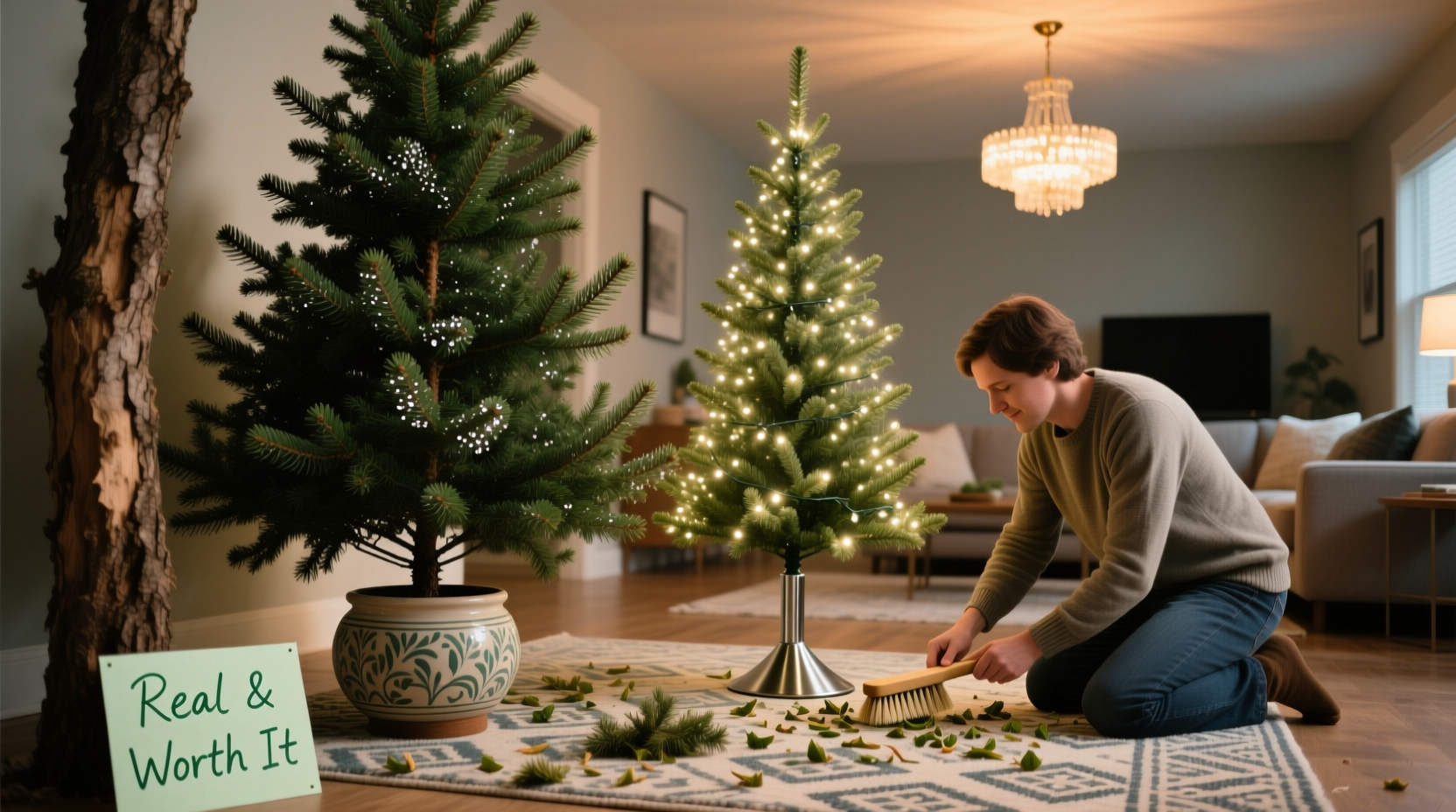
For many, a real Christmas tree isn’t just decoration—it’s ritual. The scent of balsam fir or Douglas pine filling the house, the sound of branches crackling under ornaments, the act of selecting a tree at a local lot or farm—these experiences are deeply woven into holiday memory. Psychologists note that sensory triggers like smell can powerfully evoke nostalgia and emotional connection. A 2023 study from the University of Sussex found that the aroma of conifer trees activates regions of the brain associated with comfort and childhood recollection.
“There’s something irreplaceable about the authenticity of a real tree,” says Dr. Laura Nguyen, an environmental psychologist specializing in seasonal behavior.
“The imperfections—the slight lean, the uneven branch spread, even the mess—are part of what makes it feel alive and meaningful.”This emotional payoff often outweighs minor inconveniences for families prioritizing tradition and atmosphere.
Environmental Impact: Beyond the Surface
One of the most debated aspects is environmental sustainability. At first glance, artificial trees appear greener—they’re reused for years, avoiding annual harvesting. But a closer look reveals a more complex picture.
Most artificial trees are made from polyvinyl chloride (PVC) and metal, both derived from fossil fuels. Manufacturing occurs primarily in Asia, requiring significant energy and transportation emissions. According to a 2023 lifecycle analysis by Ellipsos, a Montreal-based environmental consultancy, an artificial tree must be used for **at least 10 to 12 years** to match the carbon footprint of buying a real tree annually.
In contrast, real Christmas trees are typically grown on farms specifically for harvest. These farms sequester carbon during growth, support rural economies, and often replant one seedling for every tree cut. After the holidays, real trees can be recycled into mulch, erosion barriers, or even habitat structures for fish in lakes—programs available in over 4,500 U.S. communities.
However, improper disposal negates these benefits. Trees dumped in landfills emit methane as they decompose, a greenhouse gas far more potent than CO₂. The key is proper end-of-life management.
“Sustainability isn’t just about materials—it’s about usage patterns and disposal. A real tree composted responsibly has a lighter footprint than an artificial one used for only three years.” — Mark Tran, Sustainable Living Analyst, GreenChoice Institute
Cost Comparison Over Time
Price is another major factor. While artificial trees require a higher upfront investment, real trees involve recurring annual costs. Here’s how the numbers typically stack up in 2024:
| Tree Type | Average Initial Cost | Annual Maintenance | Lifespan | Total 10-Year Cost |
|---|---|---|---|---|
| Real Christmas Tree (farm-grown) | $75–$120 | $0 (if not including stand replacement) | 1 year | $750–$1,200 |
| Mid-Range Artificial Tree | $180–$300 | $10 (storage bags, light repairs) | 8–12 years | $260–$420 |
| Premium Artificial Tree (with lights) | $400–$700 | $5 (minimal maintenance) | 15+ years | $405–$705 |
At first glance, artificial trees win on long-term economics. But this assumes consistent reuse. Industry data shows the average American household keeps an artificial tree for only **six years**, often due to broken branches, outdated design, or fading color. When replaced prematurely, the per-year cost spikes, erasing much of the savings.
Meanwhile, real tree prices have risen modestly—about 3% annually since 2020—due to labor, fuel, and drought-related crop challenges. Still, for those who view the tree as a temporary centerpiece, the annual expense may feel justified by the experience.
Practical Challenges: Mess, Maintenance, and Space
No discussion of real versus artificial trees is complete without addressing practicality. Needles, sap, water spills, and limited shelf life are genuine concerns—especially in homes with pets, allergies, or tight schedules.
Real trees shed needles throughout their indoor life. Even well-hydrated trees lose some foliage, particularly as they dry out in heated homes. Vacuuming becomes a weekly chore, and pets may ingest fallen needles, which can cause digestive irritation. Additionally, keeping the water reservoir full is essential—neglect leads to rapid drying and increased fire risk. The National Fire Protection Association reports that between 2016 and 2020, U.S. fire departments responded to an average of 160 home fires per year involving decorative lights or trees, with dry real trees posing a notable hazard.
Artificial trees eliminate most of these issues. No watering, no shedding, no sap. They’re ideal for renters, small apartments, or people who travel during the holidays and want to decorate quickly upon return. Many come pre-lit with energy-efficient LEDs and fold compactly for storage. However, setup time varies—larger models with hundreds of tips can take 45 minutes or more to fluff and shape properly. Poorly stored trees develop permanent creases in branches, diminishing their fullness.
Step-by-Step: Choosing the Right Tree for Your Lifestyle in 2024
Instead of framing the choice as “real vs. artificial,” consider aligning your decision with your household’s values and habits. Follow this timeline to make an informed choice:
- Assess your priorities (October): Rank what matters most—tradition, ease, cost, sustainability, or aesthetics.
- Evaluate your space and routine: Do you have room for a large tree? Will someone be home to refill water daily?
- Check local recycling options: Search for curbside pickup or drop-off centers for real trees. If none exist, composting may not be feasible.
- Review past experiences: Did last year’s artificial tree frustrate you with tangled lights? Did the real tree dry out too fast?
- Set a budget and commitment level: Are you prepared to use an artificial tree for at least a decade? Or do you prefer the annual ritual of choosing fresh greenery?
- Make your purchase by early December: Avoid peak pricing and stock shortages.
This approach shifts the focus from guilt (“Am I harming the planet?”) to intentionality. Both options can be responsible when chosen mindfully.
Real Example: The Thompson Family’s Tree Transition
The Thompsons of Portland, Oregon, used real trees for 15 years. Each December, they visited a local farm, cut their own tree, and displayed it proudly in their living room. But in 2022, their youngest child was diagnosed with asthma, and allergens from pine sap and mold spores on outdoor-stored trees began triggering symptoms.
After consulting an allergist and researching alternatives, they switched to a premium artificial tree with hypoallergenic materials. “We grieved the loss of the smell and tradition,” says Sarah Thompson, “but our son’s health came first.” They now donate the equivalent of what they’d spend on a real tree to a reforestation nonprofit each year—turning their change in practice into environmental action.
Their story reflects a growing trend: hybrid solutions that honor core values while adapting to new realities.
Checklist: How to Decide Which Tree Is Right for You
- ☐ I have reliable access to real tree recycling in my area.
- ☐ Someone in the household can check and refill the tree water daily.
- ☐ I plan to keep an artificial tree for at least 10 years if I buy one.
- ☐ No household members have allergies worsened by pollen or mold.
- ☐ I have adequate storage space for an artificial tree off-season.
- ☐ The emotional experience of selecting a live tree is important to me or my family.
- ☐ My budget allows for either a one-time investment (artificial) or recurring cost (real).
Frequently Asked Questions
Do real Christmas trees contribute to deforestation?
No. The vast majority of Christmas trees are grown on farms specifically for harvest, similar to crops. For every tree cut, farmers typically plant one or more seedlings. Wild forests are not logged for Christmas tree production.
Can artificial trees be recycled?
Currently, very few recycling programs accept artificial trees due to mixed materials (plastic, metal, wires). Some municipalities offer seasonal collection for landfill diversion, but most end up in dumps. Research is ongoing into PVC-free alternatives, but widespread options aren’t yet available.
How long does a real tree stay fresh indoors?
With proper care—making a fresh cut, using a water-filled stand, and keeping it away from heat—a real tree can stay fresh for 4 to 5 weeks. After that, dryness and needle drop increase significantly.
Conclusion: Finding Value Beyond the Mess
In 2024, whether a real Christmas tree is “worth the mess” depends entirely on how you define value. If your priority is low maintenance, long-term savings, and consistency, an artificial tree likely serves you better. But if you cherish tradition, sensory richness, and supporting agricultural communities, the occasional vacuum session and sticky sap on your hands may be small prices to pay for a deeper seasonal experience.
The most sustainable choice isn’t always the one with the lowest carbon number—it’s the one you’ll use fully and responsibly. A real tree composted correctly holds more ecological integrity than an artificial one discarded after three years. Likewise, an artificial tree used for 15 joyful Decembers represents smart stewardship.
Rather than defaulting to habit or social expectation, take a moment this year to reflect. What kind of holiday do you want to create? What kind of impact do you want to leave—not just on your floors, but on your family, your community, and the planet?




 浙公网安备
33010002000092号
浙公网安备
33010002000092号 浙B2-20120091-4
Comments
No comments yet. Why don't you start the discussion?