
The decision between a real pine tree and an artificial one is more than just tradition versus convenience—it’s about atmosphere, authenticity, and personal values. For decades, families have debated which option delivers the true essence of the holidays. While artificial trees promise durability and ease, real pine trees bring an undeniable sensory experience. The crisp aroma of evergreen needles, the texture of fresh branches, and the subtle imperfections that signal life—these elements define what many consider a “real” Christmas. But how do they truly compare in terms of scent and appearance? And does the artificial alternative stand a chance?
This article examines both options with honesty and depth, weighing not only their visual appeal and fragrance but also longevity, environmental footprint, emotional resonance, and practical upkeep. Whether you're decorating your first home or reevaluating long-standing traditions, understanding these differences can help you choose the tree that best enhances your holiday spirit.
The Scent Factor: Why Real Pine Trees Are Hard to Replicate
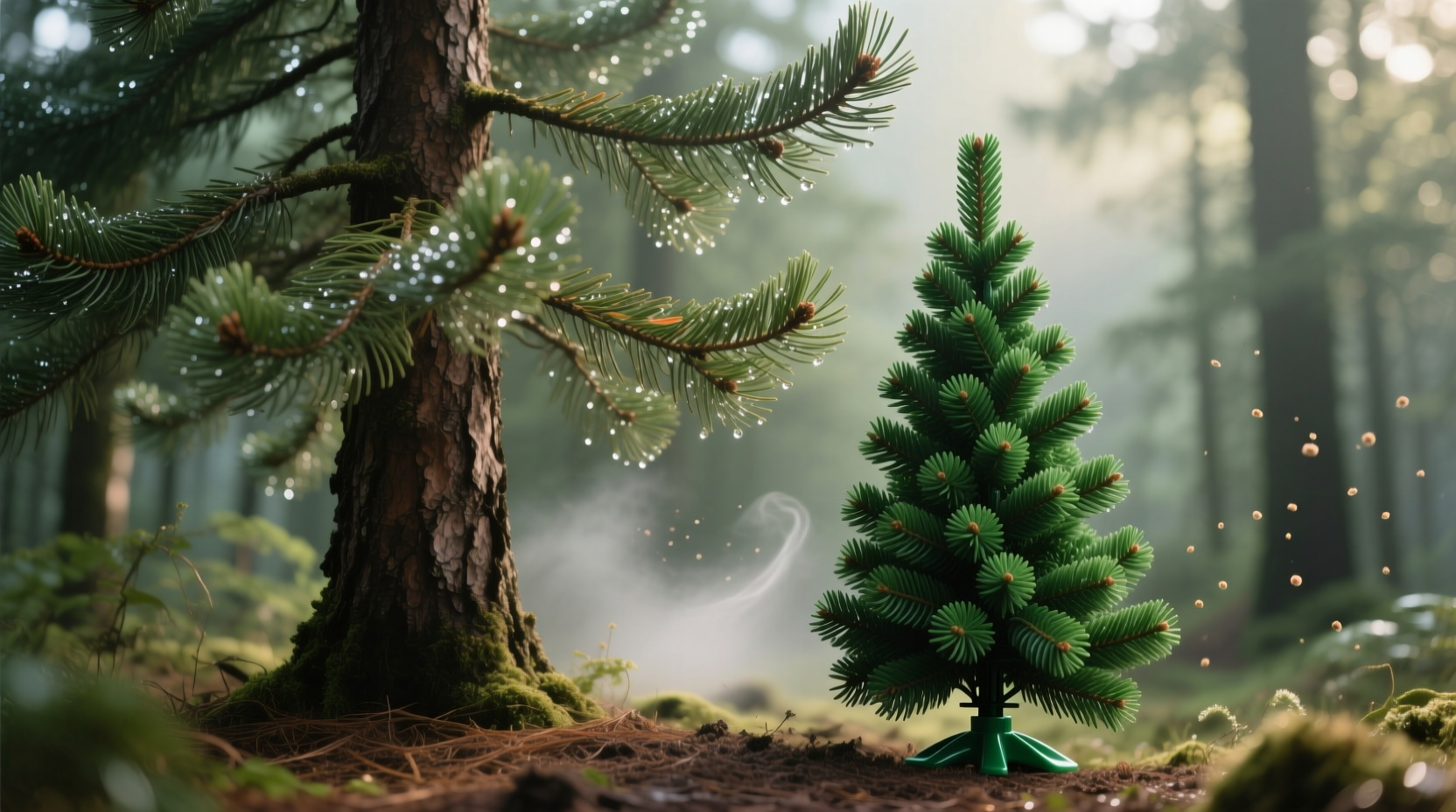
One of the most compelling arguments for choosing a real pine tree is its fragrance. When you walk into a room with a freshly cut tree, there's an immediate sensory shift—the sharp, clean scent of pine resin fills the air, evoking memories of snowy forests, family drives to tree farms, and early-morning gift openings. This aroma isn’t just nostalgic; it’s chemically complex. Pine trees release volatile organic compounds (VOCs), including pinene and limonene, which contribute to their signature woodsy, slightly citrusy smell.
Artificial trees, even those marketed as “scented,” fall short. Some come with built-in sprays or infused oils, but these often produce a flat, synthetic odor that fades within days. Others require manual application of pine-scented spritzes, which can feel forced and inconsistent. Worse, low-quality plastics used in manufacturing can emit their own chemical odors—especially when unpacked after storage—undermining any attempt at natural ambiance.
“Nothing replicates the olfactory richness of a live conifer. The scent is dynamic—it changes throughout the day based on temperature and airflow, creating a living environment.” — Dr. Laura Simmons, Environmental Psychologist specializing in sensory design
Visual Authenticity: Natural Beauty vs. Manufactured Perfection
Appearance plays a central role in holiday decor, and here, real and artificial trees offer contrasting strengths. A real pine tree brings organic variation—branches grow at irregular intervals, needles vary in shade from deep green to silvery-blue, and each tree has a unique silhouette. These imperfections are not flaws; they’re markers of authenticity. They signal that this is a living thing, harvested with care, and temporarily brought indoors to celebrate the season.
In contrast, artificial trees are engineered for uniformity. Their branches are evenly spaced, their color consistent, and their shape often fuller than most natural pines. While some high-end models mimic species like Fraser fir or Balsam pine with impressive accuracy, they still lack the subtle texture of real bark, the slight droop of heavy boughs, and the way light reflects differently off thousands of individual needles.
Moreover, artificial trees can appear overly bright or plasticky under certain lighting. Over time, exposure to sunlight and repeated assembly can cause fading, warping, or fraying—especially in lower-cost models. Real trees, while they may shed needles, maintain their structural integrity until disposal and decompose naturally afterward.
Comparison Table: Scent & Appearance Features
| Feature | Real Pine Tree | Artificial Tree |
|---|---|---|
| Natural Fragrance | Strong, authentic, evolves over time | Absent or artificial; requires additives |
| Visual Texture | Organic, varied, lifelike | Synthetic, uniform, sometimes stiff |
| Needle Retention | Sheds gradually; depends on care | No shedding (unless damaged) |
| Color Variation | Natural gradients and tones | Consistent, often artificially vibrant |
| Lifespan | One season (with proper disposal) | 5–10+ years with storage care |
| Environmental Impact | Biodegradable; renewable resource | Plastic waste; non-recyclable in most cases |
Emotional and Psychological Impact
Beyond physical traits, the choice between real and artificial trees influences mood and memory. Studies in environmental psychology suggest that natural elements indoors—known as biophilic design—can reduce stress, improve focus, and elevate emotional well-being. The presence of a real tree, with its evolving scent and organic form, taps into this principle. It engages multiple senses simultaneously, creating a more immersive holiday experience.
For children, the process of selecting and bringing home a real tree—from feeling the needles to helping secure it in the stand—builds lasting rituals. The smell alone can become a powerful trigger for future nostalgia. In contrast, assembling an artificial tree from a box lacks the same ceremonial weight. It’s efficient, yes, but rarely magical.
That said, artificial trees serve important roles for people with allergies, limited mobility, or small living spaces. For them, consistency and convenience outweigh sensory richness. The key is recognizing that emotional value isn’t universal—it depends on lifestyle, health needs, and personal history.
Maintenance and Long-Term Practicality
Real pine trees demand attention. They need daily watering, a sturdy stand, and placement away from radiators or fireplaces. Needle drop is inevitable, requiring regular vacuuming or sweeping. But this care routine also fosters connection. Checking the water level becomes a shared responsibility; noticing new scent intensity on cold mornings feels like a reward.
Artificial trees eliminate most upkeep. Once assembled, they require no watering and shed nothing. However, they must be stored properly—ideally in a climate-controlled space, protected from dust and compression. Poor storage leads to bent tips, tangled wires (in pre-lit models), and difficulty assembling year after year. What starts as a time-saver can become a frustrating chore.
Step-by-Step: Maximizing Your Real Tree’s Lifespan and Scent
- Select a Fresh Tree: Look for flexible needles, sticky sap at cut points, and minimal needle drop when gently shaken.
- Make a Fresh Cut: Before placing in the stand, trim 1–2 inches off the trunk to reopen water-absorbing vessels.
- Use a Large Water Reservoir: Choose a stand that holds at least one quart of water per inch of trunk diameter.
- Keep It Hydrated: Check water levels daily—trees drink heavily in the first few days.
- Control Environment: Keep away from vents, fireplaces, and direct sunlight to slow drying.
- Enhance Naturally: Add citrus slices or cinnamon sticks to the water for subtle aromatic boosts (avoid commercial mixes that may clog absorption).
- Dispose Responsibly: Recycle through municipal programs or repurpose as mulch or bird habitat.
Environmental Considerations
The sustainability debate often oversimplifies the issue: real trees = good, artificial = bad. Reality is more nuanced. Real Christmas trees are typically grown on farms specifically for harvest, absorbing CO₂ during growth and supporting rural economies. After use, they’re compostable and often turned into erosion barriers, fish habitats, or biomass fuel.
Artificial trees, mostly made from PVC and metal, are petroleum-based and non-biodegradable. Manufacturing involves significant carbon emissions, and most end up in landfills after 5–9 years of use. To offset their environmental cost, experts estimate an artificial tree must be reused for at least **12 to 20 years** to match the lifecycle impact of buying a real tree annually.
“Every acre of Christmas trees produces enough oxygen for 18 people. That’s not just symbolic—it’s measurable ecological benefit.” — National Christmas Tree Association
Mini Case Study: The Thompson Family’s Tree Transition
The Thompsons of Ann Arbor, Michigan, used a pre-lit artificial tree for over a decade. It was convenient, always the same height, and spared them the mess of needles. But their youngest daughter, age six, asked every November, “Why don’t we go pick a real tree like my friend Emma?”
Last year, they relented. They visited a local farm, let the kids choose a Balsam fir, and brought it home wrapped in netting. That evening, as the scent filled the house, the father remarked, “I haven’t smelled this since I was a kid.” The mother, who’d worried about cleanup, admitted the daily watering became a calming ritual. They now plan to make the farm visit an annual tradition.
Their artificial tree remains in storage—no longer needed. “It looks perfect,” says Mrs. Thompson, “but it doesn’t *feel* like Christmas.”
Frequently Asked Questions
Do artificial trees really save money over time?
They can—if used for 10+ years. But initial costs for high-quality, realistic models range from $150 to $500. Factoring in storage, repairs, and eventual disposal, savings are modest unless longevity is guaranteed.
Are real trees bad for the environment because they’re cut down?
No. Most are grown on sustainable farms, not harvested from wild forests. For every tree cut, growers plant 1–3 new seedlings. Farmed trees support biodiversity, prevent soil erosion, and sequester carbon during growth.
Can I make my artificial tree smell better?
You can try pine-scented sprays, essential oil diffusers nearby, or hanging natural sachets (like dried orange peels or cinnamon bundles). However, results are temporary and less immersive than a real tree’s natural emission.
Checklist: Choosing the Right Tree for You
- ✅ Assess your space: ceiling height, proximity to heat sources, floor protection needs
- ✅ Consider allergies: real trees may irritate sensitivities; artificial avoids pollen and sap
- ✅ Evaluate time: Are you willing to water daily and manage needle drop?
- ✅ Think long-term: Will you reuse an artificial tree for a decade or more?
- ✅ Prioritize values: Do scent, authenticity, and sustainability matter most?
- ✅ Involve the household: Make it a shared decision, especially if children are involved
Conclusion: Embracing the Essence of the Season
When it comes to scent and look, a real pine tree offers an unmatched combination of authenticity, sensory richness, and emotional depth. Its fragrance is alive, changing with the room’s temperature and humidity. Its appearance carries the gentle asymmetry of nature, inviting admiration not for perfection, but for presence. While artificial trees provide practical benefits, they cannot replicate the holistic experience of having a living tree in the home.
Ultimately, the best tree is the one that aligns with your values, lifestyle, and vision of the holidays. But if you seek the full sensory immersion—the smell of winter woods, the soft crunch underfoot, the quiet pride in a well-chosen centerpiece—then a real pine tree remains the superior choice. It’s not just decoration; it’s a seasonal companion, brief but meaningful.




 浙公网安备
33010002000092号
浙公网安备
33010002000092号 浙B2-20120091-4
Comments
No comments yet. Why don't you start the discussion?