
In an era where smart homes are no longer science fiction, robot vacuums have become one of the most visible symbols of modern convenience. Marketed as time-saving, intelligent, and effortlessly efficient, these circular devices promise to glide across your floors while you focus on more important things—like sipping coffee or finishing that report. But behind the sleek design and app-controlled features lies a growing question: Is a robot vacuum actually worth the money, or is it destined to join the ranks of forgotten gadgets collecting dust in the closet?
The answer isn’t a simple yes or no. For some households, a robot vacuum transforms daily cleaning from a chore into a seamless background task. For others, it’s underpowered, unreliable, or simply redundant. To determine whether this gadget earns its place in your home, we need to examine its real-world performance, long-term value, limitations, and how it fits into different lifestyles.
How Robot Vacuums Work: Beyond the Hype
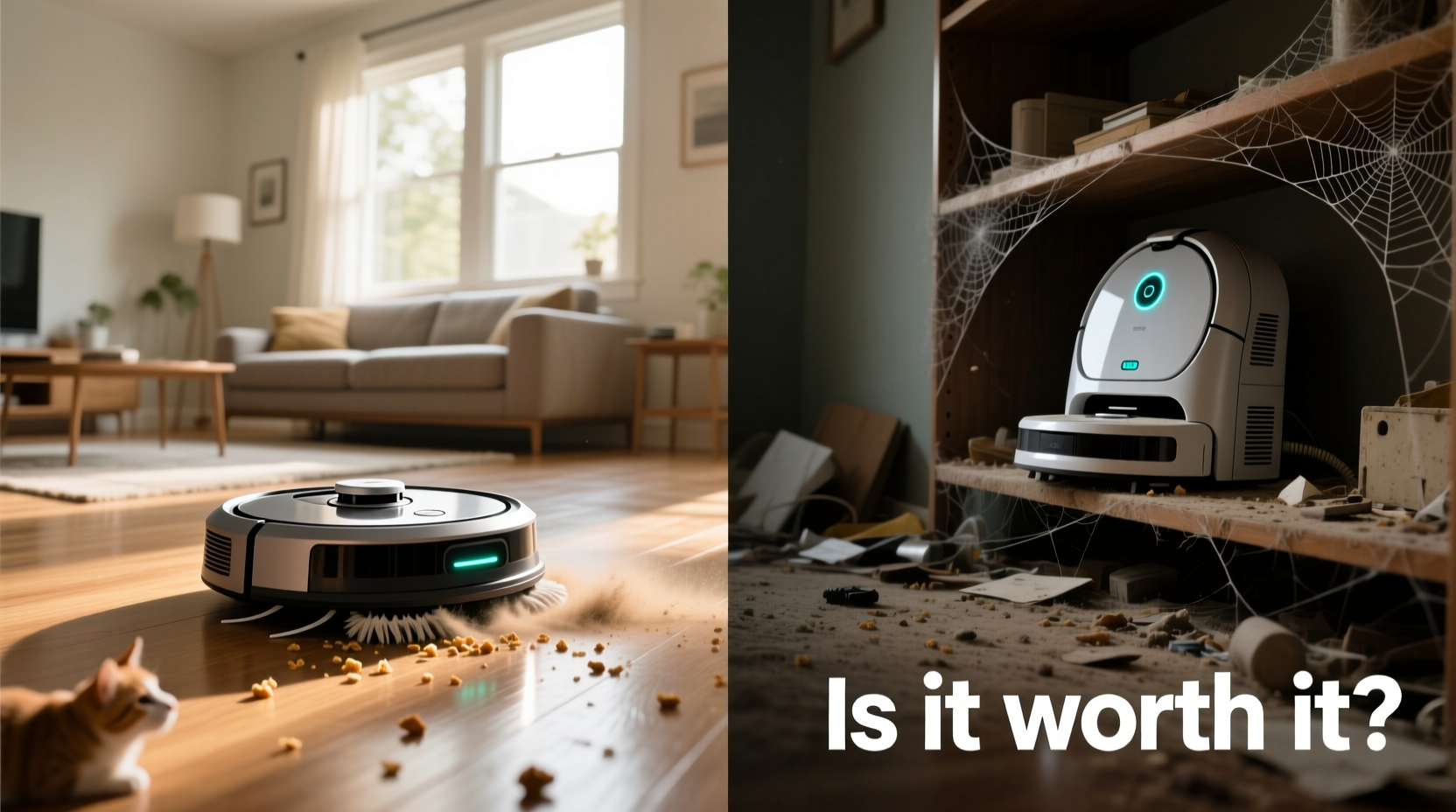
At their core, robot vacuums are autonomous machines designed to navigate your home, detect dirt, and clean floors with minimal human intervention. Most models use a combination of sensors, cameras, LiDAR (light detection and ranging), and mapping algorithms to chart rooms, avoid obstacles, and return to their charging dock when the job is done.
Modern units often come equipped with Wi-Fi connectivity, allowing control via smartphone apps, voice assistants like Alexa or Google Assistant, and scheduling features. Some even empty their own dustbins into a larger base station, reducing maintenance to once every few weeks.
However, not all robot vacuums are created equal. Entry-level models may rely on basic bump-and-run navigation, leading to inefficient coverage and missed spots. High-end versions use advanced mapping to create virtual boundaries, room-specific cleaning zones, and multi-floor memory. The technology has improved dramatically over the past decade, but expectations must align with reality—especially when comparing price points.
“Robot vacuums aren’t meant to replace deep-cleaning sessions with a traditional vacuum, but they excel at consistent maintenance.” — Dr. Linda Park, Home Automation Researcher at MIT Senseable City Lab
When a Robot Vacuum Shines: Real-World Scenarios
For certain households, robot vacuums deliver tangible benefits. Consider the following scenarios where they make a meaningful difference:
- Busy professionals who work long hours and struggle to find time for regular cleaning.
- Families with pets dealing with constant shedding on hardwood, tile, or low-pile carpets.
- Individuals with mobility challenges who find pushing a full-sized vacuum physically taxing.
- People living in small to medium apartments where space allows for predictable navigation.
- Households aiming for daily upkeep rather than weekly deep cleans.
In these cases, the robot vacuum becomes less of a novelty and more of a functional tool. A well-mapped device running every evening can prevent dust buildup, reduce allergens, and maintain cleaner surfaces without requiring active effort.
A Mini Case Study: The Chen Family’s Experience
The Chens, a family of four in suburban Chicago, purchased a mid-tier robot vacuum after their golden retriever started shedding excessively. They had always vacuumed twice a week, but with both parents working full-time and two kids in extracurriculars, consistency slipped.
After setting up a $450 model with app scheduling and carpet boost mode, they programmed it to run Monday through Friday at 7 PM. Within two weeks, they noticed less dog hair accumulating on furniture and fewer allergy flare-ups in their youngest child, who has mild asthma.
“It doesn’t replace our upright vacuum,” says Mei Chen, “but we only need to do a deep clean now every three weeks instead of weekly. The robot handles the day-to-day mess. That’s saved us hours per month.”
While the robot occasionally got stuck under a dining chair or missed a corner, firmware updates and virtual wall barriers resolved most issues. After 18 months of use, they consider it one of their best home investments.
The Limitations: Where Robot Vacuums Fall Short
No device is perfect, and robot vacuums come with notable drawbacks that can frustrate users expecting flawless performance.
Navigational errors remain common, especially in cluttered environments. Cords, dark rugs, and low furniture can confuse sensors, causing the robot to spin in place, get trapped, or abandon its mission. While higher-end models handle these better, no system is infallible.
Cleaning power is another limitation. Most robot vacuums lack the suction strength of upright or canister vacuums. They perform well on hard floors and low-pile rugs but struggle with embedded dirt in high-pile carpets or deep stains. If your home has thick shag carpeting or heavy debris like cereal crumbs or sand, a robot alone won’t suffice.
Maintenance demands are often underestimated. Users must regularly empty the bin (sometimes daily), clean brushes (which tangle with hair), wipe sensors, and check wheels for debris. Models with self-emptying docks reduce this burden but add significantly to the upfront cost—often pushing prices above $800.
| Feature | Entry-Level Model (~$200) | Premium Model (~$700+) |
|---|---|---|
| Navigation | Bump-and-run, random pattern | Laser mapping, room recognition |
| Suction Power | 1,000–1,500 Pa | 3,000–6,000 Pa |
| Dustbin Capacity | 300–400 ml | 400–600 ml (with auto-empty) |
| Smart Features | Basic app control | Zone cleaning, voice control, obstacle avoidance |
| Lifespan | 2–3 years | 4–5 years with care |
Cost vs. Value: Breaking Down the Investment
Robot vacuums range from $150 to over $1,200. So, is the upgrade worth it?
Consider this: A quality upright vacuum costs $150–$300 and lasts 8–10 years. In contrast, even premium robot vacuums typically last 4–5 years due to battery degradation and mechanical wear. However, the value isn’t solely in longevity—it’s in time saved and consistency achieved.
If you spend 30 minutes twice a week vacuuming (2,600 minutes per year), and a robot handles 80% of that, you reclaim roughly 2,000 minutes annually—over 33 hours. At even $10/hour in personal time value, that’s $330 in recovered time each year. Over three years, that totals nearly $1,000 in time savings—potentially exceeding the cost of a mid-range robot vacuum.
Additionally, reduced allergen accumulation, extended flooring life, and lower stress from maintaining cleanliness contribute to intangible but real benefits.
Checklist: Is a Robot Vacuum Right for You?
Answer the following to assess whether this investment makes sense for your lifestyle:
- Do you vacuum at least 2–3 times per week?
- Do you have pets or allergies that require frequent floor cleaning?
- Is your home layout relatively open and free of major clutter?
- Are you comfortable troubleshooting minor tech issues or updating firmware?
- Can you afford $300–$700 upfront, or would a lower-cost model meet your needs?
- Do you value time-saving automation over maximum cleaning power?
If you answered “yes” to most of these, a robot vacuum could be a smart addition. If not, it might end up as that “dusty shelf ornament” the title warns about.
Maximizing Your Investment: A Step-by-Step Guide
To ensure your robot vacuum delivers long-term value, follow this routine:
- Assess your floor types: Hardwood, tile, and low-pile rugs work best. High-pile carpets may require supplemental cleaning.
- Clear major obstacles: Pick up cords, toys, and loose papers before scheduled runs.
- Run a mapping cycle: Let the robot learn your home layout during a dedicated session with no interruptions.
- Set up virtual boundaries: Use app-defined no-go zones to protect delicate areas or keep the robot out of bathrooms.
- Schedule daily runs: Set it to clean during work hours or while you’re out to avoid interference.
- Maintain weekly: Empty the bin, clean brushes, and wipe sensors to prevent clogs and navigation errors.
- Update firmware: Enable automatic updates to benefit from performance improvements and bug fixes.
- Pair with manual cleaning: Use a traditional vacuum monthly for deep carpet cleaning and edge detailing.
FAQ: Common Questions About Robot Vacuums
Can a robot vacuum replace my regular vacuum?
Not entirely. It’s excellent for daily maintenance but lacks the suction power and reach for deep cleaning carpets, stairs, or upholstery. Think of it as a supplement, not a replacement.
Do robot vacuums work on dark floors or rugs?
Some older models struggled with dark surfaces because optical sensors misread them as drop-offs (like stairs). Modern units with LiDAR or advanced camera systems handle dark floors much better, but it’s wise to verify compatibility before purchasing.
How long do robot vacuum batteries last?
Most lithium-ion batteries last 2–3 years before degrading noticeably. After that, runtime shortens, and the robot may fail to complete cleaning cycles. Replacement batteries are available for many models but can cost $50–$100.
Conclusion: Smart Buy or Shelf Queen?
A robot vacuum isn’t inherently worth it—or worthless. Its value depends entirely on your environment, expectations, and usage patterns. For those with busy schedules, pets, or a preference for automated home management, it can be a transformative tool that enhances daily life. For others—especially those with complex layouts, thick carpets, or unrealistic expectations—it may quickly become an underused appliance.
The key is alignment: choose the right model for your home, set realistic goals, and commit to basic maintenance. When used wisely, a robot vacuum isn’t a gimmick—it’s a practical ally in the ongoing battle against dust, dirt, and time constraints.




 浙公网安备
33010002000092号
浙公网安备
33010002000092号 浙B2-20120091-4
Comments
No comments yet. Why don't you start the discussion?