
For pet owners, the battle against fur, dander, tracked-in dirt, and occasional messes is constant. No matter how well-trained your dog or cat may be, shedding and tracked debris are inevitable. This has led many households to consider a robot vacuum as a potential solution. But is it really worth investing in one when you share your home with furry companions? The answer isn’t a simple yes or no — it depends on your lifestyle, expectations, and the specific challenges your pets introduce.
Based on real-world experiences from hundreds of pet owners, combined with performance data and expert insights, this article breaks down the genuine advantages and drawbacks of using a robot vacuum in homes with pets. From managing daily shedding to navigating around chew toys and litter boxes, we’ll explore what works, what doesn’t, and how to make the most of automated cleaning without frustration.
The Pet Owner’s Cleaning Challenge
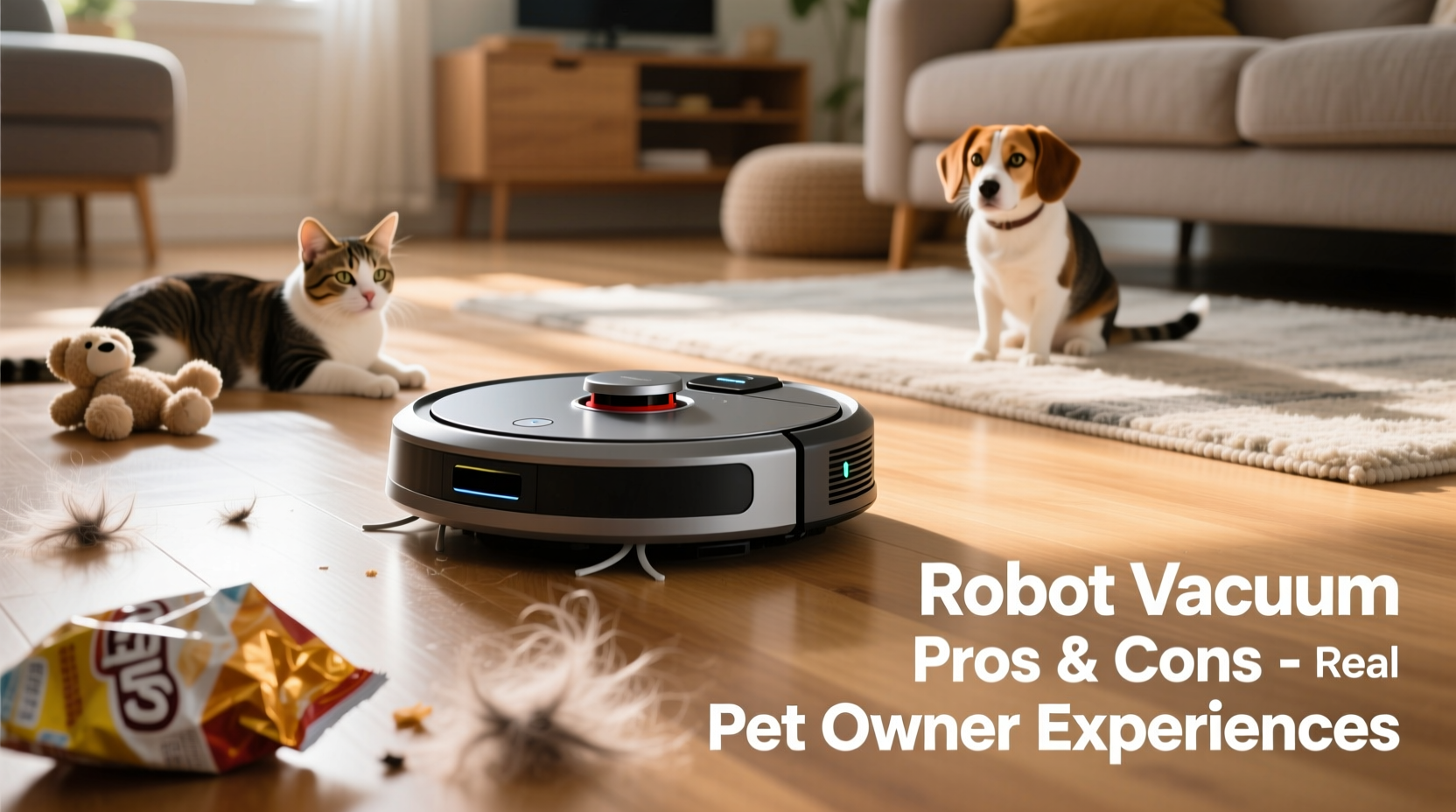
Pets bring joy, but they also bring mess. Dogs shed year-round, cats groom themselves constantly (leaving behind fine hairs and dander), and small animals like rabbits or guinea pigs scatter bedding. Even well-groomed pets track in moisture, mud, or grass from outside. Traditional vacuuming often feels like a never-ending chore, especially in multi-pet homes or on carpet-heavy floors.
This is where robot vacuums promise relief: automated, scheduled cleaning that runs while you’re at work, asleep, or simply enjoying time with your pet. But automation comes with trade-offs. Unlike manual vacuums, robots operate independently — sometimes making mistakes, missing spots, or even spreading messes if not properly managed.
Before diving into the pros and cons, it’s important to understand that not all robot vacuums are created equal. Features like suction power, brush design, navigation intelligence, and app control play a critical role in how well they perform in pet-heavy environments.
Real Pros: Why Pet Owners Love Robot Vacuums
Despite their limitations, many pet owners report significant improvements in home cleanliness after adopting a robot vacuum. Here are the most commonly cited benefits:
- Daily maintenance without effort: With scheduled cleanings, pet hair and dander are removed before they settle deeply into carpets or embed between floorboards. One owner noted, “My golden retriever sheds so much that I used to vacuum every other day. Now the robot handles it daily, and my floors stay visibly cleaner.”
- Improved air quality: Regular suction reduces airborne allergens. For allergy-prone family members, this can mean fewer symptoms and better sleep.
- Time savings: Busy pet parents, especially those with young children or full-time jobs, appreciate reclaiming hours otherwise spent pushing a heavy vacuum.
- Smart navigation around obstacles: Modern models use LiDAR or advanced cameras to map rooms and avoid pet bowls, toys, and furniture legs with impressive accuracy.
- Self-emptying bins: High-end models with auto-empty docks can go weeks without requiring user intervention — ideal for homes with heavy shedding.
Common Cons and Frustrations Reported by Pet Owners
No technology is perfect, and robot vacuums come with notable downsides — especially in homes with unpredictable pets. Here are the most frequently reported issues:
- Can’t handle wet messes: If your pet has an accident, most robot vacuums will either ignore it or, worse, spread it across the floor. Never rely on a robot to clean up urine, vomit, or spilled water.
- Gets stuck or tangled: Long-haired pets are particularly problematic. Their fur can wrap tightly around side brushes or main rollers, causing the robot to stall or emit warning sounds. One Shih Tzu owner shared, “I now brush my dog before letting her roam the house — otherwise, the robot gets clogged within minutes.”
- Limited suction on deep carpets: While great on hard floors, many robots struggle with thick plush carpets where pet hair buries itself. Higher-end models with adaptive suction help, but aren’t foolproof.
- Disturbs pets: Some animals are frightened by the noise or movement of the robot. Others see it as prey or a toy, leading to swatting, barking, or even urination on the device.
- Misses edges and corners: Despite mapping capabilities, robots often leave dust and fur along baseboards unless specifically programmed for edge cleaning.
“Robot vacuums excel at maintenance, not deep cleaning. Think of them as a daily helper, not a replacement for your upright vacuum.” — Dr. Lisa Tran, Home Automation Researcher at Smart Living Labs
Choosing the Right Robot Vacuum for Pets: A Practical Checklist
Not all robot vacuums are suited for pet homes. To avoid buyer’s remorse, consider these key features before purchasing:
- High suction power (≥2000Pa): Essential for lifting embedded pet hair from rugs and crevices.
- Tangle-free brush roll: Look for models with rubber extractors instead of bristle brushes to reduce hair wrapping.
- Advanced navigation (LiDAR or vSLAM): Ensures consistent coverage and avoids collisions with pet furniture.
- Large dustbin capacity: Reduces frequency of emptying, especially helpful during heavy shedding periods.
- Scheduling and zoning via app: Allows you to exclude areas like litter boxes or pet beds from cleaning routes.
- Self-emptying base station: Ideal for minimizing contact with dirty filters and full bins.
- HEPA filtration: Captures microscopic dander and allergens, improving indoor air quality.
- Pet-friendly noise levels (under 65 dB): Quieter models are less likely to stress sensitive animals.
Real-World Example: How One Family Manages Two Dogs and a Cat
The Ramirez family lives in a two-story suburban home with a Labrador, a Chihuahua, and a long-haired Persian cat. Before getting a robot vacuum, they vacuumed manually four times a week — a chore that often fell behind due to work and kids’ schedules.
They invested in a mid-tier robot vacuum with tangle-free rollers, HEPA filter, and smart mapping. They set it to run at 10 a.m. and 7 p.m. daily, avoiding times when the pets were most active. Zones were created to block off the cat’s litter area and the dogs’ feeding corner.
Within two weeks, they noticed a visible reduction in floating fur and less frequent sneezing among family members. However, the robot occasionally got stuck under the dining table where the Chihuahua liked to nap. After adjusting the virtual boundaries in the app, the issue resolved.
“It’s not perfect,” says Maria Ramirez. “We still do a deep clean with our old vacuum once a week. But the robot handles 80% of the daily mess. That’s huge for us.”
Their experience reflects a common theme: robot vacuums don’t eliminate the need for traditional cleaning but significantly reduce its frequency and burden.
Comparison Table: Key Features for Pet-Friendly Robot Vacuums
| Feature | Why It Matters for Pet Owners | Recommended Minimum |
|---|---|---|
| Suction Power | Removes embedded pet hair from carpets and rugs | 2000 Pa or higher |
| Brush Type | Reduces hair tangling and maintenance needs | Rubber extractors or anti-tangle designs |
| Filtration System | Captures dander and allergens for better air quality | True HEPA filter |
| Dustbin Capacity | Less frequent emptying, especially during shedding season | 0.6 liters or larger |
| Navigational Tech | Accurate path planning and obstacle avoidance | LiDAR or vSLAM |
| App Controls | Customize cleaning zones and schedules | Yes, with no-go zones |
| Noise Level | Prevents startling or stressing pets | Under 65 dB |
Step-by-Step Guide: Setting Up Your Robot Vacuum in a Pet Home
To maximize effectiveness and minimize issues, follow this setup process:
- Clear major obstacles: Remove loose cords, small toys, and clutter from high-traffic areas.
- Designate pet zones: Place food/water bowls, litter boxes, and pet beds in areas easily blocked via app or physical barriers.
- Charge and initialize: Let the robot complete its first full mapping cycle when pets are confined or calm.
- Set virtual boundaries: Use the app to create no-go zones around sensitive areas. <5> Schedule cleaning times: Choose times when pets are napping, outside, or occupied elsewhere.
- Monitor initial runs: Watch the first few cycles to ensure smooth navigation and no entanglements.
- Establish maintenance routine: Clean brushes weekly, empty bin every 2–3 days, and replace filters monthly.
Frequently Asked Questions
Can robot vacuums clean up pet hair effectively?
Yes, but with caveats. Models with strong suction and tangle-free rollers perform best. Regular maintenance (cleaning brushes and filters) is essential to maintain performance. They work well on hard floors and low-to-medium pile carpets but may struggle with very thick rugs.
Are robot vacuums safe around pets?
Generally yes, but supervision during early uses is recommended. Most units have safety sensors that stop movement upon collision. However, curious pets may paw at or ride the robot, potentially damaging it. Avoid leaving it unattended with aggressive or overly playful animals.
Do I still need a regular vacuum if I have a robot?
Yes. Robot vacuums are excellent for daily upkeep but lack the deep-cleaning power of upright or canister vacuums. Most owners still perform a thorough manual vacuuming once a week or every other week, especially on stairs, upholstery, and high-traffic carpet areas.
Final Verdict: Is It Worth It?
For most pet owners, a robot vacuum is a worthwhile investment — provided expectations are realistic. It won’t replace your traditional vacuum, handle liquid spills, or survive unchecked chewing. But as a tool for reducing daily pet mess, minimizing allergens, and saving time, it delivers tangible value.
The key is choosing a model designed for pet challenges and committing to basic maintenance. When paired with good grooming habits — such as brushing pets regularly and cleaning accidents immediately — a robot vacuum becomes a reliable partner in maintaining a cleaner, more comfortable home.
If you're tired of chasing fur tumbleweeds across your living room or want to breathe easier despite your beloved pet’s shedding, a well-chosen robot vacuum could be exactly what your household needs.




 浙公网安备
33010002000092号
浙公网安备
33010002000092号 浙B2-20120091-4
Comments
No comments yet. Why don't you start the discussion?