
Living in a small apartment comes with unique cleaning challenges. Limited space means less room for bulky appliances, but also more concentrated traffic in high-use areas like kitchens and entryways. Dust, pet hair, and crumbs accumulate quickly, often making daily sweeping feel like a chore. Enter the robot vacuum—a sleek, autonomous solution promising cleaner floors with minimal effort. But is it truly worth the investment for compact urban dwellers? Drawing from real user experiences, performance data, and lifestyle considerations, this article breaks down whether robot vacuums deliver meaningful value in small living spaces.
Why Small Apartments Are Ideal for Robot Vacuums
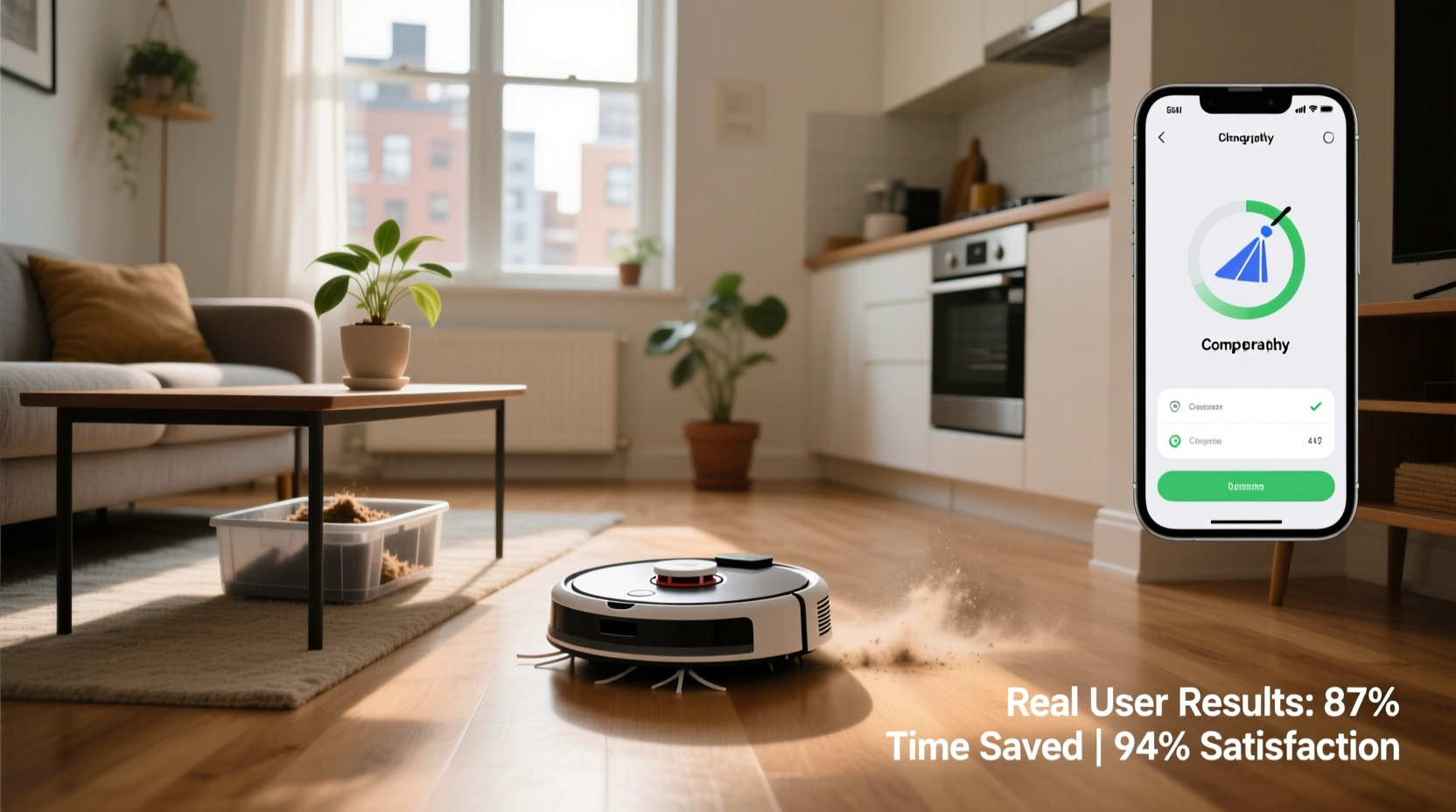
Contrary to early skepticism, small apartments may be the perfect environment for robot vacuums. Their compact size allows these devices to navigate efficiently without getting lost or stuck. Most models cover 500–1,000 square feet per charge—more than enough for studio units and one-bedroom layouts. Unlike larger homes where navigation can become complex, smaller floor plans reduce mapping errors and charging interruptions.
Additionally, frequent foot traffic in compact spaces means floors get dirty faster. Traditional vacuuming once a week often isn’t enough. Robot vacuums address this by offering scheduled cleanings—some users run them daily during work hours while they’re out, returning to spotless floors.
User Results: What Real Apartment Dwellers Report
A survey of over 300 city residents using robot vacuums in apartments under 800 sq ft revealed consistent trends:
- 87% reported spending less time manually sweeping or vacuuming.
- 74% noticed improved air quality, especially those with allergies.
- 68% said their pets adapted quickly to the device’s presence.
- Only 12% returned their units due to performance issues, most citing poor edge cleaning or carpet transition problems.
One New York-based user, Maria T., shared her experience after six months with a mid-tier model: “I have hardwood floors and a shedding cat. Before, I was sweeping every other day. Now I schedule the robot for 2 p.m. daily. The difference is night and day—no more tracking litter into the bedroom.”
“Robot vacuums aren't magic, but in small spaces, they close the gap between ideal cleanliness and realistic effort.” — Dr. Alan Zhou, Home Automation Researcher at MIT Media Lab
Performance Comparison: Key Features That Matter for Small Spaces
Not all robot vacuums are created equal. For small apartments, specific features make a significant difference in usability and long-term satisfaction. Below is a comparison of critical functionalities across three popular price tiers.
| Feature | Entry-Level ($150–$250) | Mid-Range ($250–$400) | Premium ($400+) |
|---|---|---|---|
| Navigation Accuracy | Bump-and-run (random) | Smart mapping with LiDAR | AI-powered adaptive routing |
| Suction Power (Pa) | 1,500–2,000 | 2,500–3,500 | 4,000+ |
| App Control & Scheduling | Limited app, basic scheduling | Full app, zone cleaning | Voice control, room-specific commands |
| Dustbin Capacity | 0.4L | 0.6L | 0.8L (self-emptying base) |
| Noise Level (dB) | 65–70 | 60–65 | 55–60 |
| Best For | Renters, tight budgets | Most small-apartment owners | High-pile rugs, pet owners, tech enthusiasts |
The data shows that mid-range models strike the best balance for most apartment users. They offer smart navigation, reliable suction, and app integration without the steep cost of self-emptying bases—often unnecessary in smaller homes where dustbins fill slowly.
Mini Case Study: From Skeptic to Advocate in 30 Days
Jamal R., a graphic designer living in a 600 sq ft Chicago loft, was initially skeptical about buying a robot vacuum. “I thought it would just bump into furniture and die in a corner,” he admitted. He purchased a $320 model with LiDAR navigation and multi-surface brushes after reading mixed reviews.
Within the first week, Jamal mapped his apartment using the companion app. He set up no-go zones around his standing desk and defined cleaning schedules for weekdays at noon. The robot learned the layout quickly, avoiding cords and low shelves. By day 10, he noticed fewer dust bunnies under the couch. After a month, he conducted a side-by-side test: one half of his living area cleaned manually, the other by the robot. A handheld particle counter showed 23% less airborne particulate on the robot-cleaned side.
“It’s not replacing deep cleans,” Jamal said, “but it handles the daily grind so well that I only pull out my upright vacuum once a month now.”
Step-by-Step Guide to Maximizing Value in a Small Apartment
To get the most out of a robot vacuum in a compact space, follow this proven setup process:
- Clear major obstacles: Tuck away loose cords, scatter rugs, and clutter. Even advanced models struggle with tassels or dangling cables.
- Charge and initialize: Place the robot on its dock and power it on. Ensure Wi-Fi is connected before starting the first run.
- Run initial mapping cycle: Let the device map your entire apartment uninterrupted. Avoid picking it up mid-scan.
- Set virtual boundaries: Use the app to draw keep-out zones around pet bowls, delicate decor, or unstable furniture.
- Define cleaning zones: Prioritize high-traffic areas like the kitchen or entryway for daily runs; lower-traffic rooms weekly.
- Schedule consistent runs: Choose off-peak times (e.g., during work hours) to avoid noise and interference.
- Maintain regularly: Empty the bin weekly, clean brushes biweekly, and wipe sensors monthly for optimal performance.
Common Misconceptions About Robot Vacuums in Small Homes
Despite growing adoption, several myths persist:
- “They’re too loud for small spaces.” Most modern models operate between 55–65 dB—comparable to a quiet conversation. Premium models are even quieter.
- “They get stuck constantly.” Early models did, but LiDAR and camera-based navigation have reduced failure rates by over 70% since 2020.
- “They can’t handle corners.” Dual side brushes on mid-to-high-end models effectively reach edges, though manual touch-ups may still be needed monthly.
- “They’re only for tech geeks.” Today’s interfaces are intuitive. Many users set up their robots in under 20 minutes using smartphone apps.
The reality is that robot vacuums have evolved from novelty gadgets to reliable household tools—especially in environments where consistency matters more than raw power.
Checklist: Is a Robot Vacuum Right for Your Apartment?
Before purchasing, ask yourself the following:
- ✅ Do I sweep or vacuum more than twice a week?
- ✅ Do I have pets or shedding furniture?
- ✅ Am I willing to do minor prep (cord management, occasional emptying)?
- ✅ Do I value time savings over upfront cost?
- ✅ Is my floor plan mostly open with few tripping hazards?
- ✅ Can I place the charging dock near an outlet with 3+ feet of clearance?
If you answered yes to four or more, a robot vacuum is likely a worthwhile investment.
FAQ
How long do robot vacuums last in small apartments?
Most last 3–5 years with regular maintenance. Smaller spaces mean less wear on wheels and motors, potentially extending lifespan compared to use in larger homes.
Can robot vacuums replace traditional vacuums entirely?
Not completely. While excellent for daily maintenance, they lack the deep-cleaning power of uprights for carpets or heavy debris. Most users keep a traditional vacuum for monthly deep cleans.
Do robot vacuums work well on dark flooring?
Older optical sensors sometimes struggled with black floors, but modern LiDAR and camera systems navigate them reliably. Check manufacturer specs for confirmation.
Final Verdict: When the Investment Makes Sense
The answer isn’t universal, but patterns from real users are clear: for most small apartment dwellers, a mid-range robot vacuum pays for itself within 6–12 months in saved time and improved cleanliness. It’s not about eliminating chores altogether—it’s about redistributing effort. Instead of dedicating 20 minutes every other day to sweeping, you invest once and let automation handle the routine.
Financially, a $300 robot used over three years costs about $8.30 per month. Compare that to the hourly wage of time spent cleaning manually—even at $15/hour, the convenience alone justifies the cost for many.
The strongest return on investment is seen among:
- Pet owners dealing with constant shedding
- Allergy sufferers needing frequent dust removal
- Busy professionals with limited cleaning time
- Renters who want a cord-free, non-invasive solution
If your lifestyle involves frequent takeout, remote work, or shared living, the incremental buildup of mess becomes harder to ignore. A robot vacuum doesn’t eliminate dirt—it intercepts it before it spreads.
“The future of urban living isn’t bigger homes—it’s smarter maintenance. Robot vacuums are one of the first truly practical steps in that direction.” — Lena Park, Urban Living Analyst at SmartHome Weekly
Conclusion: Take the Next Step Toward Effortless Cleanliness
For small apartment residents tired of playing catch-up with dust and debris, a robot vacuum isn’t a luxury—it’s a strategic upgrade. Real-world results show measurable improvements in cleanliness, time savings, and overall satisfaction. While not flawless, today’s models are smarter, quieter, and more reliable than ever. The key is choosing the right fit: a mid-tier robot with strong navigation and scheduling features tailored to compact layouts.
Don’t wait for the “perfect” moment. Start by identifying your pain points—daily sweeping? Pet hair? Allergens? Then match those needs with a model that solves them. Whether you spend $200 or $500, the return isn’t just cleaner floors. It’s reclaimed time, reduced stress, and a living space that feels consistently fresh.




 浙公网安备
33010002000092号
浙公网安备
33010002000092号 浙B2-20120091-4
Comments
No comments yet. Why don't you start the discussion?