
As holiday seasons approach, many families face the same annual challenge: setting up a large, full Christmas tree that stands securely and looks stunning from every angle. For those with tall or wide trees—especially artificial ones exceeding 7 feet—a rotating tree base is often marketed as a game-changer. But is it truly necessary? While it may seem like a luxury add-on, a rotating base can significantly affect setup ease, decoration efficiency, and long-term enjoyment. This article breaks down the real advantages and drawbacks of using a rotating base for large trees, backed by practical experience and expert insight.
Understanding Rotating Tree Bases
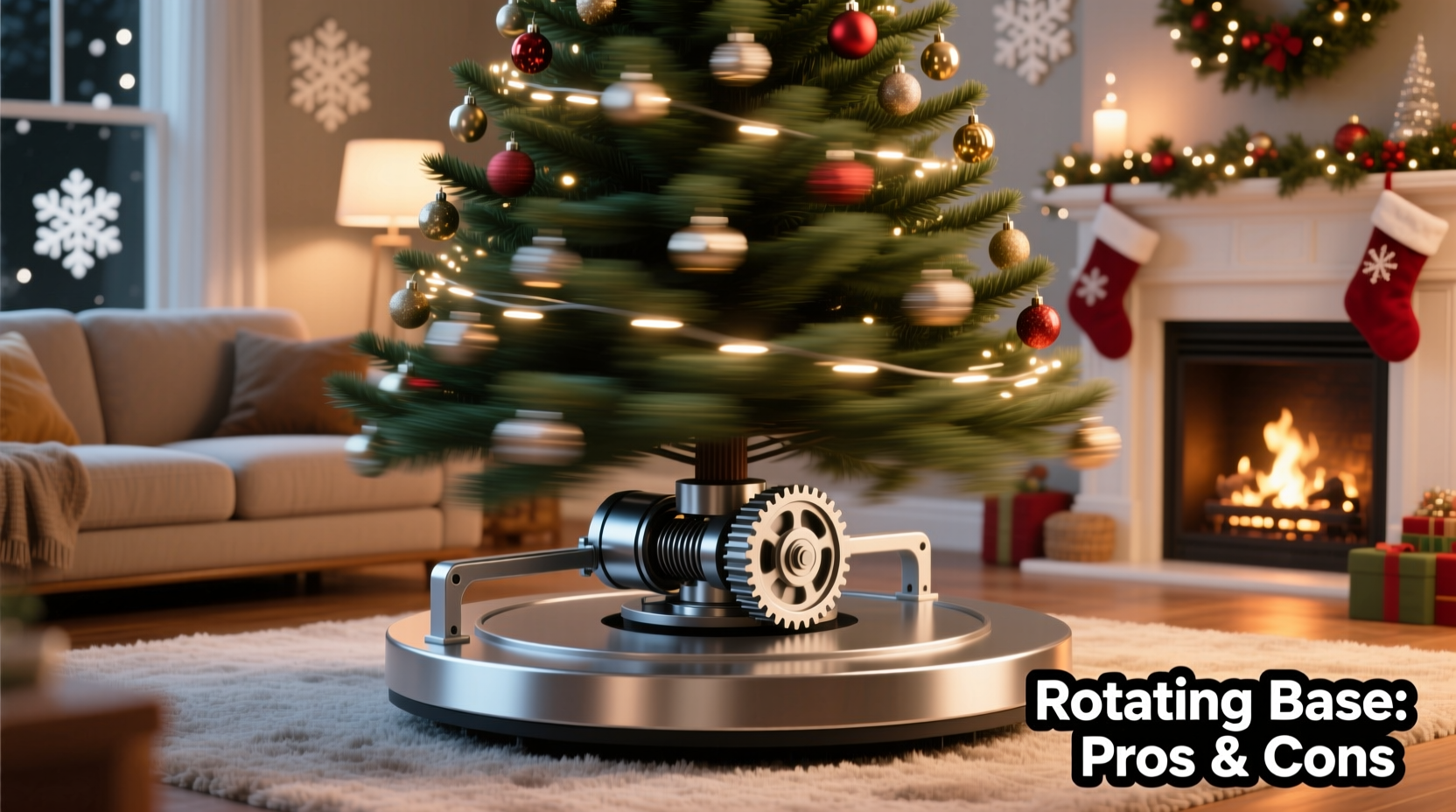
A rotating Christmas tree base is a mechanical stand designed to support artificial or real trees while allowing them to spin smoothly with minimal effort. Typically constructed from durable metal or reinforced plastic, these bases use ball bearings or low-friction mechanisms to enable 360-degree rotation. They are most commonly used with artificial trees, which tend to be heavier and more cumbersome than their natural counterparts due to built-in stands, pre-lit wiring, and dense branch construction.
The primary purpose of a rotating base is convenience. Instead of walking around the tree during setup and decorating, users can rotate the trunk in place. This becomes particularly useful when adjusting lights, hanging ornaments on the backside, or fluffing branches evenly. However, not all trees are compatible, and not all households will benefit equally.
Pros of Using a Rotating Base for Large Trees
For homeowners with oversized or densely foliaged trees, a rotating base offers several tangible benefits that go beyond novelty.
- Easier Decorating Access: One of the biggest frustrations during tree setup is reaching the backside without knocking over presents or damaging nearby furniture. A rotating base allows you to keep the tree centered while bringing every section into easy reach.
- Better Light Distribution: When stringing lights, it’s common to miss spots on the far side. With rotation, you can methodically work around the tree, ensuring even coverage and eliminating dark zones.
- Improved Symmetry and Fullness: Fluffing branches evenly is critical for a professional look. Rotating lets you assess balance from all angles without shifting your position, helping achieve a more polished appearance.
- Reduced Physical Strain: Especially beneficial for older adults or those with mobility limitations, rotation minimizes bending, stretching, and walking around heavy furniture.
- Safer Adjustments After Setup: Once decorated, minor tweaks—like straightening a lopsided ornament or repositioning a garland—are much safer when you don’t have to crawl behind the tree.
“Rotating bases are especially valuable for pre-lit artificial trees over six feet. They eliminate guesswork in lighting and reduce decoration time by nearly half.” — Sarah Linwood, Holiday Interior Designer and Author of *The Art of the Christmas Home*
Cons and Limitations to Consider
Despite the advantages, rotating bases aren’t universally ideal. Several factors can limit their effectiveness or justify skipping them altogether.
- Weight Capacity Limits: Not all rotating bases can support very large trees. Some models max out at 50–70 pounds, making them unsuitable for premium artificial trees that weigh 80+ pounds with stands.
- Floor Surface Compatibility: These bases perform best on hard, flat surfaces like hardwood or tile. On thick carpet or uneven floors, friction can hinder smooth rotation or cause wobbling.
- Stability Concerns: The pivot mechanism introduces a potential weak point. If overloaded or improperly balanced, the tree may tilt or become unstable, posing a risk to pets and children.
- Cost Premium: A quality rotating base typically costs $60–$150, compared to $20–$40 for standard stands. This added expense may not be justified for occasional users.
- Limited Use for Real Trees: Most rotating bases are designed for artificial trees with central metal trunks. Fresh-cut trees with irregular stems rarely fit securely, increasing the risk of tipping.
- Mechanical Wear Over Time: Bearings can degrade after multiple seasons, especially if stored improperly or exposed to dust. Older models may develop resistance or squeaking.
Comparison: Standard vs. Rotating Tree Bases
| Feature | Standard Tree Stand | Rotating Tree Base |
|---|---|---|
| Max Weight Support | Up to 100+ lbs (varies) | Typically 50–80 lbs |
| Ease of Decoration | Requires walking around tree | Rotate tree instead of moving |
| Ideal Tree Type | Real or artificial | Artificial only (central pole) |
| Price Range | $15–$40 | $60–$150 |
| Floor Suitability | All surfaces | Best on hard, level floors |
| Longevity | 5+ years (simple design) | 3–7 years (moving parts) |
When a Rotating Base Makes the Most Sense
Not every household will benefit equally from a rotating base. The decision should be based on specific needs and circumstances. Below is a checklist to help determine if investing in one is worthwhile.
Rotating Base Checklist: Is It Right for You?
- Your artificial tree is 7 feet or taller.
- You decorate with intricate detail (e.g., themed ornaments, ribbon weaving).
- You have limited mobility or chronic pain that makes bending/stooping difficult.
- Your living room layout restricts movement around the tree.
- You reuse the same tree annually and value long-term convenience.
- You frequently photograph or video the tree for social media or family sharing.
If four or more apply, a rotating base is likely a smart investment. Conversely, if you use a smaller tree, change styles often, or prioritize budget over convenience, a standard stand remains perfectly adequate.
Mini Case Study: The Thompson Family’s Upgrade
The Thompsons in suburban Chicago own a 9-foot pre-lit artificial tree they’ve used for eight years. Initially, they assembled it on a standard stand, but each holiday season brought frustration: tangled lights on the backside, uneven fluffing, and strained backs from reaching behind. In 2021, they invested $90 in a mid-range rotating base rated for 75 pounds.
The difference was immediate. Their daughter, who has mild arthritis, could now participate fully in decorating without discomfort. Lighting time dropped from four hours to just over two. Over three seasons, they reported no mechanical issues and estimated saving at least five hours in cumulative setup time. “It paid for itself in stress reduction alone,” said Mark Thompson. “We see it as part of our holiday tradition now.”
Step-by-Step Guide: Installing a Rotating Base Safely
Proper installation ensures stability and longevity. Follow these steps carefully:
- Clear the Area: Remove furniture, rugs, or obstacles within a 3-foot radius to allow for adjustments.
- Inspect the Base: Check for debris in the rotation mechanism and ensure the locking pin (if present) moves freely.
- Position the Tree Trunk: Insert the central pole of your artificial tree into the base’s socket. Avoid forcing it; alignment should be smooth.
- Secure the Clamp: Tighten the set screws or clamping mechanism evenly to prevent wobbling. Do not overtighten, as this may damage the pole.
- Test Rotation: Gently spin the tree by hand. It should turn smoothly without tilting. If resistance occurs, check floor levelness or redistribute branches.
- Lock if Necessary: Some models include a lock to prevent spinning during play or pet activity. Engage it when supervision isn’t possible.
- Final Alignment: Rotate the tree so its fullest side faces the main viewing area before decorating begins.
Frequently Asked Questions
Can I use a rotating base with a real Christmas tree?
No, most rotating bases are incompatible with fresh-cut trees. Real trees have irregular, tapered trunks that don’t fit securely into the fixed clamps of rotating models. Additionally, water reservoirs in traditional stands help prolong freshness—rotating versions rarely include this feature. For real trees, a sturdy standard stand with a water basin is essential.
Do rotating bases work on carpet?
They can, but performance varies. On low-pile carpet, rotation is usually smooth. On thick, plush carpeting, increased friction may make turning difficult or destabilize the tree. Placing a rigid board (like plywood) under the base can create a stable platform. Alternatively, consider rearranging furniture to place the tree on a harder surface.
How do I maintain my rotating base between seasons?
Clean off dust and debris before storage. Wipe metal components with a dry cloth and apply a light silicone lubricant to moving parts annually. Store disassembled if possible, in a cool, dry place away from rodents. Avoid plastic bags that trap moisture—opt for breathable fabric covers instead.
Conclusion: Weighing Necessity Against Practicality
A rotating Christmas tree base isn’t strictly necessary, but for many households with large artificial trees, it transforms a labor-intensive chore into a seamless, enjoyable ritual. The benefits—ease of access, reduced physical strain, and improved aesthetics—are real and measurable, especially over multiple seasons. However, it’s not a one-size-fits-all solution. Weight limits, flooring constraints, and cost must be weighed carefully.
Ultimately, the decision hinges on how you use your tree and what you value in your holiday routine. If convenience, symmetry, and accessibility matter, a rotating base is a worthwhile upgrade. If you prioritize simplicity, versatility, or budget, a high-quality standard stand remains a reliable choice.




 浙公网安备
33010002000092号
浙公网安备
33010002000092号 浙B2-20120091-4
Comments
No comments yet. Why don't you start the discussion?