
When it comes to decorating a large Christmas tree—especially one that stands over 7 feet tall—the challenge isn’t just in finding space or stringing enough lights. One of the most overlooked aspects of tree setup is how easy (or difficult) it is to access all sides during decoration and maintenance. For many households with larger trees, a rotating tree base isn't just a convenience—it’s a functional necessity. But is it truly required? The answer depends on your space, physical ability, and long-term enjoyment of the holiday display.
A rotating base allows you to spin the tree smoothly in place, eliminating the need to walk around it or stretch awkwardly to reach the backside. While small trees may not benefit significantly from rotation, larger models often do. This article examines the real value of a rotating base for big trees, compares alternatives, and provides actionable guidance for making an informed decision.
Why Large Trees Pose Unique Challenges
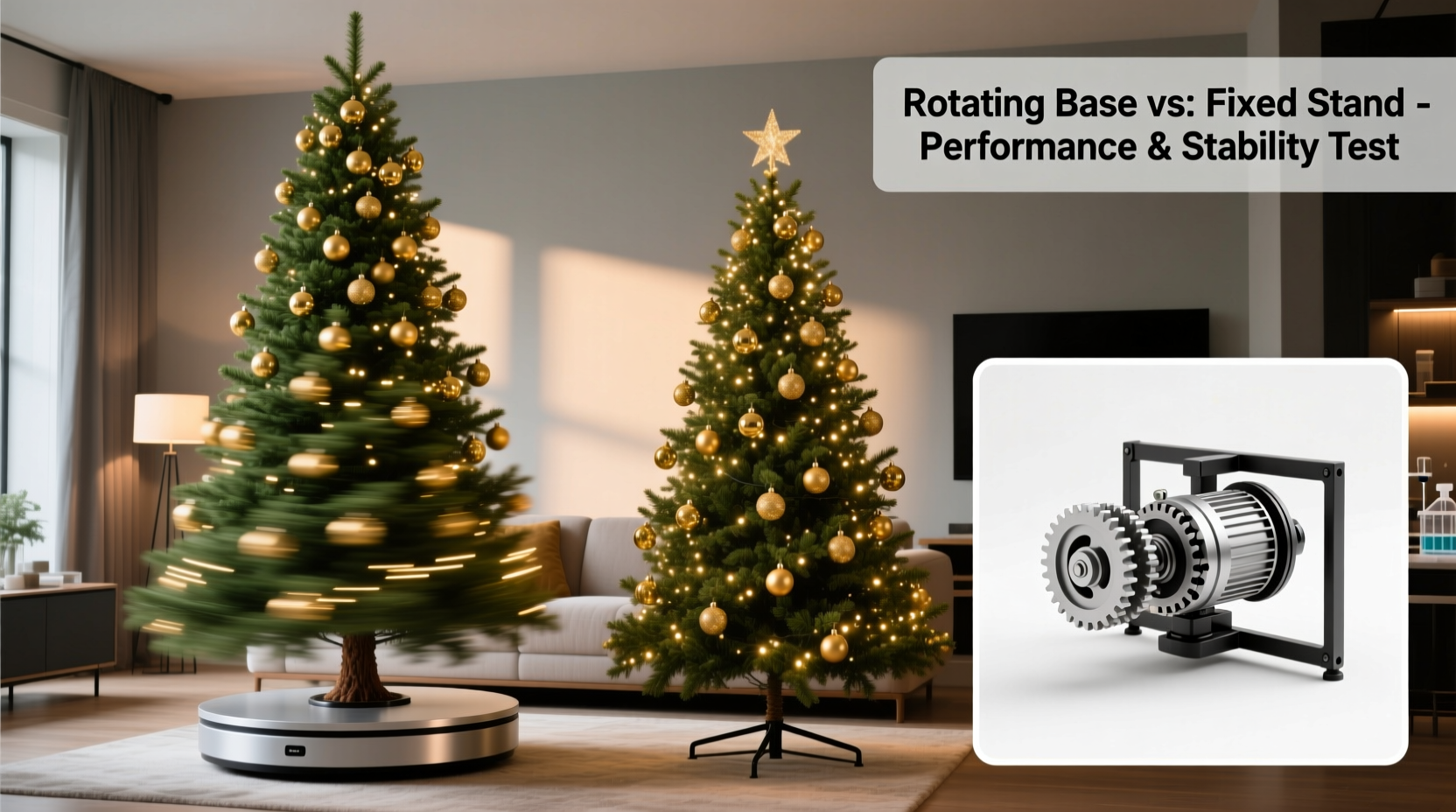
Trees taller than 7 feet can weigh anywhere from 50 to over 100 pounds when fully decorated. Their height and girth make full visibility and accessibility nearly impossible without constant repositioning. Without a rotating base, decorators often find themselves:
- Walking around the tree multiple times to check symmetry.
- Reaching behind heavy branches to plug in lights or hang ornaments.
- Accidentally knocking off decorations while adjusting hard-to-see areas.
- Straining their back or neck due to awkward angles.
These issues compound when the tree is placed flush against a wall—a common setup to save space. In such cases, the back half of the tree becomes essentially invisible until viewed from the side, which defeats the purpose of a 360-degree design. A rotating base solves this by bringing every angle within comfortable reach.
Functional Benefits of a Rotating Tree Base
The primary advantage of a rotating base is ergonomic efficiency. But beyond comfort, there are several measurable benefits:
1. Even Decoration Distribution
It's easy to overcrowd the front of a tree while neglecting the sides and back. With rotation, you can inspect each quadrant systematically, ensuring balanced ornament placement and light spacing. This results in a more professional-looking display, especially important in homes with open floor plans where the tree is visible from multiple rooms.
2. Easier Light Stringing and Troubleshooting
Finding a single burnt-out bulb on the far side of a large tree can be frustrating. A rotating base lets you bring problem areas into clear view without moving furniture or climbing over decor. It also simplifies the initial stringing process, reducing time spent circling the tree.
3. Reduced Physical Strain
Repeated bending, stretching, and walking around a large tree increases fatigue, particularly for older adults or those with mobility limitations. Rotation minimizes these movements, making setup safer and less taxing.
4. Simplified Maintenance During the Season
Over several weeks, branches may settle, ornaments shift, or lights fail. A rotating base allows for quick weekly checks without disrupting the entire setup. You can rotate the tree slightly each day to expose different sections to sunlight if placed near a window, helping maintain freshness in real trees.
“From both a safety and usability standpoint, a rotating base is one of the most underrated tools in holiday decorating—especially for trees over 7 feet.” — Daniel Reeves, Interior Design Consultant and Holiday Stylist
Comparison: Rotating vs. Standard Bases for Large Trees
| Feature | Rotating Base | Standard Base |
|---|---|---|
| Tree Rotation | Full 360° smooth rotation | No rotation; must move manually |
| Weight Capacity | Typically supports 75–150+ lbs | Varies; often lower limits |
| Installation Effort | Slightly more complex alignment | Simpler, bolt-in setup |
| Cost | $40–$100+ | $20–$50 |
| Space Requirements | Needs clearance for spinning | Can sit flush against walls |
| Best For | Trees 7+ ft, multi-angle viewing | Small trees, corner placements |
As shown, rotating bases offer superior functionality at a higher price and with greater space needs. However, for large trees in central locations, the investment often pays off in ease of use and aesthetic quality.
When a Rotating Base Is Most Necessary
Certain situations make a rotating base not just helpful—but practically essential:
- Trees in open living areas where guests view them from all sides.
- Families with children or elderly members who may struggle with mobility.
- Artificial trees with pre-lit features, where troubleshooting wiring is easier with full access.
- Real trees over 8 feet, which are heavier and harder to adjust once secured.
- Homeowners who reuse the same tree annually and want to reduce wear on their bodies over time.
In contrast, a standard base may suffice if the tree is tucked into a corner, viewed primarily from one direction, or if the household prefers minimal decoration.
Step-by-Step: Installing a Rotating Base for a Large Tree
Proper installation ensures stability and smooth operation. Follow these steps carefully:
- Choose the Right Base: Confirm weight and trunk diameter compatibility. Most rotating bases support trunks up to 2.5 inches in diameter and trees up to 12 feet tall.
- Prepare the Location: Clear a circular area with at least 2–3 inches of extra space around the tree’s widest point to allow for unhindered rotation.
- Assemble the Base: Attach the center post and locking mechanism according to manufacturer instructions. Ensure the rotation plate spins freely before loading.
- Insert the Tree Trunk: Place the tree into the center sleeve. Tighten the securing bolts evenly to prevent wobbling. Do not overtighten.
- Test Rotation: Gently spin the tree by hand. It should turn smoothly without tilting. Adjust leveling feet if necessary.
- Begin Decorating: Start with lights, rotating the tree after each string to ensure even coverage. Hang ornaments section by section, using rotation to maintain balance.
Mini Case Study: The Thompson Family’s 9-Foot Tree Upgrade
The Thompsons in Minneapolis have hosted an annual Christmas Eve gathering for 15 years. Three years ago, they upgraded to a 9-foot pre-lit artificial tree to impress their growing family. Initially, they used a standard stand, but frustration quickly mounted.
“We spent two full hours just trying to get the lights even,” said Sarah Thompson. “My husband kept saying, ‘It looks fine from here,’ but when we walked around, half the back was dark.” They also struggled to hang heirloom ornaments on the far side without knocking others loose.
The next year, they invested in a heavy-duty rotating base rated for 120 pounds. Setup time dropped to 90 minutes, and for the first time, they could see every angle without walking. “It felt like we finally had control,” Sarah added. “And our guests noticed—the tree looked fuller and more intentional.”
The base paid for itself in reduced stress and improved aesthetics, and the family now recommends rotating stands to anyone with a tree over 7 feet.
Common Misconceptions About Rotating Bases
Despite their advantages, some myths persist:
- “They’re unstable.” Modern rotating bases are engineered for balance. When properly installed, they are no more prone to tipping than standard stands—especially since they reduce the need to push or lean on the tree during decoration.
- “Only for showrooms.” While professionals use them, home users benefit equally, particularly with larger trees.
- “They break easily.” Durability depends on quality. Well-made bases with metal gears and reinforced plates last for decades with proper care.
- “You can’t place them against a wall.” True—you need clearance. But even placing the tree 4–6 inches from the wall allows for partial rotation and vastly improved access.
Checklist: Should You Get a Rotating Base?
Answer the following before deciding:
- ✅ Is your tree 7 feet or taller?
- ✅ Does it weigh more than 50 pounds when decorated?
- ✅ Is it visible from multiple angles in your home?
- ✅ Do you or a family member have difficulty bending or walking around?
- ✅ Do you spend more than 2 hours decorating it?
- ✅ Are you using a pre-lit tree with potential wiring issues?
- ✅ Do you plan to keep and reuse this tree for several years?
If you answered yes to three or more, a rotating base is likely a worthwhile investment.
FAQ
Can I retrofit a rotating base onto my existing tree stand?
No—rotating bases are standalone units. You cannot convert a standard stand. However, many rotating models include built-in water reservoirs for real trees, so you don’t lose functionality.
Do rotating bases work with real Christmas trees?
Yes, as long as the trunk fits and the weight is within limits. Choose a model with a water tank to keep the tree fresh. Just ensure the rotation mechanism doesn’t interfere with watering access.
How much extra space does a rotating base require?
You need at least 2–3 inches of clearance around the entire tree to prevent branches from hitting walls or furniture during rotation. Measure your space before purchasing.
Conclusion: Making the Right Choice for Your Home
A rotating Christmas tree base isn’t mandatory for every household, but for those with large trees, it transforms a cumbersome chore into a seamless experience. The benefits—ergonomic comfort, better decoration balance, and long-term usability—far outweigh the modest increase in cost and space requirements.
Ultimately, the goal of holiday decorating is joy, not strain. If your tree is a centerpiece meant to be admired from all sides, investing in a rotating base ensures it looks its best with less effort. It’s not about luxury—it’s about smart design meeting practical needs.




 浙公网安备
33010002000092号
浙公网安备
33010002000092号 浙B2-20120091-4
Comments
No comments yet. Why don't you start the discussion?