
A Christmas tree is more than just a centerpiece—it’s the heart of holiday tradition. Positioned proudly in living rooms, foyers, or family spaces, it becomes a shared focal point for gatherings, gift exchanges, and quiet moments of reflection. But as families grow and homes evolve, so do expectations around convenience, safety, and aesthetics. One innovation that has gained traction in recent years is the rotating Christmas tree stand—a motorized base designed to slowly turn the tree, eliminating the need to walk around it for full viewing. While the idea sounds appealing, especially for those with mobility challenges or tight spaces, many wonder: Is it truly worth the investment?
This article explores the practical benefits, limitations, and real-world considerations of using a rotating Christmas tree stand—not just during display, but throughout the entire process from setup to decoration. We’ll examine how these stands affect accessibility, symmetry, and overall enjoyment, drawing on user experiences, expert insights, and comparative analysis.
How Rotating Tree Stands Work
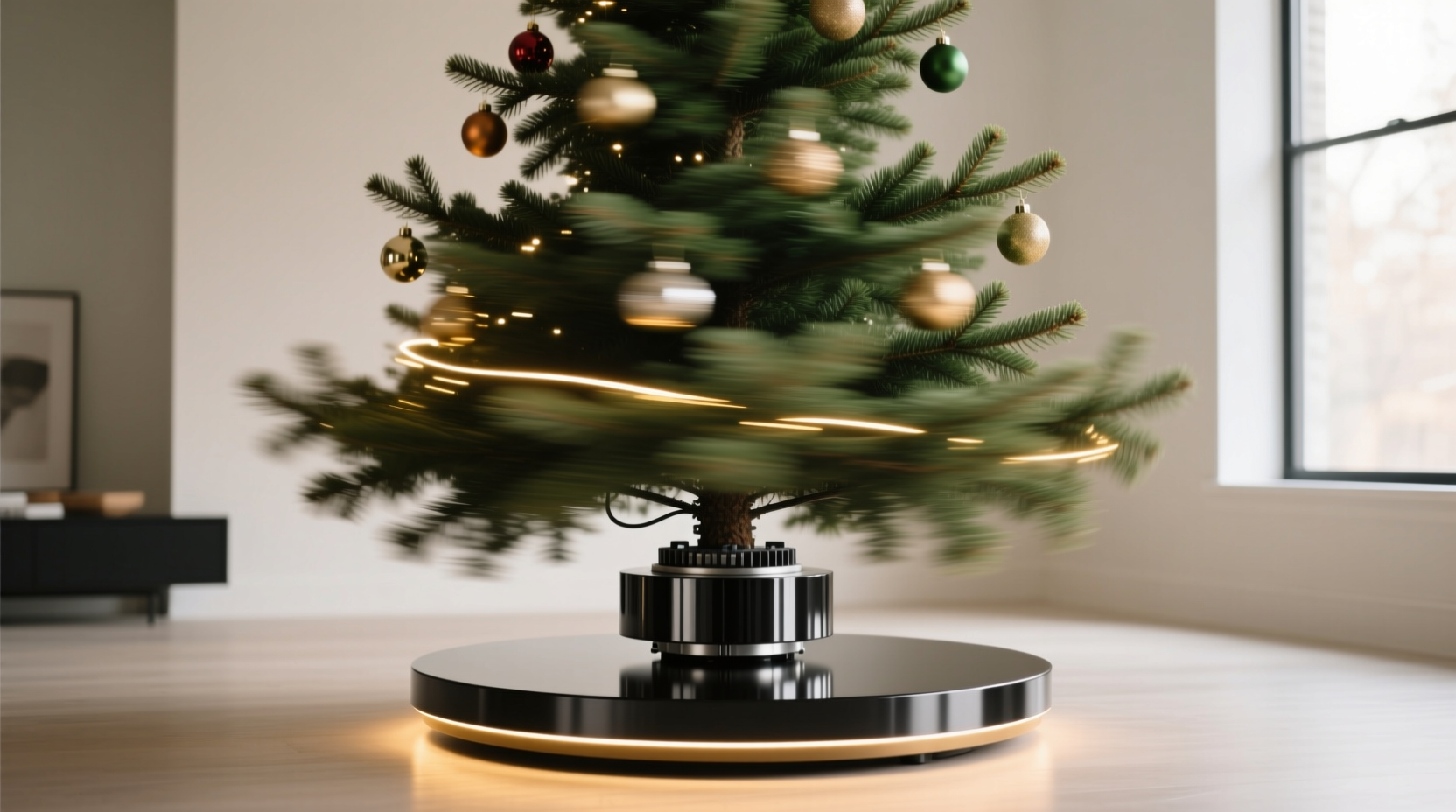
A rotating Christmas tree stand replaces the traditional fixed base with a motorized platform. Once assembled and powered (usually via standard electrical outlet), the base rotates the tree at a slow, steady pace—typically one full rotation every 60 to 90 seconds. The mechanism supports various tree sizes and weights, often accommodating live trees up to 10 feet tall and artificial ones within similar dimensions.
The core components include a central support rod, adjustable grip brackets to secure the trunk, and a low-profile motor unit concealed beneath the tree skirt. Some models offer variable speed settings or remote controls, allowing users to pause rotation when needed—for example, during decoration or photography.
While not all rotating stands are created equal, most prioritize stability and weight distribution. High-end versions feature reinforced steel frames and anti-slip pads to prevent wobbling, even on hardwood or tile floors. This engineering focus ensures that safety remains paramount despite the added mechanical complexity.
Advantages of Using a Rotating Base
The primary appeal of a rotating Christmas tree stand lies in its ability to bring the tree to you, rather than requiring constant repositioning. For individuals with limited mobility, chronic pain, or young children who may struggle to move freely around furniture, this can be transformative.
- Improved visibility: Every ornament, light strand, and decorative detail gets equal exposure without needing to circle the tree.
- Easier decoration: With the ability to pause rotation, decorators can work section by section, letting the stand bring each side into optimal reach.
- Better symmetry checks: As the tree turns, imbalances in lighting or ornament placement become immediately apparent, helping achieve a polished look.
- Social inclusivity: Guests seated in one area—such as near a fireplace or couch—can enjoy a full view without getting up repeatedly.
- Photography benefits: A slow rotation allows for dynamic video shots or time-lapse footage, adding a cinematic quality to holiday recordings.
“Rotating stands have changed how people interact with their trees. It’s no longer about walking around—it’s about experiencing the tree as a moving piece of art.” — Daniel Reeves, Holiday Interior Designer and Author of *The Modern Christmas Home*
In multi-generational households, where grandparents or elderly relatives may find movement difficult, the rotating function reduces physical strain while increasing engagement. One user reported that her mother-in-law, who uses a walker, now participates in tree-trimming for the first time in five years because she can stay seated and still see every side.
Challenges and Limitations
Despite the advantages, rotating stands come with trade-offs that potential buyers should carefully consider.
First, cost is significantly higher than standard stands. While a basic water-holding stand might cost $20–$40, rotating models range from $120 to over $300 for premium versions with smart features. This price jump may not justify the benefit for occasional users or those on a tight budget.
Second, setup complexity increases. Installing a rotating base requires precise centering of the tree trunk and careful tightening of clamps to avoid slippage during motion. Uneven weight distribution—common with lopsided artificial trees or heavy garlands on one side—can cause wobbling or strain on the motor.
Additionally, power dependency introduces vulnerability. If an outlet isn’t nearby, extension cords become necessary, creating tripping hazards or aesthetic clutter. Power outages or motor malfunctions can also leave the tree stuck mid-rotation, which may frustrate users expecting seamless operation.
Real Example: A Family’s First Experience
The Thompson family in Portland, Oregon, decided to try a mid-range rotating stand after years of struggling to decorate a large pre-lit artificial tree in a corner of their living room. With two young kids and limited floor space, circling the tree was awkward and often led to tangled lights.
They purchased a model with remote control and a “decorator mode” that pauses automatically when touched. During setup, they found the instructions unclear about weight limits and nearly overloaded the base by attaching too many heavy ornaments early in the process. After adjusting their approach—decorating lighter sections first and distributing weight evenly—they achieved smooth rotation.
Over the season, they appreciated the ease of viewing and noted fewer arguments among the kids about whose side of the tree looked best. However, they did mention that the soft hum of the motor was noticeable in quiet rooms, particularly at night. Overall, they rated the experience positive but said they’d research more thoroughly next time.
Comparison: Rotating vs. Fixed Stands
| Feature | Rotating Stand | Fixed Stand |
|---|---|---|
| Price Range | $120–$350 | $15–$60 |
| Mobility Required for Viewing | None (tree comes to viewer) | Frequent walking around needed |
| Setup Complexity | Moderate to high | Low |
| Noise Level | Low hum during operation | Silent |
| Power Requirement | Yes (AC outlet) | No |
| Weight Capacity | Varies; typically 50–75 lbs max | Often higher, especially for live trees |
| Best For | Small spaces, accessibility needs, modern decor enthusiasts | Budget-conscious users, large natural trees, infrequent decorators |
When a Rotating Stand Makes the Most Sense
Certain situations make the investment in a rotating Christmas tree stand far more justifiable than others. Consider the following scenarios:
- Limited mobility in the household: Whether due to age, injury, or disability, any condition that makes walking around furniture difficult increases the value of a rotating base.
- Trees placed against walls or in corners: In tight layouts where only partial access is possible, rotation restores full visibility without rearranging furniture.
- Heavy emphasis on symmetry and design: Perfectionists who spend hours arranging ornaments will appreciate seeing all sides without physical effort.
- Videos or social media sharing: Families who document their holidays digitally benefit from smooth rotations for reels, TikToks, or digital greetings.
- Multi-room visibility: In open-concept homes, placing the tree near a kitchen or dining area allows continuous enjoyment even when not directly facing it.
Step-by-Step Guide to Using a Rotating Stand Effectively
- Choose the right location: Ensure there's enough clearance around the tree for unobstructed rotation. Keep at least 6 inches from walls, furniture, and curtains.
- Plug in early: Confirm access to a working outlet before assembling. Avoid daisy-chaining extension cords for safety.
- Assemble the base: Follow manufacturer instructions precisely. Attach support brackets and level the platform before inserting the trunk.
- Insert and secure the trunk: Center the tree stem and tighten all gripping screws evenly. Test stability by gently nudging the tree.
- Power on and test rotation: Start the motor and observe one full cycle. Watch for wobbling, noise, or uneven turning.
- Distribute decorations evenly: Begin with lights, then add ornaments in balanced sections. Rotate between additions to maintain visual harmony.
- Use pause functions strategically: Stop rotation during active decorating, pet presence, or when small children are playing nearby.
- Maintain throughout the season: Dust the base periodically and inspect connections. For live trees, monitor water levels daily as access may be slightly more cumbersome.
FAQ
Can I use a rotating stand with a real Christmas tree?
Yes, provided the tree fits within the weight and diameter limits of the stand. Many models accommodate fresh-cut trees up to 8–9 feet tall. However, ensure the stand includes a water reservoir if using a live tree, as hydration is critical for fire safety and needle retention.
Do rotating stands damage hardwood floors?
Generally no—if the stand has rubberized or felt-bottom feet. However, prolonged stationary pressure can leave marks, and minor debris caught under the base could scratch surfaces during rotation. Placing a protective mat underneath is recommended.
Are replacement parts available if the motor fails?
Availability varies by brand. Higher-end manufacturers like Girland or TreeRite offer spare motors and support kits, while generic brands may not. Check warranty terms and customer service responsiveness before purchase.
Checklist: Should You Buy a Rotating Christmas Tree Stand?
- ☐ Do you or a household member have difficulty walking around the tree?
- ☐ Is your tree located in a corner or against a wall with limited access?
- ☐ Are you willing to pay 3–5x more than a standard stand?
- ☐ Can you place the tree near a power outlet?
- ☐ Does your tree (artificial or real) fall within the weight/diameter specs of available rotating stands?
- ☐ Do you value design precision and even ornament distribution?
- ☐ Will you use the tree for photos or videos shared online?
If you answered “yes” to three or more of these questions, a rotating stand is likely a worthwhile upgrade. If most answers are “no,” a traditional stand may serve you better.
Final Thoughts: Balancing Innovation with Practicality
The decision to invest in a rotating Christmas tree stand ultimately hinges on lifestyle needs and priorities. For some, it’s a luxury novelty—an interesting gadget with marginal returns. For others, it’s a meaningful enhancement that improves accessibility, reduces physical strain, and elevates the holiday experience.
Technology doesn’t always improve tradition, but when thoughtfully applied, it can deepen connection. A rotating stand won’t make your tree smell like pine or bring back childhood memories—but it can help everyone in your home feel included in the moment, regardless of where they’re sitting.
Before making a purchase, assess your space, budget, and usage patterns honestly. Read reviews focused on long-term durability, not just initial impressions. And remember: the magic of Christmas isn’t in the mechanics of the tree, but in the people gathered around it.




 浙公网安备
33010002000092号
浙公网安备
33010002000092号 浙B2-20120091-4
Comments
No comments yet. Why don't you start the discussion?