
Every holiday season, families across the country wrestle with the same challenge: getting the Christmas tree perfectly centered, evenly decorated, and visible from all angles. Traditional stands require constant walking around the tree—bending, stepping back, adjusting ornaments—only to realize one side still looks sparse. Enter the rotating Christmas tree stand: a modern upgrade promising 360-degree access without the hassle. But is it truly worth the added expense? For those prioritizing symmetry, ease of decorating, and long-term convenience, the answer may be a resounding yes—but only if you understand what you're paying for and how it fits your routine.
The Problem With Static Tree Stands
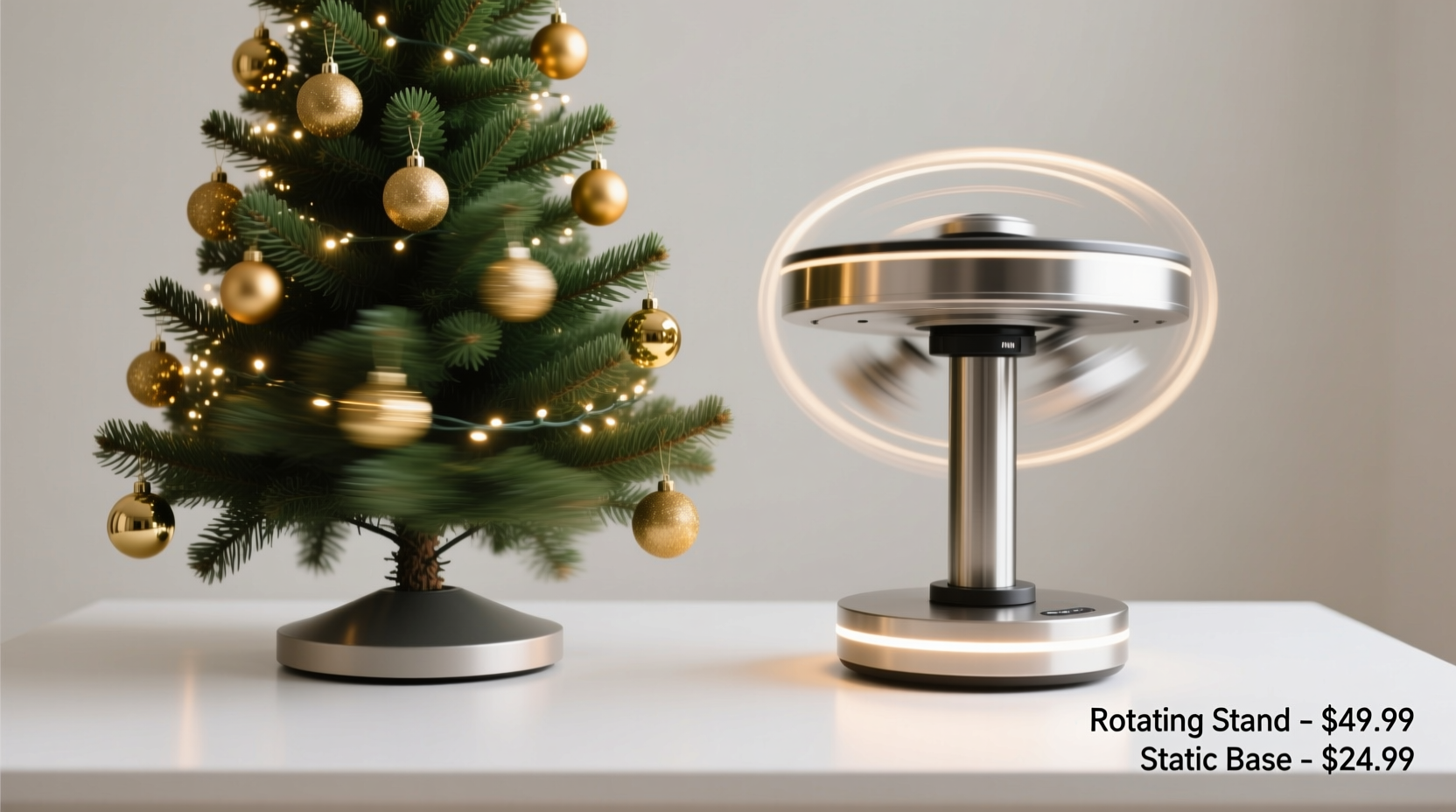
A standard tree stand holds your evergreen firmly in place, which is essential for stability. However, that immobility creates practical challenges during setup and decoration. To achieve balanced ornament placement, you must walk completely around the tree multiple times, often missing blind spots or under-decorating certain sections simply because they’re out of your direct line of sight. This process can take hours, especially for larger trees or families aiming for a magazine-worthy display.
Moreover, once the tree is lit and on display, static positioning means some guests may only see one “good” side unless they physically move around it. In open-concept homes or rooms where furniture limits movement, this becomes more than an inconvenience—it affects the overall aesthetic experience of the holiday centerpiece.
How Rotating Stands Work: Mechanics and Features
A rotating Christmas tree stand operates on a simple but effective mechanism: a circular base with ball bearings or a turntable system that allows the entire tree to spin smoothly with minimal effort. Most models support trees up to 9 or 10 feet tall and weigh between 20–40 pounds when fully loaded with water and decorations.
These stands typically include:
- A central screw clamp or adjustable brackets to secure the trunk
- A water reservoir (just like traditional stands) to keep the tree fresh
- A low-profile turntable base that rotates 360 degrees
- Locking mechanisms to stabilize the tree when not rotating
The rotation is manual—no motors involved—and requires only light pressure to turn. High-end models offer smoother motion and better weight distribution, reducing wobble. Some even integrate anti-slip pads and leveling feet for uneven floors, making them ideal for older homes with slightly sloped surfaces.
Benefits of a Rotating Stand for Even Viewing
The primary advantage of a rotating stand is immediate access to every angle of your tree without physical repositioning. Instead of walking around, you stay in one place and bring the tree to you. This makes decorating significantly faster and more precise, especially when coordinating color themes, light density, or focal-point ornaments.
From a design perspective, even viewing ensures no part of the tree feels neglected. You’re less likely to over-decorate the front and ignore the back—a common issue when the rear of the tree faces a wall or corner. With rotation, each quadrant receives equal attention, resulting in a professionally balanced appearance regardless of where guests stand.
Additionally, families with mobility limitations benefit greatly. Elderly relatives or individuals with joint pain can participate in decorating without excessive bending or pivoting. Children also find it easier to place ornaments at their eye level as the tree comes to them, fostering inclusive holiday traditions.
“Rotating stands are game-changers for achieving symmetrical designs. They eliminate guesswork and reduce decorating time by nearly half.” — Daniel Reeves, Interior Stylist & Holiday Display Consultant
Cost Comparison: Is the Investment Justified?
Traditional tree stands range from $15 to $40, depending on size and build quality. In contrast, rotating models start at around $60 and can exceed $120 for premium versions with enhanced durability and larger capacity.
To assess whether the extra cost is justified, consider frequency of use and long-term value. If you put up a real tree annually and plan to keep it for decades, spending an additional $50 upfront could save hundreds of hours in cumulative decorating time. Moreover, many rotating stands are built with heavier-duty materials, meaning they last longer than basic plastic counterparts.
| Feature | Standard Stand | Rotating Stand |
|---|---|---|
| Price Range | $15 – $40 | $60 – $120+ |
| Water Capacity | 1–2 gallons | 1.5–3 gallons |
| Tree Height Support | Up to 9 ft | Up to 10 ft |
| Rotation Capability | No | Yes (360°) |
| Decorating Efficiency | Moderate | High |
| Lifespan (Avg.) | 3–7 years | 8–15+ years |
The table illustrates that while rotating stands cost more initially, they often outperform standard models in capacity, longevity, and functionality. Over five Christmases, the per-use cost difference narrows considerably—especially when factoring in saved time and reduced frustration.
Real-World Example: The Thompson Family’s Upgrade
The Thompsons of Portland, Oregon, had used the same folding metal stand for 12 years. Each December, decorating took most of a Saturday, with two adults circling the 8-foot fir repeatedly, arguing over whether the left side had enough snowflakes. Their dining room layout forced the tree into a corner, making one full side nearly invisible until someone moved furniture.
In 2022, they invested in a mid-range rotating stand ($85). The first night, they assembled it in under 10 minutes and filled the reservoir. During decorating, they stationed themselves beside the couch—their usual vantage point—and slowly rotated the tree as they worked. For the first time, they noticed gaps immediately and corrected them in real time.
“We finished in three hours instead of six,” said Sarah Thompson. “And when guests arrived, everyone said the tree looked ‘professionally done.’ It wasn’t magic—it was just easier to see everything.”
They now lock the stand after setup but unlock it occasionally to show off different sides during gatherings. After two seasons, the stand shows no wear, and they consider it one of their best holiday purchases.
Step-by-Step: Decorating Efficiently with a Rotating Stand
To maximize the benefits of a rotating stand, follow this streamlined approach:
- Set Up in Final Location: Place the stand where the tree will remain—moving a loaded rotating base can damage flooring or strain the mechanism.
- Secure the Tree: Insert the trunk and tighten clamps evenly. Ensure the tree stands straight before adding water.
- Add Lights First: Begin with lights while rotating slowly. Check continuity every quarter-turn to avoid dark zones.
- Rotate and Assess: Spin the tree fully before hanging ornaments. Identify dominant viewing angles (e.g., entryway, seating area).
- Zone-Based Ornamentation: Divide the tree into four quadrants. Decorate one section at a time, rotating after each to maintain balance.
- Final Spin Test: Step back and rotate the tree completely. Adjust any overcrowded or sparse areas.
- Lock for Stability: Engage the locking pin if available, especially in homes with pets or small children.
This method reduces decision fatigue and prevents the common pitfall of “front-loading” decorations. Because you interact with the tree dynamically, the final result feels cohesive from every angle.
Common Misconceptions About Rotating Stands
Despite their advantages, several myths persist about rotating tree stands:
- Myth: They’re unstable. Reality: Quality models are engineered for balance and often include wider bases than standard stands.
- Myth: They’re only for large trees. Reality: Many compact rotating stands fit 6–7 foot trees and work well in apartments.
- Myth: Rotation causes water spillage. Reality: Reservoirs are designed with high walls; normal turning doesn’t displace water.
- Myth: They’re hard to assemble. Reality: Most require no tools and take less than 10 minutes to set up.
Understanding these facts helps separate genuine concerns from outdated assumptions. As manufacturing has improved, so has reliability and user-friendliness.
Frequently Asked Questions
Can I use a rotating stand with an artificial tree?
Yes. Most rotating stands are compatible with both real and pre-lit artificial trees. Just ensure the pole diameter matches the stand’s clamp range. Some artificial trees have center rods too thick for standard models, so check specifications before purchasing.
Do rotating stands require maintenance?
Minimal upkeep is needed. After the season, drain all water, dry thoroughly, and store in a cool, dry place. Wipe the turntable surface to prevent dust buildup. Avoid storing heavy objects on top to preserve alignment.
Are there motorized rotating stands?
While rare, some commercial or novelty stands include slow-rotation motors for display purposes. These are generally not recommended for home use due to noise, power requirements, and safety concerns around live trees and lights.
Checklist: Choosing the Right Rotating Stand
Before buying, verify these key points:
- ✔ Supports your tree height and trunk diameter
- ✔ Has a water reservoir of at least 1.5 gallons
- ✔ Includes a locking mechanism for stability
- ✔ Features a smooth-turning base (check reviews for “wobble” mentions)
- ✔ Fits under your tree without visible hardware
- ✔ Comes with a warranty or customer support
Reading verified buyer feedback—particularly about long-term durability—is crucial. Look for consistent comments on ease of rotation and sturdiness.
Conclusion: A Small Upgrade With Lasting Impact
A rotating Christmas tree stand isn’t a flashy gadget—it’s a thoughtful enhancement to a cherished tradition. The extra cost pays dividends in time saved, stress reduced, and visual harmony achieved. While not essential for every household, it’s particularly valuable for those who prioritize presentation, have limited mobility, or simply want to streamline the holiday setup.
If you’ve ever stepped back from your tree only to spot a bare branch or mismatched ornament cluster, you know the disappointment of near-perfection. A rotating stand eliminates those moments, bringing control and clarity to the decorating process. Over the years, its durable construction and functional design make it a smart addition to your seasonal toolkit.




 浙公网安备
33010002000092号
浙公网安备
33010002000092号 浙B2-20120091-4
Comments
No comments yet. Why don't you start the discussion?