
In compact urban living spaces, every square foot counts. For many apartment dwellers, holiday decor—especially the Christmas tree—presents a unique challenge: how to enjoy a festive centerpiece without sacrificing functionality or sightlines. One solution that’s gained traction in recent years is the rotating tree stand. Marketed as a way to eliminate the need to walk around the tree to see all sides, these motorized stands slowly spin your tree in place. But is this innovation truly valuable in tight quarters where furniture layout, wall proximity, and narrow sightlines already limit visibility?
The answer depends on more than just novelty. It involves understanding spatial dynamics, user behavior, maintenance needs, and long-term usability. This article examines the practicality of rotating tree stands in small apartments, weighing benefits against drawbacks, and offering real-world guidance for those considering one.
How Rotating Tree Stands Work
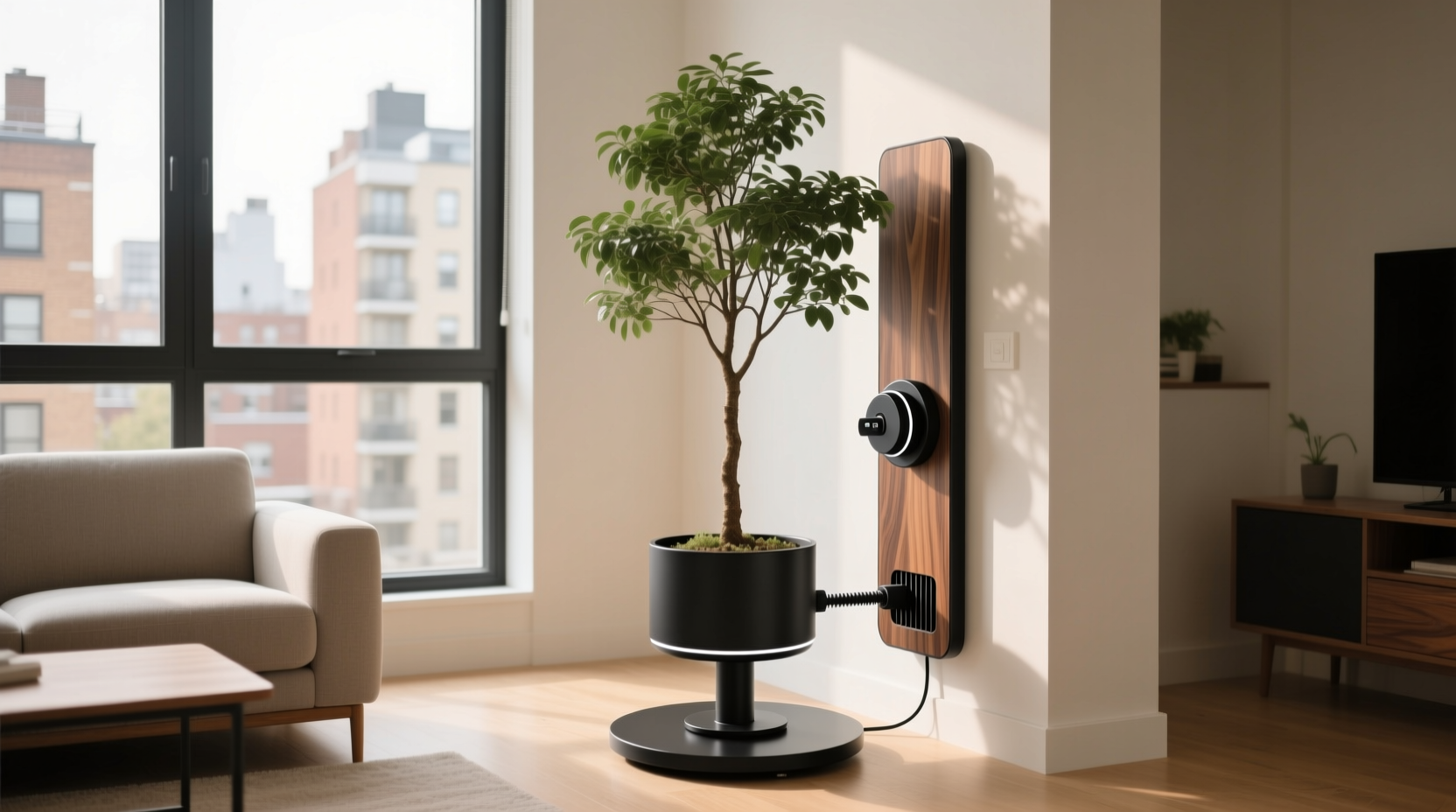
A rotating tree stand replaces the traditional fixed base. Instead of anchoring the tree statically, it uses a low-power motor (usually battery- or plug-powered) to rotate the trunk at a slow, steady pace—typically one full rotation every 60 to 90 seconds. The mechanism supports standard artificial or real trees up to a certain height and weight, often ranging from 6 to 9 feet and 50–75 pounds.
The engineering is simple but effective: a gear system turns the central rod while keeping the outer housing stable. Most models include an on/off switch, speed adjustment (on premium versions), and tilt-leveling screws to ensure smooth operation even on slightly uneven floors.
For residents of small studios or one-bedroom units, the appeal lies in passive viewing. Rather than repositioning furniture or craning your neck from doorways, you can enjoy a complete view of the tree’s decorated surface from a single vantage point—say, your sofa or kitchen counter.
Spatial Efficiency vs. Visual Accessibility
In larger homes, trees are often placed centrally or in open-plan areas, allowing natural 360-degree access. In contrast, small apartments typically force corner placements, narrow hallways, or positioning against shared walls. This leads to compromised viewing angles, especially when the tree faces away from primary living zones.
A rotating stand mitigates this by bringing all sides into view over time. From a design perspective, this shifts the focus from physical navigation to visual rhythm. You don’t move; the tree does.
However, spatial efficiency isn’t just about visibility—it’s also about footprint. Rotating stands are generally bulkier than basic tripods. They require clearance not only for the tree but also for the rotating mechanism, which may extend several inches beyond the trunk base. In a 400-square-foot studio, even five extra inches can affect traffic flow.
Moreover, because the tree moves, safety becomes a consideration. Loose wires, nearby curtains, or overhanging shelves must be evaluated. A spinning tree might look magical, but it shouldn’t become a hazard.
Pros and Cons in Apartment Living
| Advantage | Description |
|---|---|
| Improved Viewing Angles | Ideal for linear layouts where direct access to all sides is impossible. Great for renters who can't rearrange floor plans. |
| Enhanced Decor Impact | Moving lights and reflective ornaments catch attention differently when in motion, creating a dynamic focal point. |
| Convenience for Limited Mobility | Beneficial for elderly or disabled individuals who may struggle to walk around the tree. |
| Festive Novelty | Adds a whimsical, high-tech touch that guests often find memorable. |
| Drawback | Description |
| Larger Footprint | Bulkier than standard stands; may interfere with tight clearances near walls or furniture. |
| Noise and Vibration | Cheap models may emit humming sounds or slight shaking, disruptive in quiet environments. |
| Power Dependency | Requires outlet access or frequent battery changes—problematic in minimalist setups. |
| Higher Cost | Priced 2–4x higher than basic stands, with limited resale value after holidays. |
Real-World Example: A Studio Apartment Setup
Consider Maria, a graphic designer living in a converted warehouse loft in Brooklyn. Her studio is 480 square feet, with the sleeping area elevated on a platform and the main floor serving as kitchen, dining, and lounge space. She places her 7-foot pre-lit tree in the far corner behind the couch, the only spot that doesn’t block pathways or outlets.
From her favorite armchair, she can only see about 40% of the tree’s front. To view the rest, she’d need to get up and walk around—an inconvenience after long workdays. Last year, she purchased a mid-range rotating stand for $85. After setup, she noticed immediate improvement: within 75 seconds, the entire tree passed through her field of vision.
She adjusted her ornament placement, putting her most sentimental pieces on the “peak visibility” arc—the 120 degrees directly facing her seating area. Lights were distributed evenly, knowing they’d sweep across the room like a slow beacon. The only downside? The stand’s low hum was audible during silent movie scenes, so she turned it off during streaming nights.
Maria concluded the stand was “worth it for three weeks a year,” especially since she hosts holiday Zoom calls and wanted her background to feel fully decorated.
“Rotation doesn’t replace good design—it enhances constrained design. In small spaces, it’s less about luxury and more about compensation.” — David Lin, Interior Designer & Urban Living Specialist
Step-by-Step: Evaluating If a Rotating Stand Is Right for You
- Map Your Space: Sketch your apartment’s layout, marking where you plan to place the tree. Note distances from walls, furniture, and primary seating.
- Determine Visibility Gaps: Sit in your usual spots and assess how much of the tree you can see. If more than half is obscured, rotation could help.
- Check Clearance Requirements: Measure the diameter of the rotating base (often 18–24 inches). Ensure it fits without obstructing doors or footpaths.
- Assess Power Access: Confirm there’s an outlet nearby or plan for an extension cord. Avoid tripping hazards in tight corridors.
- Test Noise Sensitivity: Read reviews focusing on sound levels. Look for phrases like “whisper-quiet” or “inaudible in normal conditions.”
- Budget Consideration: Weigh the cost against alternatives—could repositioning furniture or using mirrored decor achieve similar results?
- Try Before You Buy (Optional): Some rental services offer holiday equipment. Borrow one to test before investing.
Alternatives to Rotating Stands
While rotating mechanisms offer convenience, they aren’t the only solution for limited viewing angles. Several low-cost or no-cost strategies can deliver comparable results:
- Mirrored Surfaces: Place a decorative mirror opposite the tree to reflect its hidden side. Works especially well with twinkling lights.
- Directional Lighting: Use focused LED spotlights to highlight less-visible sections, drawing the eye even if not fully seen.
- Asymmetrical Decorating: Concentrate ornaments and themed elements on the visible half, treating the back as “structural.” Many designers do this intentionally.
- Elevated Placement: Use a riser or small table to raise the tree, improving line-of-sight over furniture.
- Swivel Furniture: Choose a rotating armchair or ottoman that lets you turn toward the tree rather than walking around it.
Expert Recommendations for Apartment Dwellers
Interior experts suggest a pragmatic approach: adopt technology only when it solves a genuine problem, not for novelty alone.
“In micro-apartments, every object should serve multiple functions,” says Lena Cho, sustainable living consultant. “A rotating stand makes sense only if your tree is both a major decor piece and physically hard to view. Otherwise, it’s motion without purpose.”
She recommends prioritizing stability and safety—especially with real trees that shed needles and add moisture. “A wobbling motorized base under a 70-pound fir is a recipe for disaster. Always check weight ratings and floor levelness.”
FAQ
Can I use a rotating stand with a real Christmas tree?
Yes, provided the tree’s weight and base diameter are within the stand’s specifications. Ensure the water reservoir (if included) is accessible and won’t spill during rotation. Monitor water levels daily, as tilting can affect stability.
Do rotating tree stands work with all artificial trees?
Most do, as long as the pole fits securely in the clamp mechanism. However, some modular or hinged-core trees may not center properly, leading to uneven rotation. Check compatibility before purchase.
Are there quiet models available?
Yes. Higher-end brands like RotatingTree.com and HolidayMotion use brushless motors that operate below 30 decibels—quieter than a whisper. Avoid unknown brands with poor noise reviews.
Final Checklist Before Buying
- ✅ Tree size compatibility
- Confirm max height and weight match your tree.
- ✅ Floor type suitability
- Ensure it works on hardwood, tile, or carpet without scratching or slipping.
- ✅ Power source
- Decide between plug-in (more reliable) or battery (cleaner look).
- ✅ Noise level
- Look for verified quiet operation in customer feedback.
- ✅ Assembly ease
- In small spaces, complicated setup can be frustrating. Opt for tool-free models.
- ✅ Storage size
- Measure closet or shelf space—rotating stands are bulkier to store post-holiday.
Conclusion: Is It Worth It?
For small apartments where space limits viewing angles, a rotating tree stand can be a thoughtful solution—but only under specific conditions. If your tree is tucked into a corner, blocked by furniture, or primarily viewed from one seat, the rotational feature adds tangible value. It transforms a static object into a dynamic display, maximizing visual impact without requiring structural changes.
Yet it’s not universally necessary. Many achieve excellent results through smart decoration, mirrors, or minor layout tweaks. The stand’s added cost, power needs, and footprint must be justified by real functional benefit, not just seasonal excitement.
Ultimately, the decision comes down to lifestyle and priorities. If convenience, inclusivity (for mobility-limited household members), and immersive ambiance matter, a quality rotating stand may be a worthy investment. But if space is extremely tight or noise-sensitive, simpler alternatives may serve just as well.




 浙公网安备
33010002000092号
浙公网安备
33010002000092号 浙B2-20120091-4
Comments
No comments yet. Why don't you start the discussion?