
The holiday season brings with it a familiar sensory experience: the crisp, earthy scent of pine, the warmth of cinnamon and clove, and the cozy nostalgia tied to these smells. For many, that signature pine aroma comes from a freshly cut Christmas tree. Others opt for convenience and control by using scent diffusers with evergreen or holiday blends. But when it comes to health—especially respiratory wellness, indoor air quality, and allergy concerns—which option is truly better?
This isn’t just about preference or tradition. It’s about understanding how natural and artificial scents affect your body, particularly if you or someone in your household has asthma, allergies, or chemical sensitivities. Let’s explore the science, risks, and benefits behind both real trees and scent diffusers through a health-focused lens.
The Real Tree Aroma: Natural but Not Always Harmless
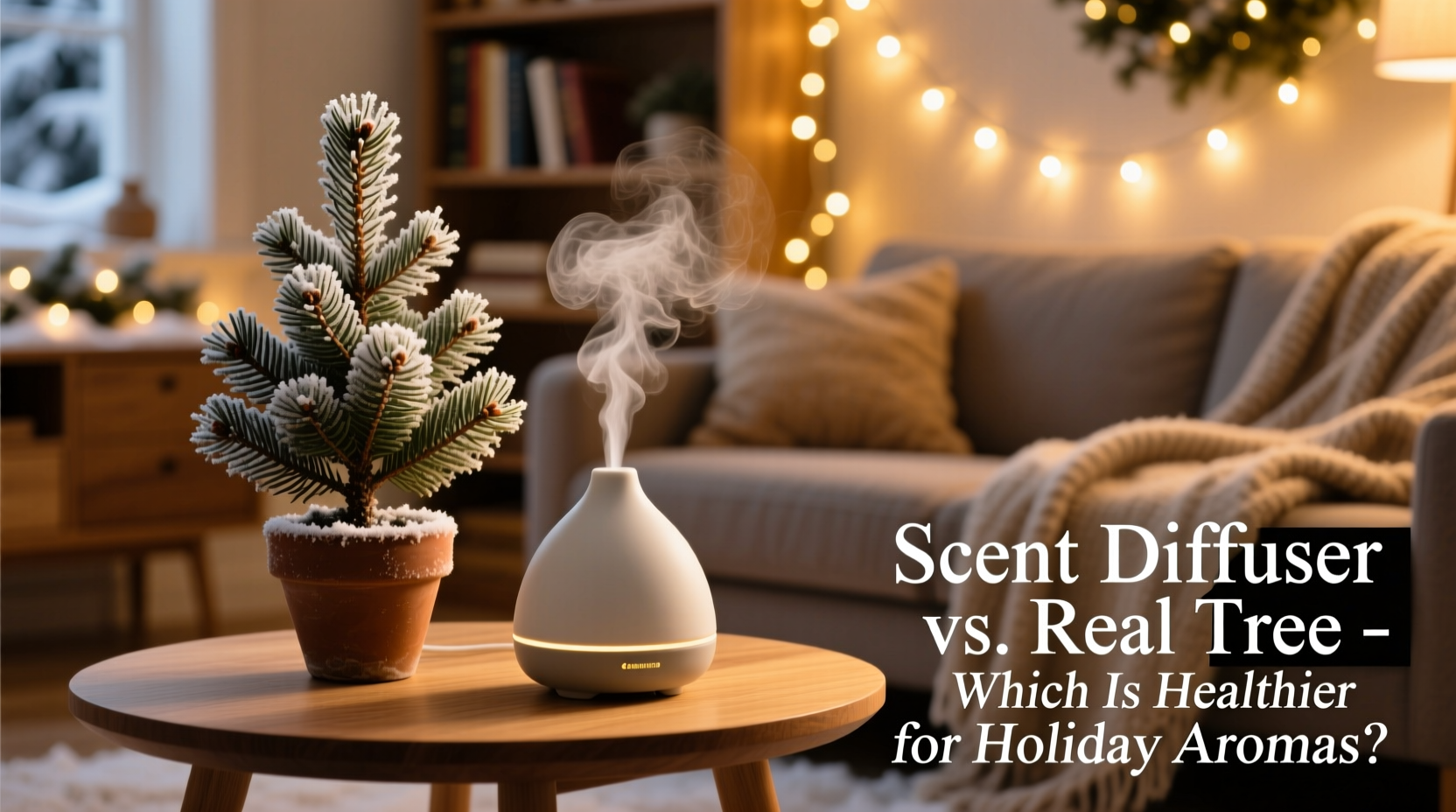
A real Christmas tree emits its fragrance naturally through volatile organic compounds (VOCs) released by pine resin, needles, and bark. These include compounds like alpha-pinene and limonene—molecules responsible for that fresh forest smell. While they originate from nature, “natural” doesn’t automatically mean “safe for everyone.”
In fact, studies have shown that live Christmas trees can significantly increase indoor VOC levels. A 2019 study published in the journal *Indoor Air* found that bringing a Norway spruce indoors could raise concentrations of monoterpenes by up to tenfold within days. For most people, this poses no issue. But for those with asthma or heightened sensitivity, elevated VOC exposure may trigger symptoms such as coughing, wheezing, or headaches.
Additionally, real trees bring more than just scent into your home—they often carry mold spores, pollen, and dust accumulated during storage or transport. According to Dr. Neeta Ogden, an immunologist and spokesperson for the American Lung Association, “Live trees can be a hidden source of allergens, especially for individuals with seasonal allergies or allergic asthma.” She notes that even well-shaken trees can release microscopic particles into the air once warmed by indoor heating systems.
Scent Diffusers: Controlled Fragrance with Hidden Trade-offs
Scent diffusers—whether reed, ultrasonic, or nebulizing—offer precise control over fragrance intensity and duration. You can pick exactly which scent fills your space: balsam fir, sandalwood, vanilla spice, or nothing at all. From a convenience standpoint, this level of customization is unmatched.
However, many essential oils and fragrance blends used in diffusers still emit VOCs. Limonene, linalool, and pinene are common in pine-scented oils and can react with ozone in indoor air to form secondary pollutants like formaldehyde and ultrafine particles. The U.S. Environmental Protection Agency (EPA) warns that prolonged or high-concentration use of diffused fragrances may contribute to indoor air pollution, especially in poorly ventilated spaces.
Moreover, not all diffuser oils are created equal. Synthetic fragrance oils often contain phthalates—chemicals linked to hormone disruption—and are rarely disclosed on labels due to trade secret protections. Even 100% pure essential oils aren't risk-free. In concentrated form, they can irritate mucous membranes or provoke allergic reactions in sensitive individuals.
“Just because something is labeled ‘essential oil’ doesn’t mean it’s safe to inhale continuously. Dose and context matter greatly.” — Dr. Susan Schiffman, Environmental Psychologist and Olfaction Researcher, Duke University
Comparing Health Impacts: Real Tree vs. Scent Diffuser
To make an informed decision, consider the following factors: allergen load, respiratory irritation potential, chemical exposure, and overall indoor air quality.
| Factor | Real Christmas Tree | Scent Diffuser |
|---|---|---|
| Allergens | High – carries mold, pollen, sap residue | Low to moderate – depends on oil purity and user sensitivity |
| VOC Emissions | Moderate – natural terpenes increase over time | Variable – low with occasional use, high with continuous diffusion |
| Chemical Additives | None (unless sprayed with preservatives) | Potentially high – synthetic fragrances, solvents, phthalates |
| Respiratory Risk | Moderate for asthmatics/allergy sufferers | Moderate to high with poor ventilation or overuse |
| Control & Customization | None – scent intensifies over time | High – adjustable strength, timing, scent type |
| Indoor Air Quality Impact | Increases bioaerosols and VOCs gradually | Can rapidly degrade air quality if misused |
The table reveals a nuanced picture: neither option is universally “healthier.” The real tree introduces biological allergens but avoids synthetic chemicals. The diffuser avoids outdoor contaminants but may introduce potent chemical ones—especially if low-quality oils are used or diffusion runs nonstop.
Real-Life Scenario: Managing Asthma During the Holidays
Sarah, a 38-year-old teacher from Vermont, has moderate allergic asthma. Each year, her family tradition included selecting a Fraser fir from a local farm. But three years ago, within 48 hours of setting up the tree, she developed chest tightness and increased nighttime wheezing. Her pulmonologist suggested the tree might be the culprit.
The following year, Sarah opted for an artificial tree and used a diffuser with a small amount of diluted balsam fir essential oil for two hours each evening. She monitored her peak flow readings and reported stable lung function throughout December. When she accidentally left the diffuser running overnight, however, she woke with a mild headache and nasal congestion—prompting her to adjust usage further.
Her solution? A compromise: no live tree, occasional diffusing (max 2 hours/day), and increased use of an HEPA air purifier in the living room. “I didn’t want to lose the holiday feeling,” she said, “but I also didn’t want to spend December on inhalers.”
Sarah’s case illustrates that personal health conditions should guide decisions more than tradition or aesthetics.
How to Minimize Health Risks—Whichever Option You Choose
You don’t have to abandon tradition or modern convenience to protect your health. With mindful practices, both real trees and diffusers can coexist safely in your home. Here’s a step-by-step approach:
- Assess household health needs: Identify any members with asthma, allergies, chemical sensitivities, or compromised immune systems.
- Choose high-quality materials: For diffusers, use only 100% pure essential oils from reputable brands with full ingredient transparency.
- Limits duration and frequency: Run diffusers no more than 30–60 minutes at a time, with several hours between sessions.
- Pre-clean the tree: If using a real tree, rinse it thoroughly outdoors and let it dry before setup. Use a leaf blower to remove loose debris.
- Improve ventilation: Open windows daily, even briefly, to exchange indoor air and reduce VOC buildup.
- Use an air purifier: Equip key rooms with HEPA + activated carbon filters to capture allergens and neutralize gaseous pollutants.
- Monitor symptoms: Keep track of headaches, coughing, or sinus issues after introducing either scent source.
Checklist: Safer Holiday Scent Practices
- ☐ Assess family members for respiratory conditions
- ☐ Avoid continuous diffusion—limit to 1 hour max per session
- ☐ Choose unscented or hypoallergenic artificial trees if opting for fake
- ☐ Clean real trees before bringing them indoors
- ☐ Use only pure essential oils—avoid synthetic fragrance blends
- ☐ Maintain good airflow with open doors or fans
- ☐ Run HEPA air purifiers in main living areas
- ☐ Discontinue use if anyone experiences dizziness, nausea, or breathing changes
Frequently Asked Questions
Can essential oil diffusers worsen asthma?
Yes, for some individuals. While certain oils like eucalyptus may temporarily ease congestion, the fine mist and VOCs from diffused oils can irritate airways and trigger bronchoconstriction in asthmatics. The American Academy of Allergy, Asthma & Immunology (AAAAI) advises caution and recommends avoiding unventilated diffusion in homes with asthma patients.
Are there hypoallergenic alternatives to real trees?
Yes. Many artificial trees are now designed with minimal off-gassing plastics and come pre-assembled without added scents. Look for models labeled “PVC-free” or “low-VOC.” Some companies even offer fabric-based trees that produce almost no airborne particles.
Is boiling pine needles a safer way to get tree scent?
Boiling pine needles releases natural aroma but also concentrates terpenes in steam, which can be irritating when inhaled deeply—especially in small kitchens with poor ventilation. It’s not inherently safer than diffusing oils and carries similar VOC risks. If tried, do so briefly and ensure strong airflow.
Conclusion: Prioritize Health Without Sacrificing the Spirit
The question isn’t whether scent diffusers are categorically better than real trees—it’s about making informed choices based on your household’s unique health profile. For families with allergies or respiratory conditions, a carefully managed diffuser using pure oils may pose fewer risks than a mold-carrying live tree. Conversely, for those sensitive to synthetic chemicals, a well-cleaned real tree might be the preferable—and more natural—option.
Ultimately, the safest approach combines awareness, moderation, and proactive air quality management. Whether you’re drawn to the authenticity of a Douglas fir or the precision of a diffused evergreen blend, you can enjoy the holidays without compromising well-being.




 浙公网安备
33010002000092号
浙公网安备
33010002000092号 浙B2-20120091-4
Comments
No comments yet. Why don't you start the discussion?