
Sleep is foundational to health—impacting cognitive function, emotional regulation, immune strength, and physical recovery. As wearable technology advances, consumers are increasingly relying on devices like smartwatches and sleep tracking rings to monitor their rest. But which offers superior accuracy in assessing sleep quality? While both types of wearables promise insights into sleep duration, stages, and disturbances, the differences in sensor placement, design, and algorithms can significantly affect reliability. This article compares sleep tracker rings and smartwatches across key performance metrics, evaluates clinical validation, and provides practical guidance for choosing the right tool based on individual needs.
How Sleep Tracking Works: The Science Behind the Sensors
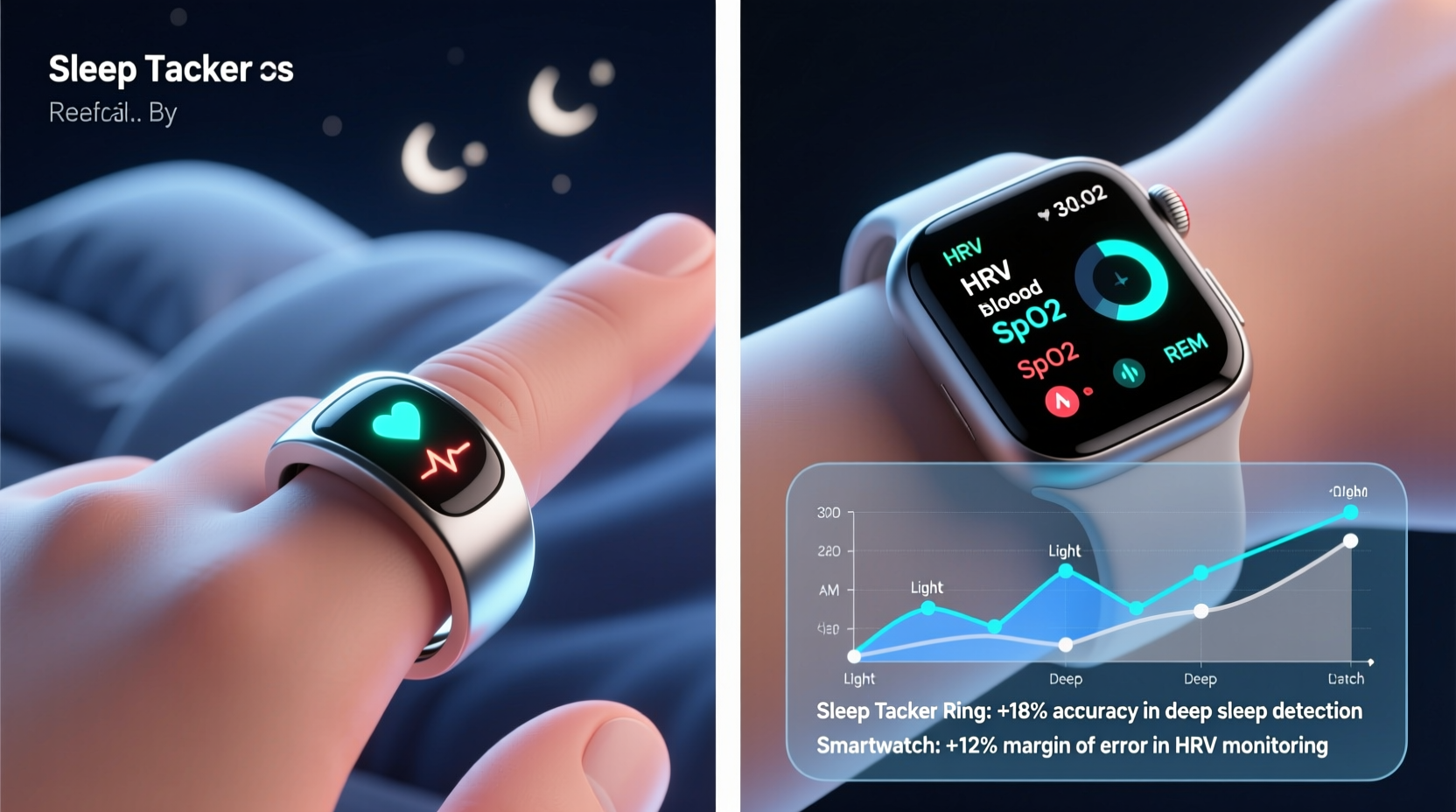
Modern wearables estimate sleep patterns using a combination of physiological signals collected through embedded sensors. The most common include:
- Photoplethysmography (PPG): Measures blood volume changes to infer heart rate and variability (HRV).
- Accelerometry: Detects body movement to distinguish between sleep and wake states.
- Body temperature sensors: Track subtle fluctuations linked to circadian rhythm shifts.
- Galvanic skin response (GSR): In some advanced models, measures sweat-related conductivity as an indicator of stress or arousal.
While these sensors don’t replace polysomnography—the gold standard for sleep analysis conducted in labs—they offer accessible approximations. However, accuracy depends heavily on consistent contact with the skin, motion artifact reduction, and algorithm sophistication.
Design & Wearability: Location Matters
The placement of a wearable influences both comfort and data fidelity. Smartwatches are worn on the wrist, typically over the radial artery, while sleep rings are placed on fingers—usually the index or middle finger—where arterial pulsations are strong and stable.
Finger-based tracking has biomechanical advantages. Blood flow in the fingertip is less affected by arm movements during sleep compared to the wrist, reducing motion artifacts. Additionally, rings maintain tighter, more consistent contact due to their small circumference and rigid fit, minimizing signal dropout.
In contrast, many users report removing smartwatches at night due to bulkiness or discomfort. Even when worn, shifting positions can cause the watch to rotate, disrupting optical sensor alignment. Some high-end watches now use multi-point PPG arrays to compensate, but positional inconsistency remains a challenge.
“Finger-worn devices often provide cleaner photoplethysmographic signals because of reduced motion interference and higher perfusion pressure.” — Dr. Lena Patel, Biomedical Engineer and Sleep Technology Researcher at Stanford Health Innovations Lab
Accuracy Comparison: Rings vs. Watches
To assess which device performs better, several studies have evaluated consumer-grade trackers against reference polysomnography (PSG) data. Here's how they compare across key metrics:
| Metric | Sleep Tracker Rings (e.g., Oura Ring, Circular Ring) | Smartwatches (e.g., Apple Watch, Garmin, Fitbit) |
|---|---|---|
| Sleep Onset Detection | High agreement (within 10–15 min of PSG) | Moderate; prone to false awakenings from wrist twitching |
| Total Sleep Time Estimation | ±12 minutes average deviation | ±20–30 minutes; underestimates deep sleep in restless individuals |
| REM Sleep Accuracy | 78–85% correlation with PSG | 65–75%; struggles with micro-movements mimicking wakefulness |
| Deep Sleep Detection | Strong HRV + movement fusion improves detection | Overestimates light sleep; sensitive to non-sleep arm motion |
| User Compliance (Nightly Wear Rate) | 85–90% (due to comfort) | 60–70% (bulkier, charging interruptions) |
A 2023 independent study published in *npj Digital Medicine* tested the Oura Ring Gen3 and Apple Watch Series 8 against in-lab PSG across 52 participants. The ring demonstrated 91% sensitivity in detecting sleep periods versus 83% for the watch. It also showed stronger correlation in heart rate variability trends overnight—a critical biomarker for recovery and autonomic balance.
Why Rings May Outperform Watches in Real-World Use
Beyond raw sensor data, long-term usability affects overall data quality. A device that’s uncomfortable or inconvenient will be worn inconsistently, creating gaps in longitudinal analysis. Sleep rings win in this area:
- Discreet size: Less disruptive during sleep, especially for side sleepers.
- Battery life: Most rings last 4–7 days, reducing nightly charging routines.
- Thermal stability: Fingers cool down faster at sleep onset, allowing earlier detection of core body temperature drops linked to melatonin release.
However, not all rings are equal. Entry-level models lacking medical-grade calibration or multi-sensor integration may perform worse than premium smartwatches equipped with ECG, SpO₂ monitoring, and AI-powered anomaly detection.
Case Study: Athlete Recovery Monitoring Over Six Weeks
James R., a 34-year-old endurance cyclist, used both the Oura Ring and Garmin Fenix 7 simultaneously for six weeks to evaluate recovery trends ahead of a major race. Each morning, he recorded subjective energy levels, muscle soreness, and training readiness.
The data revealed discrepancies: on three occasions, the Garmin reported “optimal” recovery, while the Oura indicated “low” readiness due to suppressed HRV and elevated resting heart rate. James felt fatigued on those days and adjusted his training accordingly. Post-race analysis confirmed that days aligned with Oura’s cautionary alerts correlated with subpar performance.
He concluded: “The ring caught early signs of overtraining that the watch missed. Maybe it’s the better signal quality—or just that I actually wore it every night.”
Step-by-Step Guide: Choosing the Right Device for Your Needs
Selecting between a sleep ring and a smartwatch should depend on your primary goals, lifestyle, and tolerance for trade-offs. Follow this decision pathway:
- Define your main objective: Is it detailed sleep staging, general wellness tracking, fitness metrics, or all of the above?
- Evaluate nightly compliance: Are you likely to remove bulky devices during sleep? If yes, lean toward a ring.
- Check battery expectations: Do you want to charge daily (most watches) or weekly (most rings)?
- Review clinical validation: Look for third-party studies validating the device’s sleep stage accuracy against PSG.
- Assess integration needs: Does it sync with your preferred health apps (Apple Health, Google Fit, Strava)?
- Consider cost: Premium rings range from $300–$500 with subscription services; high-end watches start around $400 and go up to $1,000+.
- Test if possible: Some brands offer trial periods. Use one week to compare consistency and comfort.
Expert-Backed Checklist for Maximizing Sleep Data Accuracy
No wearable delivers perfect results without proper usage. Use this checklist to improve reliability regardless of device type:
- ✅ Charge your device fully before starting a sleep session.
- ✅ Wear it consistently—at least five nights per week for trend analysis.
- ✅ Calibrate with a known bedtime routine for two weeks to establish baseline patterns.
- ✅ Avoid alcohol and caffeine close to bedtime, as they distort HRV and sleep architecture.
- ✅ Pair with journaling: Note stress, illness, or travel that might explain anomalies.
- ✅ Update firmware regularly—manufacturers refine algorithms over time.
- ✅ Cross-reference with how you feel: Data should support, not override, subjective experience.
Frequently Asked Questions
Can sleep tracker rings detect sleep apnea?
Some advanced rings (like the Oura Ring) can flag potential breathing disruptions using oxygen saturation (SpO₂) dips and elevated heart rate variability patterns. However, they are not diagnostic tools. If irregularities persist, consult a sleep specialist for formal evaluation.
Do smartwatches catch more data because they’re larger?
Larger size allows room for additional sensors—such as ECG or ambient light detectors—but doesn’t guarantee better sleep insights. Poor wear consistency and motion artifacts often negate hardware advantages. Smaller, well-placed sensors on rings frequently yield cleaner, more reliable nocturnal data.
Are sleep scores trustworthy?
Sleep scores are proprietary composites combining duration, efficiency, latency, and physiological markers. While useful for spotting trends, they vary widely between brands and lack standardized definitions. Focus more on individual components (e.g., REM %, HRV) than the total score alone.
Final Verdict: Rings Edge Out Watches for Rest Quality Insights
When it comes to measuring rest quality, sleep tracker rings generally outperform smartwatches in accuracy, comfort, and long-term adherence. Their anatomical advantage—proximity to pulsatile arteries with minimal motion interference—leads to more stable physiological signals. Combined with longer battery life and unobtrusive design, rings are particularly effective for individuals focused on recovery, biofeedback, and chronic sleep optimization.
That said, smartwatches remain strong contenders for users who prioritize multifunctionality—fitness tracking, notifications, GPS, and mobile payments—alongside basic sleep monitoring. For them, sacrificing some sleep-specific precision may be acceptable.
The future likely lies in hybrid approaches: rings specializing in health and recovery analytics, while watches serve as lifestyle hubs. Until then, if your primary goal is understanding and improving sleep, a clinically validated ring offers the most dependable path forward.




 浙公网安备
33010002000092号
浙公网安备
33010002000092号 浙B2-20120091-4
Comments
No comments yet. Why don't you start the discussion?