
For many home cooks, weekend meal prep is the backbone of a balanced, stress-free week. It’s when extra time allows for chopping, cooking, and portioning meals that will fuel mornings, lunches, and dinners during the busy workweek. Amid blenders, containers, and knives, one appliance often sits quietly on the countertop: the slow cooker. Once a kitchen staple, it’s now sometimes dismissed as outdated or too slow for modern life. But if you’re someone who dedicates Saturday or Sunday to prepping food in bulk, the question arises—should you keep your slow cooker, or is it just taking up space?
The answer isn’t a simple yes or no. It depends on how you cook, what types of meals you prefer, and how much value you place on hands-off preparation. When used strategically, a slow cooker can be a powerful ally in weekend meal prep—not because it speeds things up, but because it frees up your attention while delivering deeply flavorful, tender results with minimal effort.
Why Slow Cooking Fits Naturally Into Weekend Meal Prep
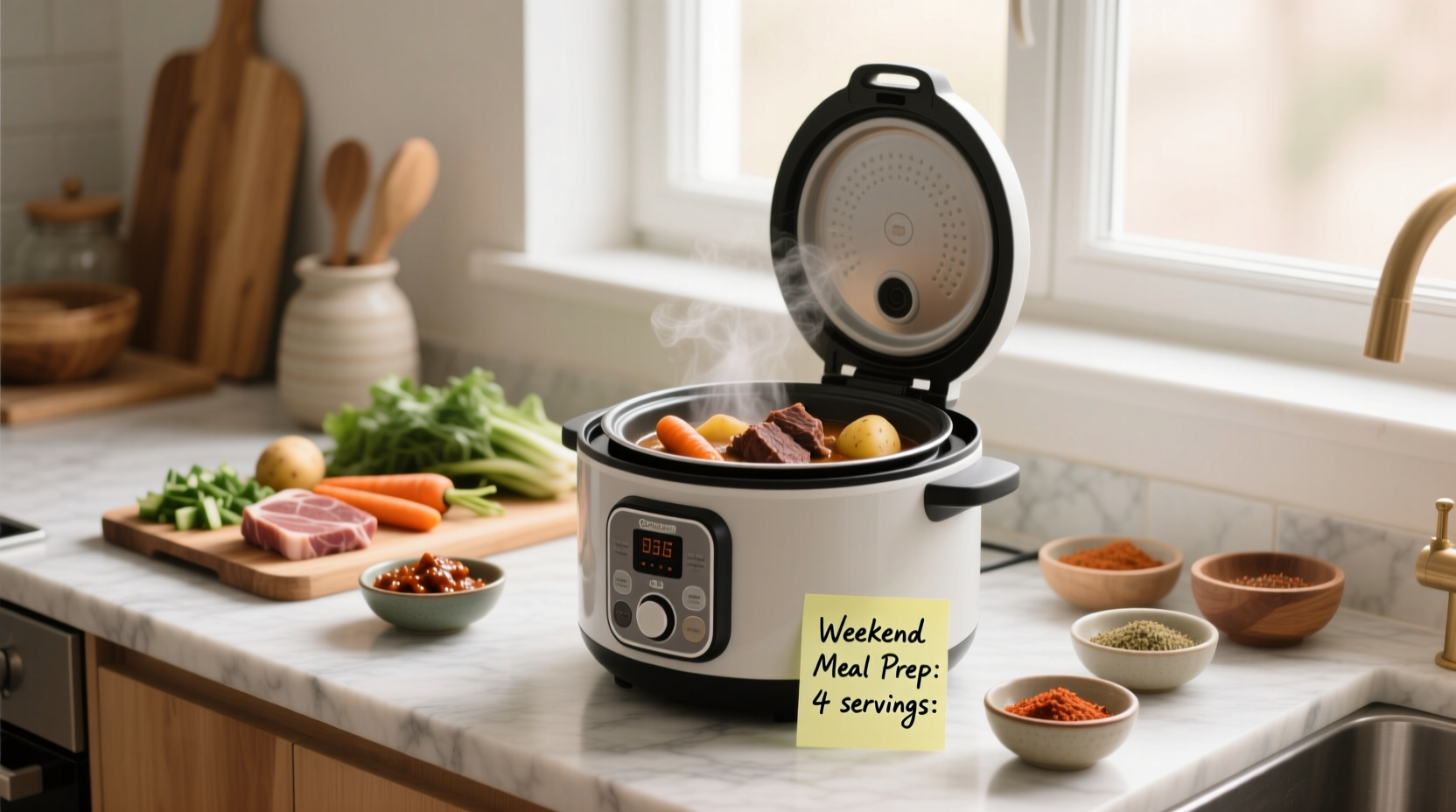
Weekend meal prep revolves around maximizing output with minimal daily effort. The goal is to create meals that are nutritious, easy to reheat, and satisfying. This is where the slow cooker excels. Unlike stovetop or oven cooking, which require monitoring, stirring, and timing adjustments, the slow cooker operates independently once started. You can load ingredients Saturday morning, turn it on, and come back hours later to fully cooked dishes ready for portioning.
Consider a typical prep session: you might spend two to three hours actively cooking—chopping vegetables, searing meat, simmering sauces. With a slow cooker, you can reduce active cooking time to under 30 minutes. Brown ground beef, add beans, tomatoes, spices, and broth to the pot, set it on low for eight hours, and return to a rich chili that feeds you five times that week. No supervision, no risk of burning, and no last-minute scrambling.
Time and Energy Efficiency Compared to Other Methods
One common misconception is that slow cookers are inefficient because they run for hours. In reality, they use significantly less energy than ovens or stovetops. A typical slow cooker uses about 1.2–1.7 kWh over eight hours, while an electric oven can consume 2.0–2.5 kWh in just one hour. Over time, this adds up—especially if you're preparing large batches weekly.
More importantly, the slow cooker saves mental and physical energy. During meal prep weekends, multitasking across multiple pots and pans can become overwhelming. The slow cooker simplifies this by handling one major component—like shredded chicken, beef stew, or lentil soup—while you focus on grains, roasted vegetables, or assembly tasks.
| Cooking Method | Avg. Active Time (per batch) | Total Time | Energy Use (approx.) | Hands-Off? |
|---|---|---|---|---|
| Slow Cooker | 15–20 min | 6–8 hrs | 1.5 kWh | Yes |
| Stovetop | 45–60 min | 1.5–2 hrs | 2.0 kWh | No |
| Oven | 30–40 min | 2–3 hrs | 4.0 kWh | Limited |
| Instant Pot | 20–25 min | 45–60 min | 1.0 kWh | Semi (requires pressure monitoring) |
While pressure cookers like the Instant Pot offer speed, they still demand attention during pressurization and release phases. The slow cooker, by contrast, runs unattended, making it ideal for background cooking while you clean, shop, or relax.
Real-World Example: A Busy Professional’s Sunday Routine
Sarah, a project manager and mother of two, dedicates Sundays from 9 a.m. to noon for meal prep. Her goal: five lunches and four dinners for the week. She used to rely heavily on sheet pan roasts and stove-simmered sauces, but found herself constantly checking timers and adjusting heat.
Last winter, she reintroduced her old 6-quart slow cooker. On Sunday mornings, she starts a pot of Moroccan-spiced chickpea and sweet potato stew while prepping quinoa and roasted broccoli. By 1 p.m., the stew is done—rich, aromatic, and portioned into eight containers. Three go into the fridge for weekday lunches; five into the freezer for future dinners. The remaining base becomes a grain bowl topping or taco filling later in the week.
“I didn’t realize how much mental load I was carrying until I offloaded one big dish to the slow cooker,” Sarah says. “Now I actually enjoy my prep time instead of rushing through it.”
“We often overlook passive cooking tools because they don’t feel ‘fast.’ But for meal preppers, predictability and consistency matter more than speed.” — Dr. Lena Patel, Nutrition & Behavioral Science Researcher
Maximizing Your Slow Cooker for Meal Prep: A Step-by-Step Guide
To get the most out of your slow cooker during weekend prep, follow this efficient process:
- Choose the Right Recipes: Focus on dishes that benefit from long, moist cooking—stews, curries, pulled meats, beans, soups, and oatmeal. Avoid delicate proteins like fish or quick-cooking vegetables.
- Prep Ingredients the Night Before: Chop onions, garlic, carrots, and proteins the evening prior. Store them in labeled containers in the fridge to save morning time.
- Layer Smartly: Place dense vegetables (potatoes, carrots) at the bottom, closer to the heat source. Add meat on top, then pour liquid over. This ensures even cooking.
- Use the Sear First (Optional): For deeper flavor, brown meat in a skillet before transferring to the slow cooker. This step takes 10 minutes but enhances taste significantly.
- Set and Forget: Turn on the slow cooker early in the day (e.g., 9 a.m.). Use the low setting for 7–8 hours for optimal texture and safety.
- Cool and Portion: Once done, turn off the cooker and let the food cool slightly. Transfer portions into meal containers. Refrigerate within two hours or freeze for later.
- Clean Immediately: Wash the ceramic insert while it’s still warm (but not hot) to prevent staining and make cleanup easier.
Common Misconceptions About Slow Cookers in Modern Kitchens
Despite their utility, slow cookers face criticism based on outdated assumptions. Let’s address a few:
- “They only make bland food.” This stems from oversimplified recipes. Layering spices, using broth instead of water, and finishing with fresh herbs or acid (lemon juice, vinegar) elevates flavor dramatically.
- “They’re unsafe for all-day cooking.” Modern slow cookers maintain safe temperatures (above 140°F) throughout the cycle, preventing bacterial growth. As long as ingredients start cold (not frozen), they cook safely.
- “You can’t prep freezer meals with them.” Actually, slow cooker meals freeze exceptionally well. Prepare full batches, cool, and freeze in single servings. Thaw overnight and reheat on the stove or microwave.
- “They take up too much space.” While they aren’t small, many models have removable inserts that can be stored separately. If counter space is tight, store the base and only bring out the pot on prep days.
When a Slow Cooker Might Not Be Worth It
Despite its strengths, the slow cooker isn’t ideal for everyone. Consider letting it go if:
- You primarily eat light, fresh meals like salads, stir-fries, or grain bowls that don’t benefit from long cooking.
- Your kitchen lacks storage space and you already own a multi-cooker (like an Instant Pot) that handles slow cooking plus other functions.
- You dislike reheating wet dishes and prefer crispy or textured foods.
- You rarely cook proteins or legumes that require tenderizing.
In such cases, investing in an air fryer, rice cooker, or high-quality sauté pan may serve you better.
Checklist: Is Your Slow Cooker Earning Its Keep?
Before deciding to keep or discard your slow cooker, ask yourself these questions:
- ✅ Do I cook soups, stews, or braised dishes at least twice a month?
- ✅ Do I value hands-off cooking during busy prep sessions?
- ✅ Do I freeze meals for future weeks?
- ✅ Does the slow cooker help me use affordable cuts of meat or dry beans?
- ✅ Am I willing to plan ahead by starting it early in the day?
If you answered “yes” to three or more, your slow cooker likely adds real value.
Frequently Asked Questions
Can I leave the slow cooker unattended while I run errands?
Yes, modern slow cookers are designed for safe, unattended operation. Ensure it’s on a stable surface, away from flammable materials, and filled between one-half and three-quarters full. Avoid using older models with damaged cords or inconsistent heating.
Can I adapt stove-top recipes for the slow cooker?
Most can be adapted. Reduce liquid by about 25% since evaporation is minimal. Add dairy or delicate vegetables in the last hour to prevent curdling or mushiness. Spices may need adjustment—start with less and taste after cooking.
Is it safe to prep ingredients the night before and refrigerate them?
Yes. Assemble everything in the removable insert, cover, and refrigerate overnight. In the morning, place the cold insert into the heated base. Note: Never put a frozen insert directly into the base—thermal shock can crack the ceramic.
Final Verdict: Yes, It’s Worth Keeping—With Conditions
The slow cooker remains a valuable tool for weekend meal preppers who prioritize depth of flavor, convenience, and energy efficiency. It won’t replace every appliance, nor should it. But for those who regularly cook hearty, batch-friendly meals, it offers something rare in today’s fast-paced kitchens: reliability without constant attention.
It’s not about speed—it’s about sustainability. The ability to start a meal with 20 minutes of effort and return to a complete, nourishing dish hours later aligns perfectly with the rhythm of weekend prep. And unlike flashier gadgets that lose appeal after a few uses, the slow cooker delivers consistent results year after year.
If yours has been collecting dust, try reintegrating it for just one month. Pick two recipes—perhaps a black bean chili and a lemon-herb chicken stew—and build your prep schedule around them. You might rediscover why this humble appliance earned its place on countertops for decades.




 浙公网安备
33010002000092号
浙公网安备
33010002000092号 浙B2-20120091-4
Comments
No comments yet. Why don't you start the discussion?