
In an era where refrigerators can stream Netflix and light bulbs adjust based on your mood, it’s no surprise that mirrors have gone high-tech too. Smart mirrors—once the stuff of sci-fi films—are now available for home bathrooms, gyms, and closets. These sleek devices combine reflective surfaces with embedded displays, voice assistants, and sensors, promising everything from weather updates to fitness coaching. But behind the polished glass lies a critical question: Is a smart mirror truly a functional upgrade, or is it merely a luxury toy with diminishing returns?
The answer isn’t straightforward. While early adopters rave about convenience and futuristic flair, skeptics argue that many features overlap with smartphones and tablets we already own. To cut through the hype, let’s examine what smart mirrors actually do, who benefits most, and whether the cost aligns with long-term value.
What Exactly Is a Smart Mirror?
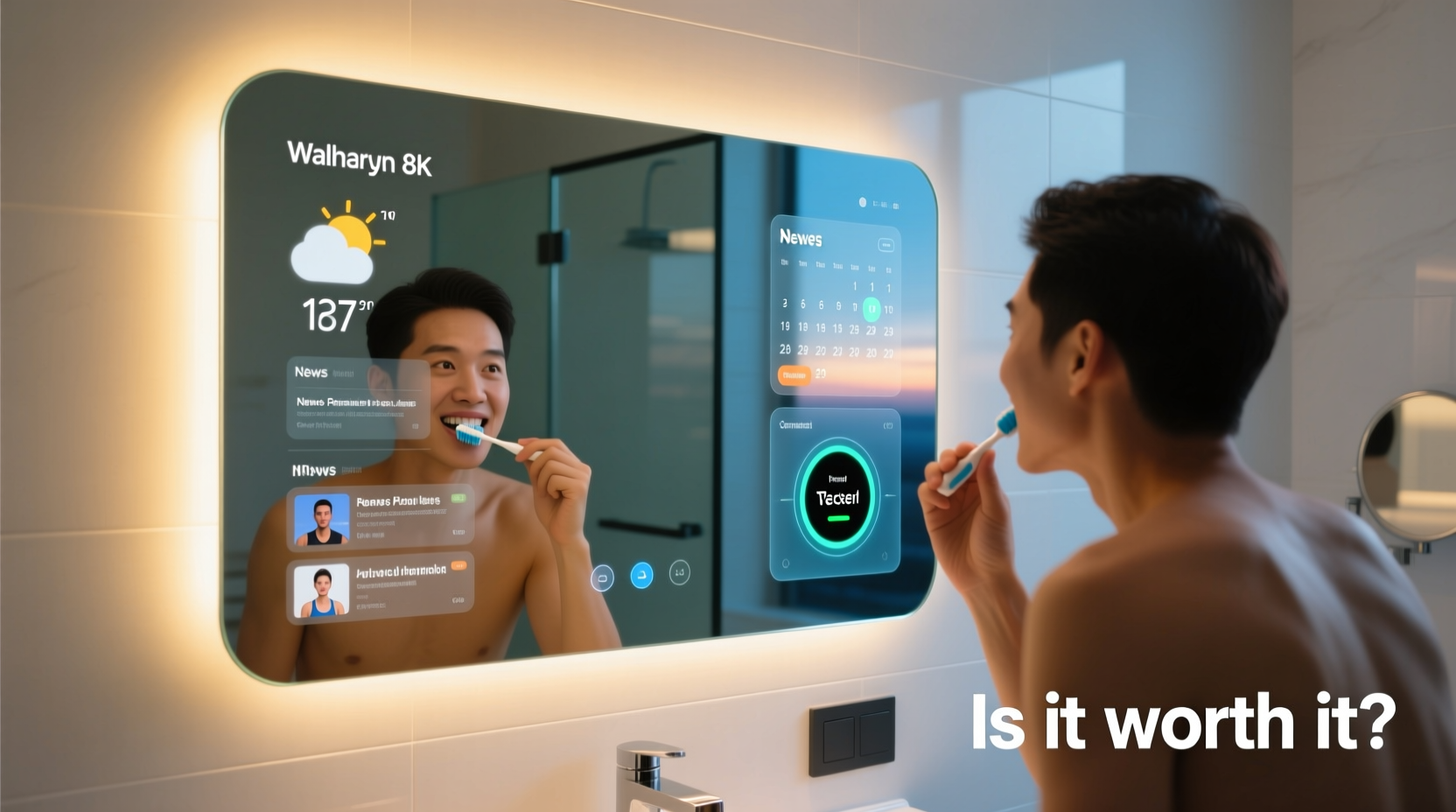
A smart mirror is a two-way mirror with a display hidden behind it. When powered off, it looks like a regular mirror. When activated, digital information appears overlaid on the reflection—things like time, weather, news headlines, calendar events, and even workout animations. Some models integrate cameras, microphones, and AI-powered software to offer personalized feedback, such as posture analysis during yoga or skin health assessments using facial recognition.
Manufacturers market these devices to tech enthusiasts, fitness buffs, and design-forward homeowners. Prices range from $500 for basic models to over $2,000 for premium versions with full-body tracking, voice control, and app ecosystems. Brands like Mirror (now part of Lululemon), Forme Life, and Fitness Mirror dominate the fitness-oriented segment, while companies like HiMirror focus on beauty and wellness analytics.
Core Features You’ll Find Across Models
- Live Display Overlays: Time, weather, news, and personal reminders appear without blocking your reflection.
- Voice & App Integration: Works with Alexa, Google Assistant, or proprietary apps for hands-free control.
- Fitness Coaching: Real-time classes with form correction via motion tracking.
- Health Monitoring: Skin analysis, hydration levels, and sleep insights (on select models).
- Entertainment: Stream music, podcasts, or videos while getting ready or exercising.
Who Actually Benefits From a Smart Mirror?
Not every household will gain equal value from a smart mirror. The utility depends heavily on lifestyle, space, and daily routines. Let’s explore three distinct user profiles where smart mirrors shine—or fall short.
Fitness Enthusiasts: A Game-Changer or Gimmick?
For people committed to at-home workouts, smart mirrors can replace bulky equipment and eliminate gym memberships. Take Sarah, a 34-year-old remote worker in Denver, who purchased a Mirror after her gym closed during winter storms. “I was skeptical at first,” she says, “but within two weeks, I was doing daily 20-minute HIIT sessions before work. The real-time feedback on my form helped me avoid injury.”
Her experience reflects a broader trend. According to a 2023 report by Grand View Research, the global interactive fitness market—which includes smart mirrors—is projected to grow at 22.7% annually through 2030, driven by demand for convenient, guided training.
“Smart mirrors lower the barrier to entry for consistent fitness. The visual feedback loop makes users more accountable.” — Dr. Marcus Lin, Human Performance Researcher at Stanford Wellness Lab
However, effectiveness hinges on engagement. Users must commit to regular use; otherwise, the device becomes an expensive wall decoration. One study found that 41% of smart mirror owners used their device less than once per week after the first month.
Beauty & Skincare Advocates: Data or Distraction?
Devices like the HiMirror analyze facial images to track wrinkles, pores, dark spots, and hydration levels over time. It uses AI to recommend products and routines tailored to changes in your skin. For someone managing acne, aging, or sensitivity, this data can be empowering.
Yet dermatologists caution against overreliance. “Cameras aren’t medical tools,” says Dr. Lena Patel, a board-certified dermatologist in Los Angeles. “They can miss underlying conditions like melasma or rosacea that require professional diagnosis.”
In this niche, the smart mirror works best as a supplement—not a replacement—for dermatological care. It encourages routine tracking but shouldn’t override expert advice.
Minimalist Design Lovers: Form Meets Function?
Interior designers increasingly recommend smart mirrors not for their tech, but for their aesthetic. Unlike TVs or tablets mounted in bathrooms, smart mirrors blend seamlessly into modern decor. They serve dual purposes: enhancing space visually while delivering practical information.
Architectural Digest featured a Brooklyn loft where a Frame TV-style smart mirror doubles as a vanity and morning briefing station. “It keeps the space clean and uncluttered,” said designer Elena Torres. “You get all the info without visible screens.”
Still, aesthetics alone don’t justify a $1,500 price tag unless paired with meaningful usage.
Cost vs. Value: Breaking Down the Investment
To determine whether a smart mirror is worth it, compare its total cost of ownership against alternatives. Below is a comparison of common smart mirror models and their associated expenses.
| Model | Upfront Cost | Monthly Subscription | Key Features | Best For |
|---|---|---|---|---|
| Mirror (Lululemon) | $1,495 | $39 | Fitness classes, live coaching, compact design | Home gym users |
| Forme Life | $1,995 | $35 | Full-length display, body scanning, wellness tracking | Wellness-focused households |
| HiMirror Mini+ | $299 | $9.99 (optional) | Skin analysis, anti-aging tracking, LED lighting | Skincare routines |
| SmartyPal Home | $799 | $15 | Family calendar, kids’ routines, voice assistant | Busy families |
Over three years, a $1,500 mirror with a $40/month subscription totals $3,035—nearly double the initial price. Compare that to a $300 tablet mounted on a stand ($300 one-time) plus a $15/month Peloton Digital membership: total $840 over three years. The functionality overlaps significantly, especially for fitness.
When a Smart Mirror Makes Sense: A Practical Checklist
Before hitting “buy,” consider whether your needs align with what smart mirrors genuinely deliver. Use this checklist to evaluate if it fits your life:
- You lack space for traditional fitness equipment but want guided workouts at home.
- You struggle with consistency and benefit from real-time coaching and accountability.
- Your bathroom or dressing area lacks a screen for checking messages, weather, or schedules.
- You value minimalist design and dislike visible electronics in living spaces.
- You’re willing to pay a monthly fee for ongoing content and software updates.
- You’ve tested similar services (like app-based workouts) and found them lacking immersion.
If four or more apply, a smart mirror could enhance your routine. If fewer, it’s likely an indulgence.
Real-World Example: The Johnson Family’s Six-Month Test
The Johnsons, a family of four in Austin, installed a SmartyPal Home mirror in their hallway to manage school drop-offs, meal planning, and extracurriculars. At first, everyone gathered around to see animated reminders for soccer practice and dentist appointments. Kids loved the gamified chore tracker.
But by month four, usage declined. The parents reverted to their phones for quick checks, and the mirror became a passive display. After six months, they unplugged it. “It was fun for a while,” said mom Lisa Johnson, “but we realized we didn’t need another screen telling us what our calendars already did.”
Their experience underscores a key insight: novelty wears off. Lasting value comes from integration into daily habits, not just flashy features.
Common Pitfalls and How to Avoid Them
Many buyers regret smart mirrors due to unrealistic expectations. Here are three frequent missteps—and how to sidestep them.
- Underestimating Subscription Costs: The upfront price is only part of the story. Always factor in recurring fees before purchasing.
- Overlooking Privacy Risks: Cameras and microphones in mirrors raise valid concerns. Check if data is stored locally or in the cloud, and whether you can disable sensors when not in use.
- Assuming Universal Compatibility: Not all mirrors work with Apple Health, Google Calendar, or Spotify. Verify integrations match your existing ecosystem.
“Technology should simplify life, not complicate it. If setting up your mirror takes more effort than the benefit it provides, reconsider.” — Tara Nguyen, Consumer Tech Analyst at GadgetWise
Frequently Asked Questions
Can I use a smart mirror without a subscription?
Most models offer limited functionality without a subscription—basic time/weather display or manual input. However, core features like fitness classes, AI analysis, and app syncing typically require a paid plan.
Are smart mirrors safe in humid environments like bathrooms?
Yes, higher-end models are built with moisture-resistant materials and sealed components. Still, avoid direct water contact (e.g., shower spray). Installing it outside the splash zone is recommended.
Do smart mirrors work for people over 50?
Absolutely. Many older users appreciate large, easy-to-read displays for medication reminders, weather, and video calls. Voice controls also reduce reliance on small touchscreens.
Final Verdict: Worth It or Not?
A smart mirror isn’t inherently worth it—or worthless. Its value is contextual. For someone deeply invested in home fitness, struggling with skincare tracking, or designing a tech-integrated home, it can be a powerful tool. For others, it risks becoming a costly ornament.
The deciding factor isn’t the technology itself, but how well it aligns with your behavior. If you open your phone 20 times a day for weather, workouts, or reminders, consolidating those actions into a glance-friendly mirror might save time and reduce screen fatigue. But if you’re already efficient with existing tools, adding another connected device brings clutter, not clarity.
Think of a smart mirror like a Swiss Army knife: packed with potential, but only useful if you regularly reach for its specific tools. Otherwise, a simple pocketknife (your smartphone) does the job just fine.




 浙公网安备
33010002000092号
浙公网安备
33010002000092号 浙B2-20120091-4
Comments
No comments yet. Why don't you start the discussion?