
In an age where personal wellness and productivity are more valued than ever, technology continues to blend into our daily rituals. One of the most intriguing innovations in this space is the smart mirror—a sleek, interactive device that combines the functionality of a regular mirror with digital displays, voice assistants, fitness tracking, and motivational prompts. These mirrors are no longer science fiction; they’re appearing in homes, gyms, and even corporate wellness centers. But for the average consumer, the question remains: Is a smart mirror worth the investment when its primary purpose is to support motivation and daily routines?
The answer isn’t straightforward. While some users report transformative changes in their habits and mindset, others find the high cost hard to justify for what feels like a glorified display. To assess whether a smart mirror delivers real value, we need to look beyond the glossy marketing and examine how it integrates into everyday life, supports behavioral change, and compares to simpler, less expensive alternatives.
How Smart Mirrors Work and What They Offer
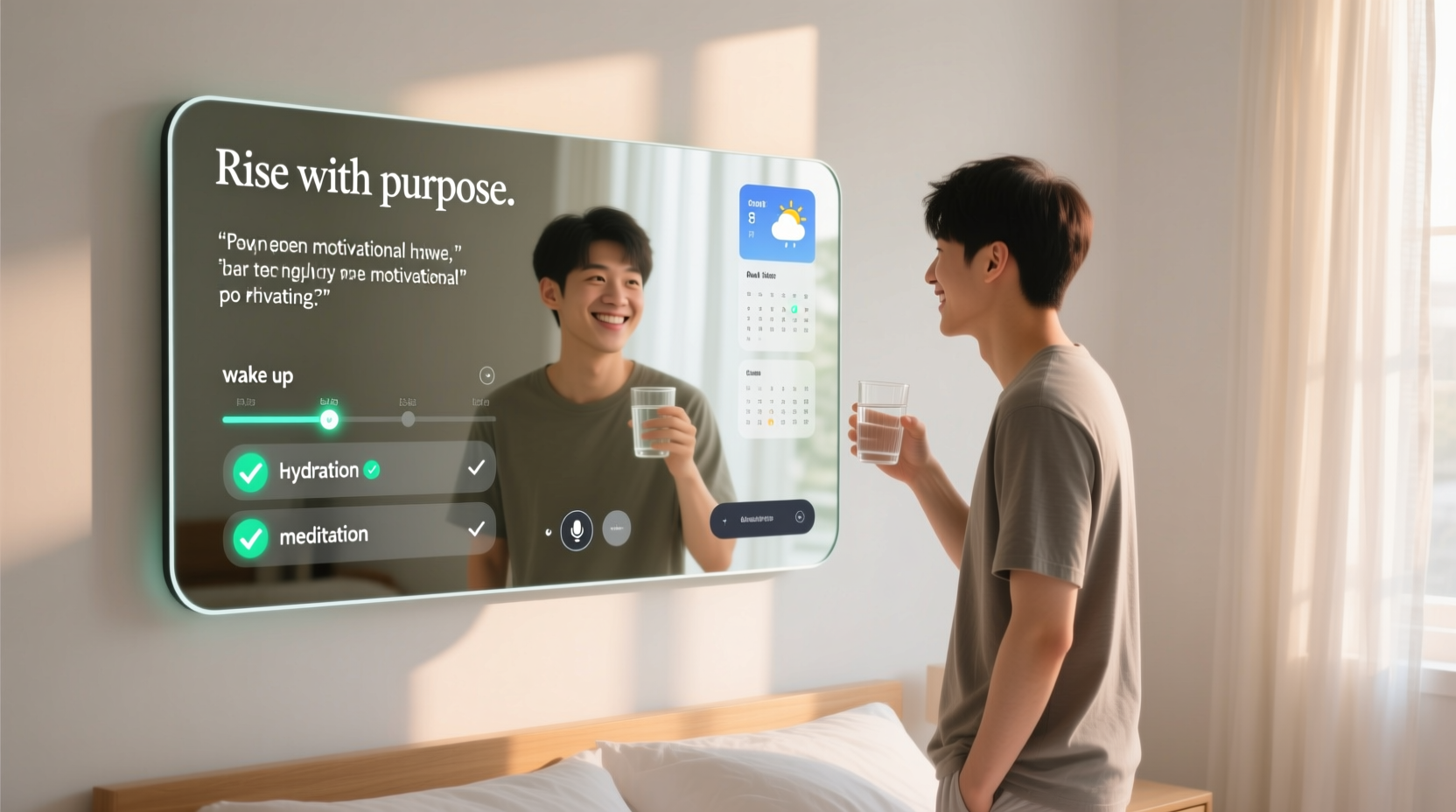
Smart mirrors resemble standard full-length or bathroom mirrors but contain embedded screens, cameras, sensors, and speakers. When inactive, they function as normal mirrors. When activated—by motion, voice command, or touch—they illuminate to reveal personalized content such as weather updates, calendar events, news headlines, workout videos, affirmations, and guided meditations.
Advanced models use AI-driven coaching systems. For example, some can analyze posture during exercise, track progress over time, and offer real-time feedback. Others integrate with wearable devices like Fitbit or Apple Watch to display heart rate, sleep quality, and step count directly on the mirror’s surface.
For motivation and routine-building, smart mirrors often feature:
- Daily inspirational quotes and affirmations
- Customizable morning and evening routines
- Voice-activated journaling or goal tracking
- Integration with habit-tracking apps (e.g., Habitica, Notion, Google Calendar)
- Guided breathing exercises and mindfulness sessions
Real-World Benefits: Motivation and Routine Reinforcement
Motivation is fleeting. Anyone who has tried to stick to a new habit—whether it's waking up earlier, drinking more water, or exercising consistently—knows that initial enthusiasm often fades within weeks. This is where environmental cues become critical. According to behavioral psychology, habit formation depends heavily on context and consistency. A smart mirror acts as a contextual trigger, reinforcing desired behaviors at key moments in your day.
Consider the morning routine. Stepping in front of a mirror is already a habitual act for most people. By overlaying that moment with positive reinforcement—such as a message like “You’ve meditated 7 days in a row!” or “Today’s workout: 15-minute yoga flow”—the smart mirror turns passive reflection into active intention-setting.
“Environmental design is one of the most underutilized tools in behavior change. Devices that meet us where we already are—like in front of the mirror—have a higher chance of creating lasting impact.” — Dr. Lena Torres, Behavioral Psychologist & Habit Specialist
Additionally, smart mirrors reduce friction. Instead of reaching for your phone, unlocking it, opening an app, and scrolling through notifications, the information you need appears automatically. That small reduction in effort can make a significant difference in follow-through, especially on low-energy days.
Mini Case Study: Sarah’s Morning Transformation
Sarah, a 34-year-old project manager from Portland, struggled with inconsistent mornings. She’d hit snooze repeatedly, skip breakfast, and arrive at work feeling scattered. After investing in a mid-range smart mirror ($699), she programmed it to greet her with a gentle light-up sequence at 6:45 a.m., followed by a curated playlist, the day’s top three priorities, and a two-minute breathing exercise.
Within three weeks, her wake-up success rate improved from 40% to 85%. The visual cue of the mirror lighting up replaced her reliance on multiple alarms. More importantly, seeing her goals displayed each morning created a sense of accountability. “It felt like someone was gently reminding me of who I wanted to be,” she said. “Not nagging—just present.”
After six months, Sarah reported increased focus, reduced anxiety, and better adherence to her fitness schedule. While she credits multiple factors, she identifies the smart mirror as the catalyst that made her routine “stick.”
Cost vs. Value: Is the Price Justified?
Smart mirrors range from $500 for basic models to over $2,000 for premium versions with AI coaching and large-format displays. At first glance, this seems steep—especially when compared to free habit-tracking apps or inexpensive alarm clocks. However, value must be measured not just in features, but in outcomes.
To evaluate whether the price is justified, consider these dimensions:
| Factor | Smart Mirror | Alternative (Phone + Speaker + Planner) |
|---|---|---|
| Initial Cost | $500–$2,000 | $0–$200 |
| Friction Level | Low (automatic activation) | High (requires manual input) |
| Habit Integration | Seamless (uses existing mirror time) | Disjointed (multiple devices/apps) |
| Motivational Impact | High (personalized, visual, timely) | Variable (easily ignored) |
| Lifespan | 5–7 years (with updates) | 1–3 years (device obsolescence) |
The data suggests that while smart mirrors have a higher upfront cost, they may deliver greater long-term value through reduced friction and stronger behavioral integration. For individuals who have tried—and failed—to build routines using traditional methods, the mirror’s immersive nature can be a game-changer.
Step-by-Step Guide to Evaluating a Smart Mirror Purchase
Before committing to a smart mirror, follow this structured approach to determine if it aligns with your needs:
- Define Your Goals: Are you seeking better time management, fitness consistency, mental clarity, or emotional resilience? Be specific about what you want to improve.
- Track Your Current Routine: For one week, log how you start and end your day. Note pain points—e.g., oversleeping, skipping workouts, feeling overwhelmed.
- Identify Friction Points: Where do you lose momentum? Is it lack of reminders, poor planning, or low energy? Match these to mirror features.
- Test Alternatives First: Try using your phone with a habit app and voice assistant for two weeks. If it works well, a smart mirror may be redundant.
- Research Models Based on Use Case: Prioritize features that address your specific challenges. For motivation, look for affirmation engines and mood tracking. For routines, check calendar sync and automation options.
- Try Before You Buy (If Possible): Some retailers offer in-home trials. Others provide virtual demos. Take advantage of return policies.
- Calculate Long-Term ROI: Estimate how much time, stress, or lost productivity your current inefficiencies cost. If a mirror saves you 30 minutes per day, that’s 182 hours annually—worth far more than $1,000.
Checklist: Is a Smart Mirror Right for You?
Answer “yes” to three or more of the following to consider a purchase worthwhile:
- You struggle to maintain consistent morning or evening routines
- You respond well to visual cues and positive reinforcement
- You already use multiple apps for fitness, mindfulness, or scheduling
- You dislike checking your phone first thing in the morning
- You have a dedicated space (bedroom, bathroom, home gym) for installation
- You’re willing to invest in tools that support long-term well-being
If most answers are “no,” simpler solutions may serve you better—at least for now.
Frequently Asked Questions
Can’t I just use my phone for the same features?
You can replicate many smart mirror functions using your smartphone—calendar alerts, meditation apps, and motivational wallpapers. However, phones require active engagement and are prone to distraction. A smart mirror delivers information passively, without pulling you into social media or email. The hands-free, glanceable interface makes it more effective for habit anchoring.
Do smart mirrors really improve motivation?
Yes, but conditionally. Studies on digital nudges show that personalized, timely prompts increase adherence to goals by up to 40%. Smart mirrors excel at delivering such nudges at psychologically potent moments—like right after waking or before leaving the house. Their effectiveness depends on proper setup and consistent use. A poorly configured mirror becomes wallpaper.
Are there privacy concerns with smart mirrors?
Yes. Many models include cameras and microphones, raising valid concerns about data collection. Always choose brands with transparent privacy policies, local data processing, and clear opt-out controls. Disable recording features when not needed, and avoid placing mirrors in private areas like bedrooms unless absolutely necessary.
Expert Insight: The Psychology Behind Digital Mirrors
The power of smart mirrors lies not in their technology, but in their alignment with human behavior patterns. “We’re more likely to act on information when it’s presented in context,” explains Dr. Alan Zhou, a cognitive scientist specializing in tech-assisted wellness. “Seeing your workout plan while you’re brushing your teeth leverages ‘implementation intentions’—a proven strategy where ‘if-then’ cues dramatically increase follow-through.”
“When technology disappears into the environment and surfaces only when useful, that’s when it becomes truly empowering.” — Dr. Alan Zhou, Cognitive Scientist
This principle—known as calm technology—suggests that the best tools don’t demand attention; they enhance existing behaviors subtly. A smart mirror, when well-designed, operates in the background until needed, then provides just enough guidance to keep you on track.
Conclusion: Making the Decision That Suits Your Life
A smart mirror isn’t essential for building motivation or routines—but for some, it can be transformative. Its value lies not in flashy tech, but in its ability to turn mundane moments into intentional ones. If you’ve tried traditional methods and still find yourself drifting off course, a smart mirror might be the missing piece that bridges intention and action.
However, it’s not a magic solution. Like any tool, its effectiveness depends on how you use it. Set it up thoughtfully, align it with your real goals, and treat it as a supportive partner—not a replacement for discipline.
If you're ready to take control of your daily rhythm and create a more mindful, motivated lifestyle, the investment could pay dividends in energy, focus, and confidence. Evaluate your needs honestly, test alternatives, and choose a model that serves your vision of a better day—one reflection at a time.




 浙公网安备
33010002000092号
浙公网安备
33010002000092号 浙B2-20120091-4
Comments
No comments yet. Why don't you start the discussion?