
In an age where every device promises to make life easier—and supposedly greener—smart plugs have quietly entered homes by the millions. Marketed as simple tools to automate appliances and cut electricity bills, they’re often labeled as entry-level smart home essentials. But beyond the convenience of turning a lamp on with your phone, do smart plugs actually save meaningful energy? Or are they just another tech accessory that adds clutter without impact?
The truth lies somewhere in between. For some households, smart plugs can reduce phantom load and optimize usage patterns. For others, they’re little more than digital remote controls with minimal ROI. Understanding when and how a smart plug delivers value requires looking past the hype and examining real-world energy dynamics, user behavior, and appliance types.
Understanding Phantom Load and Vampire Power
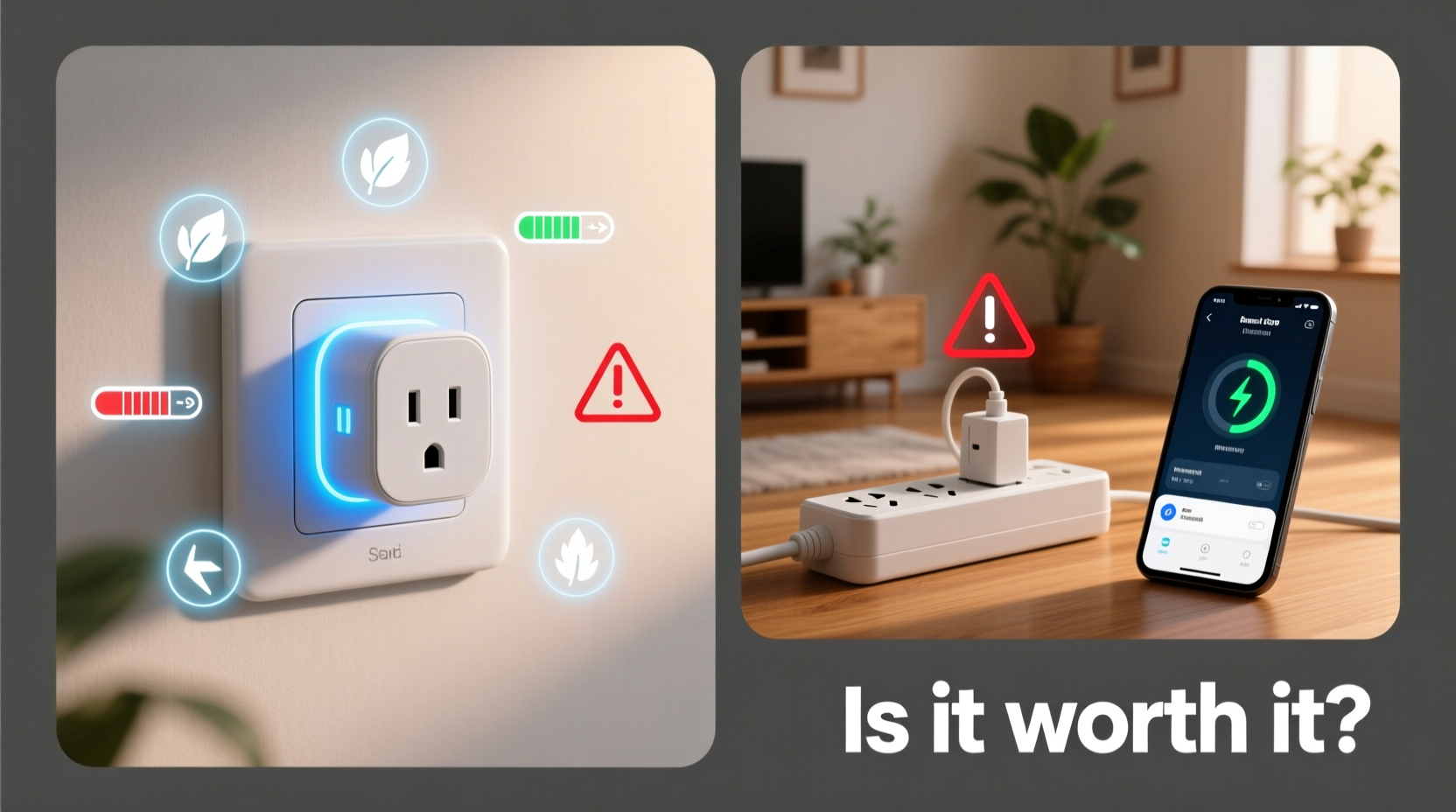
Before evaluating smart plugs, it's essential to understand what they're designed to combat: standby power, also known as vampire or phantom load. This refers to the electricity devices continue to draw even when turned \"off\" but still plugged in. According to the U.S. Department of Energy, standby power can account for up to 10% of residential electricity use annually—roughly $100–$200 per household.
Common culprits include:
- Televisions and streaming devices
- Gaming consoles
- Chargers (phone, laptop, tablet)
- Microwaves and coffee makers with clocks or touchscreens
- Stereo systems and soundbars
A smart plug can interrupt this flow completely by cutting power to the outlet. Unlike traditional power strips, which require manual switching, smart plugs allow scheduled or remote shutoffs—automating the process of eliminating idle consumption.
“Even small loads add up. A single device drawing 5 watts continuously uses over 40 kWh per year. Multiply that across ten devices, and you’re looking at real waste.” — Dr. Laura Simmons, Energy Efficiency Researcher, National Grid Institute
When Smart Plugs Actually Save Energy
Not all devices benefit equally from smart plug automation. The key factor is whether the appliance draws significant power in standby mode or operates inefficiently due to poor user habits. Here’s where smart plugs deliver measurable savings:
Heating and Cooling Accessories
Space heaters, electric blankets, and portable fans are often left running longer than necessary. A smart plug programmed to shut off after 30 minutes can prevent hours of wasted energy. For example, a 1,500-watt space heater left on overnight for eight hours consumes 12 kWh—equivalent to nearly $1.50 per night (at $0.12/kWh). Over a winter season, that could total over $100 in avoidable costs.
Entertainment Systems
Modern entertainment centers are energy hogs in standby. A TV, soundbar, game console, and streaming box might collectively draw 25–40 watts when “off.” Using a smart plug to cut power entirely during sleep hours (e.g., 11 PM to 7 AM) eliminates that drain. Over a year, this could save 150–250 kWh—about $20–$30.
Coffee Makers and Kettles with Clocks
Many coffee makers feature digital clocks that consume 3–5 watts constantly. That’s 26–44 kWh/year per unit. A smart plug set to power the machine only during morning hours (e.g., 5–9 AM) removes that baseline load while still offering convenience.
Seasonal Devices
Items like holiday lights, fountains, or dehumidifiers don’t need to run 24/7. Automating them ensures they operate only when needed. For instance, outdoor string lights limited to dusk-to-dawn operation via a smart plug can reduce runtime by 50%, cutting both energy use and bulb lifespan degradation.
When Smart Plugs Offer Little to No Savings
Despite their appeal, smart plugs aren’t universally beneficial. In several common scenarios, their energy-saving potential is negligible or counterproductive:
- Refrigerators and freezers: Cutting power destroys food and increases long-term energy use due to re-cooling demands.
- Modems and routers: While these draw constant power (~10–20W), cycling them disrupts connectivity and may reduce hardware longevity.
- Devices with instant-on features: TVs and monitors that rely on standby power for quick startup lose functionality if fully powered down.
- Low-draw electronics: Phone chargers, LED lamps, and USB hubs typically use less than 1 watt on standby—making automation pointless from a cost perspective.
In such cases, the smart plug adds complexity without meaningful reduction in energy consumption. The convenience factor may still justify its use, but not under the banner of energy efficiency.
Real-World Case Study: The Johnson Family’s Smart Plug Experiment
The Johnsons, a family of four in suburban Ohio, decided to test whether smart plugs could lower their electric bill. They installed five smart plugs across their home:
- Living room entertainment center (TV, Apple TV, soundbar)
- Kitchen coffee maker
- Home office printer and monitor
- Basement dehumidifier
- Bedroom space heater
Over three months, they monitored usage via their utility app and smart plug energy tracking features. Results:
| Device | Standby Power (W) | Daily Runtime Reduction | Monthly Savings (Est.) |
|---|---|---|---|
| Entertainment Center | 32 W | 8 hours | $1.80 |
| Coffee Maker | 4 W | 20 hours | $0.25 |
| Printer & Monitor | 6 W | 16 hours | $0.30 |
| Dehumidifier | N/A | Optimized schedule | $2.00 |
| Space Heater | N/A | Reduced overuse | $8.00 |
| Total | $12.35/month |
While $12.35 monthly ($148/year) isn’t trivial, it took six months for the $75 investment in smart plugs to break even. Beyond savings, the family appreciated automated routines—like lights turning on at sunset—but acknowledged most energy gains came from behavioral changes prompted by visibility into usage, not the plugs themselves.
Step-by-Step Guide to Maximizing Smart Plug Value
To determine if a smart plug is worth it—and to extract real benefits—follow this practical sequence:
- Identify high-phantom-load devices: Use a Kill-A-Watt meter or check manufacturer specs to find appliances drawing more than 2 watts in standby.
- Prioritize frequently forgotten devices: Focus on items people regularly leave on accidentally—like space heaters or desktop computers.
- Set time-based schedules: Program shutdowns during non-use periods (e.g., midnight to 6 AM).
- Use geofencing or voice triggers sparingly: These features enhance convenience but don’t directly save energy unless they prevent extended idle states.
- Monitor usage data: Most smart plugs offer energy reporting. Review trends monthly to adjust settings.
- Evaluate ROI after 6 months: Compare estimated savings to purchase cost. If payback exceeds two years, reconsider placement.
Smart Plugs vs. Alternative Solutions
Smart plugs aren’t the only way to manage standby power. Consider these alternatives:
| Solution | Energy Saving Potential | Cost | Best For |
|---|---|---|---|
| Advanced Power Strips (APS) | High | $25–$50 | Entertainment centers, office setups |
| Timed Mechanical Outlets | Moderate | $10–$20 | Lights, seasonal decor |
| Manual Unplugging | Variable | $0 | Rarely used devices |
| Whole-Home Energy Monitors | Insight-driven | $150+ | Comprehensive usage analysis |
| Smart Plugs | Low to Moderate | $15–$30 each | Remote control + light automation |
Advanced power strips, for instance, automatically cut power to secondary outlets (e.g., speakers) when a primary device (e.g., TV) is turned off—requiring no user input. They often outperform smart plugs in pure energy-saving contexts, though they lack app integration.
Frequently Asked Questions
Do smart plugs consume electricity themselves?
Yes, most smart plugs draw 0.5 to 2 watts continuously to maintain Wi-Fi connectivity and responsiveness. While minimal, this “parasitic” load means they should only be used where the controlled device’s savings outweigh the plug’s own consumption.
Can I use smart plugs with large appliances like refrigerators?
No. Interrupting power to refrigeration units risks food spoilage and compressor damage. Smart plugs are best suited for non-critical, intermittently used devices.
Are smart plugs safe?
Reputable brands (such as TP-Link Kasa, Wemo, or Eve) meet UL safety standards and include overload protection. Avoid cheap, uncertified models, especially for high-wattage devices. Always check the plug’s maximum load rating before connecting appliances.
Final Verdict: Gadget or Genuine Energy Saver?
The answer depends on application. As standalone energy-saving tools, smart plugs offer modest returns—typically $10–$25 in annual savings per well-placed unit. Their real value emerges when integrated into broader energy-conscious habits: awareness of phantom loads, disciplined scheduling, and selective automation.
They are not magic bullets. But for users willing to invest time in setup and monitoring, smart plugs can contribute to a leaner energy profile. More importantly, they serve as gateways to smarter energy decisions—revealing hidden consumption patterns and encouraging intentional usage.
If your goal is deep energy reduction, pair smart plugs with insulation upgrades, LED lighting, and efficient appliances. But if you're seeking low-cost, reversible steps toward a more responsive home, smart plugs can be a worthwhile starting point—provided you use them strategically.
“The biggest energy savings don’t come from gadgets, but from changing behavior. Technology works best when it makes sustainable choices effortless.” — Mark Tran, Senior Analyst, American Council for an Energy-Efficient Economy (ACEEE)
Take Action Today
Don’t buy smart plugs hoping for instant savings. Instead, audit your home’s energy vampires first. Measure, prioritize, and deploy smart plugs only where they make financial and functional sense. Start with one or two high-impact locations—like your entertainment system or home office—and track results over time.
Energy efficiency isn’t about owning the latest tech; it’s about making informed choices. Whether you adopt smart plugs or not, the most powerful tool you have is awareness. Use it wisely.




 浙公网安备
33010002000092号
浙公网安备
33010002000092号 浙B2-20120091-4
Comments
No comments yet. Why don't you start the discussion?