
In an age where wearables have evolved from simple step counters to full-fledged health monitors, the smart ring has quietly entered the scene—smaller than a watch, less noticeable than earbuds, but promising similar insights. Marketed as the discreet alternative to bulky fitness trackers, smart rings claim to deliver continuous health data, sleep analysis, and even gesture control—all from a piece of jewelry that looks like any other band on your finger. But behind the sleek design and futuristic promises lies a critical question: is a smart ring truly useful, or is it destined to join the graveyard of forgotten gadgets in your nightstand drawer?
The answer isn’t binary. For some, a smart ring is a game-changer—a seamless integration of technology into daily life. For others, it’s an overpriced trinket with limited utility. To understand where you fall, it helps to examine what these devices actually do, how they compare to alternatives, and whether their benefits justify their cost and maintenance.
What Can a Smart Ring Actually Do?
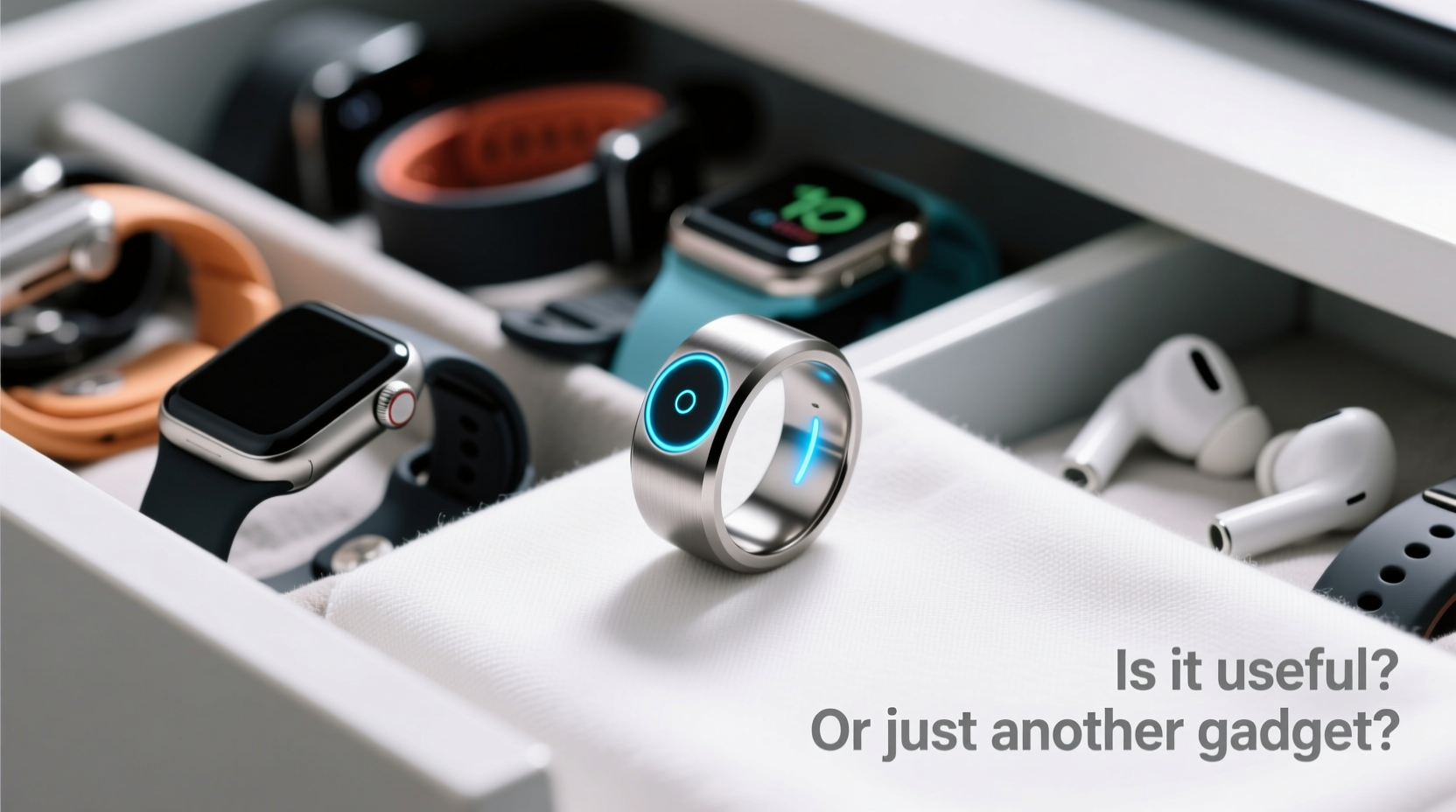
Smart rings are designed to track biometric and behavioral data with minimal intrusion. Unlike wrist-worn devices that rely on arm movement and larger sensors, smart rings take advantage of the dense network of blood vessels in the finger, offering potentially more accurate readings for certain metrics. Here’s what most high-end models—like the Oura Ring, Ultrahuman Ring Air, or Circular Ring—can monitor:
- Sleep tracking: Measures sleep stages (light, deep, REM), duration, efficiency, and disturbances.
- Heart rate and HRV (Heart Rate Variability): Continuous monitoring throughout the day and night.
- Body temperature: Detects subtle changes that may indicate illness, ovulation, or recovery status.
- Activity tracking: Steps, calories burned, and active minutes, though often less precise than wrist-based sensors.
- Recovery scores: Combines sleep, HRV, and temperature data to suggest readiness for physical exertion.
- Stress and mindfulness: Some rings integrate guided breathing exercises or stress-level alerts.
- Gesture control (limited): A few experimental models allow basic phone interactions via finger movements.
While not every ring offers all these features, top-tier models focus heavily on holistic health—particularly sleep and recovery—making them appealing to biohackers, athletes, and those managing chronic conditions.
Smart Ring vs. Smartwatch: What’s the Real Difference?
It’s impossible to assess the value of a smart ring without comparing it to its dominant counterpart: the smartwatch. Both devices aim to improve health awareness, but they serve different user profiles and lifestyles.
| Feature | Smart Ring | Smartwatch |
|---|---|---|
| Size & Discretion | Minimalist, barely noticeable | Bulky, visible |
| Battery Life | 5–7 days (some up to 10) | 1–3 days (Apple Watch), up to 14 (Garmin) |
| Sleep Tracking Accuracy | Generally superior due to stable finger placement | Good, but prone to motion artifacts |
| Display & Notifications | Limited or no screen; app-dependent | Full notifications, apps, touch interface |
| GPS & Exercise Tracking | Rarely built-in; relies on phone GPS | Most include standalone GPS |
| Price Range | $300–$600 | $200–$800+ |
| Durability & Water Resistance | High (titanium/ceramic builds) | Varies; some fragile screens |
The trade-off is clear: smart rings sacrifice interactivity and versatility for precision and subtlety. If you want to check messages, use maps, or track outdoor runs independently, a watch wins. But if your priority is understanding your body’s rhythms—especially during sleep—with minimal disruption, a ring may be the better fit.
“Sleep is the foundation of health, and the finger provides one of the most stable sites for nocturnal biometrics. That’s why rings like Oura have become staples among elite performers.” — Dr. Andrew Huberman, Neuroscientist and Host of the Huberman Lab Podcast
Who Actually Benefits From a Smart Ring?
Not everyone needs a smart ring. Its usefulness depends on your goals, habits, and willingness to act on data. Consider these scenarios:
Athletes and Coaches
For serious athletes, recovery is as important as training. A smart ring’s ability to detect elevated resting heart rate, lowered HRV, or slight fever can signal overtraining or impending illness before symptoms appear. This allows for timely adjustments in workload—critical during competition seasons.
People With Sleep Disorders
Individuals struggling with insomnia, sleep apnea, or irregular sleep patterns can gain actionable insights from detailed sleep staging. Unlike subjective sleep journals, smart rings provide objective data that can be shared with healthcare providers.
Biohackers and Longevity Enthusiasts
This group thrives on quantifying their biology. A smart ring fits perfectly into their ecosystem of wearables, supplements, and cold exposure routines. The continuous temperature baseline, in particular, is valuable for tracking metabolic trends and hormonal shifts.
Busy Professionals Seeking Balance
Executives or entrepreneurs under chronic stress often neglect rest. A smart ring can gently nudge them toward better habits by showing how poor sleep impacts next-day performance or mood. Some models even offer “readiness scores” to discourage overwork.
Pregnant Individuals or Those Tracking Fertility
Basal body temperature (BBT) tracking is essential for natural family planning. Smart rings automate this process, detecting thermal shifts linked to ovulation with greater consistency than manual methods.
However, casual users—those who occasionally check steps or want a quick glance at the time—are unlikely to see enough return on investment. Without intentionality, the data becomes noise.
Common Pitfalls and Limitations
Despite their promise, smart rings come with drawbacks that often lead to abandonment:
- Cost: At $300+, entry-level pricing is steep for a single-purpose device.
- No screen: No way to view data in real time without pulling out your phone.
- Charging routine: Must remember to charge every few days, disrupting continuous tracking.
- Finger swelling: Rings can become uncomfortable or inaccurate during illness, heat, or hormonal changes.
- Data overload: Without context, users may obsess over metrics instead of making meaningful changes.
- Limited third-party integration: Not all apps support ring data, reducing flexibility.
One common reason smart rings end up unused is unrealistic expectations. They don’t replace medical devices, diagnose conditions, or automatically improve health. Their value lies in pattern recognition and early warnings—not definitive answers.
Mini Case Study: From Skeptic to Advocate
Mark, a 42-year-old software engineer, bought an Oura Ring after months of fatigue and poor sleep. Initially skeptical, he wore it consistently for six weeks. The data revealed a consistent lack of deep sleep—averaging only 38 minutes per night, well below the recommended 1–2 hours. He also noticed his HRV dropped sharply after drinking alcohol, even in moderation.
Using this insight, Mark eliminated evening drinks and established a strict wind-down routine: no screens after 9 PM, reading instead, and keeping his bedroom cooler. Within three weeks, his deep sleep increased to 72 minutes, and he reported feeling more alert and focused during workdays.
“I didn’t think a tiny ring could change my life,” he said. “But it gave me proof that small changes had big effects. Now I wouldn’t go back.”
How to Decide If a Smart Ring Is Right for You
Before purchasing, ask yourself these questions. Answer honestly—your response will determine whether the ring becomes a tool or a trinket.
- Do I prioritize sleep and recovery? If yes, a ring’s strengths align with your goals.
- Am I willing to wear it nightly? Consistency is key. Occasional use yields little insight.
- Do I already use health data to make decisions? If you ignore your Fitbit, you’ll likely ignore a ring too.
- Can I afford it without financial strain? These are premium devices with subscription-like app costs in some cases.
- Do I dislike wearing watches? Comfort and discretion matter—if you constantly remove it, it won’t help.
Checklist: Maximizing Your Smart Ring Investment
- Charge it at the same time each week (e.g., Sunday mornings).
- Sync data weekly and review trends in the companion app.
- Set up alerts for low HRV or high resting heart rate.
- Correlate biometrics with lifestyle factors (diet, stress, exercise).
- Share reports with your doctor if managing a health condition.
- Remove during activities that cause swelling (e.g., long flights).
- Keep firmware and apps updated for accuracy improvements.
Frequently Asked Questions
Can a smart ring replace my smartwatch?
Not entirely. While it excels at passive health tracking, it lacks real-time notifications, GPS, and interactive features. Most users keep both or choose based on primary need—health depth (ring) vs. functionality (watch).
Are smart rings accurate?
They are generally accurate for sleep staging, HRV, and temperature when worn correctly. However, they’re not medical-grade devices. Use them for trend analysis, not diagnosis.
Which finger should I wear it on?
Most manufacturers recommend the index or middle finger on your non-dominant hand. Avoid the pinky (too small) and thumb (less vascular stability). Follow your device’s guidelines for best results.
Conclusion: A Tool, Not a Toy
A smart ring isn’t inherently useful—or useless. Its value emerges from how you use it. For the curious, disciplined, and health-focused, it can be a powerful ally in understanding the body’s silent signals. For others, it risks becoming just another forgotten gadget.
The difference lies in intention. If you approach it as a data partner—one that asks for consistency and offers insights in return—it can transform habits, improve sleep, and even prevent burnout. But if you expect magic from a piece of titanium, you’ll be disappointed.
Technology doesn’t fix problems. People do. Tools merely illuminate the path.




 浙公网安备
33010002000092号
浙公网安备
33010002000092号 浙B2-20120091-4
Comments
No comments yet. Why don't you start the discussion?