
In an era where nearly every household object is being \"smartified,\" the bathroom scale has not been spared. Once a simple tool for measuring weight, today’s digital smart scales connect to apps, track body composition, and sync data across devices. But as more people question the value of connected gadgets, a critical question arises: Is a smart scale actually useful, or is it just another passive data collector feeding corporate algorithms?
The answer isn’t black and white. For some, smart scales offer meaningful insights into long-term health trends. For others, they’re redundant, inaccurate, or even intrusive. To cut through the marketing hype, let’s examine what smart scales can—and cannot—do, how they handle your personal data, and whether they truly belong in your wellness routine.
What Does a Smart Scale Actually Measure?
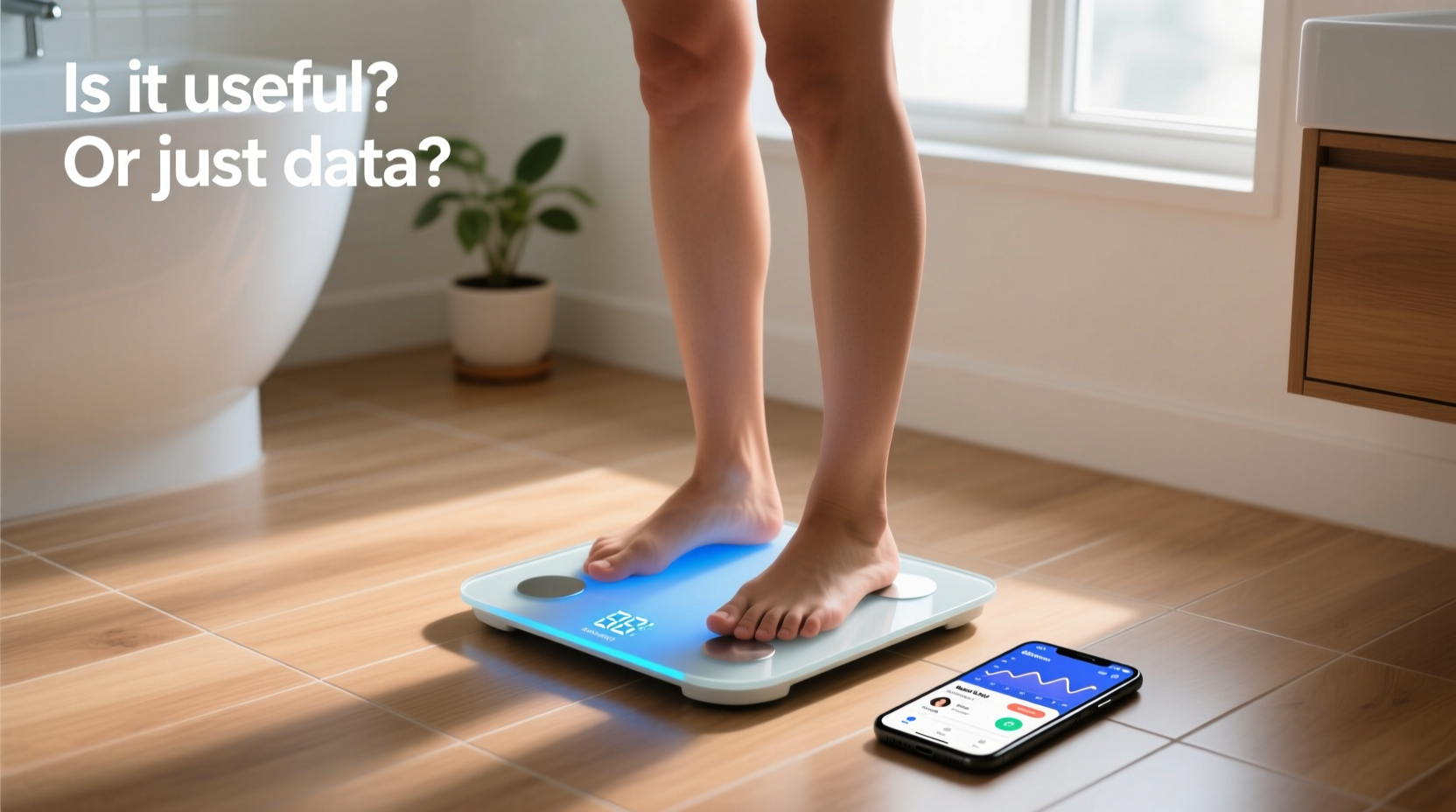
Unlike traditional scales that display only weight, most smart scales claim to measure multiple body composition metrics using a technology called bioelectrical impedance analysis (BIA). When you step on the scale, a low-level electrical current passes through your body. Based on how quickly the current travels, the device estimates:
- Body fat percentage – Estimated proportion of fat relative to total body weight.
- Muscle mass – Approximate skeletal muscle content.
- Bone mass – A rough estimate derived from resistance patterns.
- Water weight / hydration levels – Percentage of body water.
- Visceral fat – Fat stored around internal organs, often linked to metabolic risk.
- BMI (Body Mass Index) – Calculated using height and weight.
- BMR (Basal Metabolic Rate) – Estimated calories burned at rest.
These metrics are then synced via Bluetooth or Wi-Fi to a companion app, often integrated with Apple Health, Google Fit, or fitness platforms like Fitbit or MyFitnessPal. The idea is to provide a holistic view of your health beyond the number on the scale.
Real Benefits: When Smart Scales Add Value
Despite skepticism, smart scales can be genuinely helpful under the right circumstances. Here’s where they shine:
Trend Tracking Over Time
Weight fluctuates daily due to hydration, food intake, and hormonal changes. Smart scales help smooth out the noise by averaging data over weeks or months. Seeing a downward trend in body fat—even if weight stays stable—can be motivating during strength training, where muscle gain offsets fat loss.
Integration with Fitness Ecosystems
If you already use a fitness tracker or nutrition app, a smart scale can close the feedback loop. For example, if your activity level increases but body fat remains unchanged, it may signal a need to adjust diet or training intensity.
Personalized Health Insights
Some advanced models, like those from Withings or Garmin, offer menstrual cycle tracking integration or cardiovascular age estimation. These features can support women’s health monitoring or early detection of metabolic shifts.
“Consistent body composition tracking can reveal subtle health changes long before clinical symptoms appear.” — Dr. Lena Patel, Preventive Medicine Specialist
The Data Dilemma: Privacy and Security Concerns
Every time you step on a smart scale, you’re sharing highly personal biometric data. While companies claim this information is encrypted and anonymized, the reality is murkier.
Most smart scale manufacturers collect user data to improve algorithms, personalize experiences, or—more controversially—share with third parties. Some privacy policies allow aggregated data to be used for research or commercial partnerships. In 2020, a major fitness tech company faced backlash when it was revealed that anonymized health data was being sold to insurance analytics firms.
Additionally, smart scales are vulnerable to the same cybersecurity risks as other IoT devices. If your home network is compromised, so could your health data. While breaches are rare, they’re not impossible.
Data Permissions Checklist
- ✅ Read the privacy policy before setup.
- ✅ Disable data sharing options in the app settings.
- ✅ Use strong passwords and two-factor authentication where available.
- ✅ Avoid linking sensitive accounts unless necessary.
- ✅ Regularly review which apps have access to your health data.
Accuracy and Limitations: What the Marketing Doesn’t Tell You
While smart scales promise precision, their accuracy varies significantly—especially for BIA-based measurements.
Studies show that consumer-grade smart scales can deviate by up to 5–8% in body fat estimation compared to medical-grade DEXA scans. Factors affecting accuracy include:
- Hydration levels (dehydration inflates fat percentage).
- Time of day (morning vs. evening readings differ).
- Skin temperature and foot moisture.
- Foot placement on electrodes.
- User input errors (e.g., incorrect height or age).
Even high-end models struggle with consistency across different body types. For instance, athletes with high muscle density may receive inflated body fat readings because muscle conducts electricity better than fat, skewing the algorithm.
| Metric | Typical Accuracy | Best Use Case |
|---|---|---|
| Weight | High (±0.1–0.5 lbs) | Daily tracking, trend analysis |
| Body Fat % | Moderate to Low (±3–8%) | Long-term trends, not absolute values |
| Muscle Mass | Low | Rough estimate only |
| Visceral Fat | Moderate | Relative change monitoring |
| Hydration Level | Low | General awareness, not medical diagnosis |
The key takeaway? Treat smart scale data as directional, not diagnostic. It’s best suited for spotting gradual changes, not delivering lab-grade results.
Mini Case Study: Sarah’s Weight Loss Journey
Sarah, a 34-year-old teacher, bought a smart scale to support her fitness goals. Initially excited, she weighed herself daily and became discouraged when her body fat percentage fluctuated wildly—from 29% to 33% in three days. Confused and frustrated, she almost gave up.
After consulting a nutritionist, she learned that her weekend wine consumption and carb-heavy meals were affecting hydration, skewing the readings. She adjusted her strategy: weighing only once a week, first thing Monday morning, and focusing on the 4-week trend line in her app.
Over six months, her average body fat dropped from 31% to 26%, and muscle mass increased slightly—indicating fat loss and muscle gain. The scale didn’t give perfect numbers, but it helped confirm her progress when the mirror wasn’t enough.
Sarah’s experience illustrates both the potential and pitfalls: smart scales can support motivation, but only when users understand their limitations and avoid obsessing over daily fluctuations.
Smart Scale Do’s and Don’ts
| Do | Don’t |
|---|---|
| Use consistently at the same time and conditions | Weigh yourself multiple times a day chasing changes |
| Track long-term trends, not daily numbers | Make drastic decisions based on one reading |
| Verify settings (height, age, gender) regularly | Assume the data is medically accurate |
| Limit data sharing in app permissions | Connect to public Wi-Fi without security checks |
| Combine with other health indicators (energy, clothing fit) | Rely solely on the scale for progress assessment |
Step-by-Step Guide: Using a Smart Scale Wisely
- Purchase a reputable model – Choose brands with transparent accuracy testing and strong privacy policies (e.g., Withings, Eufy, Garmin).
- Set it up correctly – Enter accurate personal details (height, age, gender, athletic status).
- Place on a hard, flat surface – Carpet or uneven floors distort readings.
- Calibrate and test – Weigh a known object (like a dumbbell) to verify weight accuracy.
- Establish a routine – Step on the scale weekly, under similar conditions.
- Review trends monthly – Open the app to see 30-day averages, not daily spikes.
- Evaluate usefulness quarterly – Ask: Has this improved my health decisions? If not, consider switching to a basic scale.
Frequently Asked Questions
Can smart scales be dangerous for people with pacemakers?
Yes. The electrical current used in bioelectrical impedance analysis, though very weak, can interfere with pacemakers or implantable defibrillators. Manufacturers typically warn against use by individuals with such devices. Always consult your doctor before using a smart scale if you have a cardiac implant.
Are there smart scales that don’t require an app?
Some models offer standalone mode with basic weight display, but full functionality requires app pairing. If privacy is a concern, consider a non-connected digital scale instead. Brands like Etekcity and Seca offer high-precision scales without Wi-Fi.
Why does my body fat percentage change so much day to day?
Daily variations are normal and largely due to hydration, food intake, and hormonal cycles. BIA measures resistance to electrical flow, which increases when dehydrated—making your body appear “fatter.” Focus on weekly averages, not daily swings.
Conclusion: Utility vs. Surveillance
A smart scale isn’t inherently useful or useless—it depends on how you use it and what you expect from it. For individuals seeking long-term health insights and already embedded in a digital fitness ecosystem, it can be a valuable tool. But for those looking for simple weight tracking or concerned about data privacy, a basic digital scale may be smarter, cheaper, and less invasive.
The real danger isn’t the scale itself, but the illusion of precision. Treating smart scale data as gospel can lead to unnecessary stress or misguided decisions. Used wisely—as one input among many, not the sole judge of health—it can support, not sabotage, your wellness journey.




 浙公网安备
33010002000092号
浙公网安备
33010002000092号 浙B2-20120091-4
Comments
No comments yet. Why don't you start the discussion?