
For many people, stepping on a scale is an occasional ritual—something done once a month to check in with progress, rather than a daily habit. In this context, the appeal of a smart scale might seem questionable. After all, why invest $50–$200 in a device that connects to your phone, tracks body composition, and syncs with fitness apps if you’re only using it four times a year?
The answer isn’t a simple yes or no. While frequency of use matters, the real value of a smart scale lies not in how often you step on it, but in what kind of information you gain from those measurements—and how consistently you can track subtle changes over time.
Understanding What a Smart Scale Measures
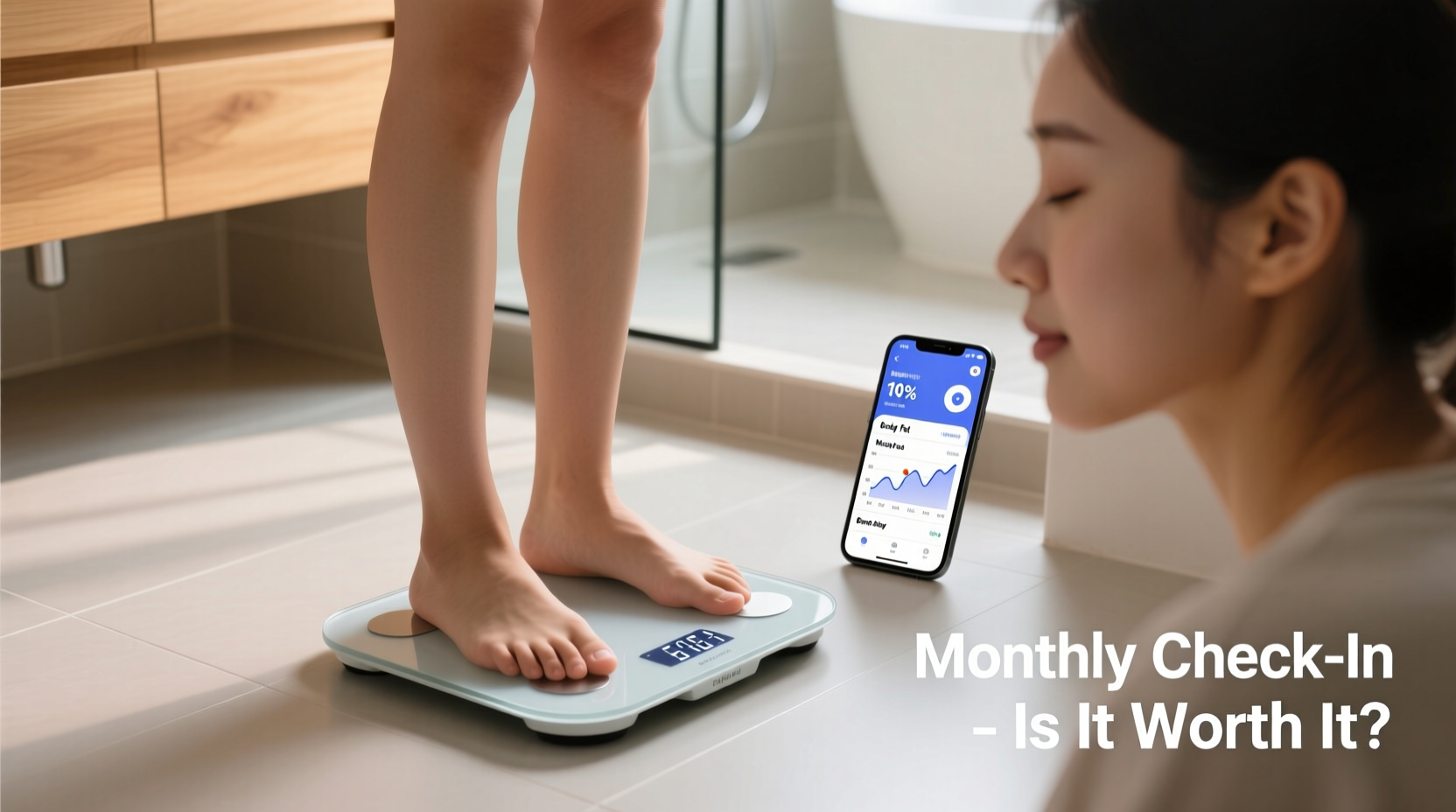
Unlike traditional bathroom scales that display only your weight, smart scales analyze multiple metrics using bioelectrical impedance analysis (BIA). When you stand barefoot on the scale, a small, safe electrical current passes through your body. Based on resistance, the device estimates several body composition factors:
- Weight – Total mass in pounds or kilograms
- Body fat percentage – Estimated proportion of fat vs. lean mass
- Muscle mass – Skeletal muscle weight
- Bone mass – Approximate bone mineral content
- Water percentage – Hydration levels
- BMI – Body Mass Index, though less accurate for muscular individuals
- Visceral fat – Fat around internal organs (in more advanced models)
- BMR – Basal Metabolic Rate, or calories burned at rest
These data points are automatically synced to smartphone apps like Apple Health, Google Fit, or proprietary platforms such as Withings Health Mate or Fitbit. Over time, even monthly readings create a longitudinal dataset that reveals patterns invisible to infrequent manual tracking.
Why Infrequent Use Doesn't Eliminate Value
One common misconception is that smart scales are only useful for daily users. But consider this: most meaningful health changes occur gradually. Weight fluctuations due to water retention, digestion, or hormones can obscure progress when measured too frequently. Monthly weigh-ins, by contrast, offer a clearer signal-to-noise ratio.
A 2023 study published in the Journal of Medical Internet Research found that participants who tracked body composition monthly via connected devices showed better long-term adherence to healthy habits than those relying on sporadic manual logging. The consistency—not the frequency—was the key factor.
“Even infrequent but consistent data points help establish baselines and detect slow shifts in body composition that might otherwise go unnoticed.” — Dr. Lena Patel, Preventive Care Physician
Imagine two people:
- Person A uses a basic scale once a month, records weight in a notebook, and forgets about it until next time.
- Person B steps on a smart scale monthly, which logs weight, body fat, and muscle mass into an app with visual trend lines.
Over six months, Person B notices their weight is stable—but their body fat dropped 3%, and muscle increased slightly. This indicates improved body composition despite no change in total weight, a nuance completely missed by Person A.
Comparing Traditional vs. Smart Scales for Monthly Users
| Feature | Traditional Scale | Smart Scale |
|---|---|---|
| Cost | $15–$30 | $50–$200 |
| Data Tracking | Manual entry required | Automatic syncing to apps |
| Body Composition Metrics | None | Yes (fat, muscle, water, etc.) |
| Trend Visualization | No graphs or history | Charts showing changes over time |
| User Profiles | One reading at a time | Multiple user detection (up to 8) |
| Integration with Fitness Apps | No | Yes (Apple Health, Fitbit, MyFitnessPal, etc.) |
| Long-Term Insight Potential | Low | High—even with monthly use |
The table illustrates that while the upfront cost is higher, smart scales deliver significantly more insight per measurement. For someone focused on overall wellness rather than rapid weight loss, these insights can be transformative—even with limited usage.
Real Example: Sarah’s Year-Long Wellness Journey
Sarah, a 42-year-old teacher, decided to take control of her health after feeling sluggish during routine checkups. Her doctor noted borderline high blood pressure and elevated cholesterol. She wasn’t overweight, but her lifestyle had become sedentary.
Instead of obsessing over daily numbers, Sarah committed to one monthly weigh-in. She purchased a mid-range smart scale ($99) and set up automatic tracking through Apple Health. Each month, she reviewed her report: weight, body fat, muscle mass, and hydration.
At first, there was little change. But by month four, she noticed her muscle mass had increased by 1.2 pounds while body fat decreased slightly—despite minimal weight loss. Encouraged, she doubled down on strength training twice a week.
By month nine, her visceral fat rating improved from “high” to “normal,” and her BMR rose by 70 calories/day. These weren’t dramatic shifts visible on a standard scale, but they reflected meaningful metabolic improvements.
“I never would’ve known I was making progress without those extra data points,” Sarah said. “It kept me going when the number didn’t budge.”
When a Smart Scale Might *Not* Be Worth It
Despite their benefits, smart scales aren’t ideal for everyone—even among monthly users. Consider skipping one if:
- You're primarily interested in weight alone and don’t care about trends.
- You’re uncomfortable sharing health data with cloud services (privacy concern).
- You lack a smartphone or reliable Wi-Fi connection.
- You have a pacemaker or implanted medical device (BIA currents may interfere).
- You’re prone to obsessive behavior around numbers and prefer less detailed feedback.
In these cases, a reliable analog or digital scale may suffice. However, if you value holistic health awareness and appreciate data-driven motivation, the smart scale remains valuable regardless of frequency.
Step-by-Step Guide: Getting Maximum Value from Monthly Use
To make the most of a smart scale with infrequent use, follow this routine:
- Pick a consistent day and time – Choose the first Sunday morning of each month, ideally after using the bathroom and before eating.
- Prepare the environment – Place the scale on a hard, flat surface. Avoid carpet or uneven floors.
- Stand correctly – Feet bare, shoulders back, weight evenly distributed.
- Wait for sync confirmation – Ensure the data uploads to your app before stepping off.
- Review the full report – Don’t just look at weight. Check body fat, muscle, and trends compared to past readings.
- Note lifestyle context – Add a journal entry: recent diet changes, sleep quality, stress level, or new exercise routine.
- Adjust goals accordingly – If muscle is increasing but weight is stable, celebrate body recomposition instead of chasing lower numbers.
This structured approach turns a simple monthly habit into a powerful health assessment tool.
Frequently Asked Questions
Can a smart scale be accurate with only monthly use?
Yes. Accuracy depends more on consistent conditions than frequency. As long as you measure under similar circumstances each time (same time of day, hydration level, etc.), the relative changes between readings are reliable indicators of progress.
Do I need Wi-Fi for a smart scale to work?
Most require Bluetooth or Wi-Fi to sync data to your phone or cloud service. However, some models store readings locally and sync later when connected. Check specifications before purchasing if connectivity is limited.
Are body fat percentages from smart scales trustworthy?
They provide reasonable estimates—not medical-grade precision. Trends over time are far more meaningful than absolute values. A consistent downward trend in body fat % is valuable, even if the actual number is ±3% off.
Actionable Checklist Before Buying
Before investing in a smart scale for monthly use, ask yourself:
- ☐ Do I want insights beyond just weight (e.g., body fat, muscle)?
- ☐ Am I comfortable using a smartphone app to track health data?
- ☐ Will I commit to regular, consistent measurements (even if infrequent)?
- ☐ Do I have space for the scale on a hard, level surface?
- ☐ Are there medical reasons to avoid BIA technology (e.g., pacemaker)?
- ☐ Am I looking for long-term health trends rather than short-term validation?
If you answered “yes” to most of these, a smart scale is likely worth it—even with monthly use.
Final Thoughts: Long-Term Perspective Over Immediate Utility
The true value of a smart scale isn’t measured in daily interactions, but in the cumulative understanding it builds over months and years. Think of it less as a weighing tool and more as a personal health historian—one that quietly documents your journey with objective clarity.
Monthly users benefit precisely because they avoid the noise of daily fluctuations. Instead, they capture meaningful snapshots that reveal whether their lifestyle choices are moving them toward better health. Whether it’s catching early signs of muscle loss with age, monitoring hydration during seasonal changes, or simply confirming stability during busy life phases, the data adds up—literally and figuratively.
Ultimately, the question isn’t whether you weigh yourself enough to justify a smart scale. It’s whether you value deeper self-awareness, even in small doses. For those who do, the investment pays dividends not in pounds lost, but in knowledge gained.




 浙公网安备
33010002000092号
浙公网安备
33010002000092号 浙B2-20120091-4
Comments
No comments yet. Why don't you start the discussion?