
For many renters, the idea of upgrading to a smart thermostat feels out of reach. Leases often restrict permanent modifications, and landlords may not approve new HVAC equipment. Yet, rising energy costs and growing interest in home automation have made smart thermostats more appealing than ever. The question isn't whether they work—but whether they're practical, legal, and beneficial for tenants on a short-term lease.
The good news is that modern technology has evolved to meet the needs of temporary living. Today’s market offers creative, reversible, and landlord-friendly options that allow renters to enjoy the benefits of climate control intelligence—without drilling holes or voiding their lease agreement.
Why Smart Thermostats Matter for Renters
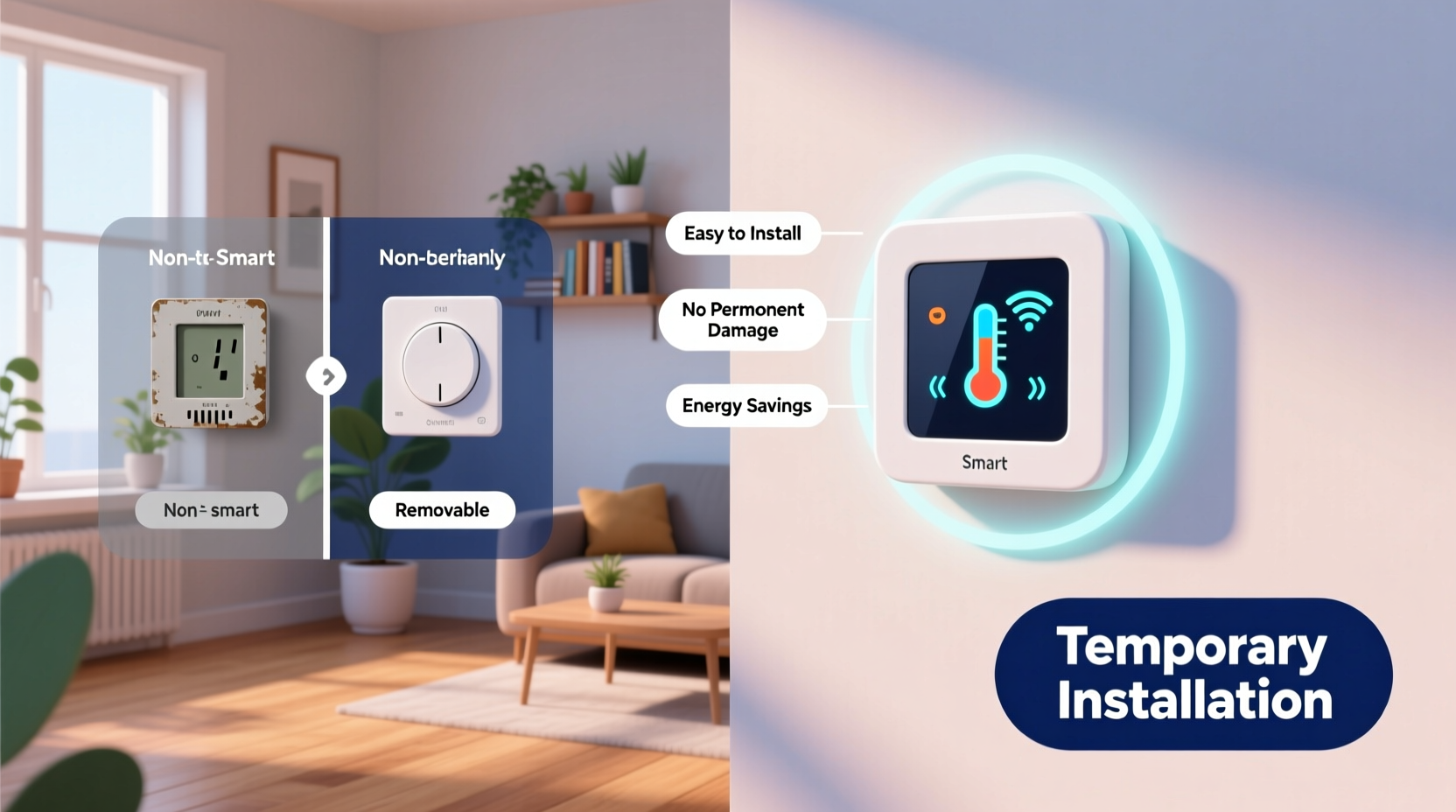
Smart thermostats do more than just automate temperature settings. They learn your habits, adjust based on occupancy, integrate with voice assistants, and provide remote access via smartphone apps. For renters, these features translate into real-world advantages:
- Energy savings: By avoiding unnecessary heating or cooling, users typically reduce HVAC energy use by 10–23%, according to the U.S. Department of Energy.
- Remote control: Adjust the temperature from bed, work, or vacation—ideal for unpredictable schedules.
- Improved comfort: No more walking into a freezing or sweltering apartment after being away all day.
- Data insights: Monitor usage patterns and identify inefficiencies in your rental unit’s climate system.
Despite these benefits, traditional installation requires replacing the existing thermostat—a modification that may require permission. That’s where temporary and renter-specific solutions come in.
Temporary Installation Options for Renters
You don’t need to permanently alter your thermostat setup to gain smart functionality. Several manufacturers now design products specifically for temporary or reversible use. Here are the most viable approaches:
1. Smart Thermostat Covers (Add-Ons)
These devices attach over your existing thermostat like a sleeve or overlay. They don’t replace wiring but instead use sensors and AI to control when your HVAC system turns on and off. Examples include the Radio Thermostat CT50 with StickOn Sensor or Wiser Air, which detect room temperature and occupancy remotely.
Installation involves placing a sensor near the thermostat and syncing it with an app. Since no wires are touched, this method is completely non-invasive and removable.
2. Plug-and-Play Smart Relays
In some cases, especially with baseboard heaters or window units, you can bypass the wall thermostat entirely. Devices like the Sensibo Sky or Clima+ plug directly into the outlet powering a portable heater or AC unit. These gadgets turn standard appliances into Wi-Fi-connected, schedule-aware systems.
This approach works best in apartments where central HVAC isn’t available or where individual rooms are climate-controlled via electric units.
3. Magnetic Mount Adapters
A few newer models, such as certain versions of the Google Nest Learning Thermostat, support baseplate adapters that allow magnetic mounting. If your current thermostat uses common wiring (like Rc, Rh, W, Y, G), you can install a compatible baseplate and snap the smart device on top—removing it cleanly at move-out.
While technically a replacement, this method leaves minimal trace and avoids drywall patching if done carefully.
“Renter-friendly smart thermostats are no longer niche—they’re a growing segment driven by urbanization and demand for flexible tech.” — Dr. Lena Patel, Senior Analyst at HomeTech Insights
Comparison Table: Renter-Friendly Smart Climate Solutions
| Solution Type | Installation Effort | Reversible? | Cost Range | Best For |
|---|---|---|---|---|
| Smart Thermostat Add-Ons | Low (sensor placement) | Yes | $70–$120 | Renters with basic digital thermostats |
| Plug-In AC/Heater Controllers | Very Low (plug & play) | Yes | $90–$150 | Units with window ACs or electric heaters |
| Magnetic Snap-On Thermostats | Moderate (wiring check needed) | Yes, if labeled properly | $100–$250 | Central HVAC systems; tech-savvy renters |
| Portable Smart Heaters | None | Yes | $150–$300 | Cold spots or supplemental heat needs |
| DIY Smart Vents | Moderate (install on vents) | Yes | $100–$200 per vent | Larger units with uneven temperatures |
Step-by-Step Guide: Installing a Renter-Friendly Smart Thermostat
If you’ve decided to proceed, follow this safe, reversible process to maintain compliance and avoid disputes with your landlord:
- Review your lease agreement – Look for clauses about modifications, utilities, or subletting. Note any restrictions on electrical work or fixtures.
- Identify your HVAC type – Is it forced air, baseboard, radiator, or window units? This determines compatibility with smart devices.
- Check thermostat wiring – Remove the cover (power off) and note wire labels. Common types include Rc, Rh, C, W, Y, G. Take photos for reference.
- Choose a reversible solution – Prioritize add-ons or plug-in controllers unless you're confident in reinstalling the original thermostat later.
- Label everything – Before disconnecting wires, label each one with tape. Keep screws and faceplates in a sealed bag.
- Install the device – Follow manufacturer instructions precisely. Use a level to ensure straight mounting.
- Test thoroughly – Turn power back on and verify heating/cooling responds correctly to commands.
- Document the original state – Save photos of the pre-installation thermostat for proof at move-out.
- Register with your landlord (optional but wise) – Send a polite email explaining the upgrade is temporary, improves efficiency, and will be reversed.
- Plan for removal – Schedule time before moving out to restore the original unit and patch minor wall marks if necessary.
Mini Case Study: How Sarah Saved $220 Annually as a Tenant
Sarah rented a two-bedroom apartment in Chicago with inconsistent heating during winter. Her landlord was unresponsive to maintenance requests, so she took matters into her own hands. After researching non-permanent options, she purchased a Sensibo Sky for $119 and connected it to her window AC unit, which doubled as a heater in mild cold spells.
She also added a Stelpro Ki line-voltage thermostat controller for her electric baseboards—a model designed for easy DIY installation. Both devices linked to her phone, allowing her to preheat the apartment before returning from work and shut it down remotely when leaving.
Within six months, her electricity bill dropped by 18%. Over a year, that amounted to $220 in savings. When her lease ended, she removed both devices in under 30 minutes and restored the original thermostats with no damage.
“I didn’t expect such control over my environment,” Sarah said. “And I got my full security deposit back—no questions asked.”
Do’s and Don’ts for Renters Considering Smart Thermostats
| Do’s | Don’ts |
|---|---|
| ✔ Get written permission if required | ✘ Assume all smart thermostats are renter-safe |
| ✔ Choose devices with easy uninstall guides | ✘ Paint over or obscure electrical boxes |
| ✔ Keep original thermostat and hardware | ✘ Leave behind exposed wires or damaged walls |
| ✔ Use smart sensors to enhance accuracy | ✘ Install devices that require a C-wire unless you know how to safely add one |
| ✔ Track energy savings to justify cost | ✘ Ignore compatibility with your HVAC system |
Frequently Asked Questions
Can I be penalized for installing a smart thermostat?
It depends on your lease. Most leases prohibit alterations to built-in systems. However, if you use a non-invasive solution like a smart sensor or plug-in controller, and restore the original setup upon move-out, penalties are unlikely. When in doubt, disclose your plans to the landlord in writing.
Will a smart thermostat work with old HVAC systems?
Many will. Modern smart thermostats support a wide range of voltages and configurations, including millivolt systems used in older gas furnaces or radiant heating. Check compatibility tools on manufacturer websites (e.g., Nest, Ecobee, Honeywell) before purchasing.
What happens if I move out and forget to remove the device?
Leaving a smart thermostat behind could result in lost investment or even privacy concerns if someone else gains access to your account. Always factory reset the device and unlink it from your app before removal. Store it securely for your next home.
Expert Insight: Balancing Innovation and Tenancy Rights
“The rise of renter-focused IoT devices reflects a shift in how we think about temporary spaces. Technology should empower occupants—not just owners. As long as tenants act responsibly and reversibly, small upgrades like smart thermostats are a net positive for energy conservation and quality of life.” — Mark Tran, Urban Sustainability Consultant at Green Lease Alliance
Conclusion: Smart Climate Control Without Long-Term Commitments
Being a renter doesn’t mean sacrificing comfort, control, or sustainability. With thoughtful selection and careful installation, a smart thermostat—or its renter-friendly equivalent—can deliver real value during your tenancy. Whether through add-on sensors, plug-in controllers, or snap-on models, today’s solutions make energy efficiency accessible without compromising lease terms.
The key is preparation: understand your system, choose reversible options, document every step, and prioritize clean removal. Done right, a smart climate upgrade can lower bills, improve daily life, and even strengthen your relationship with your landlord through demonstrated responsibility.




 浙公网安备
33010002000092号
浙公网安备
33010002000092号 浙B2-20120091-4
Comments
No comments yet. Why don't you start the discussion?