
In an age where smartphones are nearly extensions of our hands, the idea of wearing another screen on your wrist might seem redundant. After all, checking the time is one of the most basic functions of any connected device. Yet millions of people choose to wear smart watches every day—not just for telling time, but for how effortlessly they integrate into modern life. But is it truly better than simply pulling out your phone? The answer isn’t as simple as “yes” or “no.” It depends on context, lifestyle, and what you value in daily tech use.
The real advantage of a smart watch lies not in replacing your phone, but in reducing your dependence on it. When designed well and used intentionally, a smart watch shifts micro-interactions from disruptive to seamless—especially when it comes to something as frequent as checking the time.
The Speed and Subtlety of Wrist-Based Time Checks
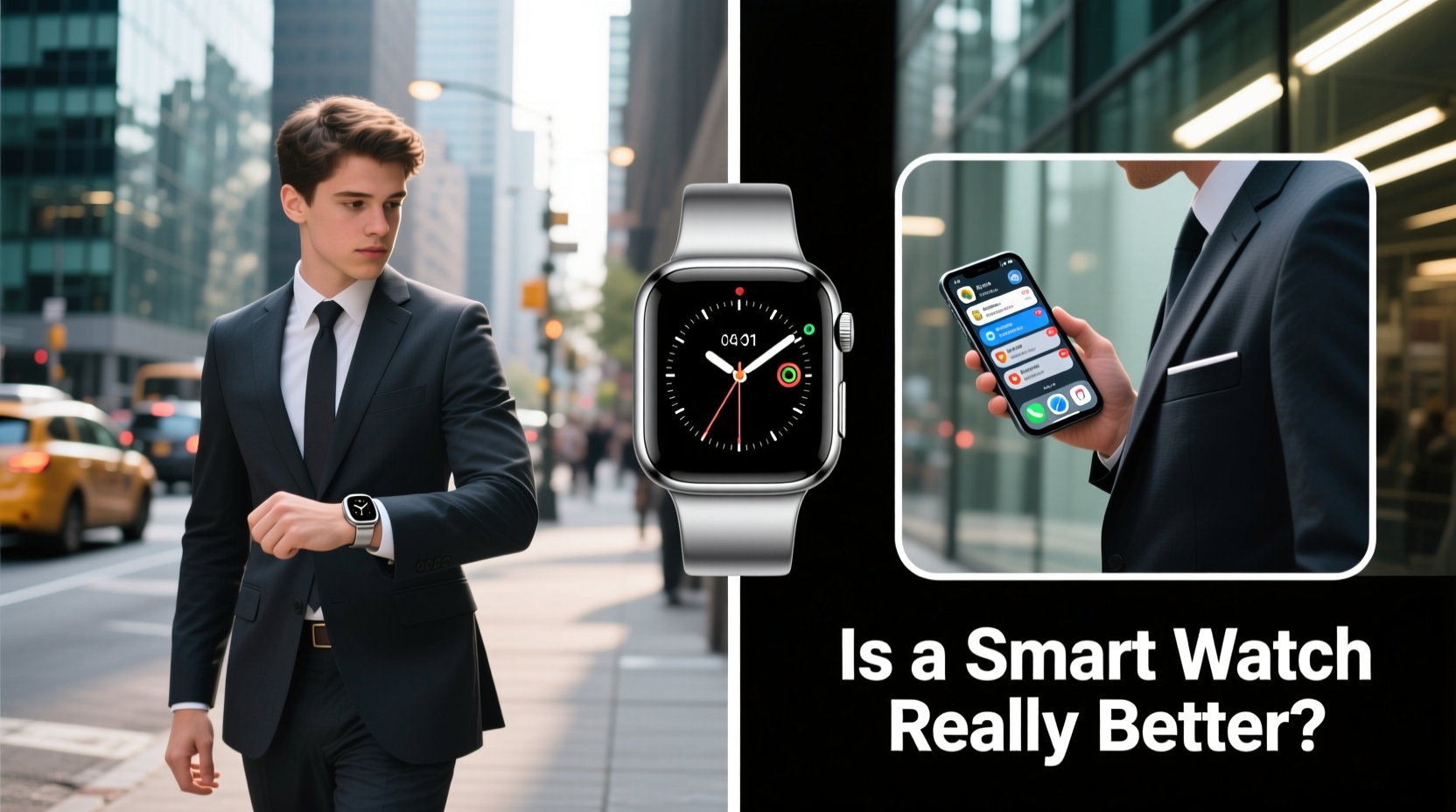
Consider the physical mechanics of checking your phone versus glancing at your wrist. Pulling a phone from your pocket requires multiple steps: unlocking, waiting for the screen to activate, and possibly dismissing notifications. Even with Face ID or fingerprint sensors, it takes 2–3 seconds. A smart watch, by contrast, often wakes up automatically when you raise your wrist. In under half a second, you see the time—and that’s it.
This difference may seem trivial, but frequency magnifies its impact. If you check the time 50 times a day (a conservative estimate for many professionals), using a phone could waste over four minutes daily—nearly 2.5 hours per year. More importantly, each phone check increases the risk of distraction. Seeing a notification banner can pull you into emails, messages, or social media, derailing focus.
Beyond Time: The Hidden Value of Contextual Awareness
A smart watch doesn't just tell time—it tells you what time means in context. Is it time to stand up after sitting too long? Are your meetings back-to-back? Did your partner text five minutes ago asking where you are? These insights arrive quietly, without requiring active digging.
Smart watches aggregate contextual data: calendar events, location-based reminders, fitness milestones, and even breathing prompts during high-stress periods. This ambient intelligence allows users to stay informed without being interrupted. For example, receiving a discreet vibration before a meeting starts lets you excuse yourself gracefully, whereas missing a phone alert could mean walking in late.
“Wearable technology excels at minimizing cognitive load. Instead of constantly managing devices, users receive just enough information at just the right moment.” — Dr. Lena Patel, Human-Computer Interaction Researcher, MIT Media Lab
Health and Wellness Integration
One area where smart watches clearly outperform phones is continuous health monitoring. While your phone sits in your pocket or bag, your watch stays in contact with your body 24/7. It tracks heart rate, blood oxygen levels, sleep patterns, and even detects falls or irregular rhythms like atrial fibrillation.
These features transform the device from a timepiece into a personal wellness sentinel. Imagine being alerted to an unusually high resting heart rate in the morning—a potential early sign of illness—before you even feel symptoms. Or receiving gentle nudges to breathe deeply during a stressful workday. Such interventions are impossible if you’re only relying on a phone.
Moreover, activity tracking encourages healthier habits. Studies show that people who wear fitness trackers walk 1,800–2,500 more steps per day on average than those who don’t. That’s roughly 1–1.5 extra miles daily—without gym memberships or drastic lifestyle changes.
Real-World Example: The Commuter’s Edge
Take Sarah, a marketing manager in Chicago who commutes via train and subway. During rush hour, pulling out her phone means fumbling through her bag, risking theft, and blocking foot traffic. With her smart watch, she checks arrival times, receives transit delay alerts, and even replies to urgent messages using voice commands—all without removing her phone.
When her watch vibrates to signal her stop is approaching, she stands up smoothly, avoiding the last-second scramble others experience. Over the course of a month, this small advantage saves her stress, time, and physical strain. It’s not about the time itself—it’s about how efficiently she acts on it.
Comparison: Smart Watch vs. Phone for Time & Notifications
| Feature | Smart Watch | Smartphone |
|---|---|---|
| Time Check Speed | Instant (raise-to-wake) | 2–3 seconds (unlock required) |
| Social Disruption | Minimal (glance) | High (device pulled out) |
| Distraction Risk | Low (limited interface) | High (apps, banners, sounds) |
| Health Monitoring | Continuous (HR, sleep, activity) | Intermittent (manual input or paired sensors) |
| Battery Impact | Low (short glances) | Higher (screen-on time) |
| Accessibility in Motion | High (hands-free options) | Low (requires handling) |
When a Smart Watch Falls Short
Despite its advantages, a smart watch isn’t always superior. Small screens limit readability in bright sunlight. Voice responses can be inaccurate in noisy environments. And battery life—typically 18 to 36 hours—requires nightly charging, unlike phones that many charge less frequently.
Additionally, some tasks still demand a full interface. Reading long emails, navigating complex websites, or editing documents remain impractical on a wrist-sized display. The smart watch works best as a filter—not a replacement.
Step-by-Step: Optimizing Your Smart Watch for Daily Efficiency
- Choose a minimalist watch face with only essential info: time, date, next calendar event.
- Customize notification settings to allow only priority apps (e.g., messages from family, calendar alerts).
- Enable haptic feedback so important alerts vibrate subtly, not loudly.
- Set automatic workout detection if you walk or run regularly.
- Review weekly health summaries to track trends in sleep, heart rate, and activity.
- Charge nightly during brushing or showering to maintain consistency.
Frequently Asked Questions
Can a smart watch completely replace my phone for timekeeping?
No device fully replaces another, but a smart watch significantly reduces the need to pull out your phone for time checks and quick updates. For comprehensive tasks, your phone remains essential.
Are smart watches worth it just for checking the time?
If time-checking were the only function, no. But their true value lies in reducing digital friction—minimizing interruptions, supporting health goals, and keeping you present in conversations and activities.
Do I need an expensive model to get these benefits?
Not necessarily. Entry-level models from Apple, Samsung, Fitbit, and Garmin offer core functionality like time display, step tracking, and notification filtering. Premium features like ECG or advanced GPS matter most to athletes or medically sensitive users.
Final Thoughts: Less Friction, More Presence
The question isn’t whether a smart watch tells time better than a phone—it does, in speed and discretion. The deeper benefit is how it helps you reclaim attention. Every time you avoid unlocking your phone, you reduce the chance of falling into a digital rabbit hole. You stay engaged in meetings, conversations, and walks without breaking flow.
In a world of constant pings and infinite scroll, the ability to glance, decide, and move on is a form of digital discipline. A smart watch supports that discipline by delivering just enough information, just in time, and no more.




 浙公网安备
33010002000092号
浙公网安备
33010002000092号 浙B2-20120091-4
Comments
No comments yet. Why don't you start the discussion?