
Walking into a room and sinking your toes into a plush, cloud-like rug is undeniably inviting. Soft rugs promise luxury, warmth, and an instant upgrade in comfort. But how do they hold up when real life sets in—spills, pets, heavy foot traffic, and daily wear? On the flip side, durable rugs may not feel as indulgent underfoot, but they often withstand years of use with minimal fuss. The question isn’t just about preference—it’s about function, lifestyle, and long-term value. Choosing between softness and durability means balancing immediate gratification with lasting performance.
The Allure of Soft Rugs: Comfort First
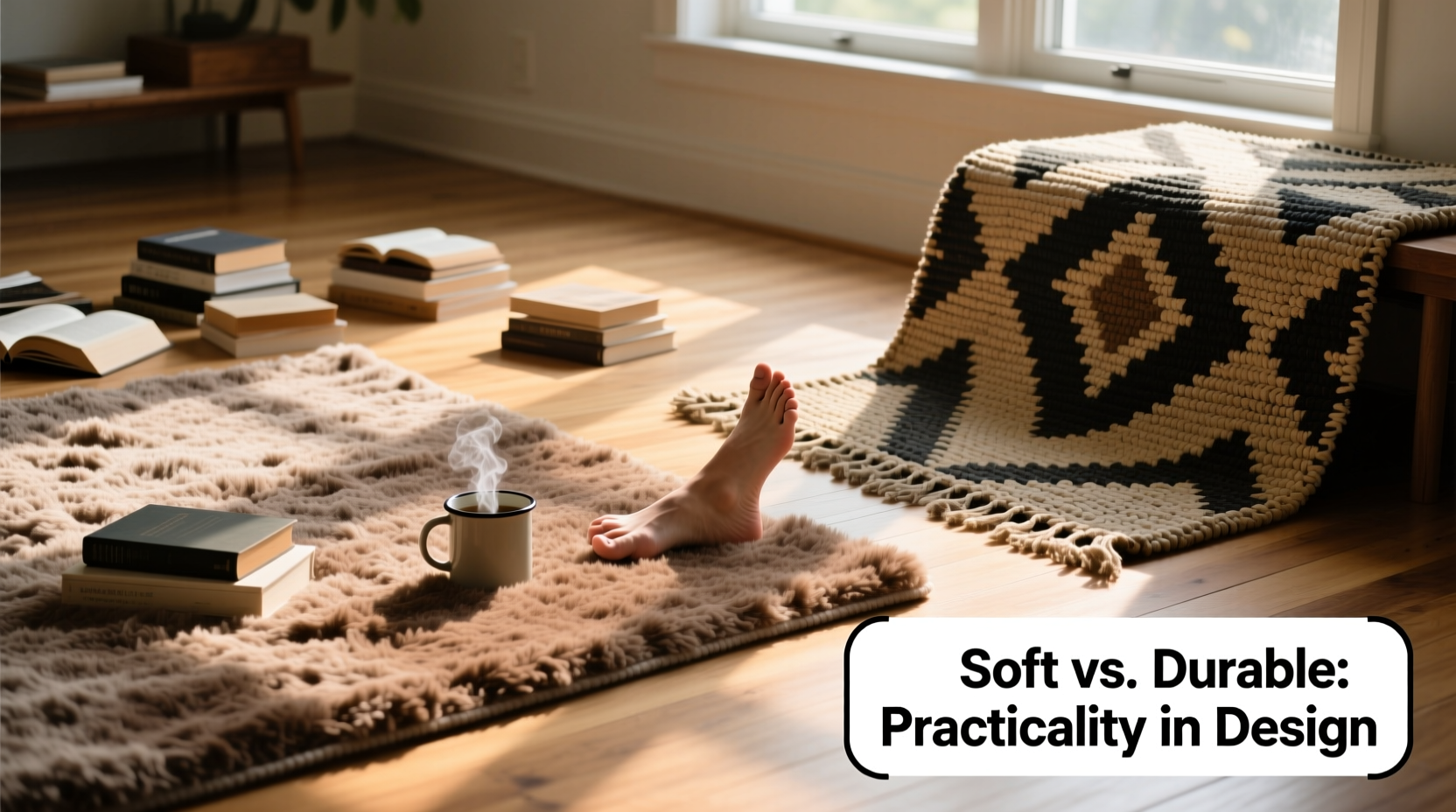
Soft rugs are designed to deliver sensory pleasure. Made from materials like wool, viscose, microfiber, or high-pile synthetics, they offer a sumptuous texture that elevates the coziness of any space. Bedrooms, sitting areas, and master suites often benefit from their inviting nature. They absorb sound, insulate floors, and create a visual focal point with rich textures and luster.
However, softness often comes at a cost. High-pile or shaggy rugs trap dust, pet hair, and allergens more easily. Their fibers compress quickly under furniture or frequent walking, leading to permanent indentations. Spills can seep deep into the base, making cleaning difficult without professional help. Viscose, while silky and elegant, is particularly vulnerable to moisture and abrasion—some experts call it “the silk of rugs” for its beauty and fragility.
Durable Rugs: Built to Last
Durable rugs prioritize resilience over plushness. Constructed from materials like polypropylene (olefin), nylon, flat-weave cotton, or tightly looped wool, they resist crushing, fading, and stains. These rugs thrive in high-traffic areas—hallways, kitchens, living rooms, and homes with kids or pets. Many are stain-treated or inherently water-resistant, making spills easy to wipe away.
Weave type also plays a role. Flatweaves like kilims or dhurries are lightweight and hardwearing, while low-loop piles (such as berber) resist snags and matting. Durability doesn’t have to mean dull; modern designs offer bold patterns and textured finishes that look stylish for years.
“Durability in rugs isn’t just about material—it’s about matching construction to usage. A well-made synthetic rug in a busy household will outperform a delicate wool one every time.” — Lena Patel, Interior Textile Consultant
Comparing Soft vs. Durable Rugs: Key Factors
| Factor | Soft Rugs | Durable Rugs |
|---|---|---|
| Comfort Level | Excellent – plush, warm, luxurious underfoot | Fair to good – firmer, less cushioned |
| Traffic Suitability | Poor – best in low-traffic areas | Excellent – ideal for hallways, living rooms |
| Cleaning & Maintenance | Difficult – deep fibers trap dirt, harder to clean | Easier – surface stains wipe clean, machine washable (some) |
| Lifespan | Short to moderate – fibers flatten, shed, stain | Long – resists wear, fading, and deformation |
| Cost Over Time | Higher – may need replacement sooner | Lower – longer lifespan offsets initial price |
| Aesthetic Appeal | High – adds luxury and depth | Varies – modern designs available, but less opulent |
Real-Life Scenario: The Family Living Room Dilemma
Sarah and James moved into a new home with two young children and a golden retriever. They initially chose a thick, ivory microfiber rug for their living room because it looked warm and inviting in the showroom. Within three months, the center was matted from foot traffic, muddy paw prints stained the edges, and a spilled glass of juice left a permanent spot despite repeated cleaning attempts.
They replaced it with a low-pile, stain-resistant polypropylene rug in a geometric pattern. It wasn’t as soft, but it survived daily playtime, tracked-in dirt, and weekly vacuuming without showing wear. After 18 months, it still looks nearly new. “We gave up on the ‘hotel suite’ feel,” Sarah said, “but we gained peace of mind.”
How to Choose: A Step-by-Step Guide
- Assess the room’s function. Is it a quiet bedroom or a high-use family area? Soft rugs suit private, low-traffic spaces.
- Consider household members. Kids, pets, and active lifestyles demand durability.
- Evaluate your cleaning habits. Will you vacuum weekly? Can you handle spot-cleaning spills immediately?
- Test the pile height. Run your hand over the rug. Anything over ½ inch is likely high-pile and less resilient.
- Check material labels. Look for polypropylene, nylon, or wool blends for longevity. Avoid viscose in wet or high-wear zones.
- Think long-term. Ask: Will this rug still look good in two years, or will it need replacing?
When Soft Rugs Make Sense: Strategic Use
Soft rugs aren’t impractical across the board—they’re just context-dependent. In a guest bedroom where visitors appreciate stepping onto something cozy in the morning, a plush wool rug makes sense. In a formal living room used only occasionally, a viscose rug can shine without enduring daily abuse. The key is placement.
Pair soft rugs with protective measures: use rug pads to reduce friction, rotate them quarterly to even out wear, and enforce a no-shoes policy. Some homeowners keep soft rugs for seasonal decor, swapping them out during high-activity months.
FAQ
Can I use a soft rug in a child’s room?
Yes, if the room isn’t a high-traffic play zone. Opt for machine-washable materials like polyester or cotton chenille, and avoid delicate fibers like silk or viscose. Clean spills immediately and vacuum gently.
Are durable rugs always ugly or boring?
No. Modern durable rugs come in vibrant colors, textured weaves, and designer patterns. Brands now blend performance materials with aesthetic appeal—look for indoor/outdoor rugs reimagined for living spaces.
Do soft rugs ruin hardwood floors?
Not if they have a non-slip, breathable rug pad. However, trapped moisture under impermeable backings can warp wood over time. Always lift and air out soft rugs periodically.
Final Checklist Before You Buy
- ✅ What is the primary use of the room?
- ✅ Do I have pets or young children?
- ✅ How often am I willing to clean or maintain the rug?
- ✅ Is the rug material suitable for my climate? (e.g., wool absorbs humidity, synthetics resist mold)
- ✅ Does the rug have a backing that protects my floor?
- ✅ Can I afford to replace it in 2–3 years if needed?
Conclusion
Choosing between a soft rug and a durable one isn’t about picking the “better” option—it’s about aligning your choice with your lifestyle. Soft rugs bring undeniable comfort and elegance but require careful placement and maintenance. Durable rugs offer resilience, ease of care, and long-term savings, especially in active households. The most practical rug is not the softest or toughest one, but the one that fits how you actually live. By assessing your needs honestly and planning for real-world use, you can enjoy both beauty and function underfoot.




 浙公网安备
33010002000092号
浙公网安备
33010002000092号 浙B2-20120091-4
Comments
No comments yet. Why don't you start the discussion?