
For many parents, the morning routine with a teenage child feels like a battle against biology. Despite going to bed at a reasonable hour, teens often struggle to wake up, appearing disoriented, irritable, and deeply groggy. This isn’t laziness—it’s a clash between natural sleep patterns and early school start times. One solution gaining traction is the sunrise alarm clock. But does it actually work? And if so, why? The answer lies in understanding adolescent sleep physiology and how light influences our internal clock.
Sunrise alarm clocks simulate a natural dawn by gradually increasing light intensity over 15 to 30 minutes before the set alarm time. Unlike traditional alarms that jolt you awake with sound, these devices ease the body into wakefulness using light as a biological cue. For teenagers, whose circadian rhythms naturally shift later during puberty, this gentle transition can make a meaningful difference in alertness and mood upon waking.
The Science Behind Teen Sleep Patterns
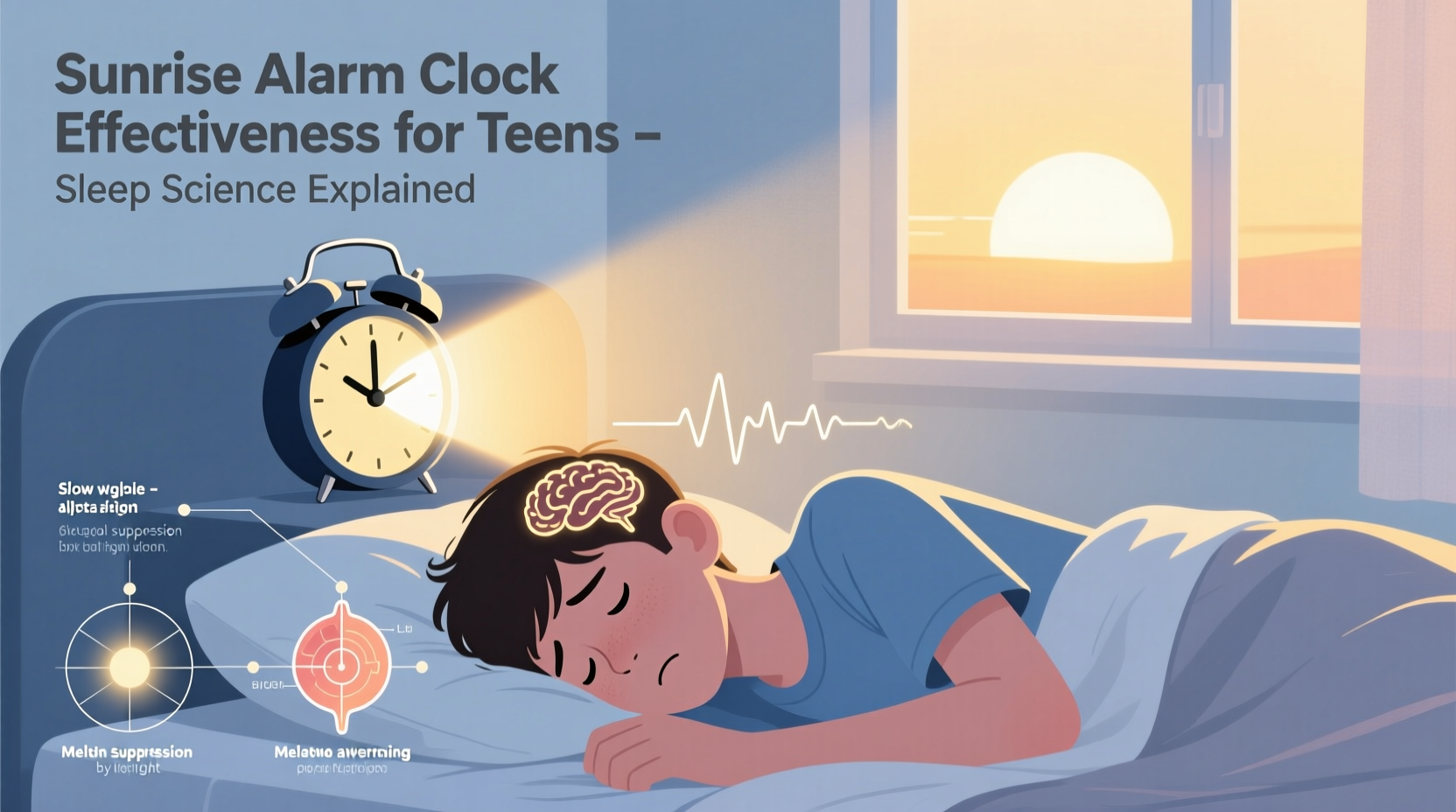
Adolescence brings significant changes to the body’s internal clock, or circadian rhythm. During puberty, hormonal shifts—particularly in melatonin secretion—cause a phase delay. This means teens don’t feel sleepy until later at night, often not until 11 p.m. or even midnight, regardless of effort. At the same time, most schools start early, typically around 7:30 or 8 a.m., forcing teens to wake up after only six or seven hours of sleep, far short of the 8–10 hours recommended by the American Academy of Sleep Medicine.
This chronic sleep deficit leads to “sleep inertia”—a state of grogginess, impaired cognition, and low energy that can last for hours after waking. It’s not just unpleasant; it affects academic performance, emotional regulation, and even physical health. According to Dr. Mary Carskadon, a leading sleep researcher at Brown University:
“Teenagers are biologically wired to go to bed later and wake up later. When we force them to wake up early, we’re essentially asking them to function in a constant state of jet lag.” — Dr. Mary Carskadon, Professor of Psychiatry and Human Behavior, Brown University
This misalignment between biological time and social time is known as “social jet lag,” and it’s especially pronounced in adolescents. Sunrise alarm clocks aim to mitigate this by helping regulate the circadian system through light exposure—a powerful zeitgeber (time-giver) for the human body.
How Light Influences Wakefulness
Light is the most potent environmental signal for regulating circadian rhythms. Specialized cells in the retina, called intrinsically photosensitive retinal ganglion cells (ipRGCs), detect light and send signals directly to the suprachiasmatic nucleus (SCN)—the brain’s master clock. When light levels rise, especially in the blue-green spectrum (around 480 nm), the SCN suppresses melatonin production and triggers physiological changes that promote alertness: increased heart rate, body temperature, and cortisol release.
Traditional alarms disrupt sleep abruptly, often during deep sleep stages, which worsens sleep inertia. In contrast, a sunrise alarm begins emitting soft light 15–30 minutes before wake-up time. This gradual increase mimics a natural dawn, prompting the body to reduce melatonin and prepare for waking before the actual alarm sounds. As a result, teens may wake up feeling more refreshed and less startled.
Do Sunrise Alarm Clocks Work for Teens? Evidence and Studies
Several studies support the use of light-based wake-up systems for improving morning alertness. A 2017 study published in Chronobiology International found that participants using a dawn simulator reported significantly lower sleep inertia and improved subjective alertness compared to those using a standard auditory alarm. Another trial involving high school students showed that those using light therapy alarms experienced better mood and cognitive performance in morning classes.
While most research hasn’t focused exclusively on teens, the underlying mechanisms apply strongly to this age group. Because adolescents are particularly sensitive to light cues—especially in the morning—gradual light exposure can help shift their delayed circadian phase earlier over time. Consistent use may even lead to falling asleep slightly earlier at night, creating a positive feedback loop for healthier sleep timing.
However, effectiveness depends on consistency and proper usage. A sunrise alarm used sporadically or placed where light doesn’t reach the eyes will have limited impact. It’s also not a substitute for adequate total sleep. As Dr. Phyllis Zee, Chief of Sleep Medicine at Northwestern University, notes:
“Light therapy devices like sunrise alarms can be helpful tools, but they work best when combined with good sleep hygiene—consistent bedtimes, reduced screen time before bed, and avoiding caffeine late in the day.” — Dr. Phyllis Zee, Neurologist and Sleep Specialist
Step-by-Step Guide to Using a Sunrise Alarm Clock Effectively
To get the most benefit from a sunrise alarm clock, follow this evidence-based routine:
- Choose the right device: Select a model with adjustable brightness, color temperature (preferably including warm white to simulate sunrise), and a backup sound alarm.
- Set the wake-up time consistently: Use the same wake-up time every day, including weekends, to stabilize your circadian rhythm.
- Set the light duration: Program the light to begin 20–30 minutes before the alarm. Start with a dim glow and build to full brightness (around 200–300 lux).
- Position the device correctly: Place it where light will reach your face directly. Avoid placing it behind furniture or under shelves.
- Combine with morning light exposure: Once awake, open curtains or step outside briefly to reinforce the wake signal with natural sunlight.
- Use nightly wind-down routines: Dim household lights an hour before bed and avoid bright screens to enhance melatonin onset.
- Maintain for at least two weeks: Allow time for your body to adapt. Most users notice improvements in alertness within 10–14 days.
Comparison: Sunrise Alarm vs. Traditional Alarm
| Feature | Sunrise Alarm Clock | Traditional Alarm Clock |
|---|---|---|
| Wake-up method | Gradual light + optional sound | Sudden sound |
| Impact on sleep inertia | Reduces grogginess | Often increases grogginess |
| Circadian alignment | Promotes natural wake-up process | No circadian support |
| Morning alertness | Improves subjective and objective alertness | May cause stress response |
| Long-term rhythm adjustment | Potentially advances sleep phase over time | No effect on sleep timing |
| Best for | Teens, night owls, seasonal affective disorder | Light sleepers, consistent schedulers |
Real-Life Example: How One Family Improved Mornings
The Thompson family had struggled for years with their 15-year-old daughter, Maya, who routinely slept through two or three alarms and arrived at school sluggish and irritable. Her parents tried everything—earlier bedtimes, no screens after 9 p.m., motivational talks—but nothing helped. After reading about circadian rhythms, they invested in a sunrise alarm clock.
They set it to begin glowing at 6:30 a.m., 20 minutes before her wake-up time, and placed it across the room so she’d have to open her eyes to see it. Within a week, Maya began stirring before the alarm sounded. By the second week, she was getting out of bed on her own, reporting she “didn’t feel as heavy” in the mornings. Over time, she even started feeling sleepy earlier at night, shifting her bedtime from midnight to 11 p.m. Her grades improved, and family tensions around morning routines decreased significantly.
It wasn’t a magic fix—but combined with consistent sleep habits, the sunrise alarm became a key part of a sustainable solution.
Checklist: Optimizing Your Teen’s Wake-Up Routine
- ✅ Choose a sunrise alarm with adjustable light intensity and duration
- ✅ Set the light to begin 20–30 minutes before wake-up time
- ✅ Place the device where light reaches the face directly
- ✅ Maintain a consistent wake-up time, even on weekends
- ✅ Limit blue light exposure (phones, tablets) 1 hour before bed
- ✅ Encourage 8–10 hours of sleep per night
- ✅ Pair morning light with natural sunlight exposure when possible
- ✅ Combine with calming bedtime rituals (reading, warm shower)
Frequently Asked Questions
Can a sunrise alarm clock help with teenage insomnia?
Not directly. While it won’t treat insomnia, it can improve morning alertness and help regulate the circadian rhythm over time. For insomnia, focus on consistent sleep schedules, reducing nighttime stimulation, and addressing anxiety. If problems persist, consult a sleep specialist.
How bright should the sunrise alarm be?
Aim for a peak brightness of at least 200 lux at pillow level. Some medical-grade light therapy boxes go up to 10,000 lux, but for wake-up simulators, 200–500 lux is sufficient and more comfortable. Look for models that mimic natural sunrise color temperatures, shifting from warm reds to cooler whites.
Are there any downsides to using a sunrise alarm clock?
For most people, there are no risks. However, individuals with certain eye conditions or light sensitivity should consult a doctor. Also, if the light is too bright or poorly positioned, it may disrupt a sleeping partner. Using blackout curtains can help contain light to one side of the room if needed.
Final Thoughts: A Small Change with Big Impact
Waking up groggy every morning doesn’t have to be a normal part of teenage life. The struggle many teens face each morning is rooted in biology, not attitude. Sunrise alarm clocks offer a scientifically grounded way to ease the transition from sleep to wakefulness by working with the body’s natural systems rather than against them.
While no device can replace the need for sufficient sleep, a sunrise alarm can significantly reduce sleep inertia and improve daily functioning. When combined with consistent sleep habits and smart environmental design, it becomes a powerful tool in supporting adolescent well-being. For parents seeking a practical, non-invasive way to help their teens start the day with more energy and less resistance, investing in a quality sunrise alarm clock may be one of the simplest and most effective steps they can take.




 浙公网安备
33010002000092号
浙公网安备
33010002000092号 浙B2-20120091-4
Comments
No comments yet. Why don't you start the discussion?