
For years, I’ve carried an A6 notebook in my jacket pocket—its compact size, tactile feedback, and zero reliance on batteries made it the ultimate companion. But as digital tools evolved, so did my curiosity. I invested in a mid-range Android tablet with stylus support, hoping to streamline my workflow. After using both daily for over 18 months—across lectures, meetings, creative brainstorming, and personal journaling—I can say this: there’s no universal answer. The “better” tool depends entirely on your habits, goals, and environment.
The truth is, tablets offer undeniable advantages in searchability, organization, and multimedia integration. Yet analog notebooks deliver something deeper: presence, focus, and a cognitive connection that screens often interrupt. This isn’t nostalgia—it’s neuroscience. Let me break down what works, what doesn’t, and where each excels.
Digital Speed vs. Analog Depth
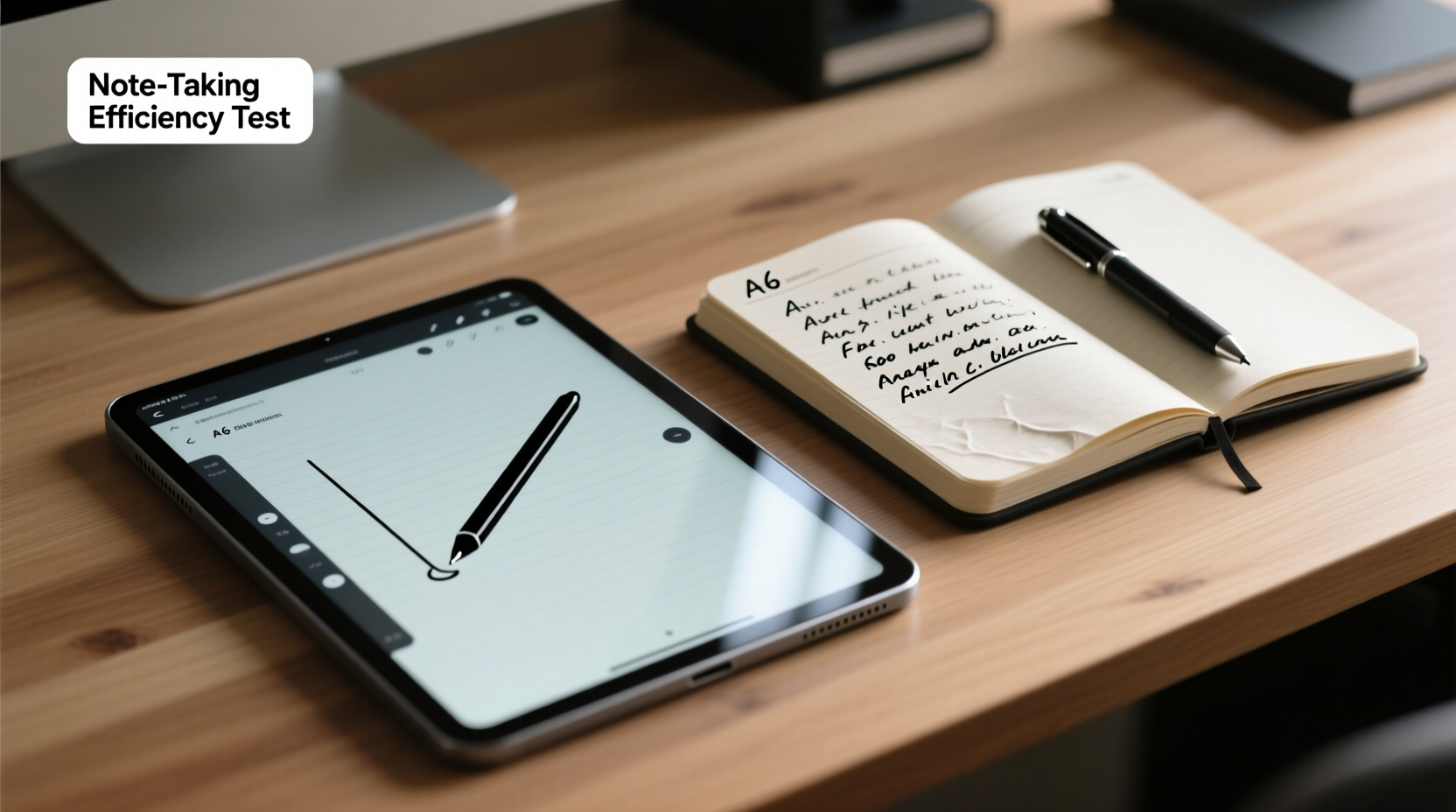
A tablet enables instant editing, cloud syncing, voice recording integration, and searchable handwriting. If you’re transcribing interviews or need to organize hundreds of pages by topic, digital wins hands-down. Apps like Samsung Notes or Notability allow tagging, indexing, and even OCR conversion from handwritten notes to text.
But speed comes at a cost. Typing or writing on glass lacks resistance, which reduces kinesthetic memory—the physical sensation that helps encode information into long-term recall. Studies suggest that students who handwrite notes retain conceptual understanding better than those who type verbatim. The act of summarizing by hand forces processing; typing often encourages passive transcription.
Ergonomics and Portability: The Real-World Test
I tested both tools across three environments: commuting, desk work, and outdoor sketching. The A6 notebook, weighing under 100 grams, slipped into any pocket without adding bulk. Paired with a retractable pen, it was ready in seconds. No boot time, no battery anxiety.
The tablet, while lightweight (~350g), required two hands for stability when writing standing up. On crowded trains, balancing it while holding a strap made note-taking impractical. Even with a slim folio case, it never felt as unobtrusive as paper.
However, during long flights or café sessions, the tablet shined. Its backlit screen allowed night writing without disturbing others. I could split the display to view a PDF on one side and annotate beside it—a feature no notebook can replicate.
Comparison Table: Tablet vs. A6 Notebook
| Feature | Tablet + Stylus | A6 Notebook |
|---|---|---|
| Battery Dependency | High – requires daily charging | None |
| Searchability | Excellent – full-text search | Poor – manual flipping only |
| Distraction Risk | High – notifications, apps | None |
| Durability | Moderate – screen cracks, software issues | High – survives drops, spills (with care) |
| Long-Term Cost | High – device + accessories + eventual replacement | Low – ~$5 per notebook |
| Ease of Sharing | Instant – email, cloud, export | Requires scanning or photo |
| Cognitive Engagement | Moderate – prone to multitasking | High – focused, linear thinking |
A Day in the Life: Mini Case Study
Let’s follow Sarah, a freelance researcher working on a book about urban design. Her day starts with a morning walk through a historic district, where she sketches building facades and jots observations.
With her A6 Moleskine, she draws freely, scribbles marginalia, and circles ideas without concern for layout. Later, at her desk, she scans key pages using her phone and uploads them to Notion. It takes 10 minutes but feels intentional.
When she switches to a tablet, the experience changes. She loves the ability to layer sketches digitally and undo mistakes instantly. But she catches herself checking email midway through a drawing. The temptation to switch apps fractures her flow. Over time, she finds her field notes less expressive—more structured, less spontaneous.
Sarah concludes: analog for creation, digital for refinement. She now uses both—scanning select notebook pages and digitizing only what needs collaboration or backup.
“Writing by hand engages the brain differently—it activates regions tied to language, memory, and spatial reasoning more deeply than typing.” — Dr. Virginia Berninger, Cognitive Scientist, University of Washington
When to Choose Which Tool
Here’s how I decide:
- Use a tablet if: You collaborate frequently, need multimedia integration (audio, images), take large volumes of notes, or rely on searchability.
- Stick with an A6 notebook if: You value focus, enjoy tactile creativity, work in unpredictable environments, or want a distraction-free zone for deep thinking.
Hybrid approaches also work well. Many professionals use notebooks for initial ideation, then transfer key points to digital systems later. This “slow tech” method combines the best of both: raw creativity first, organization second.
Action Checklist: Choosing Your Note-Taking System
- Assess your primary use case: learning, creativity, meetings, journaling?
- Track how often distractions interfere with your current method.
- Test both tools for one week each in real scenarios.
- Evaluate comfort, speed, and mental clarity after each session.
- Consider long-term costs: device lifespan, accessories, subscription apps.
- Decide whether you prefer immediate convenience or sustained focus.
- If choosing hybrid, define a simple scan-and-archive routine.
Frequently Asked Questions
Can a tablet truly replicate the feel of pen on paper?
Not fully. Even high-end devices with low-latency styluses lack the texture and resistance of real paper. Screen protectors help, but they wear down and still feel slick compared to fiber-based surfaces.
Are small notebooks like A6 too limiting for serious work?
No. Constraints often enhance creativity. Limited space forces concise thinking. Many writers and designers prefer A6 for its portability and minimalism. Expand with multiple volumes if needed.
What’s the most overlooked downside of digital note-taking?
Dependency on ecosystem lock-in. If your app discontinues support or changes pricing (e.g.,降价取消功能), your entire archive may become harder to access. Physical notebooks remain readable decades later.
Final Thoughts: Tools Serve Purpose, Not Trends
After nearly two years of side-by-side testing, I’ve returned mostly to my A6 notebook. The tablet remains useful—for specific tasks like meeting minutes with attachments or collaborative edits. But for genuine thinking, reflection, and creative exploration, paper wins.
The appeal of tablets lies in their promise of efficiency. But efficiency isn’t always the goal. Sometimes, the slower path—writing slowly, thinking deeply, pausing between lines—is exactly what produces insight.
You don’t need to choose one forever. Re-evaluate as your needs change. Students might benefit from tablets during exam season; artists may prefer notebooks for concept drafting. The key is intentionality.




 浙公网安备
33010002000092号
浙公网安备
33010002000092号 浙B2-20120091-4
Comments
No comments yet. Why don't you start the discussion?