
As urban living becomes more compact and homes grow smaller, holiday traditions must adapt. One of the most visible changes is in how we decorate for Christmas—particularly when it comes to the centerpiece of seasonal decor: the Christmas tree. For many, especially those in apartments, studios, or multi-generational households with limited square footage, a towering floor model simply isn’t practical. Enter the tabletop Christmas tree: a space-saving alternative that’s gaining popularity not just out of necessity, but by design.
But is a tabletop tree truly better than a traditional floor-standing model for small spaces? The answer depends on your priorities—space efficiency, aesthetics, safety, ease of setup, and even emotional resonance. This article explores the advantages and trade-offs of both options, helping you make an informed choice that aligns with your lifestyle and living environment.
Spatial Efficiency: Maximizing Limited Square Footage
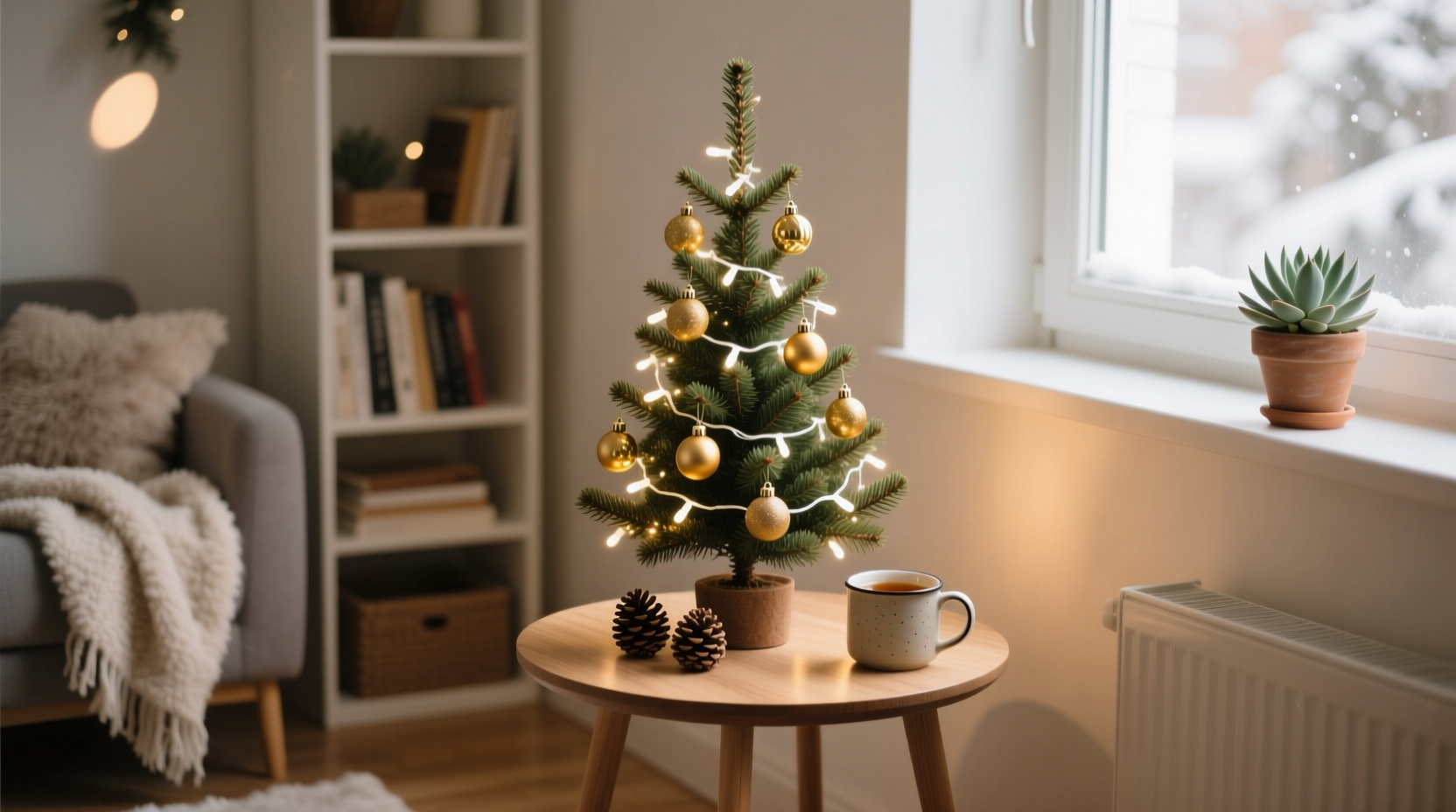
In cities like New York, Tokyo, or London, where average apartment sizes hover between 500 and 700 square feet, every inch counts. A standard floor-standing Christmas tree ranges from 6 to 8 feet tall and requires at least a 3-foot clearance radius to avoid obstructing foot traffic or furniture. That’s nearly 30 square feet of usable space dedicated solely to holiday decor—a luxury many can’t afford.
Tabletop trees, typically standing between 12 and 36 inches, fit comfortably on dressers, consoles, mantels, or dining tables. They occupy less than 2 square feet of floor space, leaving room for movement, storage, and daily living. Their compact size makes them ideal for studio apartments, dorm rooms, or even office desks where festive cheer is welcome but space is tight.
Moreover, smaller trees allow for creative placement. You’re no longer confined to a single corner. Multiple tabletop trees can be arranged throughout a home—on bookshelves, bathroom vanities, or kitchen islands—creating a layered, immersive holiday atmosphere without sacrificing functionality.
Design and Aesthetic Flexibility
One common misconception is that smaller trees mean fewer decorating opportunities. In reality, tabletop trees often encourage more intentional and creative design. With limited branch space, decorators tend to focus on quality over quantity, selecting meaningful ornaments, delicate string lights, and cohesive color schemes.
Floor models, while grand, can sometimes become cluttered with decades of accumulated decorations. Tabletop trees, by contrast, invite curation. They work beautifully with minimalist themes, rustic farmhouse styles, or modern metallic palettes. Because they're closer to eye level, intricate details—like hand-blown glass baubles or tiny felt animals—are easier to appreciate.
Additionally, tabletop trees come in a wider variety of unconventional shapes and materials. You’ll find spiral wireframes, geometric metal designs, pre-lit fiber-optic models, and even living dwarf pines in ceramic pots. This diversity allows for personal expression beyond the traditional evergreen silhouette.
“Small-space decorating is about precision, not compromise. A well-designed tabletop tree can evoke just as much warmth and nostalgia as a full-sized one.” — Lena Torres, Interior Stylist & Holiday Design Consultant
Safety and Accessibility Considerations
Safety is another critical factor, especially in homes with young children, pets, or elderly residents. A tall floor-standing tree poses several risks: it can tip over if tugged, has dangling cords within reach, and may have fragile ornaments placed at lower levels. According to the U.S. Consumer Product Safety Commission, hundreds of injuries related to falling Christmas trees are reported each year—many involving children under five.
Tabletop trees significantly reduce these hazards. Positioned above floor level, they’re naturally out of reach for curious toddlers and playful pets. If made from lightweight materials like aluminum or plastic, they won’t cause injury if accidentally knocked over. Pre-lit models with LED lights generate minimal heat, reducing fire risk compared to older incandescent strands.
They’re also ideal for individuals with mobility challenges. Setting up, decorating, and maintaining a floor tree often requires bending, stretching, or climbing a step stool—actions that can be difficult or painful for some. A tabletop version keeps everything within easy reach, promoting independence and inclusion during the holidays.
Cost, Setup, and Storage Comparison
When evaluating value, consider not just purchase price but also long-term costs related to setup, maintenance, and storage. Here's a breakdown comparing typical tabletop and floor models:
| Feature | Tabletop Tree (Average) | Floor Model (Average) |
|---|---|---|
| Height | 12–36 inches | 6–8 feet |
| Price Range | $20–$100 | $50–$300+ |
| Setup Time | 5–15 minutes | 30–60+ minutes |
| Storage Size | Shoebox to small bin | Large cylindrical bag (3–4 ft tall) |
| Lighting Included? | Often pre-lit | Sometimes pre-lit; usually separate |
| Ornament Capacity | 10–30 pieces | 50–150+ pieces |
The data shows clear advantages for tabletop trees in terms of affordability, speed of assembly, and off-season storage. After the holidays, a tabletop tree can be disassembled and stored in a closet, under a bed, or even in a kitchen cabinet—no need for bulky attic or basement storage.
Real-Life Example: A Studio Apartment Transformation
Take the case of Marcus Lee, a graphic designer living in a 580-square-foot studio in downtown Seattle. Each November, he faced the same dilemma: how to bring holiday spirit into his home without making it feel cramped.
For years, he used a 7-foot artificial tree in the corner beside his sofa. While festive, it blocked access to a side table and made navigating the room awkward. Last year, he switched to three coordinated 24-inch pre-lit tabletop trees—one on his entry console, one on the dining table, and one on the bedroom dresser.
Each tree featured a different theme: silver and white, rustic red plaid, and vintage gold. He used matching ribbon and coordinated lighting tones (warm white LEDs) to unify the look. The result? A more immersive, personalized holiday experience that didn’t sacrifice comfort or function.
“I get more compliments now than I ever did on my big tree,” Marcus says. “People love the creativity. And honestly, I enjoy decorating more because it feels manageable, not overwhelming.”
Step-by-Step: Choosing and Styling Your Tabletop Tree
If you're considering making the switch—or adding a tabletop tree to complement a larger one—follow this simple process:
- Measure Your Space: Identify available surfaces. Note height, width, and proximity to foot traffic.
- Determine Your Theme: Decide on a color scheme or aesthetic (e.g., Nordic, glam, rustic) to guide ornament selection.
- Select the Right Base Size: Ensure the tree base fits securely without overhanging edges.
- Choose Lighting Wisely: Opt for battery-operated or plug-in LED lights with low heat output. Timer functions add convenience.
- Curate Ornaments: Pick 10–20 high-impact decorations. Mix textures—wood, glass, fabric—for visual interest.
- Add a Skirt or Base Cover: Use a small fabric skirt, faux fur pad, or decorative tray to anchor the tree and hide cords.
- Position Strategically: Place near natural focal points—mirrors, windows, or seating areas—to enhance visibility.
Common Misconceptions About Small Trees
Despite their benefits, tabletop trees still face skepticism. Some believe they lack the \"grandeur\" of a full-sized tree or aren't \"real\" Christmas trees. Others assume they’re only for kids or temporary setups.
The truth is, a tabletop tree can be just as authentic and emotionally resonant. Many people use live miniature potted firs or spruces that can be replanted after the holidays. Others invest in heirloom-quality trees with artisan ornaments passed down through generations.
The scale doesn’t diminish the sentiment. In fact, the intimacy of a smaller tree—placed at the center of a dinner table or bedside—can deepen connections. It invites closer interaction, storytelling, and quiet reflection, which are often lost beneath the shadow of a towering evergreen.
FAQ: Your Top Questions Answered
Can a tabletop tree be the main Christmas tree?
Absolutely. If space is limited or you prefer a minimalist aesthetic, a well-decorated tabletop tree can serve as your primary holiday centerpiece. Pair it with complementary decor—wreaths, candles, garlands—to maintain seasonal ambiance throughout your home.
Are tabletop trees safe for apartments with strict fire codes?
Yes, especially if you choose flame-retardant materials and LED lighting. Many modern tabletop trees are made from non-flammable metals or plastics and meet UL safety standards. Always check local regulations, but in general, small, cool-burning trees pose minimal fire risk.
How do I store a tabletop tree properly?
Disassemble the tree if possible and store it in a rigid container to prevent crushing. Wrap delicate branches in tissue paper and keep ornaments in divided compartments. Store in a dry, temperature-stable area to prevent warping or mold.
Checklist: Is a Tabletop Tree Right for You?
- ✅ Do you live in an apartment, condo, or home under 800 sq ft?
- ✅ Is floor space limited or shared with high-traffic areas?
- ✅ Are you decorating for seniors, infants, or pets?
- ✅ Do you want a low-maintenance, quick-setup option?
- ✅ Are you looking for creative, customizable holiday decor?
- ✅ Do you lack long-term storage for large items?
If you answered yes to three or more, a tabletop Christmas tree is likely a smarter, safer, and more sustainable choice than a traditional floor model.
Conclusion: Rethinking Tradition for Modern Living
Holiday traditions evolve—not out of loss, but out of love for what matters most: connection, joy, and belonging. The decision to choose a tabletop Christmas tree isn’t a downgrade; it’s an adaptation to contemporary life. It reflects mindfulness, intentionality, and a desire to celebrate meaningfully within real-world constraints.
Whether you embrace a single elegant tabletop tree or scatter several throughout your home, you’re not sacrificing tradition—you’re redefining it. And in doing so, you make space—literally and figuratively—for what the season is truly about.




 浙公网安备
33010002000092号
浙公网安备
33010002000092号 浙B2-20120091-4
Comments
No comments yet. Why don't you start the discussion?